
Virginia Redistricting 2026, Why the Supreme Court of Virginia Voided the New Congressional Map and What It Means for the November 3 Election
Virginia’s November 3, 2026 congressional elections will use the same 11-district map that has been in place since 2021. Voters approved a constitutional amendment on April 21, 2026 that would have let Democrats redraw the map mid-decade, but the Supreme Court of Virginia voided the vote on May 8 by a 4-3 ruling. The U.S. Supreme Court refused to pause that decision on May 15, so the new map never took effect.
The dispute mattered because the proposed map was expected to turn Virginia’s current 6-5 Democratic House delegation into a map favoring Democrats in as many as 10 of 11 seats. Ballotpedia counted four Republican-held districts that would have become more Democratic under it.
Short answer for voters: your congressional district has not changed. Confirm it on the Virginia Department of Elections’ official interactive map.
Quick Facts: Virginia’s 2026 Congressional Redistricting Dispute
| Detail | Verified information |
| Case | Scott v. McDougle (also reported as McDougle v. Scott) |
| Supreme Court of Virginia record number | 260127 |
| Lower court | Tazewell County Circuit Court, Case No. CL25001582-00 |
| Referendum date | April 21, 2026 |
| Referendum result | 1,604,276 “Yes” votes, about 51.7%; roughly 48.3% “No” |
| Injunction against certification | April 22, 2026, by a Tazewell County judge |
| Supreme Court of Virginia denies stay of injunction | April 28, 2026 |
| Supreme Court of Virginia ruling | May 8, 2026, 4-3, voiding the referendum’s legal effect |
| U.S. Supreme Court | May 15, 2026: emergency stay application (No. 25A1240) denied in a unanimous, one-sentence order with no noted dissent |
| Map used in 2026 | The 11-district map the Supreme Court of Virginia adopted in 2021 |
| Current delegation | 6 Democrats, 5 Republicans |
| Proposed map | Designed to favor Democrats in up to 10 of 11 districts |
| Primary election | August 4, 2026 |
| General election | November 3, 2026 |
| Public claim form or settlement | None; this is an election-law dispute |
How Virginia’s 2026 Redistricting Fight Unfolded
- October 31, 2025: The General Assembly gave its first approval to the proposed constitutional amendment. Early voting in the November 2025 House of Delegates election had already begun on September 19.
- Early 2026: Lawmakers approved the amendment a second time and passed a new congressional map to take effect if voters approved it. Republican Sen. Ryan McDougle, a member of the Virginia Redistricting Commission, had sued in Tazewell County in October 2025.
- February to March 2026: Courts went back and forth. The Supreme Court of Virginia let the referendum proceed, a Tazewell County judge ruled the amendment unlawful on February 19 on separate grounds, and the Supreme Court of Virginia stayed that ruling on March 4.
- April 21, 2026: Voters approved the amendment by about 3.3 percentage points out of roughly 3.1 million votes cast.
- April 22 and April 28, 2026: A Tazewell County judge blocked certification and implementation. The Supreme Court of Virginia refused to lift that block.
- May 8, 2026: The Supreme Court of Virginia voided the referendum 4-3.
- May 11 to May 15, 2026: Virginia Attorney General Jay Jones and Democratic legislative leaders asked the U.S. Supreme Court for an emergency stay. It was denied on May 15.
- Aftermath: Democratic campaigns tied to the new districts suspended or regrouped, and the 2021 map governed the August 4 primaries.
The referendum cost Virginia taxpayers about $5 million, and the Virginia Public Access Project counted roughly $83 million in campaign spending by both sides.
Why Virginia Democrats Tried to Redraw the Congressional Map in 2026
Virginia’s regular process puts congressional redistricting after each decennial census, with the next regular cycle following the 2030 census. A 2020 constitutional amendment created the Virginia Redistricting Commission of eight legislators and eight citizens, evenly split between the parties. After that commission deadlocked in 2021, the Supreme Court of Virginia adopted the current map through special masters.
The 2026 amendment would have temporarily allowed the General Assembly to adopt new congressional districts, largely in response to mid-decade map changes by Republican-led states, and then returned authority to the commission after 2030.
Supporters argued Virginia should not unilaterally disarm while other states redrew maps for partisan advantage, and that voters had spoken. Opponents, including McDougle, argued the amendment authorized partisan gerrymandering and bypassed the bipartisan commission voters created in 2020. The court’s opinion described the amendment in those terms, but the legal basis for its ruling was procedure, not the map’s fairness.
Related article: Braskem and Bondholders Edge Toward an $11 Billion Debt Restructuring, Proposals, Court Cases and What Happens Next
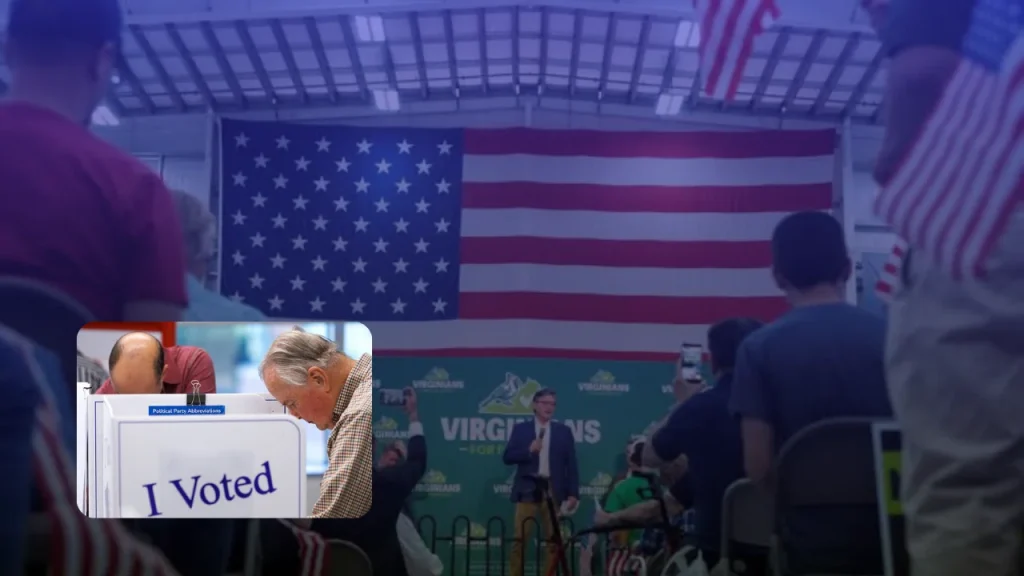
Why the Supreme Court of Virginia Voided the April 21 Referendum
The ruling turned on Article XII, Section 1 of the Virginia Constitution, which requires a proposed amendment to pass the General Assembly twice with a general election in between. The question in Scott v. McDougle was what “general election” means.
What the 4-3 majority held
Justice D. Arthur Kelsey wrote for the majority. The court concluded that an election is a process that begins when voters start casting ballots, not only on Election Day. Because early voting in the November 2025 House of Delegates election began September 19, and the court noted more than 1.3 million votes had been cast before the legislature’s first vote on October 31, the intervening-election requirement was not met. The majority said the process “incurably taints” the referendum, so the vote had no legal effect.
The court also held that the 2021 congressional maps remain the governing maps for the 2026 elections.
What the three dissenting justices argued
The dissent would have treated an election as occurring on Election Day, November 4, 2025, which came after the October 31 first vote and would satisfy the requirement. The majority rejected that reading as inconsistent with the purpose of the requirement.
Reactions from both sides
McDougle said the ruling shows “you cannot violate the Constitution to change the Constitution,” and called it constitutional rather than partisan. Democratic leaders took a different view. Senate Majority Leader Scott Surovell called the decision unprecedented, and said, to his knowledge, it was the first time the court had struck down the results of a statewide election. Attorney General Jay Jones called the U.S. Supreme Court’s one-sentence denial part of a national attack on voting rights. Legal commentators noted the question before the court was procedural, under a strict state amendment process.
Did the U.S. Supreme Court Decide the Merits of Virginia’s Redistricting Case?
No. On May 15, 2026, the U.S. Supreme Court denied the emergency stay application in No. 25A1240 in a unanimous, one-sentence order with no explanation. A stay denial is not a ruling on the merits, but it left the Supreme Court of Virginia’s decision in force for 2026. Commentators noted the dispute was a matter of state law and that Democrats had not raised federal claims in the lower court. Virginia’s high court has the final say on Virginia law.
Which Virginia Congressional Map Is Used on November 3, 2026?
The 11-district map adopted in 2021 is in effect. The Virginia Department of Elections confirmed after the May 8 ruling that no district changes would be made for the 2026 primary or general election. Draft maps from the rejected proposal that still circulate online do not control your ballot.
How to check your Virginia congressional district and polling place
- Use the Department of Elections’ interactive district map.
- Check registration and polling location through the Virginia Citizen Portal.
Virginia’s 2026 U.S. House and Senate Races Under the 2021 Map
Virginia is currently represented by six Democrats and five Republicans, all seeking reelection. Democratic leaders including Gov. Abigail Spanberger have said as many as four seats could flip under the existing map. In the U.S. Senate race, Democratic Sen. Mark Warner faces Republican Bert Mizusawa.
Major-party nominees in the House races most watched, per the Virginia Department of Elections’ federal candidate list and primary reporting:
| District | Democratic nominee | Republican nominee |
| 1st | Shannon Taylor | Rob Wittman (incumbent) |
| 2nd | Elaine Luria | Jen Kiggans (incumbent) |
| 5th | Tom Perriello | John McGuire (incumbent) |
| 6th | Beth Macy | Ben Cline (incumbent) |
| 7th | Eugene Vindman (incumbent) | Doug Ollivant |
| 9th | Joy Powers | Morgan Griffith (incumbent) |
| 10th | Suhas Subramanyam (incumbent) | Dave Beckwith |
Independent and third-party candidates also appear on several ballots. Check the Department of Elections’ November 3, 2026 federal candidate list for the full, current list.
Why Rep. Ben Cline’s 6th District Matters in the Redistricting Story
Under the rejected map, several Republican-held districts, including the 6th, would have been reshaped. Because the 2021 lines stayed in place, Cline and Macy are running in the existing 6th District.
What Virginia Voters Need to Know Before November 3, 2026
| Election detail | Current information |
| General Election Day | Tuesday, November 3, 2026; polls open 7 a.m. to 7 p.m. |
| Early in-person voting | September 18 through 5 p.m. Saturday, October 31 |
| Regular registration deadline | October 23 |
| Mailed absentee ballot request deadline | 5 p.m., October 23 |
| Same-day registration | Available in person through Election Day using a provisional ballot |
Confirm all dates on the Department of Elections’ Upcoming Elections and Deadlines page.
Can Virginia Try Mid-Decade Congressional Redistricting Again?
The ruling does not say Virginia can never change its map between censuses. It says this amendment process failed the state constitution’s intervening-election requirement. Any future attempt would need a valid amendment process, beginning again with legislative approval before and after an intervening general election, followed by a referendum. The next regular redistricting follows the 2030 census.
How Virginia’s Case Compares With Other Redistricting Lawsuits
Redistricting disputes across the country turn on different legal questions. For a Voting Rights Act case, see Louisiana V Callais Voting Rights Act Redistricting Lawsuit. For a federal court fight over a congressional map, see Alabama Congressional Map Lawsuit: Supreme Court Halts Black District Order. For a state-court gerrymandering claim, see NC Court Of Appeals Rejects ‘Fair Elections’ Gerrymandering Lawsuit. Each involves different constitutions, statutes and records and does not decide Virginia’s questions.
FAQ: Virginia Redistricting 2026, Scott v. McDougle and the November Election
Did Virginia redistrict for the 2026 election?
No. Voters approved the amendment on April 21, 2026, but the Supreme Court of Virginia voided the vote on May 8, so the existing 2021 map is used.
What was the vote on Virginia’s April 21, 2026 redistricting referendum?
About 51.7% voted yes (1,604,276 votes) and about 48.3% voted no, a margin of roughly 3.3 percentage points.
Why did the Supreme Court of Virginia strike down the redistricting amendment?
A 4-3 majority held that the General Assembly’s first vote came after early voting in the 2025 election had begun, violating the intervening-election requirement in Article XII, Section 1.
Did the U.S. Supreme Court reverse Virginia’s ruling?
No. On May 15, 2026 it denied an emergency stay application in No. 25A1240, leaving the state ruling in place. It did not issue a merits decision.
Is Virginia’s map different from 2024?
No. The 2021 court-adopted map used in 2024 is also used in 2026.
Is Ben Cline’s 6th District the same in 2026?
Yes. Ben Cline (R) and Beth Macy (D) are the major-party candidates in the existing 6th District.
Could the 10-1 map be used in a later election?
Not under this amendment, which was voided. A new valid amendment process would be required.
Is there a claim form or settlement tied to this case?
No. Scott v. McDougle is an election-law case about constitutional amendment procedure.
Primary Sources and References
- Supreme Court of Virginia, Scott v. McDougle, Record No. 260127, opinion issued May 8, 2026: vacourts.gov opinion (PDF)
- Virginia Department of Elections, Supreme Court of Virginia Voids April 21 Redistricting Referendum, May 8, 2026
- U.S. Supreme Court, Docket No. 25A1240, denial of stay application, May 15, 2026
- Virginia Department of Elections, interactive map of voting districts and precincts
- Virginia Department of Elections, November 3, 2026 federal candidate list
- Virginia Department of Elections, Upcoming Elections and Deadlines
- Virginia Department of Elections, Proposed Constitutional Amendment for the April 2026 Special Election
- VPM News, Supreme Court declines to intervene in Virginia redistricting, and VPM, Voter Guide: What About Virginia’s 10-1 Redistricting?, October 22, 2026
- Virginia Mercury, US Supreme Court decision ends Virginia’s redistricting fight, May 18, 2026
- Ballotpedia News, Virginia Supreme Court voids election results for Virginia redistricting referendum, May 8, 2026
- NPR, Supreme Court is death knell for Virginia’s Democratic-friendly congressional map, May 15, 2026
This article is for general information and is not legal advice. AllAboutLawyer.com is not a law firm.
Researched and written by Israr Ahmad, legal content researcher and founder of AllAboutLawyer.com. All facts verified against the Supreme Court of Virginia opinion, the Virginia Department of Elections, the U.S. Supreme Court docket and major news reporting, as of October 26, 2026. Last Updated: October 26, 2026.
About the Author
Israr Ahmad is a legal content researcher with 4+ years of experience covering class action settlements and consumer rights cases. He has researched and published coverage of 2,500+ settlements using verified court records, settlement administrator filings, and government sources. Learn more about Israr.