
Is Kratom Legal in Colorado? 2026 Age Limits, Daniel Bregger Act, 7-OH Ban and Local Laws
Yes. Kratom is generally legal to possess in Colorado as of November 16, 2026, and adults 21 and older may buy qualifying kratom products where local law allows sales. Colorado has not scheduled ordinary kratom leaf as a controlled substance, but it strictly regulates what can be sold.
The state’s Daniel Bregger Act (Senate Bill 25-072), signed May 29, 2025, bars businesses from selling kratom products with more than 2% 7-hydroxymitragynine (7-OH) in the total alkaloid composition. It also restricts synthetic and semisynthetic alkaloids, candy-like products, and smokable or vape products.
Local rules matter too. Castle Rock adopted a ban on retail kratom sales for human consumption in October 2026, Denver has long restricted sales for human consumption, and Aurora permits qualifying products.
Being over 21 does not make every kratom product lawful, and a product sold legally in one city may be prohibited in another.
Colorado Kratom Law 2026: Quick Facts
| Question | Current Colorado law |
| Is ordinary kratom legal statewide? | Generally yes |
| Statewide criminal possession ban for adults? | No kratom-specific possession ban |
| Minimum purchase age | 21 |
| Main product law | C.R.S. § 6-1-740 |
| Underage-sale and ID law | C.R.S. § 18-13-132 |
| Key 2025 legislation | Senate Bill 25-072, Daniel Bregger Act |
| 7-OH limit | No more than 2% of total alkaloids |
| Synthetic and semisynthetic alkaloids | Prohibited in covered products |
| Candy-like and child-appealing products | Prohibited |
| Vape and combustible kratom | Prohibited from sale |
| Underage sale or missing ID check | $200 civil infraction |
| Storage rule | Kept where people under 21 cannot directly access it |
| Castle Rock | Retail sales for human consumption banned (Ordinance 2026-032) |
| Denver | Restrictions on sales for human consumption (2017 advisory) |
| Aurora | Qualifying products permitted under city rules |
| FDA approval | None |
| Last reviewed | November 16, 2026 |
What Does Colorado Law Say About Kratom?
Colorado regulates kratom mainly through consumer-protection law rather than treating ordinary kratom leaf as a Schedule I substance. The key provisions are:
- C.R.S. § 6-1-740: product composition, labeling, manufacturing, marketing, and retail restrictions
- C.R.S. § 18-13-132: bars furnishing kratom to anyone under 21 and requires government photo ID checks
- C.R.S. § 44-1-105: additional rules on adulterated products, labeling, underage sales, and retail storage
The Daniel Bregger Act took effect when signed on May 29, 2025. It is not a new statewide prohibition enacted in November 2026.
How Old Do You Have to Be to Buy Kratom in Colorado?
You must be at least 21. Sellers may not sell, give, or offer kratom to anyone under 21 and must check a government-issued photo ID before the sale.
What Happens if a Store Sells Kratom to Someone Under 21?
An underage sale or failure to check ID is a $200 civil infraction. Prohibited sales can also violate the Colorado Consumer Protection Act, which can trigger broader enforcement. Retailers must also keep kratom where people under 21 cannot directly access it, so it cannot sit on an ordinary self-service shelf.
Can Someone Under 21 Possess Kratom?
The statewide age law mainly regulates people who furnish kratom to underage buyers. It does not create a general possession crime for those under 21. Other laws, product contents, and local rules may still apply.
Is 7-OH Legal in Colorado?
Colorado prohibits selling or manufacturing kratom products containing more than 2% 7-hydroxymitragynine within the product’s total alkaloid composition. 7-OH occurs naturally in small amounts in the plant, but some commercial products contain artificially boosted levels.
What Does the 2% Rule Mean?
The percentage is measured against the alkaloid fraction, not the product’s total weight. A product with 100 mg of total alkaloids and 3 mg of 7-OH would be at 3%, which exceeds the limit. Actual composition should be confirmed by reliable testing, not just a label claim.
| Product type | General Colorado treatment |
| Ordinary kratom leaf with natural alkaloids | Generally permitted, subject to other rules |
| Product with more than 2% 7-OH in its alkaloid fraction | Prohibited commercial activity |
| Product with synthesized alkaloids | Prohibited commercial activity |
| Product with semisynthesized alkaloids | Prohibited commercial activity |
| Kratom vape or smokable product | Prohibited from sale |
| Kratom candy or child-appealing confection | Prohibited from sale |
Does Colorado Ban All 7-OH?
No. Naturally occurring trace amounts are not automatically illegal. But a concentrated product can violate the law even if the manufacturer calls it “natural.” The ingredients, production process, and concentration all matter.
Are Kratom Gummies, Drinks and Vapes Legal in Colorado?
Not necessarily. The Daniel Bregger Act prohibits kratom products that are confectionery or mimic candy, are made or packaged to appeal to children, take the shape of a person, animal, or fruit, are combustible, or are meant for vaporization.
Kratom beverages require careful review of ingredients, labeling, and applicable state and federal food rules. The FDA maintains that kratom is not lawfully marketed as a dietary supplement or conventional food ingredient. Colorado not criminalizing ordinary possession is not FDA approval of every retail product.
Related article: Is Kratom Legal in California? 2026 Laws, Sales Ban and 7-OH Rules
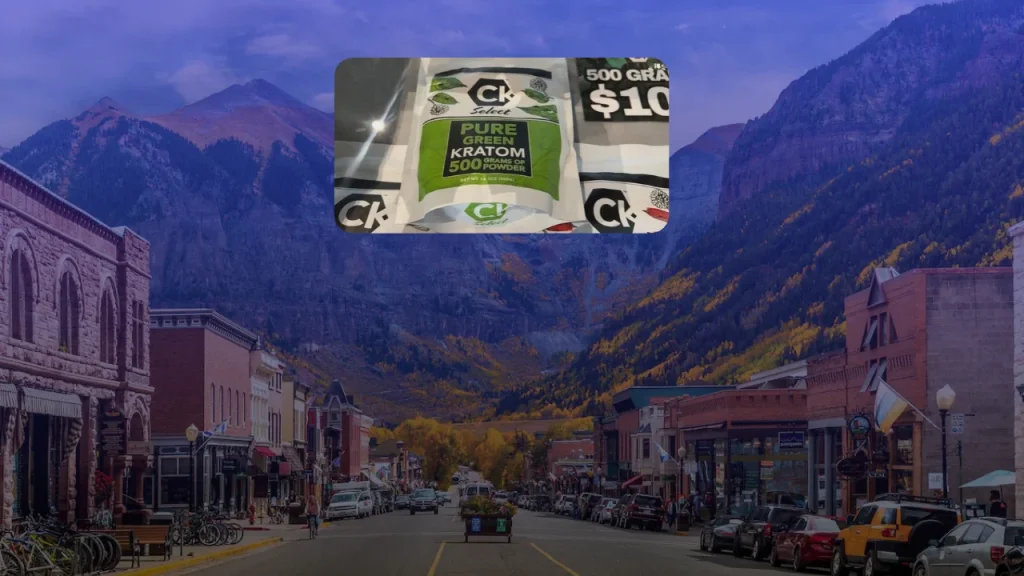
Is Kratom Legal in Denver?
Denver is an exception to the simple statewide picture. In 2017, Denver Environmental Health issued a public-health restriction on selling or serving kratom for human consumption. It required retailers selling kratom for non-consumptive purposes to give specified warnings and barred them from offering dosing or consumption guidance.
That guidance predates the 2025 state law, so verify the city’s current enforcement position before relying on it. Denver’s rules are not a statewide ban on possession.
Is Kratom Legal in Castle Rock?
The Castle Rock Town Council advanced a retail kratom ban on September 15, 2026, and adopted Ordinance 2026-032 on October 6, 2026, amending Section 9.22.010 of the municipal code. It prohibits retail sales, or offers to sell, kratom products intended for human consumption within the town.
This goes beyond Colorado’s statewide age, labeling, and 7-OH rules. A Castle Rock business may violate the local ordinance even if the product meets all state requirements. The ordinance addresses retail sales and does not by itself ban personal possession or use.
Is Kratom Legal in Aurora, Colorado Springs, Fort Collins and Boulder?
| Location | Verified legal position |
| Denver | Published restrictions on sale or service for human consumption |
| Castle Rock | Retail sales for human consumption banned by October 2026 ordinance |
| Aurora | City expressly permits qualifying products under detailed rules |
| Fort Collins | State rules apply. A 2026 enforcement action involved one local retailer |
| Colorado Springs | State rules apply. Check current local requirements |
| Boulder | State rules apply. Check current local requirements |
Aurora
Aurora’s business guidance allows sale of qualifying kratom products that follow the 21+ age rule, the 2% 7-OH limit, state labeling, limits on candy-like and vape products, and underage-access prevention.
Fort Collins: Smoke Shop Closed After Violations
On May 27, 2026, the Colorado Attorney General announced a settlement with Smokin’ Genie, a Fort Collins smoke shop operated by AIH Enterprises LLC. Investigators found improperly labeled kratom products and a sale to someone under 21. The store agreed to close by May 31, destroy remaining inventory, and follow specified restrictions. The owner accepted a five-year bar on operating certain businesses that sell psychoactive or intoxicating products in Colorado, with a $200,000 payment owed if the terms are violated.
This was an enforcement settlement against one business, not a statewide recall or a consumer class action.
What Must Colorado Kratom Labels Say?
C.R.S. § 6-1-740 requires disclosures on retail packages, including:
- Manufacturer or distributor name and business address
- Ingredients
- Warnings against use by people under 21 or who are pregnant or breastfeeding
- Advice to consult a healthcare professional
- Potential habit-forming properties
- Possible interactions with medications and other substances
- Suggested serving amounts
- Quantities of mitragynine and 7-OH per serving
- Required FDA-related and child-safety statements
The word “natural” on packaging does not satisfy these requirements. Prohibited manufacturing, distribution, advertising, and sales practices are treated as deceptive trade practices under the Colorado Consumer Protection Act.
What Are the Penalties for Illegal Kratom Sales in Colorado?
| Violation | Potential consequence |
| Furnishing kratom to someone under 21 | $200 civil infraction |
| Failing to check qualifying ID | $200 civil infraction |
| Selling products above the 2% 7-OH cap | Consumer-protection enforcement |
| Selling products with synthetic or semisynthetic alkaloids | Consumer-protection enforcement |
| Improper labeling or deceptive marketing | Consumer-protection enforcement |
| Violating a local retail ban | Penalties under that local ordinance |
| Selling products adulterated with controlled substances | Possible additional state or federal consequences |
The Colorado Consumer Protection Act lets enforcement authorities seek injunctions, civil penalties, and other remedies. Penalties can be significant per violation, and settlements can include closure and business bans, as in the Fort Collins case. No single universal criminal sentence applies to every violation, and a retailer’s labeling error does not by itself make ordinary adult possession a felony.
Can You Order Kratom Online in Colorado?
Online sales must still follow state and local law. A website accepting payment does not make a product lawful. Check whether the product contains synthetic or semisynthetic alkaloids, exceeds the 2% 7-OH threshold, has required potency and ingredient labeling, is a prohibited candy-like or vape form, or is being delivered into a place with a stricter local rule. The state law gives no blanket exemption to online-only businesses.
Can You Drive After Taking Kratom in Colorado?
No. Colorado’s impaired-driving law (C.R.S. § 42-4-1301) covers drugs, not just alcohol. A person can face a DUI or DWAI charge when a drug affects their ability to drive to the legal standard. Legal possession does not prevent an impaired-driving charge.
Is Kratom Legal Under Federal Law?
Ordinary kratom leaf is not generally listed under the federal Controlled Substances Act, but federal regulators have acted on certain kratom-related compounds, and FDA marketing rules also apply. The FDA has not approved kratom for pain, anxiety, opioid withdrawal, or any medical condition, and warns of risks including dependence, seizures, and liver injury.
A product can be unscheduled federally yet still be unlawfully marketed under federal food-and-drug rules or Colorado law.
Can Consumers Sue Over Dangerous or Mislabeled Kratom?
Potentially, depending on the facts. A harmed consumer may explore claims involving false advertising, undisclosed ingredients, defective products, or inadequate warnings. A statutory violation does not automatically create an individual damages claim, and the cause of action, evidence of injury, and causation all matter. Consult a licensed Colorado attorney.
How to Report a Suspected Illegal Kratom Product
File a complaint with the Colorado Attorney General’s consumer-protection office through StopFraudColorado.gov. Keep receipts, packaging, label photos, and transaction details. For urgent health concerns, get medical care first.
Colorado Kratom Law Timeline
| Date | Development |
| August 10, 2022 | Colorado’s kratom age-restriction statute takes effect |
| July 1, 2024 | Earlier statewide labeling and sales restrictions begin |
| May 29, 2025 | Daniel Bregger Act becomes law |
| August 13, 2025 | Attorney General issues kratom consumer advisory |
| May 27, 2026 | Attorney General announces Fort Collins smoke shop settlement |
| September 15, 2026 | Castle Rock advances retail kratom ban |
| October 6, 2026 | Castle Rock adopts retail sales prohibition |
| November 16, 2026 | Ordinary kratom remains generally legal statewide, subject to state and local rules |
Frequently Asked Questions
Is kratom legal in Colorado in 2026?
Yes. Ordinary kratom is generally legal to possess, and qualifying products may be sold to adults 21+ where local law allows.
Is kratom banned in Denver?
Denver restricts sale or service of kratom for human consumption under a 2017 advisory. Verify current city rules.
Is kratom banned in Castle Rock?
Castle Rock adopted Ordinance 2026-032 banning retail sales for human consumption. It does not itself ban all personal possession.
Is kratom legal in Aurora?
Yes. Aurora permits specified compliant products under its published rules.
Can you buy kratom in Colorado at 18?
No. Sales to anyone under 21 are prohibited.
Are 7-OH tablets legal in Colorado?
Not above the 2% alkaloid threshold, and not if they contain synthetic or semisynthetic alkaloids.
Is possessing ordinary kratom a crime?
Colorado has no general kratom-specific criminal penalty for adult possession of ordinary kratom leaf. Other consequences may apply to separately controlled substances or other unlawful conduct.
Are kratom gummies legal?
Covered candy-like and child-appealing kratom products are prohibited.
Can kratom be shipped to Colorado?
Only if the shipment complies with state, federal, and local requirements. Online availability does not establish legality.
Is kratom FDA-approved?
No. The FDA has not approved kratom as a drug and has raised concerns about its marketing as food or supplements.
Bottom Line: Is Kratom Legal in Colorado?
Kratom remains generally legal in Colorado in November 2026, but the state regulates commercial products far more strictly than many older guides suggest. Buyers must be 21. The Daniel Bregger Act restricts synthetic and semisynthetic alkaloids, 7-OH above 2% of total alkaloids, candy-like products, and vape products. Local rules add complexity: Castle Rock bans retail sales for human consumption, Denver has separate restrictions, and Aurora allows qualifying products.
Keep three questions separate: ordinary possession, lawful commercial sale of a particular product, and local retail bans. Colorado law does not treat them as interchangeable.
Disclaimer: This article provides general legal information, not medical or individualized legal advice. The legality of a kratom product depends on its ingredients, manufacturing process, marketing, sale location, and applicable laws. Denver’s cited guidance dates from 2017, so confirm its current application with the city.
Last reviewed: November 16, 2026.
Sources
- Colorado Revised Statutes 2026, § 6-1-740, Kratom Consumer Protection: https://olls.info/crs/crs2026-title-06.htm
- Colorado Revised Statutes 2026, § 18-13-132, Underage Kratom Sales: https://olls.info/crs/crs2026-title-18.htm
- Colorado Revised Statutes 2026, § 44-1-105, Kratom Regulation: https://olls.info/crs/crs2026-title-44.htm
- Colorado General Assembly, SB25-072, Daniel Bregger Act: https://leg.colorado.gov/bills/sb25-072
- Colorado Attorney General, August 2025 Kratom Public Advisory: https://coag.gov/press-releases/attorney-general-phil-weiser-public-advisory-kratom-8-13-25/
- Colorado Attorney General, May 27, 2026 Fort Collins enforcement settlement: https://coag.gov/press-releases/fort-collins-smoke-shop-shut-down-for-illegally-selling-kratom-product-to-minors/
- Castle Rock Town Council, Ordinance 2026-032: https://castlerock-co.legistar.com/LegislationDetail.aspx?GUID=ECCE5FB2-F854-4162-8128-3753F6FD4D4E&ID=8209007
- Denver Environmental Health, Kratom retail advisory: https://www.denvergov.org/content/dam/denvergov/Portals/771/documents/PHI/11.20.17%20Kratom%20Press%20Release.pdf
- City of Aurora, Kratom and psychoactive product regulations: https://www.auroraver2.hosted.civiclive.com/business_services/licenses___permits/psychoactive_ingredients_drug_paphernalia
- FDA, FDA and Kratom: https://www.fda.gov/news-events/public-health-focus/fda-and-kratom
- Colorado Attorney General, Consumer Complaints: https://stopfraudcolorado.gov/
About the Author
Israr Ahmad is a legal content researcher with 4+ years of experience covering class action settlements and consumer rights cases. He has researched and published coverage of 2,500+ settlements using verified court records, settlement administrator filings, and government sources. Learn more about Israr.