
Russian Ship Sparta II Hit by Drones Near Finland, Did Ukraine Attack, and Could NATO Get Involved?
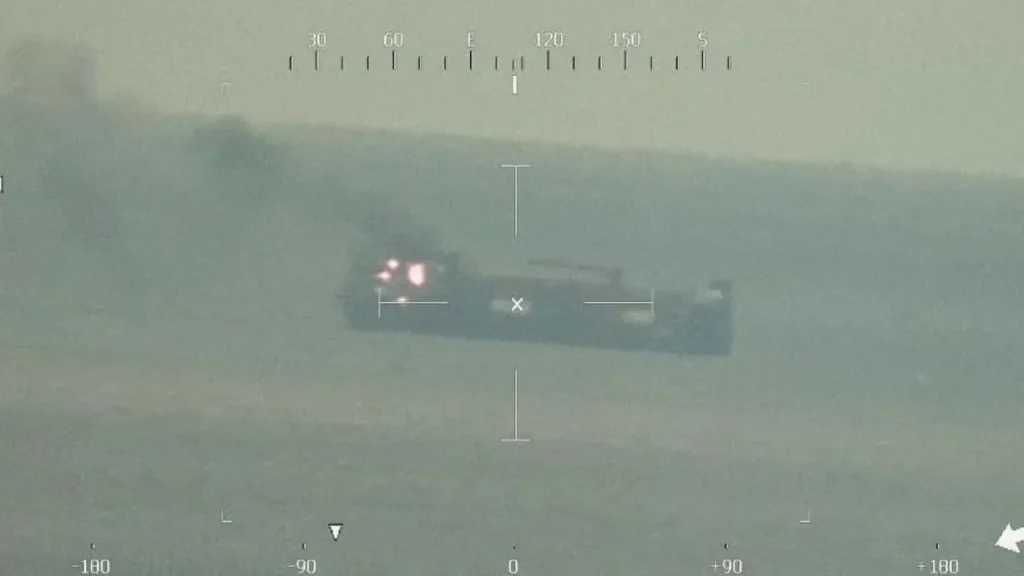
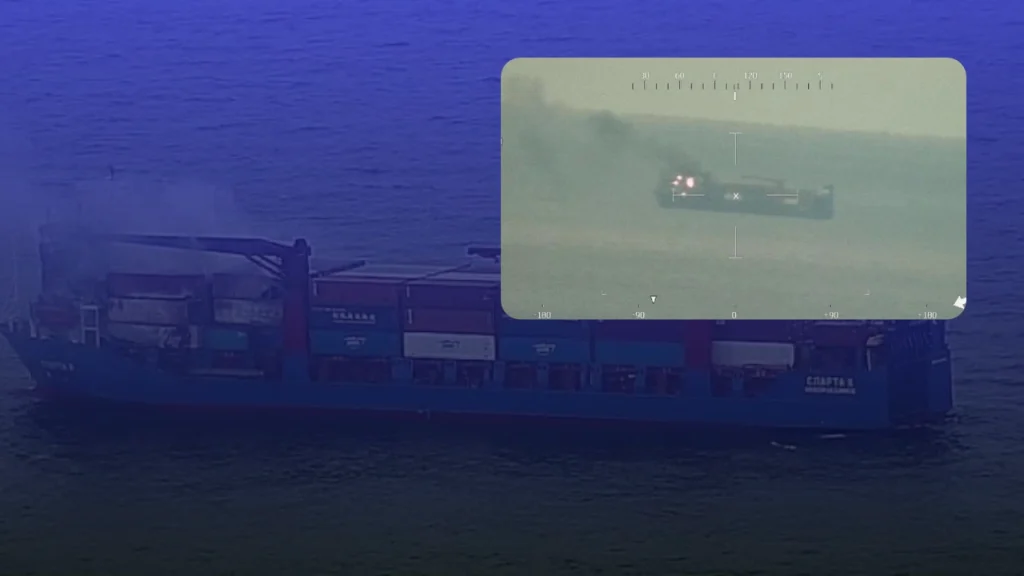
Two drones struck the Russian-flagged cargo ship Sparta II in the Gulf of Finland on Saturday, November 21, 2026. The ship caught fire, all 16 crew members abandoned it, and the damaged vessel drifted into Finnish territorial waters, where Finland led an international firefighting and rescue effort.
Finnish military officials said Ukraine was probably responsible. Kyiv had not formally claimed the strike in the verified statements available for this report. Finnish Prime Minister Petteri Orpo said the war is “spilling over into our neighbouring areas,” while also defending Ukraine’s right to fight the aggressor.
Hours after the ship was hit, Finland reported a separate suspected Russian helicopter violation of its airspace near Loviisa, reaching as far as 4.1 kilometers inside Finland. Authorities are investigating that incident on its own.
The key point: the ship was reportedly hit before it entered Finnish waters. Finland was dealing with a damaged vessel, not announcing an attack on its own territory. An attack on a Russian ship near Finland is not automatically an attack on Finland.
Quick Facts: Sparta II Drone Attack
| Detail | Latest verified information |
| Ship | Sparta II |
| Date | November 21, 2026 |
| Location | Eastern Gulf of Finland, west of Gogland (Suursaari) Island |
| Flag | Russia |
| IMO number | 9160994 |
| Type | Roll-on/roll-off cargo ship, about 121 m, 7,260 gross tonnage |
| Owner | Oboronlogistika OOO |
| Military link | Provides logistics services to Russia’s Defense Ministry |
| U.S. sanctions | Designated May 8, 2022 (Executive Order 14024) |
| Destination | Kaliningrad, Russia |
| Weapons reported | Two drones, per a Russian regional governor |
| Attacker | Ukraine considered likely by Finnish officials; not conclusively established |
| Crew | 16 evacuated, no injuries reported |
| Fire | Still being fought in the latest confirmed official update (evening of Nov. 21) |
| Ship’s position | Anchored near Loviisa, in Finnish territorial waters |
| Environmental damage | None detected in the earlier Finnish assessment |
| NATO | Allies informed; no Article 5 action announced |
What Happened to Sparta II?
The ship left Saint Petersburg on Friday, November 20, heading for Kaliningrad. On Saturday morning it was sailing west through the Gulf of Finland when explosions and a fire were reported.
Leningrad Region Governor Alexander Drozdenko said two drones hit the vessel in international waters, roughly three nautical miles from Russia’s maritime border. Finland’s Defense Forces separately confirmed detecting a drone attack on a Russian cargo ship west of Gogland Island.
The ship was badly damaged and lost normal navigation. Estonian naval officials said its engines could not be operated. Estonian authorities also reported that the ship was inside Estonia’s exclusive economic zone when the incident happened. Estonia’s Police and Border Guard Board reportedly received the alert at about 9:35 a.m. local time.
The ship then drifted north and ended up in Finnish waters near Loviisa, where it anchored.
The strike followed a night of heavy drone activity over Russia’s Leningrad region. Russian officials claimed their air defenses shot down roughly 80 drones. That claim does not, on its own, say where the drones that hit Sparta II came from.
Did the Ship Sink?
No sinking has been confirmed. The ship stayed afloat, but as of the Finnish Border Guard’s evening update on November 21, it was still on fire and crews were working to put it out.
Border Guard Commander Ilja Iljin warned that an uncontrolled fire could lead to further dangers, including explosions or sinking. That was a risk assessment, not a report that either had happened. Finland’s plan was to stabilize the ship enough to tow it toward Russia’s maritime area of responsibility.
What Happened to the 16 Crew Members?
All 16 got off the ship. According to the Finnish Border Guard, they left in lifeboats or life rafts and were picked up by a nearby Russian cargo ship, which took them back toward Russia. No injuries were reported.
Early reports said the crew was still aboard fighting the fire. Later official updates confirmed the evacuation. The crew’s identities and nationalities have not been made public.
Why Was Sparta II Heading to Kaliningrad?
Kaliningrad is a Russian territory on the Baltic coast, cut off from mainland Russia and bordered by NATO members Poland and Lithuania. Moving goods there by sea avoids having to cross NATO territory, which is why Baltic shipping lanes matter so much to Moscow’s supply chain.
Was the ship carrying weapons?
That is unconfirmed. Sparta II has a documented history of supporting Russian military logistics, but Finnish authorities said they had no verified information about its cargo on November 21. Claims that it carried missiles, ammunition, or any specific weapons system on this trip should not be treated as fact.
Kaliningrad Governor Alexei Besprozvannykh said the incident would not threaten supplies to the region. That is a Russian official’s assessment, not independent verification.
Related article: Fifth Circuit Rules 9–8 That House Proxy Voting Violated the Quorum Clause in State of Texas v. Blanche, What It Blocks and What It Doesn’t
What Is Sparta II, and Why Is It Sanctioned?
Sparta II is owned by Oboronlogistika OOO. According to the U.S. Department of State, the company provides transportation and logistics services to Russia’s Defense Ministry. The United States sanctioned the company and associated vessels on May 8, 2022, and the Treasury Department’s official listing identifies Sparta II by name and IMO number (9160994).
Ukraine’s military intelligence also keeps a public sanctions record for the ship. It alleges the vessel previously moved military equipment, including air-defense systems, between Russia and Syria. Ukraine added the ship to its own sanctions list in May 2026.
Is Sparta II part of Russia’s shadow oil fleet?
Not as far as the record shows. It’s a roll-on/roll-off cargo ship, not a tanker, and has carried vehicles, containers, and machinery. The “shadow fleet” label generally applies to tankers used to move sanctioned oil. Both topics involve sanctioned Russian shipping, but they are not the same thing. For an example of how Russian oil trade can end up in commercial litigation, see Igor Soglayev Russian Oil Lawsuit, Dubai Freezes Up to $704 Million in Assets as the Brazilian Diesel Dispute Escalates.
Did Ukraine Attack the Ship?
Finnish military officials think so. Defense Forces spokesperson Aki-Mauri Huhtinen told reporters Ukraine was probably responsible, though the reason for the strike was unclear. Prime Minister Orpo tied the incident to the wider war and said Ukraine has the right to defend itself against Russia’s aggression.
Those statements are not a Ukrainian claim of responsibility. As of the reporting reviewed for November 22, Kyiv had not issued a formal operational statement. A Ukrainian presidential sanctions adviser commented on the ship’s military-logistics history, but that doesn’t identify who launched the drones. The drones’ launch site and the intelligence behind choosing this target have not been publicly established.
Where Did the Attack Happen: Finnish Waters, Estonian Waters, or the High Seas?
The evidence points to the strike happening outside Finland’s territorial sea. Finland reported detecting it in international waters west of Gogland. Estonian reporting is more specific: an international shipping lane inside Estonia’s exclusive economic zone, about 11 nautical miles north of Vaindloo Island.
The ship drifted into Finnish waters afterward.
Why the zone matters
- Territorial sea: The coastal state has sovereignty, subject to the right of innocent passage.
- Exclusive economic zone (EEZ): The coastal state has rights over natural resources and certain activities, but other countries keep key navigation freedoms.
- High seas: Waters beyond national territorial seas and EEZs, governed by the relevant international rules.
An EEZ is not sovereign territory. A ship can be in Estonia’s EEZ without being inside Estonian territorial waters. That distinction matters when asking whether a strike hit a neutral or NATO state’s territory. The exact coordinates have not been independently confirmed, so the final legal characterization remains open.
Was the Strike Legal Under International Law?
This can’t be answered with the facts public today.
Civilian merchant ships are generally protected from attack under international humanitarian law. But a merchant ship can become a lawful military objective if its nature, location, purpose, or use makes an effective contribution to military action and destroying it offers a definite military advantage. That principle appears in Article 52(2) of Additional Protocol I to the Geneva Conventions and in customary law, and the ICRC discusses it in connection with the San Remo Manual on naval warfare.
A Russian flag, or the assumption that all Russian trade supports the war, is not enough. Relevant questions include:
- What was the ship carrying?
- Was it directly supporting military operations?
- What did the attacker reasonably know before striking?
- Was there a definite anticipated military advantage?
- What risk did the attack pose to the civilian crew?
- Were feasible precautions taken?
- Could the strike cause excessive civilian or environmental harm?
Public information doesn’t answer all of these.
Does a U.S. sanctions listing make a ship a lawful target?
No. Sanctions and the law of armed conflict do different jobs. A U.S. designation restricts transactions and blocks property interests under U.S. jurisdiction. It does not authorize anyone to attack the designated company or vessel. Sparta II’s military-logistics ties are relevant evidence in a targeting analysis, but they are not a legal finding that this strike was lawful.
For a separate look at how sanctions and anti-money-laundering rules operate on their own track, see Bank of America Fined $1.2 Billion for Money-Laundering Failures, What Went Wrong, Which Laws Were Broken, and What Happens Next.
Could it be a war crime?
There isn’t enough verified evidence to say so. A war-crime finding would require establishing the vessel’s status, what the attacker knew and intended, and the circumstances of the strike. A burning merchant ship does not by itself prove a war crime, and the ship’s military ties do not by themselves prove the attack was lawful. No international court ruling on this strike had been identified as of this update.
Why Is Finland Helping a Sanctioned Russian Ship?
Because it’s a sea emergency, and rescue duties don’t depend on politics. The International Convention on Maritime Search and Rescue sets up the framework for helping people in distress at sea, and Article 98 of the UN Convention on the Law of the Sea addresses the duty to render assistance. Finland also has its own reason to act: keeping a burning ship from sinking or leaking in its waters.
| Vessel or organization | Reported role |
| Finnish patrol vessel Uisko | Rescue and response |
| Finnish patrol boats | Maritime response |
| Finnish surveillance aircraft and helicopters | Monitoring and support |
| Rescue tugs Ajax and H. Kanter | Firefighting and cooling |
| Estonian vessel Kindral Kurvits | Firefighting and rescue help |
| Russian rescue vessel Murman | Assistance at Finland’s request |
The operation was coordinated with Russian maritime authorities.
Does helping the ship violate U.S. sanctions?
Emergency rescue is not the same as an ordinary commercial deal with a sanctioned company. Sanctions regimes have their own rules on emergency services, licensing, and authorized transactions, and whether any particular payment or commercial service needs authorization is a separate question. The sanctions designation is not proof that rescuers were barred from saving lives or limiting pollution.
The Helicopter Incident Near Loviisa
According to the Finnish Defense Ministry, a suspected Russian helicopter violation took place at about 12:34 p.m. local time on November 21 near Loviisa, reaching up to 4.1 kilometers into Finnish airspace. Defense Minister Antti Häkkänen suggested the flight might have been linked to monitoring or rescue activity around the ship. That explanation has not been established. The Border Guard is investigating.
Finland also reintroduced temporary aviation and maritime restrictions in the eastern Gulf of Finland.
Emergency circumstances may explain why an aircraft approaches a border, but they don’t give blanket permission to enter another state’s sovereign airspace. Under the Convention on International Civil Aviation, states hold sovereignty over the airspace above their territory. Investigators will need to establish the aircraft’s identity, flight path, circumstances, and whether any permission was given. Finland has not said this was a deliberate military attack.
Could This Trigger NATO’s Article 5?
Not automatically, and no Article 5 response has been announced.
Finland joined NATO in April 2023. Under Article 5, an armed attack against one member can engage the alliance’s collective-defense obligations. But here a Russian ship was reportedly hit outside Finnish waters, then drifted in, and a separate helicopter incident is under investigation. Neither development, on current facts, amounts to an armed attack on Finland.
Article 4 is different. It lets any member request consultations when it feels its territory, political independence, or security is threatened. Finland informed allies about the situation, but sharing information is not invoking Article 4 or Article 5. For background, read NATO’s Deterrence Strategy Against Russia, What’s Happening and Why It Matters.
Reuters reported that Swedish combat aircraft operated under Finnish command to help safeguard Finnish and NATO territorial integrity. That is notable cooperation, but not an announcement that NATO is fighting Russia, and there was no verified report of Finnish or Swedish aircraft attacking Russian forces in connection with this incident.
What about the United States?
U.S. membership in NATO doesn’t mean every incident involving an ally needs an American military response. If a real armed attack on an ally occurred, collective-defense provisions could become relevant, depending on the facts and treaty procedures. Right now the U.S. link is the sanctions record: Sparta II has been under American sanctions since 2022. There’s no verified report of U.S. forces taking part in the strike or the rescue.
Oil Spill and Environmental Risk
Sparta II is a cargo ship, not a tanker, so the main worry isn’t a large oil cargo. But cargo ships carry substantial fuel for their own engines, and damaged tanks or machinery spaces can leak. The unknown cargo adds uncertainty, since a continuing fire or sinking could release hazardous substances or cause secondary explosions.
Finland’s Border Guard said earlier on November 21 that no environmental damage had been detected, and coastal rescue departments raised their readiness. That’s a snapshot, not a guarantee.
The setting makes it harder. The Gulf of Finland is narrow and heavily used by shipping, fishing, and coastal communities. Risk intelligence adviser Robin Haggblom noted that the lack of winter ice cover so far this season affects how oil-spill response vessels would operate if a leak occurred. Weather, currents, and whether the ship can be stabilized will decide how serious any damage becomes.
Why Finland and Estonia Are Worried About Spillover
This wasn’t the first recent incident in these waters. Finnish forces detected a separate reported strike involving a Russian naval vessel on November 11, which the military discussed publicly on November 12. Drones have also repeatedly strayed toward countries bordering Russia.
The fear is accidental spread: a stray drone crossing a border, a damaged ship drifting into another country’s waters, an aircraft entering neighboring airspace during an emergency. In a corridor this tight, with Russian, Finnish, and Estonian waters and airspace packed close together, misreading a radar track or a flight path can become a crisis fast.
The fighting has also moved well beyond the Black Sea, where naval and drone attacks used to be concentrated. None of this means a NATO–Russia war has started or is about to.
What Officials Said
Finland: Prime Minister Orpo said the war is spilling over into neighboring areas, stressed that Finnish authorities were handling the situation, and reaffirmed Ukraine’s right to defend itself. Defense officials said Finland was taking precautions to protect civilians and watch for drone activity.
Estonia: Prime Minister Kristen Michal said the consequences of Russia’s war had reached the Baltic Sea. Estonia sent the Kindral Kurvits and supplied key information about the ship’s reported position in its EEZ.
Russia: Governor Drozdenko said two drones hit the ship. Officials reported large-scale drone interceptions in the region, and Kaliningrad’s governor said supplies to the territory were not at risk. Russia has not published a cargo manifest for this voyage.
Timeline: November 20–21, 2026
| Time | Development |
| Nov. 20 | Sparta II leaves Saint Petersburg for Kaliningrad |
| Nov. 21, morning | Finnish forces detect a drone attack west of Gogland Island |
| About 9:35 a.m. | Estonian authorities receive a report of fire and explosions |
| Later that morning | Damaged ship drifts toward Finnish waters |
| 12:34 p.m. | Suspected Russian helicopter violation near Loviisa |
| Early afternoon | Finnish Border Guard coordinates the response |
| Afternoon | Restricted area set up around Sparta II |
| Evening | All 16 crew confirmed evacuated; Finnish, Estonian, and Russian vessels fight the fire |
| 8:55 p.m. | Border Guard confirms fire continues, ship anchored near Loviisa |
| Nov. 22 | Further updates expected; final fire and towing outcome not independently confirmed |
Times are local Finnish or Estonian time where applicable.
What to Watch Next
- Fire and stability: Whether the fire is put out and the ship is stable enough to tow.
- Cargo: Reliable information on what Sparta II was carrying, especially hazardous materials.
- Pollution: Any fuel or cargo leaks as monitoring continues.
- Towing: The plan to hand the ship back toward Russia’s maritime area of responsibility.
- Airspace investigation: Findings on the helicopter near Loviisa.
- Restrictions: How long Finland keeps its aviation and maritime limits in the eastern Gulf.
- Attribution and diplomacy: Any Ukrainian statement, plus responses from Helsinki, Tallinn, Moscow, and NATO.
As of this update, there is no completed tow, confirmed sinking, final pollution assessment, or formal finding on the strike’s legality.
Frequently Asked Questions
What Russian ship was attacked near Finland?
Sparta II, a Russian-flagged roll-on/roll-off cargo ship owned by Oboronlogistika, which provides logistics services to Russia’s Defense Ministry.
Did Ukraine attack Sparta II?
Finnish military officials said Ukraine was probably responsible, but Ukraine has not formally claimed the strike and the origin of the drones has not been fully verified.
Did anyone die?
No fatalities or injuries were reported. All 16 crew members were evacuated.
Did Sparta II sink?
No. In the latest official reporting reviewed, it remained afloat and anchored near Loviisa while firefighters worked on the blaze.
Why did the ship enter Finnish waters?
It was damaged, reportedly unable to maneuver normally, and drifted there after the strike.
Was the ship carrying weapons?
Its military-logistics history is documented, but its cargo on November 21 has not been confirmed.
Is Finland at war with Russia?
No. Finland was running an emergency maritime response and investigating a suspected airspace violation. Neither amounts to a state of war.
Has NATO activated Article 5?
No Article 5 response has been announced.
Was attacking the ship legal?
It can’t be determined yet. It depends on whether the ship qualified as a military objective and whether the attack followed international humanitarian law.
Why is Finland helping a sanctioned Russian ship?
Maritime rescue duties apply regardless of nationality, and Finland also wants to prevent pollution in its waters.
Is the Baltic Sea closed to shipping?
No. Finland imposed temporary local restrictions in the eastern Gulf of Finland, and a restricted zone surrounds the damaged ship.
Bottom Line
The Sparta II strike matters because a military-linked emergency landed in the waters of a NATO country. The ship has been sanctioned by the U.S. since 2022, was hit by two drones, caught fire, and drifted into Finnish waters, where Finland led a rescue involving Estonia and even Russia. A suspected Russian helicopter incursion the same day added to the tension.
Two legal points stand out. An attack on a Russian ship near Finland is not automatically an attack on Finland. And a sanctions listing does not automatically make a merchant ship a lawful military target.
Still unresolved: who launched the drones, what the ship carried, why it was targeted, whether the fire can be contained, and whether more territorial violations occurred. Nothing so far justifies claiming Finland was attacked or that NATO has entered the war.
This article offers general legal information and news analysis. It is not legal advice. Attribution, maritime boundaries, and the legality of the strike remain subject to further evidence.
Official Sources and Legal References
- Finnish Border Guard: November 21 Evening Rescue Update
- Finnish Border Guard: Original Cargo Ship Announcement
- U.S. Treasury OFAC: May 8, 2022 Sanctions Designations
- U.S. Department of State: May 2022 Russian Maritime Sanctions
- Ukraine Military Intelligence: Sparta II Sanctions Record
- NATO: The North Atlantic Treaty, Articles 4 and 5
- NATO: Collective Defence and Article 5
- ICRC: Air and Naval Warfare
- ICRC: San Remo Manual, Rules 38–45
- IMO: Search and Rescue Convention
- UN Convention on the Law of the Sea
- ERR News: November 21 Incident Reporting
About the Author
Israr Ahmad is a legal content researcher with 4+ years of experience covering class action settlements and consumer rights cases. He has researched and published coverage of 2,500+ settlements using verified court records, settlement administrator filings, and government sources. Learn more about Israr.