
Fifth Circuit Proxy Voting Ruling 2026, Did Texas v. Blanche Strike Down the Pregnant Workers Fairness Act?
The full U.S. Court of Appeals for the Fifth Circuit ruled 9–8 on November 20, 2026, that the U.S. House of Representatives violated the Constitution’s Quorum Clause when it counted absent members as present by proxy to pass the $1.7 trillion Consolidated Appropriations Act of 2023.
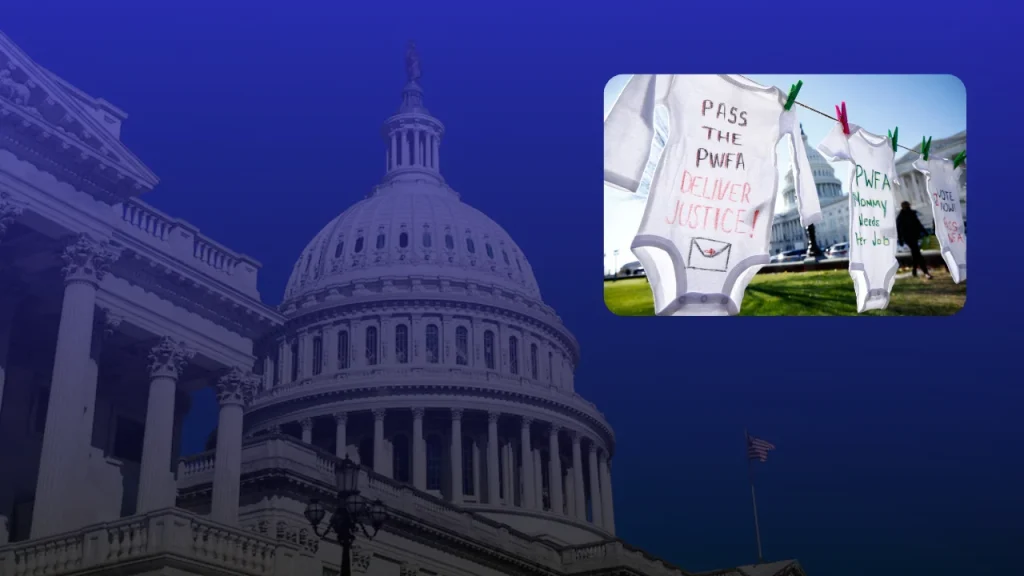
The court affirmed a permanent injunction that stops federal officials from enforcing the Pregnant Workers Fairness Act (PWFA) against the State of Texas. The case is State of Texas v. Blanche, No. 24-10386.
Did the court cancel the spending law or end pregnancy accommodations nationwide? No. The majority said its decision “extends no further” than the relief the district court already gave: an injunction against PWFA enforcement, only against Texas. It does not undo the rest of the Consolidated Appropriations Act, and it does not directly bind private employers in Texas, Louisiana or Mississippi.
The reasoning is broader than the remedy, though. That gap is what employers, workers and other litigants will be watching.
Texas v. Blanche Quick Facts
| Detail | Verified information |
| Case | State of Texas v. Blanche, No. 24-10386 |
| Court | U.S. Court of Appeals for the Fifth Circuit (en banc) |
| Decision date | November 20, 2026 |
| Vote | 9–8 |
| Majority opinion | Circuit Judge Cory T. Wilson, joined by Chief Judge Elrod and Judges Jones, Smith, Willett, Ho, Duncan, Engelhardt and Oldham |
| Principal dissent | Circuit Judge James E. Graves Jr., joined by Judges Stewart, Richman, Southwick, Higginson, Douglas and Ramirez |
| Separate dissent | Circuit Judge Catharina Haynes |
| Lower court | U.S. District Court, Northern District of Texas, No. 5:23-cv-34 (Judge James Wesley Hendrix) |
| Law challenged | Consolidated Appropriations Act, 2023 (Pub. L. 117-328) |
| House vote, December 23, 2022 | 225–201, one member voting present, four not voting |
| Votes recorded by proxy | 226 |
| Constitutional provision | Article I, Section 5, Clause 1 (Quorum Clause) |
| Remedy affirmed | Injunction against federal enforcement of the PWFA against Texas only |
| Spending law invalidated nationwide? | No |
| Supreme Court ruling? | None as of November 21, 2026 |
Official ruling: Fifth Circuit en banc opinion, November 20, 2026 (PDF)
What Did the Fifth Circuit Decide About House Proxy Voting?
The court decided one specific question: can a member who is absent from the House be counted as “present” toward a quorum because another member holds a proxy? The majority answered no.
The Quorum Clause says a majority of each chamber constitutes a quorum to do business. The House has 435 seats, so a quorum is normally 218. On December 23, 2022, the House had four vacancies, leaving 431 members serving.
The opinion notes that 427 members recorded a vote on the bill, and 226 of them did so by proxy. Fewer than a majority of members were physically present. The court also noted that it is undisputed the quorum existed only because proxies were counted.
During the vote, Representative Chip Roy objected that the bill was moving without a physical quorum. Speaker Pro Tempore G.K. Butterfield answered that proxy participation counted toward the quorum under the House’s rules.
What Narrow Question Did the Fifth Circuit Leave Open?
The majority was careful about what it did not decide. It said the question was not whether Congress may ever allow proxy voting, and not whether the Quorum Clause demands “bottom-in-a-seat” presence in every case. It specifically declined to say whether participation by videoconference would satisfy the clause. Only proxy presence was held insufficient.
Why Did the Fifth Circuit Say the Quorum Clause Bars Proxy Presence?
Judge Wilson’s majority opinion rested on four points:
- Text and context. The clause lets a minority “compel the Attendance of absent Members.” The court read “absent” and “attendance” in their physical sense, and pointed to the Constitution’s Privilege from Arrest Clause as a parallel use of “Attendance.”
- Original understanding. At the Constitutional Convention, the concerns about quorums were about travel and secession, which are physical problems. The court found no Founding-era example of anyone counting proxies toward a quorum.
- Historical practice. The court found no instance of proxy presence being used to establish a quorum before the House did it.
- Supreme Court precedent. The majority relied on United States v. Ballin, 144 U.S. 1 (1892), which held that the House may choose how to determine whether a quorum is present but may not “ignore constitutional restraints.”
The court also rejected the argument that the Rulemaking Clause (Article I, Section 5, Clause 2) lets the House define what “present” means. In its view, a quorum is a constitutional prerequisite for doing business, so internal rules cannot lower it.
It addressed unanimous consent too. The majority said that long-standing practice is consistent with its reading, because it works from a presumption that a quorum exists once one has been established, and that presumption disappears when a recorded vote or an objection shows otherwise.
What Is the Enrolled-Bill Rule, and Why Did It Not Stop Texas’s Challenge?
The federal government argued that the enrolled-bill rule from Marshall Field & Co. v. Clark, 143 U.S. 649 (1892), barred the courts from reviewing how the House passed the Act. Under that rule, a bill signed by both chambers’ presiding officers and the President is treated as conclusive proof that it passed.
The Fifth Circuit disagreed. Texas was not disputing any fact about what happened in the House. Everyone agreed that the House reached a quorum only by counting proxies. Texas’s challenge was a legal one about what the Quorum Clause means, and the court held the enrolled-bill rule does not shield an enactment from a constitutional challenge of that kind.
The judges also rejected the warning that striking the law would cause too much disruption. The opinion’s answer was that “too big to be unconstitutional” is not an accepted principle of constitutional interpretation.
Did the Fifth Circuit Invalidate the Entire $1.7 Trillion Consolidated Appropriations Act?
No. This is the most important limit on the ruling.
Texas asked for an injunction against two parts of the Act: the PWFA, and a $20 million Department of Homeland Security alternatives-to-detention pilot program. The district court found Texas had standing to challenge the PWFA but not the pilot program. Texas did not appeal that ruling, so the pilot-program claim was abandoned.
The court enjoined only the application of the PWFA against Texas. The Fifth Circuit affirmed that judgment and said plainly that its decision goes no further.
What Does the Injunction Actually Block?
The injunction prevents the defendants, who include the U.S. Attorney General, the Department of Justice and the Equal Employment Opportunity Commission (EEOC), from enforcing the PWFA against the State of Texas as an employer.
It does not require the government to recover any spending, cancel programs funded by the Act, invalidate other parts of the Act, or directly enjoin any private employer.
The dissent pointed out the oddity of that result. It noted that the Act also contains veterans’ benefits legislation, and asked why the majority would declare the whole Act improperly passed while limiting relief to one provision affecting one state.
What Is the Pregnant Workers Fairness Act (PWFA)?
The PWFA took effect on June 27, 2023. It generally requires employers with 15 or more employees to provide reasonable accommodations for known limitations related to pregnancy, childbirth or related medical conditions, unless the accommodation would cause undue hardship.
Common accommodations include extra rest or bathroom breaks, a chair or modified workstation, temporary lifting limits, schedule changes, time off for prenatal appointments and temporary reassignment. The law also limits an employer’s ability to push a worker onto leave when another reasonable accommodation would work.
Official explanation: EEOC: What You Should Know About the Pregnant Workers Fairness Act
How Does the Texas v. Blanche Ruling Affect Employers in Texas, Louisiana and Mississippi?
The Fifth Circuit’s published decisions bind federal courts in Texas, Louisiana and Mississippi. The injunction itself, however, protects only the State of Texas.
| Employer | Immediate effect of the November 20 judgment |
| State of Texas (state agencies as employer) | Federal enforcement of the PWFA against Texas is barred by the affirmed injunction |
| Private employers in Texas | Not covered by the injunction; may try to raise the court’s reasoning in future cases |
| Texas cities and counties | Not automatically covered by the injunction, which runs to the State of Texas |
| Louisiana employers | Not covered by the Texas-specific injunction; Louisiana’s own pregnancy accommodation law still applies |
| Mississippi employers | Not covered by the injunction; federal protections remain central |
| Employers in other states | Not subject to this judgment; PWFA duties are not automatically canceled |
What Does the Ruling Mean for Texas State Employees?
The State of Texas, as an employer, is the one party that now has an order shielding it from federal PWFA enforcement. That does not make pregnancy discrimination lawful. The Pregnancy Discrimination Act, the ADA, the FMLA and Texas law may still apply, depending on the employer, the facts and the limits that apply to claims against state governments.
What Does the Ruling Mean for Pregnant Workers at Private Companies in Texas?
The injunction does not cover private companies. Private employers may nonetheless cite the Fifth Circuit’s reasoning if a worker sues under the PWFA, which could create uncertainty in court. Workers should not assume a pending accommodation request or discrimination claim has disappeared, and employers should not assume they are excused from their accommodation duties.
What Pregnancy Protections Still Apply After Texas v. Blanche?
Pregnancy Discrimination Act (Title VII)
The Pregnancy Discrimination Act amended Title VII of the Civil Rights Act to prohibit covered employers from discriminating because of pregnancy, childbirth or related conditions. It also addresses whether pregnant workers are treated worse than other workers with a similar ability or inability to work.
Americans With Disabilities Act (ADA)
Pregnancy alone is not a disability under the ADA, but certain pregnancy-related conditions can qualify, which can trigger a duty to accommodate.
Family and Medical Leave Act (FMLA)
The FMLA gives eligible employees of covered employers up to 12 workweeks of unpaid, job-protected leave for qualifying family and medical reasons. Eligibility depends on employer size, length of employment and hours worked.
PUMP Act (Providing Urgent Maternal Protections for Nursing Mothers Act)
The PUMP Act expanded the right of most covered employees to reasonable break time and a private space, other than a bathroom, to express breast milk for one year after a child’s birth. It was also part of the 2022 spending legislation, which means it could face similar arguments in future cases. The November 20 judgment did not enjoin enforcement of the PUMP Act.
Official resource: U.S. Department of Labor: Break Time for Nursing Mothers
Which Texas, Louisiana and Mississippi State Laws Protect Pregnant Workers?
Texas Pregnancy Employment Laws
Texas Labor Code § 21.106 addresses pregnancy-related employment discrimination under Texas law. Texas Local Government Code § 180.004 covers working conditions for pregnant municipal and county employees: when a physician certifies that an employee cannot perform her permanent duties because of pregnancy, and a temporary assignment she can perform is available in the same office, the supervisor must assign her to it. The Fifth Circuit did not strike down either provision.
Louisiana Pregnancy Accommodation Law
Louisiana Revised Statutes §§ 23:341–342 requires covered employers to provide reasonable accommodations for pregnancy-related limitations unless they can show undue hardship. The law generally applies to employers with more than 25 employees in Louisiana.
Mississippi Pregnancy Protections
This article does not identify a Mississippi statute that parallels Louisiana’s accommodation law. Workers in Mississippi therefore rely mainly on Title VII, the ADA, the FMLA and the PUMP Act, plus any employer or local policy.
Why Did Texas Challenge the PWFA, and Why Did Eight Judges Dissent?
Texas argued the PWFA imposed compliance costs on the state as an employer, exposed it to EEOC investigations and litigation, and stripped away its sovereign immunity. Importantly, Texas’s challenge was about how Congress passed the law, not whether Congress may protect pregnant workers.
Judge Graves, writing for seven judges, agreed that the enrolled-bill rule did not block review. He disagreed on the merits. In his view, the Quorum Clause’s text contains no physical-presence requirement, the Rulemaking Clause gives the House broad control over its procedures, and Ballin allowed the House to choose any reasonable method of determining whether a quorum is present. He also stressed that more than 99% of House members took part in the vote, and said Texas accepted most of the federal funds the Act appropriated while challenging only the pregnancy protections. Judge Haynes dissented separately.
The majority’s position: The Quorum Clause’s limits cannot be changed by a House rule, and proxy presence does not count.
The dissent’s position: The Constitution says nothing that bars the House from counting members who participate by proxy, and the majority added a requirement that is not in the text.
How Did Texas v. Blanche Reach the Full Fifth Circuit?
| Date | Development |
| May 15, 2020 | House adopts proxy voting through House Resolution 965 |
| December 23, 2022 | House passes the Consolidated Appropriations Act using proxy presence |
| December 29, 2022 | President Biden signs the Act (Pub. L. 117-328) |
| 2023 | Texas sues in the Northern District of Texas (No. 5:23-cv-34) |
| February 27, 2024 | Judge Hendrix enjoins PWFA enforcement against Texas only |
| August 15, 2025 | Divided three-judge Fifth Circuit panel reverses in Texas v. Bondi |
| January 14, 2026 | Fifth Circuit grants rehearing en banc and vacates the panel opinion |
| May 12, 2026 | En banc oral argument in New Orleans |
| November 20, 2026 | Full court rules 9–8 and affirms the injunction |
The 2025 panel decision is no longer the controlling opinion. It was vacated when the court agreed to rehear the case.
Could the Supreme Court Review the Fifth Circuit’s Quorum Clause Ruling?
Yes, it could, if a party files a petition for review. As of November 21, 2026, the Supreme Court has not ruled in this case. Whether the government seeks review, or asks for a stay of the injunction, has not been confirmed.
Could Other Laws Passed Through House Proxy Voting Be Challenged?
Possibly. The reasoning could encourage new suits over other laws that depended on proxy presence. A challenger would still need a proper case, standing and a court willing to order a remedy. The opinion does not create a way to cancel every law passed during the COVID-19 period.
What Should Pregnant Employees Do if an Employer Denies a PWFA Accommodation?
- Keep the request. Save emails, texts, medical notes and any proposed accommodation.
- Record the response. Note whether the employer approved, denied or delayed it.
- Identify the employer. Texas state agencies, private businesses and other public employers face different legal analysis.
- Check other laws. Title VII, the ADA, the FMLA, state law and local rules may still apply.
- Watch the deadlines. EEOC charges generally must be filed within 180 or 300 days, depending on the jurisdiction. Federal employees usually must contact an EEO counselor within 45 days.
Start with the EEOC’s guidance on time limits for filing a charge. Anyone facing termination should speak with an employment attorney about how Texas v. Blanche applies to their situation.
Pregnancy-related workplace claims are also being litigated elsewhere. See Amazon Pregnancy Discrimination Lawsuit, Were You Affected? — Hatch v. Amazon.com, Inc, a separate putative class action arising in New York, as well as Kylie Jenner Chef Lawsuit, Former Private Chef Fights to Stay Anonymous as Jane Doe After Pregnancy Discrimination and Miscarriage Claims and TQL Lawsuit Update, $22.5M Wrongful Death Verdict, An Overtime Case Still Waiting on Damages, and a Pregnancy That Changed Everything. None of these cases is dismissed or controlled by the Fifth Circuit’s decision.
Frequently Asked Questions About the Fifth Circuit Proxy Voting Ruling in Texas v. Blanche
Did the Fifth Circuit declare House proxy voting unconstitutional in Texas v. Blanche?
Partly. The court held that absent House members cannot be counted toward a quorum through proxies. It did not decide whether Congress may ever use proxy voting, or whether videoconference attendance would satisfy the Quorum Clause.
Did the Fifth Circuit cancel the $1.7 trillion Consolidated Appropriations Act of 2023?
No. The judgment affirms only an injunction against enforcing the PWFA against Texas.
Is the Pregnant Workers Fairness Act still in effect after Texas v. Blanche?
Yes. No order eliminates the PWFA for every employer. Federal enforcement against the State of Texas is blocked, and the court’s reasoning could be raised in future cases.
Are pregnant workers in Texas still protected from discrimination?
Yes. The Pregnancy Discrimination Act, the ADA, the FMLA and Texas law remain relevant, depending on the employer and the facts.
Does the Fifth Circuit ruling apply to Louisiana and Mississippi employers?
The decision is binding precedent for federal courts in both states, but the injunction does not directly cover employers there. Louisiana also has its own pregnancy accommodation statute.
Was the Fifth Circuit’s PWFA decision unanimous?
No. The en banc court split 9–8.
Can Congress re-enact the PWFA after the Fifth Circuit ruling?
Congress could pass new legislation using constitutionally valid procedures. Whether it will is a separate political question.
Has the Supreme Court ruled on the PWFA proxy voting case?
Not as of November 21, 2026. The Fifth Circuit’s November 20 decision is the latest ruling in the case.
The Bottom Line on the Fifth Circuit’s PWFA Proxy Voting Ruling
By a 9–8 vote, the full Fifth Circuit held that the House could not count proxy-designated absent members toward the quorum needed to pass the Consolidated Appropriations Act of 2023. It affirmed an injunction barring federal enforcement of the Pregnant Workers Fairness Act against the State of Texas.
The judgment does not cancel the $1.7 trillion spending law or end pregnancy workplace protections nationwide. Its reasoning may shape future challenges to the PWFA and to other laws passed under the same House procedures. For now, workers and employers should separate the narrow Texas injunction from the federal, state and local protections that still apply.
Official Sources and Legal References
- Fifth Circuit: State of Texas v. Blanche, No. 24-10386 (en banc opinion, November 20, 2026)
- Fifth Circuit: Texas v. Bondi panel opinion, August 15, 2025
- U.S. Constitution, Article I, Section 5
- EEOC: Pregnant Workers Fairness Act statutory text
- EEOC: What You Should Know About the Pregnant Workers Fairness Act
- EEOC: Pregnancy Discrimination and Pregnancy-Related Disability Discrimination
- EEOC: Time Limits for Filing a Charge
- Texas Labor Code, Chapter 21
- Texas Local Government Code § 180.004
- Louisiana Revised Statutes § 23:342
- U.S. Department of Labor: PUMP Act protections
Disclaimer: This article is general legal information, not legal advice. The PWFA’s enforcement may change through further court proceedings or legislation.
Researched and written by Israr Ahmad, legal content researcher and founder of AllAboutLawyer.com. All facts verified against the Fifth Circuit’s official en banc opinion (ca5.uscourts.gov), EEOC and U.S. Department of Labor guidance, and state statute sources, as of November 21, 2026. Last Updated: November 21, 2026.
About the Author
Israr Ahmad is a legal content researcher with 4+ years of experience covering class action settlements and consumer rights cases. He has researched and published coverage of 2,500+ settlements using verified court records, settlement administrator filings, and government sources. Learn more about Israr.