
Igor Soglayev Russian Oil Lawsuit, Dubai Freezes Up to $704 Million in Assets as the Brazilian Diesel Dispute Escalates
Igor Soglayev, a former Deutsche Bank and Rosneft executive, is fighting a cross-border commercial dispute over Russian diesel shipments to Brazil with traders linked to the Coral oil-trading network. The dispute has produced competing claims, a reported $42 million arbitration award against his Dubai company, and an interim order freezing assets valued at up to $704 million.
The $704 million freeze is not a judgment awarding Soglayev $704 million. It is an interim measure meant to preserve assets while the case continues. His reported damages claims are also just claims. No final judgment resolving the competing claims has been reported, and no settlement has been identified as of October 27, 2026. This is a private commercial dispute, not a consumer class action, so there is no claim form.
Primary reporting: The Wall Street Journal, October 26, 2026 and Folha de S.Paulo, October 3, 2026. The UAE proceedings are largely non-public, so details of them come from court documents reviewed by journalists and from statements by counsel.
Igor Soglayev Russian Oil Dispute: Quick Facts
| Detail | Information |
| Central figure | Igor Soglayev (his name is spelled differently across reports) |
| Soglayev’s Dubai company | DIA33 Energies General Trading LLC |
| Opposing parties | Traders and companies reportedly linked to the Coral network, including Etibar Eyyub and Tahir Garayev |
| Main dispute | A failed Russian diesel trading venture and allegations of business interference |
| Main jurisdictions | United Arab Emirates (including the Dubai International Financial Centre, DIFC) and Brazil |
| Damages Soglayev says he is owed | More than $500 million in lost business (WSJ) |
| Separate arbitration claim reported | $703 million (Folha de S.Paulo) |
| Interim asset freeze | Assets valued at up to $704 million |
| Separate arbitration award | About $42 million against DIA33 (reported) |
| UAE status | Jurisdiction disputed; appeal pending, per Soglayev’s counsel |
| Settlement | None identified |
| Criminal conviction | None established in the reporting reviewed |
Who Is Igor Soglayev?
According to The Wall Street Journal, Soglayev worked at Deutsche Bank in Russia and later led Sanors, a petrochemicals producer that Rosneft acquired in 2015. He then led Rosneft’s chemicals business, reportedly advised Rosneft chief executive Igor Sechin, and left Rosneft in 2017.
After Russia’s full-scale invasion of Ukraine in 2022 and the Western sanctions that followed, Soglayev founded DIA33 in Dubai to buy Russian diesel and resell it to distributors in Brazil. That trade needed a fuel supplier, tanker access, Brazilian port and storage access, and local buyers. His background does not establish that his allegations are true, and the other side disputes them.
What Is the Coral Oil-Trading Network?
“Coral network” is a term used in reporting for companies and traders associated with Coral Energy, which later became known as 2Rivers Group, and with Azerbaijani businessmen Etibar Eyyub and Tahir Garayev.
The UK government designated Eyyub and Garayev under its Russia sanctions regime on May 9, 2025, citing involvement in Russia’s energy sector through Coral Energy Group, now 2Rivers Group. In June 2026, the EU also listed Garayev under Council Decision 2026/1364, describing allegations about shipping Russian oil, including from Rosneft, through networks tied to the so-called shadow fleet. The UK sanctions list is also public.
Sanctions designations are not findings that anyone breached a contract with Soglayev. They are separate legal processes. “Coral network” is also not a single legal entity that is a party to every proceeding.
How the Russian Diesel Deal Fell Apart
According to Soglayev’s account in legal filings reviewed by the WSJ, he bought Russian diesel in late 2023 from Serene Resources, a Dubai company. Its chief executive, Andrey Romanovskiy, later moved to a different company that Soglayev alleges was controlled by Eyyub and Garayev. Soglayev says he was told Coral operated through many companies and that DIA33 might become its Brazilian trading arm. Romanovskiy disputed this in an affidavit reviewed by the WSJ, saying his company was independent.
The relationship broke down after a tanker carrying tens of millions of dollars’ worth of diesel was reportedly rejected by a Brazilian port. According to the filings described by the WSJ, it then waited weeks before another harbor accepted it, adding costs. The two sides blame each other. The fuel sellers allege Soglayev failed to pay for the cargo. Soglayev alleges the partnership was a pretext to gain access to DIA33’s commercial information and its Brazilian customer list, and that the traders then approached those customers directly and undercut his prices. No court has made a final finding on who caused the failure.
Igor Soglayev Lawsuits: Which Proceeding Involves Which Parties?
These are connected but separate matters. They should not be merged into one verdict.
| Proceeding | Parties | What it concerns | Status in reporting |
| Dubai Arbitration Centre (DIAC) arbitration, Case No. 240186 | P.P.T.F. (described as a fuel-trading firm) v. DIA33 | Payment for the diesel cargo | Award of about $42 million against DIA33 reported |
| Brazil Superior Court of Justice, order of July 22, 2026 | P.P.T.F. v. DIA33 | Recognition of the foreign award and urgent asset-preservation measures | Judge asked the Federal Public Prosecutor’s Office to comment urgently; not a final ruling |
| UAE court proceedings (DIFC) | Soglayev/DIA33 v. Eyyub, Garayev and 13 other individuals and companies | Alleged business interference; interim asset freeze | Freeze of up to $704 million remains pending a jurisdiction appeal, per Soglayev’s counsel |
| Reported arbitration claim | DIA33’s claim of $703 million (Folha) | Lost-business damages | No award reported |
| Brazilian commercial litigation (São Paulo) | DIA33 v. Coral-linked individuals and companies, plus a Coral-linked company’s counter-accusation of misappropriated cargo | Alleged unfair competition, poaching of staff and customers, and cargo | Ongoing; interim decision noted indications of unfair competition |
Sources differ on whether the party that won the $42 million award is itself Coral-linked. The WSJ describes it as Coral-linked traders, while the Brazilian court order and arbitration records identify the claimant as P.P.T.F. Check the award itself before saying so.
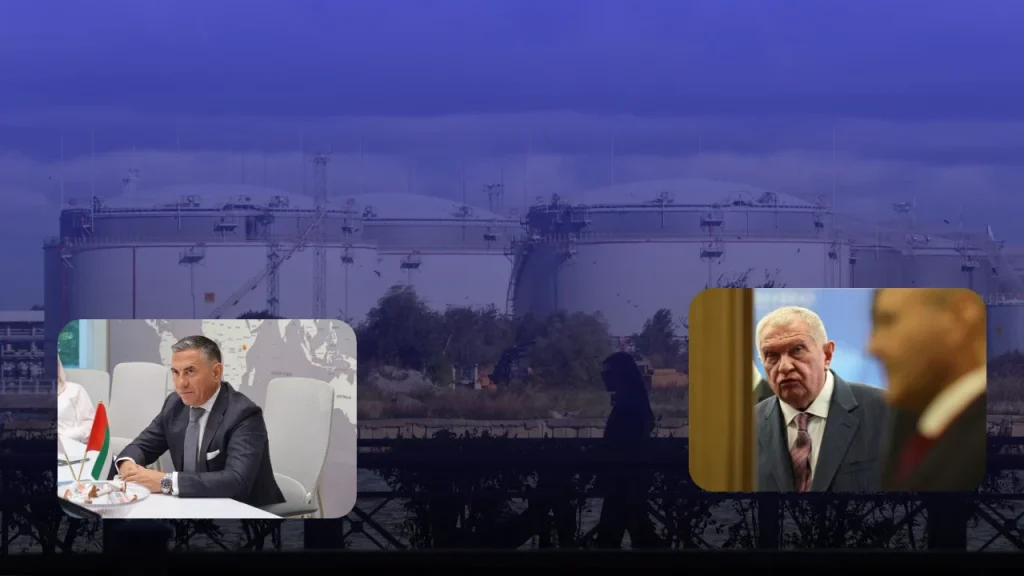
Why Did a Dubai Court Freeze Up to $704 Million of Assets?
In June 2026, a Dubai judge issued an order restraining Eyyub, Garayev and 13 other individuals and companies from disposing of assets valued at up to $704 million, according to the WSJ’s review of court filings. An asset freeze is meant to keep assets from being moved in a way that frustrates a future judgment. It does not mean the money was seized, that the assets belong to Soglayev, that the defendants are liable for that amount, or that the assets are proceeds of unlawful conduct.
Does the Dubai asset freeze remain in place?
According to the WSJ and Soglayev’s UAE lawyer, David McCoy of ADG Legal, it remained in place as of October 26, 2026 pending an appeal about jurisdiction. The judge reportedly concluded the court lacked jurisdiction over the main dispute. Soglayev is appealing to keep the case in the DIFC. If the ruling stands, the case could be dismissed or have to move to another forum. If the appeal succeeds, it could continue in the DIFC court.
The $500 Million, $703 Million and $704 Million Figures in the Soglayev Dispute
| Figure | What it represents |
| More than $500 million | Lost-business damages Soglayev says he is owed (WSJ) |
| $703 million | Amount DIA33 reportedly sought in arbitration (Folha de S.Paulo) |
| Up to $704 million | Value of assets covered by the interim freezing order |
None of these is a final award to Soglayev. The first two are claims, and the third is a cap on a protective order. A claimant must prove liability, causation and recoverable losses, which for lost profits can require evidence of binding contracts and expected sales. The publicly available material does not establish whether the $500 million and $703 million figures describe the same demand.
The $42 Million Arbitration Award Against DIA33
A separate DIAC arbitration reportedly produced an award requiring DIA33 to pay about $42 million, according to the WSJ. Records list the case as P.P.T.F. v. DIA33 Energies General Trading LLC, DIAC Case No. 240186. The Brazilian Superior Court of Justice’s July 22, 2026 order, published on Jus Mundi, concerns recognition of that award and describes it as based on contractual nonperformance. The award’s exact amount and reasoning should be confirmed against the award itself.
An arbitral award can bind the parties, but collecting may still require enforcement steps where the losing party’s assets are located. A foreign award is not automatically enforceable as a domestic judgment in every country, and the losing party can challenge it.
What Is Happening in the Brazilian Courts?
According to Folha de S.Paulo, DIA33 alleges in Brazil that Coral-linked people and companies recruited its former employees into a rival operation, used its customers and infrastructure to build a competing business, and damaged it through discounted sales and a campaign against it. Folha also reports that a Coral-linked company accused DIA33 of misappropriating diesel cargo and sought asset-related relief.
A São Paulo commercial court reportedly identified indications of unfair competition and sought to limit certain actions on the Coral-linked side. That is a preliminary step, not a final finding. The defendants dispute wrongdoing, and a former executive reportedly argued the dispute arose from a business arrangement that was never finalized.
Which Laws and Rules Apply to the Igor Soglayev Dispute?
No single lawsuit resolves everything, and the full UAE pleadings are not public, so no statutory violation should be assigned to each allegation without the underlying documents.
- Commercial contract law: decides whether binding agreements existed, what each side owed, and what remedies exist. Talks about a joint venture do not necessarily create an obligation to complete one.
- Arbitration rules of the Dubai International Arbitration Centre: the DIAC Arbitration Rules 2022 and applicable UAE arbitration law govern the tribunal’s authority and the award’s enforceability. See DIAC.
- DIFC Courts jurisdiction: whether the DIFC Courts can hear the dispute depends on their statutory jurisdiction framework. The exact provision relied on in the reported ruling should be checked against the judgment. See DIFC Courts.
- Interim asset-freezing relief: such orders are protective, not findings of liability. Courts generally look at the strength of the claim, the risk assets will be dissipated, jurisdiction and proportionality.
- Brazilian Arbitration Act, Law No. 9,307/1996: foreign arbitral awards must be recognized by Brazilian courts before domestic enforcement. See Law No. 9,307/1996. The July 22 order only asked the prosecutor to comment on provisional relief.
- UK and EU sanctions: these can restrict dealings with designated persons and freeze assets in the relevant jurisdiction. They do not decide who breached the diesel contract.
- Brazilian unfair competition law: the Brazilian claims involve alleged misuse of confidential information and interference with customers. The exact causes of action should come from the Brazilian filings.
What About the Alleged Death Threats in the Soglayev Case?
The WSJ reported that Soglayev says he received what he took to be death threats. He describes a call in which Eyyub allegedly said he had discussed the dispute with a “Chechen warlord,” which Soglayev interpreted as threatening. The reporting does not show that any court found a threat occurred, and no criminal conviction from these allegations was identified. The alleged threats are separate from the commercial claims.
What the Opposing Parties Say About Igor Soglayev’s Claims
Garayev’s lawyer told the WSJ he was not aware of any legal proceedings with Soglayev, and Eyyub could not be reached. In earlier reporting, Eyyub rejected allegations of unlawful conduct and called his sanctions baseless, and a lawyer for Garayev said Garayev had not been involved in petroleum operations since 2022. Romanovskiy disputed Soglayev’s description of Serene Resources. Folha reports that defendants in the Brazilian litigation deny wrongdoing and dispute that a binding joint venture existed. Each allegation must be judged separately on the evidence.
What Happens Next in the Igor Soglayev Lawsuits?
- UAE jurisdiction appeal: decides whether the main case stays in the DIFC Courts.
- Asset freeze: remains in place pending that appeal, per counsel.
- Brazilian litigation: the sides still dispute the business relationship, customer interference and the cargo.
- Arbitration award: enforcement of the reported $42 million award depends on recognition and where assets are located.
- Damages claims: the $500 million and $703 million figures have not become awards.
A final resolution may take decisions across several courts and tribunals.
How the Igor Soglayev Case Compares With Other Energy-Sector Lawsuits
This is a commercial fuel-trading dispute, unlike environmental or regulatory cases, but readers following energy litigation may want context. The Energy Transfer Vs. Greenpeace $345M Judgment, Full Case Explained involves a large damages judgment against an environmental group. Shell Pennsylvania Pollution Lawsuit, $24.9M In Settlements concerns environmental settlements at a petrochemical plant. And Trump DOJ Sues Minnesota Over Big Oil Climate Lawsuit is a government challenge to climate litigation against fossil-fuel companies. None of them determines the outcome here.
Igor Soglayev Russian Oil Lawsuit: Frequently Asked Questions
Who is Igor Soglayev?
A former Deutsche Bank and Rosneft executive who founded DIA33, a Dubai company that sought to trade Russian diesel into Brazil.
Why is Igor Soglayev suing Russian oil traders?
He alleges traders linked to the Coral network used a proposed partnership to access DIA33’s information and customers and then undercut his business. The defendants dispute his account.
Why did a Dubai court freeze up to $704 million in assets?
As an interim measure to preserve assets while the dispute continues. It is not an award and not a finding of liability.
What is the $42 million arbitration award?
A DIAC award reportedly requiring DIA33 to pay about $42 million, with related recognition proceedings in Brazil.
Is Igor Soglayev guaranteed more than $500 million?
No. It is a reported damages claim that must be proven.
Is the Coral network sanctioned?
The UK designated Eyyub and Garayev in May 2025, and the EU listed Garayev in June 2026. These designations do not by themselves establish liability in the commercial cases.
Did the court find that the Coral-linked traders stole customers or information?
No final finding has been identified. A São Paulo court noted indications of unfair competition at an interim stage.
Is there a claim form for the public?
No. This is not a consumer class action.
When will the Soglayev dispute end?
No resolution date has been announced.
Bottom Line on the Igor Soglayev Russian Oil Lawsuit
The dispute grew from a failed plan to sell Russian diesel in Brazil. Soglayev says Coral-linked traders damaged his business and claims more than $500 million, with Folha reporting a $703 million arbitration demand. A Dubai court reportedly froze up to $704 million in assets, but its jurisdiction is now in question on appeal. Separately, a DIAC award of about $42 million was reportedly issued against DIA33, with related Brazilian proceedings. None of the reported amounts is a final award in Soglayev’s favor, and the facts remain disputed.
Sources and Legal Documents
- The Wall Street Journal, Death Threats, Lawsuits and Billions in Play: The Battle Over Moving Russian Oil (Oct. 26, 2026)
- Folha de S.Paulo, Brazilian reporting on the DIA33 and Coral dispute (Oct. 3, 2026)
- ADG Legal, David McCoy featured in The Wall Street Journal
- UK Russia Sanctions Targets, May 9, 2025
- EU Council Decision 2026/1364
- Jus Mundi, P.P.T.F. v. DIA33, Order of the Superior Court of Justice of Brazil (July 22, 2026)
- Brazilian Law No. 9,307/1996
- DIFC Courts
This article is for general information only and is not legal or investment advice. AllAboutLawyer.com is a legal information website, not a law firm. The allegations described remain disputed, and interim orders and the reported arbitration award must be distinguished from final judgments on the full set of claims.
Researched and written by Israr Ahmad, legal content researcher and founder of AllAboutLawyer.com. All facts verified against The Wall Street Journal’s October 26, 2026 report, Folha de S.Paulo’s October 3, 2026 report, the UK and EU sanctions notices, the July 22, 2026 Brazilian Superior Court of Justice order as published by Jus Mundi, and the cited statutes and rules, as of October 27, 2026. The UAE court filings are not public. Last Updated: October 27, 2026.
About the Author
Israr Ahmad is a legal content researcher with 4+ years of experience covering class action settlements and consumer rights cases. He has researched and published coverage of 2,500+ settlements using verified court records, settlement administrator filings, and government sources. Learn more about Israr.