
Syracuse Landlord William D’Angelo Banned After Lead Poisoning Violations, What Happens to Tenants and Rent?
SYRACUSE, N.Y. — Landlord William D’Angelo must sell his remaining rental properties and permanently leave New York’s residential rental business under a consent order approved by Onondaga County Supreme Court Justice Joseph E. Lamendola on November 19, 2026, and announced by Attorney General Letitia James on November 20. The case involved lead-paint violations at Syracuse homes where at least 16 children tested positive for elevated blood lead levels.
The agreement resolves a contempt proceeding after authorities found that D’Angelo violated an earlier court order requiring him to eliminate dangerous lead conditions. Investigators documented approximately 336 lead-paint violations, and unsafe conditions remained at 10 properties when the latest agreement was reached.
What does this mean for tenants? Existing renters are not automatically evicted because their landlord must sell the buildings. Buyers of the 10 properties with unresolved lead hazards must repair them, obtain the required clearance, and cannot collect rent from existing tenants until those conditions are met. This is not a blanket cancellation of rent for every D’Angelo tenant.
Important: The earlier $310,000 judgment, which included $80,000 in restitution for affected families, was part of a previous resolution. The November 2026 order does not open a new public compensation fund or claim form.
William D’Angelo Syracuse Landlord Case: Quick Facts
| Detail | Verified information |
| Landlord | William D’Angelo |
| Associated company | Marpat LLC |
| Location | Syracuse, Onondaga County, New York |
| Case | People of the State of New York, et al. v. William D’Angelo and Marpat, LLC |
| Court | New York Supreme Court, Onondaga County |
| Judge | Justice Joseph E. Lamendola |
| Index number | 007822/2023 |
| Original lawsuit | July 27, 2023 |
| Previous consent judgment | June 18, 2024 |
| New court order | November 19, 2026 |
| Attorney General announcement | November 20, 2026 |
| Lead violations identified | Approximately 336 |
| Children with elevated blood lead levels | At least 16 |
| Priority properties under the 2024 judgment | 18 |
| Priority properties with remaining hazards | 10 |
| Earlier financial resolution | $310,000 |
| Earlier tenant restitution | $80,000 |
| Required property sales | Within 180 days, according to the Attorney General |
| Permanent rental-property ban | Applies after remaining properties are sold |
| New consumer claim form | None announced |
Why Was Syracuse Landlord William D’Angelo Permanently Banned?
The ban followed repeated failures to fix unsafe housing conditions despite government investigations, a lawsuit, a financial settlement, and a court order.
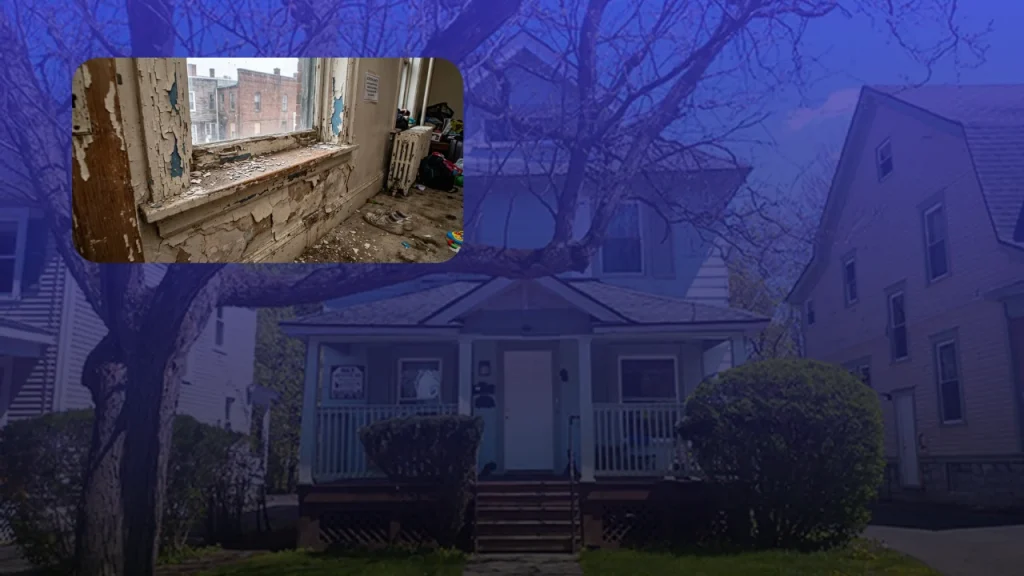
According to the New York Attorney General’s Office, D’Angelo owned or managed at least 48 rental properties containing 116 individual rental units in Syracuse over approximately three decades. All of those properties were built before 1940, according to city and county records, so they are presumed to contain lead-based paint.
In July 2023, Attorney General James, Onondaga County, and the City of Syracuse sued D’Angelo and Marpat LLC. Investigators identified approximately 336 lead-paint violations over about seven years at nearly two dozen properties. The lawsuit alleged that D’Angelo often used untrained or uncertified workers for renovations, which can create and spread lead-containing dust and paint chips in living areas, and that he gave tenants false or misleading lead disclosures. Authorities also reported that at least 16 children living in his rental properties had elevated blood lead levels.
What did the original $310,000 settlement require?
In February 2024, the Attorney General announced a settlement in principle. The court entered a consent judgment on June 18, 2024. The financial terms included:
| Required payment or expenditure | Amount |
| Restitution for harmed tenants | $80,000 |
| Lead hazard identification and remediation | At least $230,000 |
| Total | $310,000 |
The order required D’Angelo to address lead hazards at 18 priority properties. The work had to be performed by Environmental Protection Agency (EPA)-certified professionals, using approved repair plans and independent monitoring. The deadline for completing the required work was December 2025.
Why Did the New York Attorney General Take Action Again in 2026?
The Attorney General said D’Angelo initially complied with some requirements, including making the restitution payments to affected families. However, he later failed to complete the required repairs.
A June 2026 City of Syracuse inspection found continuing violations at several properties. Authorities also discovered that D’Angelo had performed some lead-related repair work himself, without the EPA-certified firm, approved work plan, or monitor the judgment required. This was particularly serious because disturbing old lead paint without proper precautions can spread contaminated dust.
In August 2026, the Attorney General asked the court to hold D’Angelo in contempt for violating the earlier judgment. The court found that he had failed to comply. By November, hazards remained at 10 of the original 18 priority properties. Rather than continuing under the old arrangement, the parties entered a new agreement requiring D’Angelo to exit the residential rental business.
Related article: Sentry and Dairyland $2.75 Million New Mexico Settlement, Who Can Claim Up to $25,000 by January 8, 2027?
What Does the November 2026 Agreement Require?
The new consent order sets strict conditions for transferring the properties and correcting the remaining hazards.
1. D’Angelo must sell his remaining rental properties
The Attorney General’s November 20 announcement states that he must complete the sales within 180 days. Every proposed buyer must be reviewed by the Attorney General’s Office in consultation with Syracuse and Onondaga County, which can examine the buyer’s suitability to operate residential rental property. The court order gives the Attorney General’s Office 10 business days to review a submitted buyer.
2. The ban becomes permanent after the sales
Once his remaining properties are sold, D’Angelo and the covered defendants are permanently prohibited from owning or managing residential rental properties in New York. The restriction is statewide, not limited to Syracuse.
3. New buyers must complete lead remediation
For the 10 properties with outstanding hazards, buyers must agree to correct those conditions as a condition of the purchase. The deadlines depend on whether the property is occupied.
| Property status | Required remediation deadline |
| Occupied | Within 60 days after closing |
| Unoccupied | Within 120 days after closing |
The remediation must comply with the court’s requirements, including use of EPA-certified professionals and appropriate clearance testing.
4. New owners cannot collect rent until hazards are cleared
This is one of the most important protections for affected residents. A purchaser of one of the 10 properties with unresolved hazards cannot collect rent from current tenants until the required lead clearance is completed. The buyer also cannot rent out an empty unit before meeting those requirements.
This restriction applies to properties covered by the outstanding-hazard provisions of the agreement. It is not a general rent holiday for every tenant who previously rented from D’Angelo.
5. D’Angelo must fix certain properties if they remain unsold
If an occupied property with unresolved lead hazards is not sold within 90 days of the order’s entry, D’Angelo must arrange and pay for the required repairs. An EPA-certified firm must perform the work, and an approved monitor must oversee compliance and clearance testing.
6. Additional violations carry substantial penalties
- $100 per day, per property for specified failures to comply.
- $37,500 per property if D’Angelo performs prohibited lead remediation himself instead of using the required certified firm.
Justice Lamendola also warned that further noncompliance could result in additional consequences, including possible jail time through court enforcement proceedings.
Which 10 Syracuse Rental Properties Still Had Lead Hazards?
The November 19 consent order identifies 10 properties where lead hazards had been documented but not cleared:
| Address | City |
| 113 Davis Street | Syracuse, NY |
| 221 Davis Street | Syracuse, NY |
| 212–214 Delaware Street | Syracuse, NY |
| 553 Delaware Street | Syracuse, NY |
| 231 Fitch Street | Syracuse, NY |
| 115 Hartson Street | Syracuse, NY |
| 110–112 Herriman Street | Syracuse, NY |
| 121 Hoefler Street | Syracuse, NY |
| 313 Hoefler Street | Syracuse, NY |
| 213 Kellogg Street | Syracuse, NY |
Important: These properties were identified as having outstanding hazards when the agreement was entered. Their inclusion does not establish whether a particular unit is currently occupied or whether repairs have since been completed. The original settlement covered 18 priority properties; the 10 above are the subset with unresolved hazards in the latest order. Residents of other D’Angelo properties should not assume their buildings are hazard-free merely because they are not in this table.
Can Existing Tenants Stay in Their Homes After the Properties Are Sold?
In general, selling a rental property does not automatically terminate an existing valid lease. A new owner ordinarily takes ownership subject to applicable lease obligations and tenant protections, so a sale alone is not a shortcut to evicting a tenant in good standing. New York’s Residential Tenants’ Rights Guide explains that tenants with existing leases generally cannot be evicted during their lease term without legally sufficient grounds. D’Angelo’s obligation to sell is not itself an eviction order against residents.
However, some households may need temporary relocation while hazardous paint is safely removed. Whether relocation is required depends on the condition of the property, the remediation plan, applicable housing rules, and individual circumstances. Tenants should ask for written information about the construction schedule, safety precautions, temporary accommodations, and plans for returning home. If remediation creates unsafe dust or requires work inside a unit, check with local housing or health officials or legal aid about relocating children safely. The Attorney General’s Office has also funded the Syracuse Lead Freedom House, a lead-safe temporary housing facility for children recovering from lead poisoning and families displaced by lead abatement; ask local housing or health officials whether space is available.
The November agreement does not automatically guarantee that every affected household will receive permanent replacement housing or additional money.
Do Tenants Still Have to Pay Rent?
The answer depends on who owns the property and whether the specific lead-clearance restriction applies.
Before a covered property is sold: The new agreement does not establish that every existing tenant may immediately stop paying rent to D’Angelo.
After a covered property with unresolved hazards is sold: The new owner’s agreement with the state prohibits collection of rent until the required hazards are cleared.
For properties without outstanding hazards under the order: Ordinary lease and rental-payment rules generally continue to apply unless another legal basis changes them.
A tenant who is uncertain about the status of their property should request written confirmation from the landlord, new owner, or an appropriate legal-services organization.
Do not stop paying rent based solely on a news headline or without legal advice. Nonpayment carries eviction risk even when repair or habitability disputes exist. Instead, document repair requests in writing, contact local code and health authorities, and consult a New York tenant-rights attorney or legal aid organization.
Separately, New York’s warranty of habitability may support rent reductions or other remedies when serious unsafe conditions exist. Those rights are fact-specific and should be evaluated independently.
What Happens to Security Deposits When a Syracuse Rental Property Is Sold?
Under New York General Obligations Law § 7-105, when a landlord sells or transfers a property covered by a lease, the landlord must generally either turn over tenants’ security deposits (with any required interest and accounting) to the new owner within five days, or return the deposits directly to tenants. The landlord must also notify tenants by registered or certified mail of the new owner’s name and address. The new owner’s responsibility for returning deposits can depend on the type of rental property and applicable law.
Tenants should keep copies of their original lease, deposit receipts, payment records, and any ownership-change notice. A sale does not automatically entitle the former landlord to retain the security deposit.
What New York Laws Did the Syracuse Landlord Case Involve?
The original lawsuit cited several state, county, city, and federal protections.
New York Executive Law § 63(12)
Gives the Attorney General authority to pursue certain persistent fraudulent or illegal business practices. It provides an important legal basis for statewide enforcement actions against businesses and property operators.
New York General Business Law § 349
Prohibits deceptive acts or practices in business and consumer transactions. The government’s lawsuit included claims concerning false or misleading lead-related disclosures.
New York Real Property Law § 235-b
Establishes the warranty of habitability: residential landlords generally must provide safe, livable conditions, and cannot eliminate this obligation through ordinary lease language. Persistent lead hazards may support claims under this law, depending on the evidence.
Federal lead disclosure requirements
Under 42 U.S.C. § 4852d and related regulations, landlords generally must provide required lead-hazard disclosures and educational information for covered housing built before 1978, including disclosure of known lead-based paint and lead hazards. The rule does not mean every pre-1978 property is confirmed unsafe, but landlords cannot ignore applicable disclosure obligations.
Federal Renovation, Repair and Painting Rule
The EPA’s rules at 40 CFR Part 745 govern certain work that disturbs paint in older homes. Covered work generally must be performed by certified firms and workers using lead-safe practices. D’Angelo’s court order imposed particularly specific requirements for approved work plans, certified contractors, monitoring, and clearance.
Syracuse’s Lead Abatement and Control Ordinance
Chapter 54 of Syracuse’s Revised General Ordinances imposes local lead-hazard requirements. The city conducts rental inspections and can require owners to correct deteriorating paint and other identified lead hazards.
New York State Lead Rental Registry Law
New York’s Lead Rental Registry took effect on November 3, 2025, in 25 designated communities, including Syracuse. Under Public Health Law § 1377, covered residential rental properties built before 1980 with at least two units must comply with registration, inspection, and lead-safety requirements. The state’s final program regulations were published in April 2026. These requirements operate alongside Syracuse’s local rules and the specific court order against D’Angelo.
What Should Syracuse Parents Do if They Suspect Lead Exposure?
Children can have elevated blood lead levels without obvious symptoms. The New York State Department of Health explains that lead exposure can affect development, learning, behavior, and other aspects of health, and there is no known safe level of lead exposure for children.
Parents should act if they find peeling paint, deteriorated windows, paint dust, or other suspected hazards in an older rental home:
- Arrange a blood lead test. New York requires routine testing at ages one and two, with additional testing when risk is identified or earlier screening was missed.
- Contact a healthcare professional. Ask what the results mean and whether confirmation or follow-up testing is needed.
- Contact the Onondaga County Health Department’s Lead Poisoning Prevention Program for guidance on elevated blood lead levels, home environmental assessments, and family support resources.
- Report suspected hazards to the Syracuse Lead Hazard Control Office or Onondaga County.
- Document the conditions. Keep dated photographs (especially of chipping or peeling paint on window sills, window troughs, doors, and porches), written repair requests, inspection notices, and available test results.
- Avoid disturbing old paint. Do not dry-scrape, sand, or attempt unsafe removal.
- Ask about safe housing options. If repairs require temporary relocation, request information about available assistance.
For lead testing in Onondaga County, call 315-435-3271 or email [email protected].
How Can Syracuse Tenants Report Lead-Paint Problems?
City of Syracuse Lead Hazard Control Office Handles local lead-hazard enforcement and housing inspections. Phone: 315-448-8266 | Complaints and inspections: 315-448-8695 Email: [email protected] Website: Lead Hazard Control Office
Onondaga County Lead Poisoning Prevention Program Provides information about inspections, childhood testing, and preventing exposure. Phone: 315-435-3271 Website: onondaga.gov/health-lead
New York Attorney General Tenants can report lead-related housing complaints through the state’s complaint system. Website: File a housing complaint Help line: 1-800-771-7755
Tenants needing representation may also contact a local legal aid or tenant-rights organization.
Can Families Receive Money From the William D’Angelo Lead-Paint Settlement?
The earlier $310,000 resolution included $80,000 in restitution for current and former tenants harmed by lead exposure. The Attorney General confirmed in November 2026 that restitution had already been paid to impacted families.
There is no newly announced claim form, application deadline, or additional restitution fund under the November 19 agreement. The latest order principally concerns enforcement, property sales, and completion of lead remediation.
Families who believe they suffered injury from unsafe rental conditions may have separate legal questions about medical expenses or other damages. Such claims depend on individual facts, applicable filing deadlines, and the law. The existence of the $80,000 restitution provision does not mean every tenant is entitled to a payment.
Why Is Lead Poisoning Such a Serious Problem in Syracuse?
Syracuse has a large supply of older housing. According to the Attorney General, approximately 81% of the city’s housing stock (roughly four-fifths) predates New York’s 1970 residential lead-paint restrictions. Older properties can contain lead-based paint beneath newer layers of paint. When paint deteriorates around windows, doors, porches, and other surfaces, lead-contaminated dust can spread.
The Attorney General reported that 9.4% of Syracuse children tested during the first half of 2026 had elevated blood lead levels. The problem has disproportionately affected families in older, lower-income rental housing.
The D’Angelo agreement follows other local enforcement actions. In April 2026, the Attorney General announced a separate settlement with Syracuse landlords Brian and Harry Murphy involving lead hazards and unsafe conditions. Earlier actions included a March 2024 settlement of $175,000 with Syracuse landlord Todd Hobbs and a June 2022 shutdown of landlord John Kiggins and Endzone Properties. These cases show why local enforcement matters, but each involves different landlords, properties, and remedies.
Frequently Asked Questions
Is William D’Angelo permanently banned from being a landlord in New York?
Yes. The November 19 court-approved agreement requires him to sell his remaining residential rentals and permanently prohibits covered defendants from owning or managing residential rental properties in New York after those sales are completed.
Does the ban mean every tenant must move out?
No. A forced property sale does not automatically terminate existing leases. Temporary relocation may be necessary for certain safety repairs, but individual housing arrangements must be assessed separately.
Can a new owner charge rent before completing lead repairs?
For the 10 identified properties with unresolved hazards, the court-required buyer agreement prohibits collecting rent until the necessary lead-clearance conditions are satisfied.
Can tenants stop paying rent now?
Not safely on the basis of the news alone. Nonpayment can lead to eviction proceedings. Document problems in writing and get advice from a tenant-rights attorney or legal aid organization first.
Which Syracuse properties still had unresolved lead hazards?
The order identifies properties on Davis, Delaware, Fitch, Hartson, Herriman, Hoefler, and Kellogg Streets. The full list of 10 addresses appears above.
Was the $310,000 settlement announced in November 2026?
No. The original financial resolution was announced in 2024. The November 2026 agreement addresses violations of the earlier judgment and imposes new obligations.
Is there a new claim form for tenants?
No. The $80,000 restitution was part of the earlier resolution, and no new claim process has been announced.
Can a child be tested for lead without symptoms?
Yes. Children can have elevated blood lead levels without obvious symptoms, and a blood test is the way to measure exposure. Contact a pediatrician or Onondaga County’s Lead Poisoning Prevention Program.
Can a landlord evict someone for reporting lead hazards?
New York law protects against certain retaliatory evictions and other retaliation for good-faith tenant complaints. How those protections apply depends on the circumstances, and tenants facing eviction should seek legal assistance promptly.
Bottom Line: What the Syracuse Landlord Ban Means
The November 2026 William D’Angelo agreement is a significant housing-enforcement development for Syracuse. After approximately 336 documented lead violations, elevated blood lead levels in at least 16 children, and failure to complete court-ordered repairs, D’Angelo must sell his rental properties and leave New York’s residential rental business.
The order also sets deadlines for correcting hazards at 10 identified properties, limits new owners’ ability to collect rent before clearance, and imposes financial penalties for noncompliance.
For tenants, the immediate priorities are knowing whether their property is covered, understanding their lease and rent rights, getting suspected lead exposure investigated, and keeping records of all communications about repairs or ownership changes.
The previous $80,000 tenant restitution has already been distributed to impacted families. No new compensation claim form is available under the November agreement.
This article provides general New York legal and public-health information, not individualized legal or medical advice. Readers should consult a licensed New York attorney or qualified health professional about their specific housing conditions or health concerns.
Primary Sources and Official References
- New York Attorney General: November 20, 2026 Enforcement Announcement
- November 19, 2026 Court-Approved Consent Order, Index No. 007822/2023 (PDF)
- New York Attorney General: Original 2024 $310,000 Agreement
- New York Attorney General: 2023 Lawsuit Announcement
- New York Attorney General: Residential Tenants’ Rights Guide
- New York Department of Health: Lead Rental Registry
- City of Syracuse: Lead Inspections and Local Requirements
- Onondaga County: Childhood Lead Testing
- New York Attorney General: Tenant Lead-Paint Protections
- New York Attorney General: Syracuse Lead Freedom House
Verification note: This article reflects the Attorney General’s November 20, 2026 announcement, the 2023 and 2024 enforcement announcements, and official city, county, and state guidance. Official court records take priority as new information becomes available.
About the Author
Israr Ahmad is a legal content researcher with 4+ years of experience covering class action settlements and consumer rights cases. He has researched and published coverage of 2,500+ settlements using verified court records, settlement administrator filings, and government sources. Learn more about Israr.