
What Is a DOJ Referral? Meaning, Who Can Make One, How the Justice Department Reviews It and What Happens Next
A DOJ referral (also called a criminal referral) is when a government agency, congressional committee, inspector general or other body sends information or an investigative file to the U.S. Department of Justice (DOJ) because it believes federal law may have been broken. Prosecutors then decide what to do with it.
A referral is not an arrest, a criminal charge, an indictment or a finding of guilt. The DOJ can investigate further, ask for more evidence, open a grand jury investigation, file charges, pass the matter to another authority, pursue a civil case or decline it. The referring agency does not make that decision.
DOJ Referral: Quick Facts
| Question | Short answer |
| What is it? | Information or an investigative file sent to the DOJ for review |
| Who can make one? | Federal agencies, military investigators, inspectors general, Congress, and state or local authorities |
| Does it mean someone is charged? | No |
| Must the DOJ prosecute? | No. Prosecutors have discretion |
| Can Congress force a prosecution? | No. Congressional referrals are nonbinding |
| Is it always criminal? | No. Some lead to civil enforcement |
| Is it always public? | No. Many stay confidential |
| Governing guidance | Justice Manual, Chapter 9-27 (Principles of Federal Prosecution) |
| Is there a claim form or settlement? | No. It is not a compensation program |
How Does a DOJ Referral Work Step by Step?
The details differ by agency, but the usual path is:
- Possible wrongdoing is identified through an audit, complaint, whistleblower report or investigation.
- Evidence is gathered: records, communications, interviews, forensic or financial analysis.
- A referral is prepared. Agencies do not all use the same form. The IRS, for example, uses a Special Agent Report that recommends prosecution after internal review.
- It goes to the right DOJ office, such as a U.S. Attorney’s Office or a division at Main Justice (for example, the National Security Division for classified-information cases).
- Prosecutors review it and may ask for more documents, interviews or a grand jury investigation.
- A charging decision follows, or the matter is declined or redirected.
What standard do federal prosecutors use under the Justice Manual?
Under Justice Manual § 9-27.220, prosecutors generally commence or recommend prosecution when the conduct constitutes a federal offense and the admissible evidence will probably be enough to obtain and sustain a conviction. Exceptions include no substantial federal interest, an effective prosecution in another jurisdiction, or an adequate noncriminal alternative.
Who Can Make a DOJ Referral?
Federal law enforcement and military investigators
The FBI, IRS Criminal Investigation, Homeland Security and military investigators such as the Air Force Office of Special Investigations can send matters to prosecutors. Investigative agencies cannot file federal criminal charges themselves.
Inspectors general
Inspectors general investigate fraud, waste and misconduct inside federal agencies. When they find possible crimes, the Inspector General Act (5 U.S.C. §§ 401–424) generally requires them to report to the Attorney General. Separately, 28 U.S.C. § 535 sets up reporting of crimes involving federal officers and employees. A report from an inspector general is not the same as a conviction or even a charging decision.
Regulatory agencies
The SEC, FTC and others mainly pursue civil and administrative cases. When conduct looks criminal, they may refer it to criminal authorities. The receiving authority decides whether to act.
Congress
A congressional criminal referral is a nonbinding communication from a committee or member asking the DOJ to investigate or consider prosecution. The Congressional Research Service says it does not, and likely cannot, require the DOJ to prosecute (see Introduction to Criminal Referrals by Congress). The one statute that gives referrals special treatment is 2 U.S.C. § 194, which covers contempt of Congress.
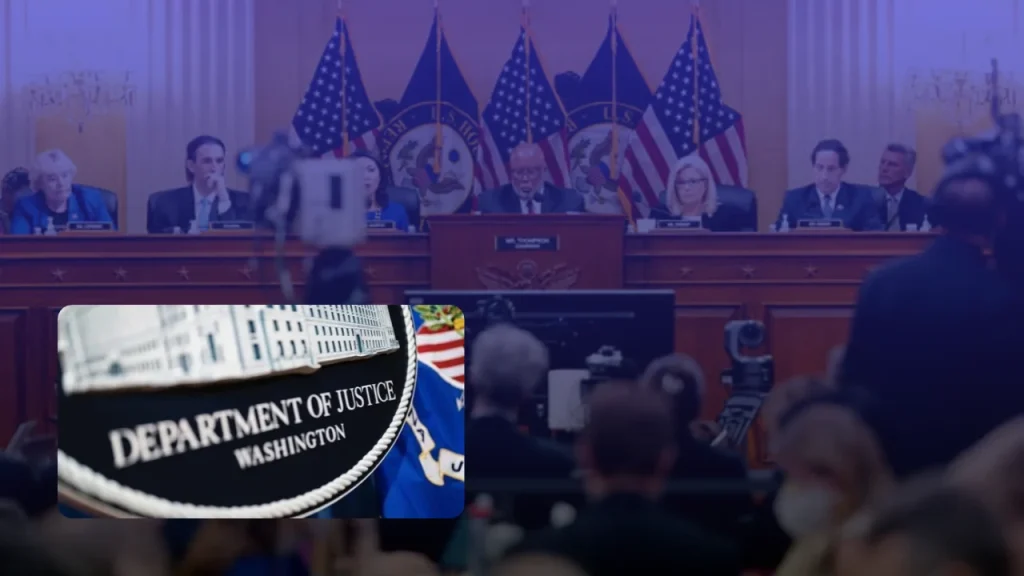
A well-known example is December 2022, when the House Select Committee on the January 6 attack referred former President Donald Trump and others for possible violations including obstruction of an official proceeding, conspiracy to defraud the United States, conspiracy to make a false statement, and inciting or assisting an insurrection. The DOJ was free to make its own decisions.
Did referrals lead to charges? Contempt of Congress examples
Referrals can end in charges, but the DOJ decides each case. The January 6 committee also sent criminal contempt referrals for witnesses who defied its subpoenas, and the DOJ acted on some of them:
- Steve Bannon: A jury convicted him in July 2022 on two counts of contempt of Congress. He was sentenced in October 2022 to four months in prison and a $6,500 fine, with the sentence paused during his appeal.
- Peter Navarro: The committee’s referral went to the U.S. Attorney’s Office for the District of Columbia. A jury convicted him on two counts in September 2023, and in January 2024 he was sentenced to four months in prison and a $9,500 fine.
Both are misdemeanors carrying up to a year per count, and both show that a referral can lead to prosecution. They do not show that every referral does. CRS notes that referrals are nonbinding, and the DOJ chooses which ones to pursue. Appeals and later developments in those cases should be checked before relying on them.
State and local authorities and private citizens
State attorneys general and local police can pass along conduct that may violate federal law. A private citizen can report a suspected crime, but a tip is not the same as a formal agency referral, and nobody can compel a prosecution by filing one.
What Happens After the DOJ Receives a Criminal Referral?
| Possible decision | What it means |
| More investigation | Prosecutors want more evidence before deciding |
| Grand jury investigation | Evidence and witnesses are examined by a federal grand jury |
| Criminal prosecution | Charges are filed by complaint, information or indictment |
| Civil enforcement | The DOJ sues for penalties or an injunction instead |
| Referral elsewhere | Another federal, state or local authority takes it |
| Pretrial diversion | A qualifying person may get an alternative to prosecution |
| Declination | The DOJ decides not to prosecute |
A declination does not prove an allegation was false. It means prosecutors chose not to proceed on what they had.
Referral, Investigation, Indictment and Conviction: What Is the Difference?
| Term | Meaning |
| DOJ referral | Information is sent for review |
| Criminal investigation | Investigators work out whether a crime occurred and who did it |
| Grand jury investigation | A grand jury hears evidence and issues subpoenas |
| Criminal complaint | A written accusation filed with a court |
| Indictment | A grand jury’s formal charge based on probable cause |
| Arrest warrant | A judge’s authorization to arrest |
| Conviction | A guilty verdict or an accepted guilty plea |
Under Federal Rule of Criminal Procedure 7, felonies generally must be charged by indictment unless the defendant waives it in open court. An indictment is not a conviction. For how arrest warrants, search warrants and indictments differ, read Search Warrant Vs. Arrest Warrant Vs. Indictment Vs. Target Letter.
Does a DOJ Referral Mean Someone Will Be Arrested?
No. A referral is not an arrest warrant. Arrests happen only if charges are filed or another lawful basis exists. Many referrals take months, and many end without charges.
How Long Does a DOJ Referral Take, and Does the Statute of Limitations Stop?
There is no deadline. A simple case can move in weeks; a complex financial or national-security matter can take months or years. A referral does not by itself pause the statute of limitations. Most federal crimes carry a five-year limit under 18 U.S.C. § 3282, though some offenses have different periods and tolling rules.
How Are DOJ Referrals Used in National Security and Classified-Leak Cases?
Referrals for suspected unauthorized disclosure of classified information are common and often public. Military and intelligence investigators build a file, which may include interviews, device forensics and sometimes polygraph examinations, and send it to the DOJ, usually through the National Security Division. Polygraph results are generally not admissible in court, so a case turns on other evidence. The agency that refers also often takes separate personnel action, such as removing someone from a job, which is different from a criminal charge.
A recent example is Lt. Gen. Brett Sylvia Fired Over Alleged Classified Leaks on Iran and Ukraine: DOJ Referral, Disputed Evidence and Possible Charges. It shows why the difference between a firing, a referral and an actual charge matters.
Can a DOJ Referral Lead to a Civil Lawsuit Instead of Criminal Charges?
Yes. Some referrals, such as those from the FTC, result in DOJ civil enforcement. See REPS & Company Ticket Resale Lawsuit, What the DOJ and FTC Allege, the BOTS Act and What Happens Next. Read the actual complaint to see whether a matter is criminal or civil.
Can an Ordinary Person Report a Crime Directly to the DOJ or FBI?
Yes.
| Concern | Where to report |
| General federal crimes | FBI tips |
| Cybercrime and online fraud | Internet Crime Complaint Center |
| Securities fraud | SEC tips, complaints and referrals |
| Tax fraud | IRS Criminal Investigation |
| Civil rights violations | DOJ Civil Rights Division |
| Misconduct inside a federal agency | That agency’s Inspector General |
| Emergency | 911 |
A useful report is factual and specific: what happened, when and where, who was involved, how you know, and copies of any records. Do not exaggerate, and do not break into accounts to get evidence. If classified material is involved, use an authorized channel and get legal advice rather than posting it to a public form.
Can You Get Paid for Reporting Fraud to the DOJ? False Claims Act Qui Tam Suits and SEC Whistleblower Awards
Some people who say “DOJ referral” mean reporting fraud and possibly being rewarded. Two programs matter most:
- False Claims Act qui tam suits (31 U.S.C. §§ 3729–3733): A private person, called a relator, can file a civil suit on the government’s behalf over fraud against federal programs, such as false billing or contract fraud. The complaint is filed under seal so the DOJ can investigate and decide whether to take over the case. A successful relator generally receives a share of the recovery, commonly 15–25% if the government intervenes and 25–30% if it does not. This is a civil lawsuit, not a criminal referral, and it normally requires a lawyer.
- SEC whistleblower program: A person who gives the SEC original information about securities violations may qualify for an award of 10–30% of sanctions over $1 million. You report through the SEC’s tip form.
Both programs have strict rules on timing, original information and retaliation protection, so talk to a whistleblower attorney before sharing documents. Reporting fraud does not guarantee a payout or a prosecution.
Can You Get a DOJ Referral Through a FOIA Request?
Usually not while the matter is open. The Freedom of Information Act allows agencies to withhold law-enforcement records that could interfere with enforcement proceedings (5 U.S.C. § 552(b)(7)(A)). Agencies and the DOJ also often refuse to confirm or deny that a particular person is under investigation, and grand jury material is generally secret under Federal Rule of Criminal Procedure 6(e). A referral that a committee or agency announces publicly may be available in whatever form it chose to release it. Records may become more accessible after a case ends, subject to privacy and other exemptions.
What Is the Difference Between a Referral and Being Fired as a Government Employee?
An agency can take employment action and make a criminal referral at the same time, but they are separate. Removing someone from a job (as with Lt. Gen. Brett Sylvia’s removal from his Joint Staff post) is a personnel decision. A referral only asks prosecutors to consider charges. A person can be fired and never charged, and a referral does not by itself end employment. Federal employees also have their own procedures for challenging discipline, which run separately from any criminal case.
What Should You Do if You Learn You Have Been Referred to the DOJ?
A referral does not mean you have been charged, but take it seriously.
- Preserve records. Never delete, alter or hide documents, messages or devices.
- Talk to a federal criminal defense lawyer before speaking to investigators. You can decline an interview and rely on your Fifth Amendment rights.
- Know the labels. Under the Justice Manual, a target is someone prosecutors have substantial evidence linking to a crime, a subject is within the scope of the investigation, and a witness is neither. A subpoena, search warrant, target letter and charging document mean different things.
- Government employees may have special warnings when interviewed (known as Garrity and Kalkines warnings), which can affect how statements are used.
- Do not contact witnesses to influence what they say.
- Do not assume silence means closure. Investigations often continue quietly.
Is a Person Told About a DOJ Referral?
Not necessarily. Some are announced publicly, especially those from Congress or senior officials. Others stay confidential as investigative or grand jury material, and the DOJ usually will not confirm whether a matter is under investigation.
Common Myths About DOJ Referrals
| Myth | Reality |
| A referral means guilt | It is a request for review, not a finding |
| Every referral ends in arrest | Many produce no charges |
| Congress can order a prosecution | Its referrals are nonbinding |
| The DOJ must accept every referral | Prosecutors can decline or redirect |
| Every referral is criminal | Some lead to civil or internal review |
| A referral means an indictment is coming | A grand jury and a charging decision are separate steps |
| A citizen can force a prosecution | Charging decisions belong to prosecutors |
| A declined referral proves innocence | It only shows the DOJ chose not to proceed |
Frequently Asked Questions About DOJ Referrals
What does DOJ stand for?
The U.S. Department of Justice, which enforces federal law and runs federal criminal prosecutions.
What is the difference between a DOJ referral and a criminal charge?
A referral sends information for review. A charge is a formal accusation filed through an authorized procedure.
Who can make a DOJ criminal referral?
Federal agencies, military investigators, inspectors general and congressional committees can. State and local authorities can send information about possible federal crimes, and private citizens can report suspected crimes.
Can Congress refer someone to the DOJ?
Yes, but the referral is nonbinding and does not require prosecution.
Can the DOJ reject a referral?
Yes. It can decline, ask for more evidence, redirect it or pursue a civil option.
What does it mean when the DOJ accepts a referral?
Usually that prosecutors will review it or direct further investigation. It does not mean charges have been approved.
How long does the DOJ take to review a referral?
There is no deadline. It depends on complexity and evidence.
Does a referral become public record?
Not necessarily. Many are confidential.
Can a referral lead to both civil and criminal cases?
Yes. They can proceed separately or in parallel.
Is a DOJ referral the same as an indictment?
No. An indictment is a grand jury’s formal charge, which comes later, if at all.
Can someone sue the DOJ for not acting on a referral?
Generally no. Charging decisions are committed to prosecutorial discretion.
Does a referral mean someone will lose their job?
Not automatically. Employment action is separate from criminal prosecution, though an agency can act on its own.
Do congressional criminal referrals ever lead to prosecution?
Sometimes. Steve Bannon and Peter Navarro were both convicted of contempt of Congress after January 6 committee referrals. The DOJ decides each case, and many referrals produce no charges.
Can I get paid for reporting fraud to the government?
Possibly. Under the False Claims Act, a whistleblower who files a qui tam suit may receive a share of what the government recovers, and the SEC pays awards of 10–30% on qualifying tips. Neither is guaranteed.
Can I get a copy of a DOJ referral through FOIA?
Usually not while an enforcement matter is open, because FOIA exemption 7(A) allows withholding records that could interfere with it.
Sources
- Congressional Research Service: Introduction to Criminal Referrals by Congress (LSB10879)
- U.S. Department of Justice: Justice Manual, Chapter 9-27, Principles of Federal Prosecution
- Internal Revenue Service: How Criminal Investigations Are Initiated
- Federal Rules of Criminal Procedure, Rules 6, 7 and 16
- 28 U.S.C. § 535, Investigation of crimes involving Government officers and employees
- 18 U.S.C. § 3282, Offenses not capital
- FBI Electronic Tip Form
- 31 U.S.C. § 3730, False Claims Act civil actions
- 5 U.S.C. § 552, Freedom of Information Act
- Associated Press and Axios reporting on the Bannon and Navarro contempt sentences
For information only. AllAboutLawyer.com is a legal information website, not a law firm, and does not give legal advice. A referral is not proof of wrongdoing.
Researched and written by Israr Ahmad, legal content researcher and founder of AllAboutLawyer.com. All facts verified against the Congressional Research Service, the Justice Manual, IRS and FBI guidance, the Federal Rules of Criminal Procedure and the U.S. Code, as of October 30, 2026. Last Updated: October 30, 2026.
About the Author
Israr Ahmad is a legal content researcher with 4+ years of experience covering class action settlements and consumer rights cases. He has researched and published coverage of 2,500+ settlements using verified court records, settlement administrator filings, and government sources. Learn more about Israr.