
Jonathan Rinderknecht Found Guilty in Palisades Fire Retrial, Evidence, Sentence Range and What Victims Can Claim
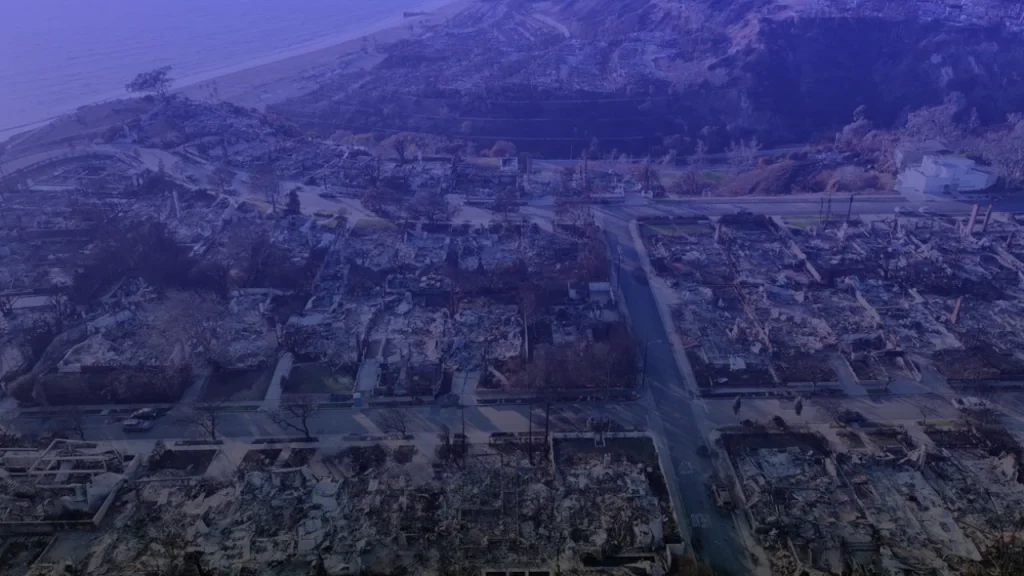
A federal jury in Los Angeles found Jonathan Rinderknecht, 30, guilty on November 20, 2026, of starting what became the January 2025 Palisades Fire, the most destructive wildfire in Los Angeles history. The U.S. Attorney’s Office says the fire killed 12 people and destroyed 6,837 structures, with estimated damage of $25 billion.
He was convicted of two counts: destruction of property by means of fire and arson affecting property used in interstate commerce. U.S. District Judge Anne Hwang set sentencing for March 17, 2027, when he faces a five-year mandatory minimum and a 40-year statutory maximum.
The verdict came after a first trial ended in a mistrial in June 2026, when the jury was reportedly split 10–2 in favor of acquittal.
Does the conviction create a victim compensation fund? No. The criminal verdict does not open a claims portal, and it does not decide the separate civil lawsuits over the fire response. Rinderknecht has not been sentenced, and no restitution order has been announced.
Jonathan Rinderknecht Verdict: Quick Facts
| Detail | Verified information |
| Defendant | Jonathan Rinderknecht, 30 |
| Case | United States v. Rinderknecht, No. 2:25-cr-00833 (C.D. Cal.) |
| Judge | U.S. District Judge Anne Hwang |
| Verdict date | November 20, 2026, after a 14-day trial |
| Convictions | Destruction of property by means of fire; arson affecting property used in interstate commerce |
| First trial | June 2026; mistrial after the jury deadlocked, reportedly 10–2 for acquittal |
| Lachman Fire started | Just after midnight, January 1, 2025 (about 12:12 a.m. per environmental sensors) |
| Palisades Fire | Spread above ground January 7, 2025 |
| Deaths / structures destroyed | 12 / 6,837 |
| Estimated damage | $25 billion (per the U.S. Attorney’s Office) |
| Sentencing | March 17, 2027 |
| Sentence range | 5-year mandatory minimum; 40-year statutory maximum |
| In custody since | October 2025 |
| Investigating agencies | ATF, with the Los Angeles Police Department and U.S. Forest Service |
Official source: U.S. Attorney’s Office, Central District of California: Guilty Verdict Announcement, November 20, 2026
What Federal Crimes Was Jonathan Rinderknecht Convicted Of?
The Justice Department’s announcement does not cite statutes. Based on the charges described there and in earlier court coverage, the two counts correspond to these federal laws:
| Count | Federal law | What it covers |
| Destruction of property by means of fire | 18 U.S.C. § 844(f) | Maliciously damaging or destroying qualifying federal or federally supported property by fire |
| Arson affecting interstate commerce | 18 U.S.C. § 844(i) | Maliciously damaging or destroying property used in interstate commerce or in activity affecting it |
Each of these statutes carries a five-year mandatory minimum and up to 20 years, which is how two counts produce a combined 40-year maximum if the sentences run consecutively. Local reporting on the retrial said the first count was narrowed to the January 1 Lachman Fire, and the second addresses the Palisades Fire. A third count, setting timber afire, was dropped before the retrial.
He was not convicted of 12 homicide counts. The deaths are part of the government’s description of the harm, but the verdict covers the two arson-related counts.
How Did the Lachman Fire Become the Palisades Fire?
Prosecutors argued the Palisades Fire was a holdover fire: a fire that looks out but keeps burning underground. According to the Justice Department, firefighters quickly suppressed the Lachman Fire, but it continued to smolder in the root structure of dense vegetation. On January 7, 2025, heavy winds caused it to surface and spread.
| Date | Event |
| December 31, 2024 | Rinderknecht drives Uber passengers, drops the last one in Pacific Palisades |
| January 1, 2025, about 12:12 a.m. | Environmental sensors indicate the Lachman Fire has begun |
| January 1, 2025 | Firefighters suppress the visible fire |
| January 7, 2025 | Heavy winds cause the underground fire to surface; Palisades Fire spreads |
| October 2025 | Rinderknecht taken into federal custody |
| June 26, 2026 | Mistrial declared after the jury deadlocks |
| November 20, 2026 | Retrial jury returns guilty verdicts |
What Evidence Did Prosecutors Use Against Rinderknecht?
According to the Justice Department’s account of the trial:
- Phone location data. Geolocation data from his iPhone carrier showed him standing in a clearing 30 feet from the fire as it grew. In a January 24, 2025 interview, he told investigators he was near the bottom of a hiking trail when he first saw it.
- 911 call timing. Sensors indicated the fire began around 12:12 a.m. Over the next five minutes he called 911 several times without getting through because his phone was out of range. When he connected, he was at the bottom of the trail, and a nearby resident had already reported the fire.
- His movements afterward. He drove away, passed fire engines heading the other way, turned back and followed them, and recorded more videos around 1:02 a.m.
- State of mind. Prosecutors presented evidence of anger and frustration in the days before, including over being unable to find companionship on New Year’s Eve 2024, and a rap song he had played repeatedly whose video showed things being set on fire.
Reporting on the first trial added other evidence the jury saw: his DNA was found on a barbecue lighter in his car, though an ATF agent said investigators could not prove a lighter started the fire, only that it began with an “open flame,” and he asked ChatGPT whether someone would be responsible for a fire started accidentally by a cigarette. Anger, music choices and chatbot queries do not prove arson on their own. The jury weighed all the evidence together.
Why Did the First Rinderknecht Trial End in a Mistrial?
After a trial of about two weeks and two days of deliberations, the jury told Judge Hwang it was deadlocked. Reporting said 10 jurors favored acquittal and two favored conviction. The judge found “manifest necessity” for a mistrial because the jury was deadlocked.
Can Prosecutors Retry a Defendant After a Hung Jury?
Yes. The Fifth Amendment’s double jeopardy protection bars a second trial after an acquittal, but a mistrial from a genuinely deadlocked jury is not an acquittal. A 10–2 split is not a verdict, so the government could retry the case. Defense attorney Steve Haney argued during the first trial that the government lacked evidence that Rinderknecht started the fire, and the defense has pointed to New Year’s Eve fireworks as the more likely cause.
What Is the Maximum Sentence Rinderknecht Faces?
Judge Hwang will decide the sentence on March 17, 2027. The Justice Department says he faces a mandatory minimum of five years and a statutory maximum of 40 years. That is a range, not a decision. The judge will consider the presentence report, the federal sentencing guidelines, arguments from both sides and victim statements.
Rinderknecht can pursue post-trial motions and, after final judgment, an appeal. An appeal does not erase the verdict by itself.
Can Palisades Fire Victims Get Restitution After the Verdict?
Possibly, but nothing has been ordered. Under the Mandatory Victims Restitution Act, 18 U.S.C. § 3663A, courts must order restitution to identifiable victims who suffered physical injury or financial loss from certain offenses, including crimes of violence and offenses against property. The procedures for determining the amount are in 18 U.S.C. § 3664. Victims typically document their losses for the court, and the judge decides what is compensable. In practice, a restitution order against an individual defendant may recover little compared to $25 billion in losses.
Victims also have rights under the Crime Victims’ Rights Act, 18 U.S.C. § 3771, including the right to be reasonably heard at sentencing and to be notified of court proceedings.
The $25 billion figure is the government’s estimate of total damage. It is not a fine, a restitution order or a fund.
Official resources: United States v. Jonathan Rinderknecht (victim updates) and the U.S. Attorney’s Victim/Witness Assistance Program.
Does the Rinderknecht Verdict Decide the Palisades Fire Lawsuits Against Government Agencies?
No. The criminal case asked whether Rinderknecht committed the charged arson offenses. Civil lawsuits ask different questions, such as whether public agencies or other defendants were negligent before or during the fire. More than one party can contribute to a single disaster, and the civil defendants continue to dispute liability. The verdict neither establishes nor defeats those claims.
For the civil allegations, see Palisades Fire Lawsuit, California State Parks Allegedly Withheld Text Messages Showing Embers Were Still Burning. For insurance disputes tied to California wildfires, see State Farm California FAIR Plan Collusion Lawsuits, Judge Refuses to Dismiss, What Affected Homeowners Need to Know. For how an earlier wildfire compensation process worked, see PG&E Wildfire Lawsuit, Wildfire Settlement Updates and Claim Deadlines. The PG&E Fire Victim Trust has no connection to the Palisades Fire verdict.
What Deadlines Matter for Palisades Fire Victims in California?
Do not assume the March 2027 sentencing date extends any civil filing deadline. California’s general limitation periods include two years for many personal-injury and wrongful-death claims (Code of Civil Procedure § 335.1) and three years for many property-damage claims (Code of Civil Procedure § 338). Measured from January 7, 2025, a two-year period would end around January 7, 2027, though the exact date depends on when a claim accrued and on any tolling.
Claims against California public entities also require a written government claim first, generally within six months for personal-injury and personal-property claims and one year for other claims (Government Code § 911.2). Those windows may already have passed for some claims, and late-claim relief is limited. Anyone who has not yet acted should speak with a California attorney promptly.
What Should Palisades Fire Homeowners and Renters Do Now?
- Keep records. Save photos, inventories, rebuilding estimates, medical bills, evacuation costs and proof of lost income.
- Check insurance. Compare payments against policy limits for dwelling, contents and additional living expenses. A criminal verdict does not replace an insurance claim. The California Department of Insurance helps with disputes, and its consumer hotline is 800-927-4357. See its wildfire resources.
- Follow the criminal case. Use the official victim page above to stay informed about sentencing and restitution.
- Get legal advice on deadlines. Time limits can differ by claim and defendant.
Frequently Asked Questions About the Jonathan Rinderknecht Palisades Fire Verdict
Was Jonathan Rinderknecht convicted of starting the Palisades Fire?
Yes. A federal jury found him guilty on November 20, 2026, of two counts: destruction of property by means of fire and arson affecting property used in interstate commerce.
What sentence does Jonathan Rinderknecht face?
A mandatory minimum of five years and a statutory maximum of 40 years. Sentencing is set for March 17, 2027. No sentence has been imposed.
Why did the first Rinderknecht trial end without a verdict?
The jury deadlocked. Reporting said it was split 10–2 in favor of acquittal, and Judge Hwang declared a mistrial in June 2026.
Can the government retry someone after a hung jury?
Yes. A deadlocked jury is not an acquittal, so double jeopardy does not bar a retrial.
Will Palisades Fire victims receive money because of the verdict?
Not automatically. No fund or claim portal was announced. Victims may seek criminal restitution, insurance benefits or relief through civil lawsuits.
Does the verdict end the Palisades Fire lawsuits against Los Angeles or California agencies?
No. The civil claims about the fire response and public infrastructure are separate and unresolved.
The Bottom Line on the Rinderknecht Palisades Fire Conviction
A federal jury convicted Jonathan Rinderknecht of two arson-related counts after prosecutors argued that the January 1, 2025 Lachman Fire smoldered underground and became the Palisades Fire on January 7. He faces five to 40 years at sentencing on March 17, 2027. For victims, the verdict establishes his guilt on the charged counts but creates no automatic payment and does not settle the civil cases. Keep records, watch the deadlines and use the official victim page for updates.
Official Sources and Legal References
- U.S. Attorney’s Office, C.D. Cal.: Guilty verdict announcement, November 20, 2026
- U.S. Attorney’s Office: United States v. Jonathan Rinderknecht, victim information
- U.S. Attorney’s Office: Victim/Witness Assistance Program
- California Department of Insurance: Wildfire resources
- 18 U.S.C. §§ 844(f), 844(i), 3663A, 3664 and 3771; California Code of Civil Procedure §§ 335.1 and 338; California Government Code § 911.2
Disclaimer: This article is general legal information, not legal advice. Sentencing is pending, and the criminal verdict does not decide separate civil claims.
Researched and written by Israr Ahmad, legal content researcher and founder of AllAboutLawyer.com. All facts verified against the U.S. Attorney’s Office press release of November 20, 2026, and published AP, NPR and Bloomberg Law reporting on the June 2026 mistrial, as of November 21, 2026. Last Updated: November 21, 2026.
About the Author
Israr Ahmad is a legal content researcher with 4+ years of experience covering class action settlements and consumer rights cases. He has researched and published coverage of 2,500+ settlements using verified court records, settlement administrator filings, and government sources. Learn more about Israr.