
REPS & Company Ticket Resale Lawsuit, What the DOJ and FTC Allege, the BOTS Act and What Happens Next
The U.S. Department of Justice, acting on a referral from the Federal Trade Commission, has sued San Diego ticket broker REPS & Company, Inc. and three of its executives in federal court. The government alleges the company used thousands of accounts and a range of masking tools to get around ticket sellers’ purchase limits, buying more than 18.5 million tickets for at least 83,500 events and reselling them for at least $120.8 million in profit. REPS President Brian Archibald denies the allegations and says the company never uses bots.
This is a civil enforcement case, not a criminal case and not a class action. Everything below is an allegation in a court filing or a statement by a party. No court has found REPS or any executive liable.
REPS & Company Lawsuit: Quick Facts
| Detail | Information |
| Case | United States of America v. REPS & Company, Inc., et al., No. 3:26-cv-05895-CAB-BJW |
| Court | U.S. District Court, Southern District of California |
| Judges | District Judge Cathy Ann Bencivengo; Magistrate Judge Brian J. White |
| Filed | October 15, 2026 |
| Plaintiff | United States, filed by the DOJ after FTC referral (Commission vote 2-0) |
| Defendants | REPS & Company, Inc.; CEO Ryan Pancheri; President Brian Archibald; Chief Operating Officer Nicholas Totagrande |
| Laws cited | Better Online Ticket Sales (BOTS) Act, 15 U.S.C. § 45c; Section 5(a) of the FTC Act, 15 U.S.C. § 45(a) |
| Alleged period | January 2022 through October 2025 |
| Scale alleged | More than 18.5 million tickets; at least 83,500 events (FTC figure; the complaint text is reported as at least 83,000); more than $1.3 billion spent; at least $120.8 million in resale profit |
| Relief sought | Permanent injunction, monetary relief and civil penalties |
| Class action? | No. There is no claim form or settlement fund |
| Status | Complaint stage; no ruling on liability |
What Does the DOJ Say REPS & Company Did?
The complaint says REPS built its business on identifying high-demand events and buying tickets before ordinary fans could. Ticket issuers such as Ticketmaster and AXS cap how many tickets one person can buy and use account, payment, phone and IP checks to enforce those caps. The government alleges REPS beat those controls in several ways:
- Accounts in other people’s names. Thousands of accounts allegedly opened with names, addresses or phone numbers belonging to employees or third parties under agreements with REPS.
- Virtual credit cards and phone numbers allegedly controlled by REPS, not the account holders.
- Masking tools. IP proxy services, VPNs and multi-session browsers allegedly used to hide who was buying and from where.
- An overseas buying team. The complaint says most of REPS’ ticket-buying employees were in the Philippines. That describes where workers allegedly were, not a finding that they acted unlawfully.
- Retries after blocks. When purchases were blocked or canceled, REPS allegedly made small changes to names or addresses and tried again.
- The “Error Bible.” An internal document that allegedly logged Ticketmaster error codes with instructions for clearing each block and completing the purchase.
The FTC says internal documents show REPS officials discussing ways to keep their accounts from being blocked. Christopher Mufarrige, director of the FTC’s Bureau of Consumer Protection, said REPS’ entire business model is aimed at gaming the ticket-buying system to get as many tickets as possible and resell them at inflated prices.
The Beyoncé and Pitbull Examples in the REPS Complaint
| Event | Alleged accounts | Tickets bought | Per-buyer limit or capacity | Alleged resale profit |
| Beyoncé, Renaissance World Tour, Arrowhead Stadium, Kansas City, October 1, 2023 | At least 1,300 | 7,624 | Limit of 4 to 8 tickets | $833,323 |
| Pitbull, Empower FCU Amphitheater, Syracuse, September 7, 2024 | At least 700 | 5,430 | Estimated capacity 17,500 (about one-third bought) | $120,109 |
These figures are the government’s allegations about two events, not court-verified findings.
Where REPS Allegedly Resold the Tickets
The complaint says REPS resold on StubHub, Vivid Seats, SeatGeek, Gametime, TicketNetwork and Ticketmaster’s resale marketplace. Those companies are not defendants. Being named as a place where tickets were resold does not mean a marketplace took part in or violated the law.
Why Pancheri, Archibald and Totagrande Are Named Personally
The complaint names the three executives individually and as officers of REPS. It alleges they directed, controlled or took part in the ticket-buying operation and knew about the BOTS Act. One report says Archibald signed a 2022 audit questionnaire listing the BOTS Act as applicable to the company. A corporate title alone does not prove personal liability. The government must establish each executive’s role under the statutes it invokes.
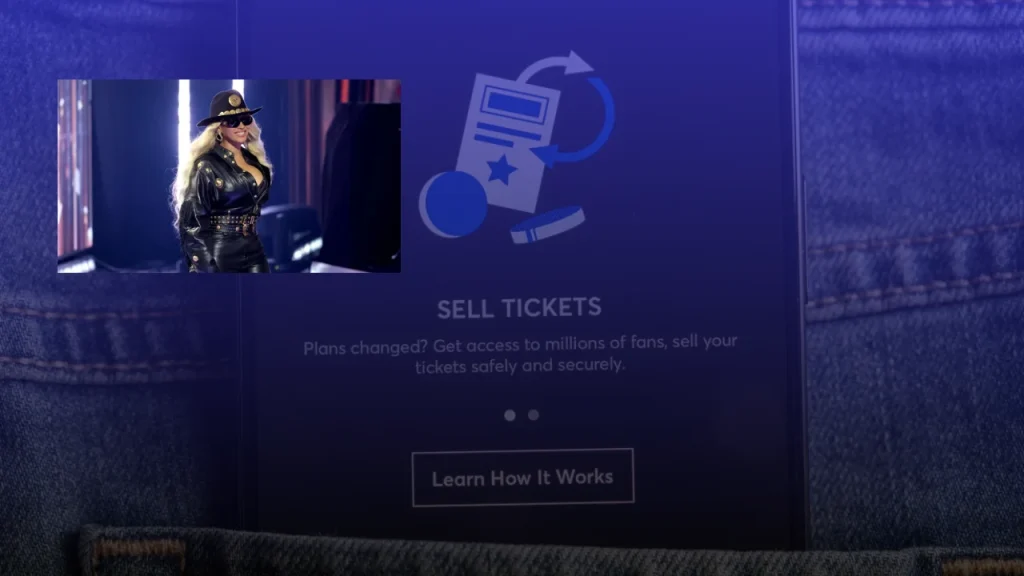
What Laws Does the REPS & Company Lawsuit Involve?
The Better Online Ticket Sales (BOTS) Act, 15 U.S.C. § 45c
Congress passed the BOTS Act in 2016. It makes it unlawful to circumvent a security measure, access control system or other technological control a ticket issuer uses to enforce posted ticket limits or to maintain the integrity of its online ordering rules. It also reaches a person who sells, or offers to sell, a ticket obtained through that circumvention when the person took part in the conduct, could control it, or knew or should have known how the ticket was obtained. The statute has narrow exceptions for qualifying security research and similar uses.
The BOTS Act does not ban ticket resale. Buying within the limits and reselling above face value is not, on its own, a violation. The statute is also not limited to conventional bots. The question is whether the buyer circumvented the issuer’s controls.
Section 5(a) of the FTC Act, 15 U.S.C. § 45(a)
Section 5(a) prohibits unfair or deceptive acts or practices. The BOTS Act treats a violation of its prohibition as a violation of an FTC rule defining an unfair or deceptive practice. That gives the FTC enforcement authority and access to the FTC Act’s remedies.
Remedies Statutes: 15 U.S.C. §§ 45(m)(1)(A), 53(b) and 57b(b)
The complaint invokes three remedy provisions:
- 15 U.S.C. § 45(m)(1)(A): civil penalties for rule violations committed with actual or objectively implied knowledge that the conduct was unlawful. That knowledge requirement is why the complaint stresses what REPS allegedly knew about the BOTS Act.
- 15 U.S.C. § 53(b): injunctive relief.
- 15 U.S.C. § 57b(b): monetary relief in qualifying proceedings. The Supreme Court held in AMG Capital Management, LLC v. FTC, 593 U.S. 67 (2021), that Section 13(b) does not authorize equitable monetary relief, which is why monetary claims like this one rely on Section 19.
News reports put the BOTS Act civil penalty at more than $53,000 per violation, a figure adjusted annually for inflation. How many violations a court would count, and what penalty it would set, are open legal questions.
Why the DOJ Filed and Why There Is a Jury Demand
When the FTC seeks civil penalties, the DOJ files the case on the Commission’s referral (15 U.S.C. § 56(a)). The complaint includes a jury demand. Under Tull v. United States, 481 U.S. 412 (1987), a defendant facing civil penalties generally has a Seventh Amendment right to a jury on liability, while the judge sets the penalty amount.
Executive Order 14254
On March 31, 2025, President Trump signed Executive Order 14254, “Combating Unfair Practices in the Live Entertainment Market,” directing the FTC to enforce the BOTS Act rigorously. That order helps explain the increase in BOTS Act cases after years of limited enforcement.
State Law
State attorneys general can also enforce the BOTS Act in federal court for their residents, and several states, including New York, have their own anti-bot ticketing laws. No state action against REPS has been reported.
How Does the REPS Case Compare to the Key Investment Group and Live Nation Cases?
BOTS Act history. The law was signed in 2016 and went largely unused until January 2021, when the FTC filed its first BOTS Act cases against three ticket brokers.
FTC v. Key Investment Group. In August 2025, the FTC sued Maryland-based Key Investment Group, alleging it got around Ticketmaster’s limits to obtain nearly 380,000 tickets between November 2022 and December 2023, including Eras Tour tickets. Key argued the BOTS Act covers only bots, not people using many accounts. In April 2026, a Maryland federal judge denied Key’s motion to dismiss and rejected the bots-only reading, along with vagueness and major-questions arguments. One outlet reports Key later agreed to pay $300,000 in civil penalties. Confirm that against the court record before relying on it. A Maryland ruling does not bind the Southern District of California, but it shows how a court has read the statute.
FTC v. Live Nation and Ticketmaster. In September 2025, the FTC sued Live Nation and Ticketmaster. According to TicketNews, a 2018 Ticketmaster document cited in that complaint listed REPS as controlling 1,074 Ticketmaster accounts and holding 102,968 tickets across 1,202 events. That is a historical snapshot, not a finding that REPS broke the law in 2018. A federal court denied the companies’ motion to dismiss in September 2026, which let the claims proceed but found no wrongdoing. Live Nation and Ticketmaster deny the allegations.
The two cases put the government in an unusual position: it accuses REPS of beating the platform’s safeguards while separately alleging Ticketmaster tolerated some broker activity. REPS could try to use that in its defense, as Key did.
How Has REPS & Company Responded?
Archibald told TicketNews that REPS supports stopping bots, false identities and fabricated accounts and denies doing any of those things. He said the complaint itself acknowledges REPS uses real people and real accounts, and that the FTC’s theory would harm consumers by undermining the secondary market. He said REPS looks forward to presenting its case in court. Some outlets reported that REPS did not respond to requests for comment. I found no filed answer or motion as of October 19, 2026.
What Defenses Could REPS Raise?
These are possible issues, not defenses REPS has filed:
- Whether using many real accounts without bots counts as circumvention under 15 U.S.C. § 45c (the question Key lost at the motion-to-dismiss stage).
- Whether the statute is unconstitutionally vague as applied.
- Whether each executive is personally liable.
- Whether the government’s ticket, spending and profit figures hold up.
- Whether the knowledge standard in 15 U.S.C. § 45(m)(1)(A) is met for civil penalties.
- Whether ticket issuers’ own conduct affects the case.
What Does the REPS Lawsuit Mean for Fans and Resellers?
There is no class to join and no claim form. The government’s theory is that fans who might have bought tickets at face value were harmed when REPS allegedly took them first. How any money recovered would be used has not been described in the sources I reviewed, and fans who paid high resale prices are not automatically owed compensation. The BOTS Act does not give every individual buyer a private damages claim, though a buyer may have separate claims under state law.
For another ticket-purchase dispute, see FIFA World Cup Ticket Lawsuit (Feinhaus v. FWC2026 US, Inc.), Putative Class Action Says Category 1 Seat Maps Misled Buyers, which concerns seating information, not purchase limits. For hidden-fee claims, see Boston Red Sox Class Action, Fans Sue Over Hidden Fees That Allegedly Doubled the Price of Fenway Tickets. For a completed fee settlement, see $1.2M Posh Group Ticket Fee Settlement, Are You Eligible to Claim? Deadline is July 7, 2026. None of those cases is connected to REPS.
For other resellers, the case signals that federal agencies are treating account-multiplying and masking tactics as BOTS Act issues even without bots. REPS and Key both argue that reading goes too far, and courts are still testing it.
What Happens Next in United States v. REPS & Company?
These are likely stages based on comparable cases, not predictions:
- Service and response. The defendants must answer or move to dismiss. A motion would likely repeat the bots-only, vagueness and platform-tolerance arguments.
- Ruling on dismissal. In Key, the court let the claims proceed.
- Discovery. Account records, communications, financial data and documents such as the alleged “Error Bible” would be tested.
- Settlement or trial. Many BOTS Act cases resolve by settlement. No settlement has been announced, and no trial date has been set.
- Remedies. If the government wins, the court could enter an injunction, monetary relief and civil penalties, and the individual defendants could be bound by any order.
- Appeal. Either side could appeal, and a ruling on non-bot multi-account buying could matter well beyond this case.
Key Dates
| Date | Event |
| 2016 | BOTS Act signed |
| January 2021 | FTC files first BOTS Act cases |
| March 31, 2025 | Executive Order 14254 |
| August 2025 | FTC sues Key Investment Group |
| September 2025 | FTC sues Live Nation and Ticketmaster |
| April 2026 | Court denies Key’s motion to dismiss |
| September 2026 | Court denies Live Nation and Ticketmaster’s motion to dismiss |
| October 15, 2026 | DOJ files REPS complaint |
| To be determined | REPS’ response |
REPS & Company Ticket Resale Lawsuit: Frequently Asked Questions
Who is suing REPS & Company?
The United States, through the Department of Justice, on referral from the FTC.
Who are the defendants?
REPS & Company, Inc., CEO Ryan Pancheri, President Brian Archibald and COO Nicholas Totagrande.
What does the government say REPS did?
It says REPS used thousands of accounts, accounts in other people’s names, virtual cards, proxies and an overseas buying team to buy more than eight tickets to at least 83,500 events, beyond issuers’ limits.
How many tickets and how much profit?
More than 18.5 million tickets, more than $1.3 billion spent and at least $120.8 million in resale profit. A court has not verified those numbers.
Which laws are involved?
The BOTS Act (15 U.S.C. § 45c) and Section 5(a) of the FTC Act (15 U.S.C. § 45(a)).
Is ticket resale illegal under the BOTS Act?
No. The law targets circumventing issuers’ purchase controls and knowingly selling tickets obtained that way.
Are Ticketmaster, AXS, StubHub or SeatGeek defendants?
No. They appear in the complaint as ticket issuers or resale marketplaces.
Is this a criminal case?
No. It is a civil case.
Can I join the lawsuit or claim money?
No. It is a government enforcement action, and no claim process has been announced.
What does REPS say?
It denies using bots, false identities or fabricated accounts and disputes the FTC’s reading of the law.
Sources
- Federal Trade Commission, “FTC Sues Ticket Broker Over Unlawful Tactics Used to Buy Millions of Tickets to Popular Live Events,” October 15, 2026. https://www.ftc.gov/news-events/news/press-releases/2026/10/ftc-sues-ticket-broker-over-unlawful-tactics-used-buy-millions-tickets-popular-live-events
- FTC case record, United States v. REPS & Company, Inc. https://www.ftc.gov/legal-library/browse/cases-proceedings/252-3105-reps-company-inc-us-v
- U.S. Department of Justice, complaint, No. 3:26-cv-05895-CAB-BJW, filed October 15, 2026. https://www.justice.gov/opa/media/1466336/dl
- Justia, federal docket, No. 3:26-cv-05895. https://dockets.justia.com/docket/california/casdce/3%3A2026cv05895/874983
- Pollstar, “Feds Sue San Diego Broker Who Allegedly Bought 18.5M Tickets For BOTS Act Violations,” October 16, 2026. https://news.pollstar.com/2026/10/16/feds-sue-san-diego-broker-who-allegedly-bought-18-5m-tickets-for-bots-act-violations/
- TicketNews, “FTC Sues Ticket Broker on BOTS Act Grounds After Alleging Ticketmaster Turned a ‘Blind Eye’ to Behavior,” October 16, 2026. https://www.ticketnews.com/2026/10/ftc-reps-ticket-broker-lawsuit-ticketmaster/
- TicketNews, “Federal Judge Lets FTC’s BOTS Act Case Against Key Investment Group Move Forward,” April 2026. https://www.ticketnews.com/2026/04/federal-judge-lets-ftcs-bots-act-case-against-key-investment-group-move-forward/
- 15 U.S.C. § 45c (BOTS Act). https://uscode.house.gov/us/usc/119-121/t15/s45c/
- 15 U.S.C. § 45 (FTC Act). https://uscode.house.gov/us/usc/119-121/t15/s45/
This article is general information, not legal advice. I am a legal content researcher, not an attorney. The case is at an early stage and details may change.
Researched and written by Israr Ahmad, legal content researcher and founder of AllAboutLawyer.com. All facts verified against the DOJ complaint, the FTC press release and case page, and the federal court docket, with reporting from Pollstar and TicketNews, as of October 19, 2026. Last Updated: October 19, 2026.
About the Author
Israr Ahmad is a legal content researcher with 4+ years of experience covering class action settlements and consumer rights cases. He has researched and published coverage of 2,500+ settlements using verified court records, settlement administrator filings, and government sources. Learn more about Israr.