
RECA Uranium Worker Claims 2026, Eligible Mining Jobs, 11 States, Covered Diseases and How to Get $100,000
Former uranium miners, millers, ore transporters, core drillers and qualifying mine or mill remediation workers may receive $100,000 in federal compensation under the expanded Radiation Exposure Compensation Act (RECA) if they worked in a designated state between January 1, 1942 and December 31, 1990 and later developed a covered lung or kidney disease.
The U.S. Department of Justice (DOJ) is accepting claims under the law expanded on July 4, 2025 (Public Law 119-21). The filing deadline is December 31, 2027. Eligible surviving family members can also apply, and some workers or survivors may qualify for an additional $50,000 plus medical benefits through a separate Department of Labor program.
RECA is a federal compensation program, not a class action settlement, and you do not need a lawyer to file. Working in the uranium industry does not guarantee payment: you must document qualifying work, the required duration or radiation exposure, and a covered diagnosis. Where you live today does not matter, so retirees and heirs in any state may qualify.
RECA Uranium Worker Quick Facts: Section 5 Compensation
| Detail | Current federal requirements |
| Program | Radiation Exposure Compensation Act (RECA), Uranium Workers (Section 5) |
| Administrator | U.S. Department of Justice, Civil Division |
| Expansion enacted | July 4, 2025 (Public Law 119-21) |
| Payment | $100,000 |
| Covered employment dates | January 1, 1942 to December 31, 1990 |
| Eligible states | 11 |
| Covered occupations | Miners, millers, ore transporters, core drillers, remediation workers |
| General work requirement | At least 1 year |
| Alternative mining exposure requirement | At least 40 working level months (WLMs) |
| Covered diseases | Specified lung and kidney conditions |
| Survivor claims | Permitted for eligible relatives |
| Possible additional benefit | $50,000 under EEOICPA Part B, plus applicable medical benefits |
| Filing deadline | December 31, 2027 |
| Filing methods | Online or by mail (never by email) |
| Official DOJ RECA website | justice.gov/civil/reca |
| Official claims portal | reca.justice.gov |
| DOJ helpline | 800-729-7327 |
| Class action settlement? | No, this is a federal compensation program |
Which 11 States Qualify for RECA Uranium Worker Compensation?
The 2025 amendments cover qualifying uranium work in these 11 states:
| State | Covered uranium industry employment |
| Arizona | Yes |
| Colorado | Yes |
| Idaho | Yes |
| New Mexico | Yes |
| North Dakota | Yes |
| Oregon | Yes |
| South Dakota | Yes |
| Texas | Yes |
| Utah | Yes |
| Washington | Yes |
| Wyoming | Yes |
This is a work-location requirement, not a residency requirement. A person who worked at a qualifying Colorado uranium mine in the 1960s and now lives in Florida may still qualify.
Colorado Uranium Workers Under RECA
Colorado’s uranium history includes operations around Uravan, Naturita, Grand Junction and the Colorado Plateau. Former miners, mill workers, qualifying ore haulers and covered remediation workers may qualify, even if they no longer live in Colorado.
Wyoming Uranium Workers Under RECA
Wyoming’s industry included the Gas Hills, Shirley Basin and other districts. Workers employed at qualifying facilities through December 31, 1990 may be eligible, which matters most for people who worked in the 1970s and 1980s and were outside the older program’s period.
Utah Uranium Workers Under RECA
Moab, Monticello and the Lisbon Valley region were major production areas. Utah’s statewide downwinder rules are separate from the occupational rules for uranium workers.
New Mexico and Navajo Nation Uranium Workers Under RECA
New Mexico’s uranium work included mining and processing around Grants, Church Rock and other northwestern communities. Navajo Nation workers may qualify when their jobs meet the federal requirements, and the DOJ form has a procedure for authorizing DOJ to obtain tribal enrollment information. The Navajo Nation Uranium Workers’ Program also helps with claims and historical documentation.
Which Uranium Mining Jobs Qualify for the $100,000 RECA Payment?
| Occupation | Work covered |
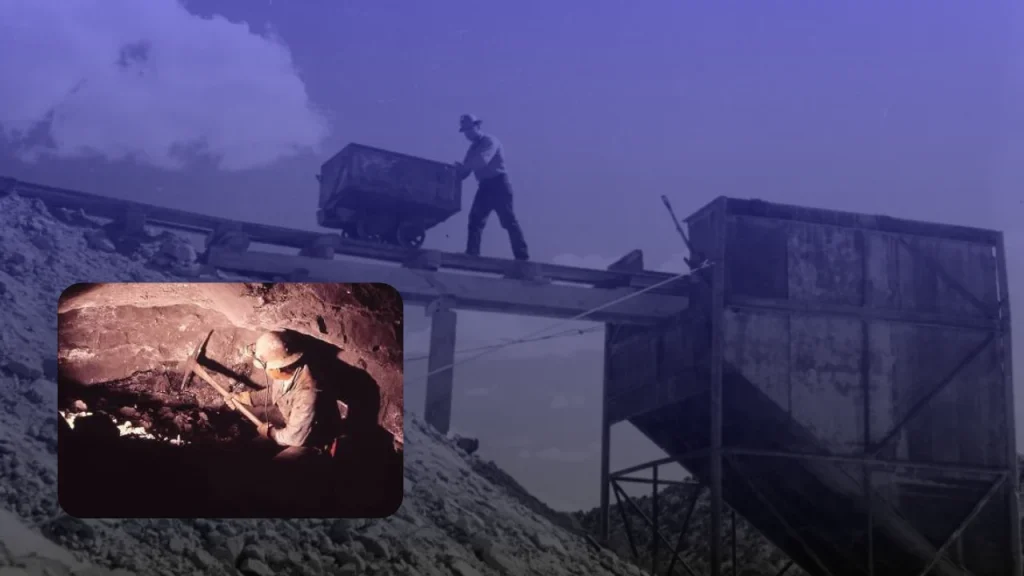
| Uranium miner | Qualifying underground or aboveground (open-pit) uranium mining |
| Uranium miller | Processing uranium or vanadium-uranium ore at a qualifying mill |
| Ore transporter | Hauling uranium or vanadium-uranium ore from qualifying mines or mills |
| Core driller | Drilling samples for uranium or vanadium exploration tied to qualifying mining |
| Remediation worker | Qualifying cleanup work at a uranium mine or mill |
Actual job duties matter more than job title. A truck driver who hauled uranium ore from a qualifying mine may fall within the ore-transporter category. A driver who hauled only unrelated freight does not automatically qualify, and working near a mine does not by itself establish a covered job. If your title was unusual, describe your actual duties and ask DOJ whether the work qualifies.
Related article: Radiation Exposure Compensation Act 2026, $1 Billion in Awards, Who Qualifies for $100,000 and How to Apply
How Long Must You Have Worked in Uranium Mining, Milling or Hauling to Qualify for RECA?
The general rule is at least 1 year of qualifying employment between January 1, 1942 and December 31, 1990. Qualifying periods can be combined, but overlapping jobs cannot be double-counted.
What if You Worked at More Than One Colorado, Utah or Other Uranium Site?
Suppose someone worked six months at a qualifying Colorado mine, four months at a qualifying Utah mill and two months hauling covered ore. Those periods may add up to the one-year requirement. The person would still need a covered medical condition.
What Is the 40 Working Level Month Rule for Uranium Miners?
Uranium miners can also qualify by showing at least 40 working level months (WLMs) of radiation exposure during covered employment. A WLM measures exposure to radon decay products. It is not the same as 40 calendar months of work. A miner with under a year of employment may still qualify if enough exposure is documented. Do not assume the 40-WLM option substitutes for the one-year rule in every other occupation.
Does Uranium Work After 1971 Qualify Under the 2025 RECA Expansion?
Yes, and this is one of the biggest changes. The older program generally covered employment ending December 31, 1971. The new law extends coverage through December 31, 1990, so workers employed from 1972 to 1990 should not rely on older RECA guides that exclude them.
Which Lung and Kidney Diseases Qualify for RECA Uranium Worker Payments?
| Medical condition | Covered under RECA Section 5? |
| Primary lung cancer (trachea, bronchus or lung) | Yes |
| Pulmonary fibrosis | Yes |
| Fibrosis of the lung | Yes |
| Silicosis | Yes |
| Pneumoconiosis | Yes |
| Cor pulmonale related to fibrosis of the lung | Yes |
| Renal (kidney) cancer | Yes |
| Chronic renal disease | Yes, subject to medical requirements |
| Nephritis | Yes, as a chronic renal disease |
| Kidney tubular tissue injury | Yes, as a chronic renal disease |
Not every cancer or kidney problem qualifies. A worker with thyroid cancer, for example, cannot claim under the uranium worker category just because thyroid cancer is covered under other RECA categories. A general diagnosis of “kidney dysfunction” must be measured against the federal medical criteria, and a reduced kidney-function result alone may not be enough.
What Medical Records Do Uranium Workers Need for a RECA Claim?
The DOJ Uranium Worker Claim Form has a medical records attachment, and the requirements depend on the disease and on whether the worker is living or deceased.
| Condition | Examples of relevant medical evidence |
| Lung cancer | Pathology report, bronchoscopy, oncology report, qualifying imaging or physician-signed death certificate |
| Pulmonary fibrosis, silicosis or pneumoconiosis | Qualifying chest imaging (including NIOSH B-reader interpretations), pulmonary function tests, pathology or other specified evidence |
| Cor pulmonale | Evidence of the underlying lung disease plus appropriate cardiac evidence |
| Kidney cancer | Pathology, operative report, imaging or oncology records |
| Chronic renal disease | Kidney lab results, imaging, pathology or physician records (nephrology records) |
What Do Living Uranium Workers With Silicosis or Pulmonary Fibrosis Need to Show?
A note saying you have a lung condition is usually not enough. DOJ’s form lists combinations of evidence, such as qualifying arterial blood gas testing or a specified physician diagnosis together with acceptable imaging, pathology or pulmonary function evidence. Review the exact requirements for your diagnosis before filing. Free screening is available at federally funded RESEP clinics (see below).
Official form: DOJ Uranium Worker Claim Form and Medical Records Attachment.
How to Prove Uranium Mining, Milling or Ore Hauling Work From Decades Ago
Many mines closed long ago, companies changed hands and personnel files may be lost. Start with whatever records survive.
| Document | What it may help prove |
| Social Security earnings records | Employer identity, years of employment and wages |
| Pay stubs and W-2 forms | Work period and employer |
| Federal or state tax returns | Earnings from qualifying work |
| Mine or mill personnel records, union or pension records | Job duties, location and work history |
| Workers’ compensation records | Employment findings or occupational illness |
| Occupational medical records | Employer, job title and work history |
| Historical radiation monitoring records | Exposure relevant to certain mining claims |
| Co-worker or supervisor affidavits | Work history where company records were lost or the company dissolved |
How Do You Get Social Security Earnings Records for a Uranium Worker?
Request them with SSA Form 7050, Request for Social Security Earnings Information. Ask for detailed employer information, not just annual totals. SSA may charge a fee for certain detailed or certified records and may require added identity and authorization documents for deceased workers.
What if the Uranium Mining Company No Longer Exists?
Look for successor-company records, government mine records, old payroll documents, workers’ compensation files or historical studies. The DOJ application asks for the mine or mill name, dates, location, occupation and a description of duties. If records are incomplete, describe the work history as accurately as you can and ask DOJ about acceptable alternative evidence. Never invent dates or radiation measurements.
Does the DOJ Uranium Worker Claim Form Still List Only Nine States and a 1941 Start Date?
There is a discrepancy to be aware of. Part 8 of the July 2025 DOJ Uranium Worker Claim Form (page 7) lists nine states and an inconsistent starting year. DOJ’s updated November 19, 2026 guidance and the amended statute identify all 11 states, including Oregon and Texas, with covered employment from January 1, 1942 through December 31, 1990.
Uranium workers in Oregon and Texas should not treat the older wording in the PDF as an exclusion. Use the current federal guidance, give your full work history and contact DOJ at 800-729-7327 if you need clarification. DOJ has said it is working on revised RECA regulations.
Can Surviving Spouses and Children File a RECA Uranium Worker Claim?
Yes. If a worker who met the employment and medical requirements has died, eligible survivors may apply for shares of the single $100,000 payment. The award goes first to an eligible surviving spouse (married at least one year immediately before death). If there is no eligible spouse, it is divided equally among eligible surviving children. If there are no children, eligible parents, grandchildren or grandparents may qualify under the statute. It is not $100,000 per family member.
Survivors may need:
- The worker’s birth and death certificates.
- Marriage certificates and records of any earlier marriages.
- Children’s birth or adoption records, and records establishing qualifying stepchild relationships.
- The worker’s employment and medical records.
- Government-issued identification for the applicant.
Prior award rule: a person who already received a RECA award generally cannot claim again for that same award. Disclose any earlier payment on the form.
Can Uranium Workers Receive an Additional $50,000 From EEOICPA on Top of the $100,000 RECA Award?
Potentially, yes. The Energy Employees Occupational Illness Compensation Program Act (EEOICPA) is a separate program run by the U.S. Department of Labor. Uranium workers or eligible survivors awarded benefits under RECA Section 5 may qualify for an additional $50,000 under EEOICPA Part B, plus applicable medical benefits.
| Program | Potential benefit |
| RECA Section 5 | $100,000 |
| EEOICPA Part B | Additional $50,000 |
| Medical benefits | Separate coverage under program rules |
Some workers could therefore receive $150,000 in combined lump sums, if approved under both programs. EEOICPA Part E may also provide benefits for certain occupational illnesses under different eligibility and causation rules. These benefits are not paid automatically with a RECA award, so contact a Department of Labor Energy Employees Compensation Resource Center to review the application. Official source: U.S. Department of Labor, EEOICPA Program.
How to File a RECA Uranium Worker Claim Before December 31, 2027
Step 1: Confirm the Covered Occupation
Decide whether the work was uranium mining, milling, ore transportation, core drilling or qualifying remediation.
Step 2: Identify the Mine, Mill, State and Dates
Write down each employer, facility, state, set of duties and employment period, including every employer if the worker changed jobs.
Step 3: Gather Medical Documentation
Collect the records for the covered lung or kidney condition and check the diagnosis-specific rules in the medical records attachment.
Step 4: Download the Uranium Worker Claim Form
Use the DOJ Uranium Worker Claim Form and complete the sections on the worker, employment history, compensable disease and previous payments.
Step 5: File Online or by Mail (Never by Email)
File online at the DOJ RECA Claims Portal and upload scans of original or certified records. DOJ may later request originals or certified copies. To file by mail, send the form and records to:
U.S. Department of Justice Radiation Exposure Compensation Program P.O. Box 146 Ben Franklin Station Washington, DC 20044-0146
DOJ does not accept initial applications by email. Keep copies of everything.
Step 6: Keep Your Acknowledgment and Claim Number
High volume can delay acknowledgments. Use your claim number on all later correspondence. Do not mail extra evidence without a completed claim or claim number, because unmatched records may be destroyed.
Step 7: Answer Any DOJ Requests for More Evidence
DOJ may ask for more employment or medical records. If a claim is denied, review the written decision and the reconsideration procedures.
Where Can Uranium Workers Get Free RECA Claim Help in Colorado, New Mexico and Utah?
Federally funded RESEP clinics provide screening, education and help gathering documents. You do not have to use one to apply directly to DOJ.
| Resource | Location | Contact |
| National Jewish Health Miners Clinic | Denver, Colorado | 877-255-5864 |
| University of New Mexico RESEP | Albuquerque, New Mexico | 505-272-4672 |
| Utah Navajo Health System RESEP | Montezuma Creek, Utah | 435-678-0344 |
| Navajo Nation Uranium Workers’ Program | Shiprock, New Mexico | Official tribal program |
Full directory: HRSA Radiation Exposure Screening and Education Programs.
How Many RECA Uranium Worker Claims Has DOJ Approved in 2026?
DOJ’s November 19, 2026 report shows these nationwide uranium worker figures under the reauthorized program:
| Status | Number |
| Claims received | 2,119 |
| Approved | 380 |
| Pending | 1,696 |
| Denied | 43 |
| Compensation approved | $38,000,000 |
These figures are nationwide and do not break out Colorado, Wyoming, Utah or any other state. The approval rate of about 89.8% is among decided claims only (380 of 423), and most claims in this category are still pending. Source: DOJ RECA Awards to Date, November 19, 2026.
Is RECA a Uranium Mining Lawsuit or Class Action Settlement? Do You Need an Attorney?
No. RECA is a federal statutory program. You do not join a class action or prove in court that a mine operator was negligent. DOJ reviews statutory employment, exposure and medical eligibility.
You can file directly with DOJ. The usual attorney fee cap for an initial application is 2% of the award, with exceptions for certain older agreements and resubmitted claims. On a $100,000 award, 2% is $2,000. Review any contract with a claims-assistance service carefully, and do not assume a company offering RECA filing help is affiliated with the federal government.
For the full overview of RECA categories, read Radiation Exposure Compensation Act 2026, $1 Billion in Awards, Who Qualifies for $100,000 and How to Apply. Historical-residence rules differ for downwinders, as explained in RECA New Mexico 2026, Who Qualifies for $100,000 in Radiation Compensation? and Arizona and Nevada Downwinder Compensation 2026: Eligible Counties, Cancers and How to Claim $100,000 Under RECA.
The Manhattan Project waste category pays differently. See Tennessee RECA Claims 2026: Which 14 Oak Ridge-Area ZIP Codes Qualify for $50,000 in Radiation Compensation? and Missouri Radiation Exposure Compensation 2026, Which 21 St. Louis ZIP Codes Qualify for RECA Payments?.
Frequently Asked Questions About RECA Uranium Worker Claims
Do uranium workers in Colorado still qualify if they live in another state now?
Yes. Eligibility depends on where the qualifying work happened, not where you live today.
Does uranium work in 1985 qualify for RECA?
Potentially. The 2025 expansion covers employment through December 31, 1990, if the job, state, duration and diagnosis requirements are met.
Do Oregon and Texas uranium workers qualify for RECA?
Yes. Both states are among the 11 covered states, even though the July 2025 DOJ PDF lists only nine.
Can a core driller or remediation worker claim RECA compensation?
Potentially. Core drillers and qualifying mine or mill remediation workers are covered occupations added by the 2025 expansion.
Does chronic kidney disease qualify for a uranium worker RECA claim?
Potentially, if it meets the federal criteria for a chronic renal disease such as nephritis or kidney tubular tissue injury. The full medical record matters.
Can a uranium worker get both RECA and EEOICPA benefits?
Potentially. Workers awarded RECA Section 5 benefits may qualify for an additional $50,000 under EEOICPA Part B plus medical benefits, but they must apply separately to the Department of Labor.
What is the RECA filing deadline for uranium workers?
December 31, 2027.
Bottom Line: Who Qualifies for the $100,000 RECA Uranium Worker Payment?
Uranium miners, millers, ore transporters, core drillers and remediation workers who worked in one of 11 states between January 1, 1942 and December 31, 1990, for at least one year (or 40 working level months for miners), and who later developed a covered lung or kidney disease, may receive $100,000, or their eligible survivors may share it. Covered work from 1972 through 1990 is the biggest change from the older program. File by December 31, 2027.
The strongest claims document the actual mine or mill, employment dates, job duties and diagnosis. If records are missing, start with Social Security earnings statements, former employers and government archives.
- Official program: justice.gov/civil/reca
- Claims portal: reca.justice.gov
- DOJ helpline: 800-729-7327
- Program email (questions only, not applications): [email protected]
Official Sources and Legal References
- DOJ, RECA Eligibility and Filing Guidance
- DOJ Uranium Worker Claim Form, revised July 2025
- DOJ RECA Claims Portal
- DOJ RECA Awards to Date, November 19, 2026
- Congressional Research Service, The Radiation Exposure Compensation Act
- Public Law 119-21
- 28 CFR Part 79, RECA Regulations (some older provisions await updates after the 2025 amendments)
- Social Security Administration, Request for Earnings Information
- U.S. Department of Labor, EEOICPA Program
- HRSA, Radiation Exposure Screening and Education Program
- Navajo Nation, Uranium Workers’ Program
Disclaimer: This article is general legal information, not legal or medical advice. Federal agencies make final eligibility decisions.
Researched and written by Israr Ahmad, legal content researcher and founder of AllAboutLawyer.com. All facts verified against the official DOJ Uranium Worker Claim Form, the DOJ RECA website and claims portal (reca.justice.gov), DOJ award statistics, Public Law 119-21 and U.S. Department of Labor EEOICPA guidance, as of November 20, 2026. Last Updated: November 20, 2026.
About the Author
Israr Ahmad is a legal content researcher with 4+ years of experience covering class action settlements and consumer rights cases. He has researched and published coverage of 2,500+ settlements using verified court records, settlement administrator filings, and government sources. Learn more about Israr.