
TRESemmé Lawsuit 2026, Hair Loss Claims, New Cases, Court Rulings and Recall Status
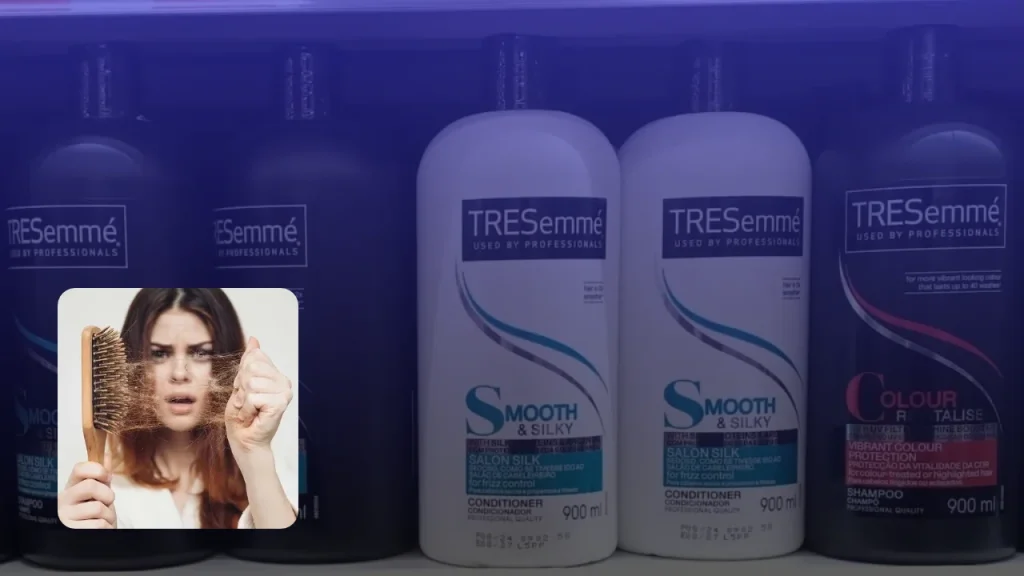
TRESemmé has faced lawsuits alleging that certain shampoos caused hair loss, thinning and scalp irritation because they contained DMDM hydantoin, a preservative that can release small amounts of formaldehyde. The lawsuits accuse Unilever United States, Inc. and Conopco, Inc. of selling products without adequate warnings. Unilever disputes the claims, and no court has found that TRESemmé products generally cause hair loss.
2026 brought major developments. Federal judges granted Unilever summary judgment in four individual hair-loss cases (Schafer, Maddox, Hossain and Candelaria), and three of those plaintiffs have appealed. Meanwhile, a new group of customers filed product-liability litigation in New Jersey in July 2026, followed by separate complaints for five of those plaintiffs in October.
There is no approved TRESemmé hair-loss settlement and no open class-wide claims process as of October 28, 2026. The original nationwide putative consumer class action was dismissed with prejudice in 2022, and the newer injury cases do not give every TRESemmé customer a right to payment.
A separate matter involves certain TRESemmé aerosol dry shampoos included in Unilever’s 2022 voluntary recall for potentially elevated benzene. That is a different alleged problem from the DMDM hydantoin hair-loss claims, and a proposed $3,625,000 settlement in that case was not approved. It should not be confused with the hair-loss lawsuits.
TRESemmé Lawsuit 2026: Quick Facts
| Detail | Verified information |
| Brand | TRESemmé |
| Corporate defendants | Unilever United States, Inc.; Conopco, Inc. (d/b/a Unilever Home & Personal Care USA) |
| Main hair-loss allegations | Hair loss, thinning, scalp irritation and inadequate product warnings |
| Ingredient at the center | DMDM hydantoin (formaldehyde-releasing preservative) |
| Original putative consumer class action | Castillo v. Unilever United States, Inc., No. 1:20-cv-06786 (N.D. Ill.) |
| Original class action outcome | Dismissed with prejudice on December 28, 2022 |
| Newer injury litigation | Kinney et al. v. Conopco, Inc., No. 2:26-cv-08708 (D.N.J.), filed July 14, 2026 |
| Key 2026 rulings | March 4, May 12 and July 30, 2026 |
| Appeals identified | Maddox (3rd Cir.), Hossain and Candelaria (2nd Cir.) |
| Hair-loss settlement | None approved |
| Official settlement website / claim form | None exists. No court-approved TRESemmé hair-loss settlement or claim form has been identified |
| Separate dry-shampoo issue | 2022 limited-lot benzene recall and a separate proposed class settlement |
| What consumers should do now | Preserve the product and medical records; do not assume a class-wide claim form exists |
These cases involve different legal claims and different products. Some plaintiffs allege personal injury. Others brought consumer claims over marketing or disclosure. A ruling in one case does not automatically decide the others.
What Is the TRESemmé Lawsuit About?
The hair-loss litigation concerns certain TRESemmé shampoos and other hair-care products that plaintiffs say contained DMDM hydantoin. DMDM hydantoin is a preservative that helps prevent microbial growth in personal-care products. It is a formaldehyde donor, meaning it can release small amounts of formaldehyde over time. Plaintiffs allege this can trigger allergic or irritant contact dermatitis in some people, and that the resulting scalp inflammation can cause hair loss.
The complaints generally accuse Unilever or Conopco of:
- Designing or selling products plaintiffs allege were defective.
- Failing to adequately warn about hair-loss and scalp-irritation risks.
- Negligently manufacturing, testing, marketing or selling the products.
- Promoting smoothing, nourishing or repairing benefits without disclosing the alleged risks.
- Continuing to use the ingredient despite alleged consumer complaints and available alternatives.
These are allegations, not findings. They have not been proven against every product or every consumer.
Unilever disputes the hair-loss claims. TRESemmé’s own ingredient-safety FAQ states that the brand does not use formaldehyde as an ingredient, while acknowledging that some formulas use preservatives that release trace amounts of formaldehyde. The brand denies that its products cause hair loss.
In court, the question is narrower than whether an ingredient has a certain chemical property. A plaintiff must prove the legal elements of the claim, including a sufficient connection between the product and the alleged injury. The 2026 decisions show how difficult that proof becomes when the cause of hair loss is disputed.
Which TRESemmé Products Are Named in the Lawsuits?
The lawsuits do not all involve the same product or formula.
| Product or product group | Legal issue raised |
| TRESemmé Keratin Smooth shampoo | Individual hair-loss claim linked to DMDM hydantoin |
| TRESemmé Keratin Smooth and Keratin Smooth Color shampoos | The dismissed 2020 putative consumer class action over alleged disclosure and marketing problems |
| TRESemmé Color Revitalize shampoo | Individual injury claim involving alleged reactions to preservatives |
| Other TRESemmé shampoos and conditioners | Named in newer product-liability allegations filed in New Jersey in 2026 |
| Certain TRESemmé aerosol dry shampoos | Separate 2022 benzene recall and related litigation |
A brand name alone does not establish that a bottle contains the ingredient at issue. Formulas can differ by product, manufacturing date and market. Check the ingredient list on your actual bottle against the products named in the relevant court documents.
What Is DMDM Hydantoin, and Why Does It Matter?
DMDM hydantoin is a preservative used in some cosmetic and personal-care formulas. The plaintiffs’ theory involves several steps:
- A product contained DMDM hydantoin.
- The plaintiff alleges using it caused an allergic or irritant reaction.
- The reaction allegedly caused scalp dermatitis or inflammation.
- The scalp condition allegedly led to hair loss or thinning.
- The plaintiff argues the manufacturer should have designed, tested, marketed or labeled the product differently.
Each step needs evidence. Showing that a product contains a preservative is not proof that it caused a particular person’s hair loss. Hair loss has many possible causes, including genetic pattern hair loss, hormonal changes, stress, illness and other products.
That distinction was decisive in Hossain v. Unilever United States, Inc., where the court excluded the plaintiff’s medical expert and then granted summary judgment because causation could not be proven without that testimony. The ruling turned on the evidence in that case. It was not a nationwide finding that DMDM hydantoin can never cause dermatitis, or that no individual can bring a valid injury claim.
What Happened to the Original TRESemmé Class Action?
The original prominent consumer case was Castillo v. Unilever United States, Inc., No. 1:20-cv-06786, in the U.S. District Court for the Northern District of Illinois. Plaintiffs alleged that TRESemmé Keratin Smooth products contained DMDM hydantoin and that consumers were not adequately informed about its alleged risks. The claims included consumer-protection, warranty, fraud and unjust-enrichment theories.
This case differed from the later injury cases. The Castillo plaintiffs argued they would not have bought the products, or would have paid less, had they known what they alleged about the ingredient. They did not base their claims on personally suffering hair loss.
Why Did the Illinois Court Dismiss the Class Action?
On December 28, 2022, the court granted Unilever’s motion to dismiss the second consolidated amended complaint and dismissed the action with prejudice. The plaintiffs had already been allowed to amend after an earlier dismissal.
The ruling did not certify a class or create a settlement program, and it was not a trial finding that TRESemmé never causes hair loss. The court evaluated whether the consumer claims, as pleaded, could proceed under the applicable legal standards.
Consumers cannot submit a claim form or receive compensation through the dismissed Castillo case. No settlement administrator or class-wide payment process resulted from it.
What Did Federal Courts Decide in the 2026 TRESemmé Hair-Loss Cases?
Four individual injury cases reached major decisions in 2026. They did not all rest on the same legal ground.
March 4, 2026: Schafer v. Conopco, Inc.
In Schafer v. Conopco, Inc., No. 2:23-cv-00348, the District of New Jersey considered Unilever’s motions to exclude the plaintiff’s expert and for summary judgment. Holly Schafer alleged an allergic reaction to DMDM hydantoin in TRESemmé shampoo and temporary hair loss. The court granted both motions on March 4, 2026, so her claim could not proceed to trial on the record before the court.
The decision shows the importance of admissible expert evidence in product-injury cases with a disputed medical cause.
May 12, 2026: Maddox v. Conopco, Inc.
In Maddox v. Conopco, Inc., No. 2:23-cv-00293, Tamie Maddox alleged that TRESemmé shampoo containing DMDM hydantoin caused hair loss, thinning and scalp irritation. She asserted manufacturing-defect, design-defect, failure-to-warn and negligence claims. On May 12, 2026, the court granted Unilever’s motions to exclude her medical expert and for summary judgment.
Maddox appealed to the Third Circuit (No. 26-2458, docketed June 14, 2026). No final appellate decision had been identified as of October 28, 2026.
July 30, 2026: Hossain v. Unilever United States, Inc.
Zebin Hossain alleged that TRESemmé Keratin Smooth shampoo caused hair loss after an allergic reaction to DMDM hydantoin. She said she began using it in 2017, noticed hair loss in 2018 and kept using it until early 2020. Her medical records later reflected a diagnosis of androgenic alopecia, a genetic-pattern form of hair loss, and did not document the scalp dermatitis her expert’s explanation required.
On July 30, 2026, Judge Natasha C. Merle excluded the plaintiff’s expert under Federal Rule of Evidence 702 and granted summary judgment to Unilever. The court found the expert’s opinion was not reliably applied to Hossain’s circumstances and that, without it, she could not prove causation.
Hossain appealed to the Second Circuit (No. 26-2431, opened August 31, 2026). No final appellate ruling had been identified as of October 28, 2026.
July 30, 2026: Candelaria v. Conopco, Inc.
Elizabeth Candelaria’s lawsuit, No. 1:21-cv-06760, alleged that preservatives in TRESemmé products, including Color Revitalize shampoo, caused significant hair loss and scalp irritation. On July 30, 2026, Judge Merle granted summary judgment for Conopco because the claims were time-barred. The court therefore did not need to decide the motions to exclude her experts.
A statute-of-limitations ruling is different from a finding that a product did not cause an injury. It means the claim was filed too late under the deadlines that applied.
Candelaria appealed to the Second Circuit (No. 26-2426, opened August 31, 2026). No final appellate ruling had been identified as of October 28, 2026.
What the Four Rulings Mean for Consumers
The decisions do not set one universal rule for every TRESemmé injury claim. They show that individual cases can fail for different reasons:
- A court may exclude an expert’s testimony if the methodology or its application is not sufficiently reliable.
- A plaintiff may be unable to prove medical causation without admissible expert evidence.
- A claim may be barred by a statute of limitations without the court ever deciding whether the injury occurred.
- Success depends on the evidence and the applicable state law.
This is why “the TRESemmé lawsuit” can be misleading. There are multiple proceedings, each with its own parties, claims and procedural history.
What Is the New TRESemmé Lawsuit Filed in New Jersey in 2026?
On July 14, 2026, a product-liability case was filed as Kinney et al. v. Conopco, Inc., No. 2:26-cv-08708, in the District of New Jersey. The docket names Conopco, Inc., doing business as Unilever Home & Personal Care USA, and records the case as a personal-injury/product-liability action.
The original filing named six plaintiffs: Tarrah Kinney, Johanna Wheeler, Carliss Eaton, Jennifer Kiggans, Jeannie Walker and Kristina Sinclair. They allege that TRESemmé shampoo products caused hair loss and scalp problems, citing DMDM hydantoin and alleged failures to warn. These assertions have not been proven in court.
Why Did Five Plaintiffs File Separate Complaints in October 2026?
A court order dated October 8, 2026 directed counsel to file separate individual complaints for the other named plaintiffs and have the clerk assign separate case numbers. New individual dockets appeared on October 19 and 20.
| Plaintiff | Case number | Filing date |
| Johanna Wheeler | 2:26-cv-13603 | October 19, 2026 |
| Carliss Eaton | 2:26-cv-13604 | October 19, 2026 |
| Jennifer Kiggans | 2:26-cv-13605 | October 19, 2026 |
| Jeannie Walker | 2:26-cv-13606 | October 19, 2026 |
| Kristina Sinclair | 2:26-cv-13607 | October 19, 2026 |
The original Kinney case remains identified as No. 2:26-cv-08708. These are individual product-injury cases, not proof that a class has been certified. As of October 28, 2026, they were at an early stage, with no court-approved settlement, certified class or claims process.
Does the New Lawsuit Cover Every Customer Who Bought TRESemmé?
No. The new cases are product-liability proceedings brought by named plaintiffs. A consumer who bought TRESemmé but never experienced an alleged injury should not assume they can claim money from them. Filing a complaint also does not establish that Unilever is liable. The cases may proceed through motions, discovery and expert-evidence disputes, and any settlement or class certification would require later steps and court approval.
Is There a TRESemmé Hair-Loss Settlement or Claim Form in 2026?
No approved TRESemmé hair-loss settlement or public claim form was identified as of October 28, 2026.
Because no approved settlement program exists, there is no verified claim deadline. The New Jersey cases are not an open settlement fund, and the dismissed 2020 class action offers no claim form.
Be cautious about websites or ads promising a guaranteed TRESemmé payment or asking for money to “register” for a settlement. A law firm may advertise consultations about product-injury claims, but that does not mean a court has approved a class action or opened compensation to all consumers.
Shampoo hair-loss allegations are not unique to this brand. Our report on the OGX shampoo lawsuit and the hair loss allegations against Johnson & Johnson covers a similar dispute, though each case has its own product, defendant, legal claims and court status.
What Should You Do If You Believe TRESemmé Caused Your Hair Loss?
Without an open class settlement, a person who believes a product caused an injury would need to assess whether an individual claim is available. The answer depends on medical history, the product and formula used, the state where the person lives, when the injury occurred and the applicable law.
- Stop using the product if you suspect it is causing a reaction, and keep it. Preserve the bottle, ingredient list, lot or batch code and receipt. If you cannot keep it, photograph all sides of the container and the ingredient panel.
- Document your symptoms. Keep dated photos and a timeline of when use began, when symptoms appeared, when use stopped and how the condition changed.
- See a dermatologist. A qualified medical professional can examine your scalp, consider possible causes of hair loss and document a diagnosis. Do not assume the shampoo caused the condition without medical assessment.
- Report the reaction. You can report adverse reactions to cosmetics to the FDA through its MedWatch system.
- Save your records. Keep purchase history, communications with the manufacturer, medical records and expense records.
- Check the legal deadline promptly. Product-liability and personal-injury filing periods vary by state and claim type. The Candelaria ruling shows a court may dismiss a claim as time-barred, and the clock may start when you first noticed symptoms or were told a product might be the cause, not when you first heard about a lawsuit.
- Get case-specific legal advice. A qualified product-liability attorney can evaluate whether your facts, medical evidence and filing deadline support an individual claim.
These are general recordkeeping steps, not a guarantee of eligibility or recovery.
What Was the TRESemmé Dry-Shampoo Benzene Recall?
The dry-shampoo issue is separate from the DMDM hydantoin litigation.
On October 18, 2022, Unilever announced a voluntary U.S. recall of select aerosol dry shampoos produced before October 2021 because they might contain elevated levels of benzene. The FDA published the company’s recall notice on October 21, 2022. The recalled brands included TRESemmé, Dove, Nexxus, Suave and certain TIGI products.
Benzene is a chemical associated with cancer risk. The dry-shampoo plaintiffs alleged benzene contamination in certain aerosol products, a different problem from the hair-loss lawsuits.
The recall covered select aerosol dry-shampoo products and lot codes, not all TRESemmé products. It was not a recall of every TRESemmé shampoo or conditioner. If you have an old aerosol dry shampoo can, check the exact product name and lot code against the FDA’s official recall notice listed in the Sources section below.
Why Was the Proposed $3.625 Million Dry-Shampoo Settlement Not Approved?
The benzene case is Little et al. v. Unilever United States, Inc., No. 3:22-cv-01189, in the District of Connecticut. It combined claims over aerosol dry-shampoo products sold under several Unilever brands, including TRESemmé.
A proposed $3,625,000 settlement was submitted in 2025. In February 2026 the court did not grant preliminary approval, citing concerns about whether the proposed class included people who could establish standing to sue.
On June 24, 2026, the court dismissed the claims of ten of the eleven named plaintiffs for lack of standing, denied their request to file a revised complaint, and allowed the defendants to renew a motion to dismiss the remaining plaintiff’s claims. The June order did not dismiss the remaining plaintiff, Billie Barnette, on the same ground. A later final resolution of her claim could not be verified in public records as of the date of this article.
The proposed settlement therefore did not become an approved payment program. A settlement amount in court papers does not mean claim forms are available or that consumers are entitled to payment. Owners of a recalled dry shampoo should not assume they can file a hair-loss claim, or that the $3.625 million settlement is accepting claims.
How Does This Compare With Other Unilever and Hair-Care Cases?
The same corporate parent can face very different legal actions. The TRESemmé hair-loss cases focus on product injury and alleged ingredient risks. Other Unilever cases involve labeling, advertising or entirely different products.
For example, the Dove collagen body wash class action lawsuit is a putative class action alleging a body-wash label misleads consumers about collagen. That case concerns product representations, not an alleged injury.
For a hair-care litigation on a much larger scale, see our explainer on the hair relaxer cancer lawsuit and where MDL No. 3060 stands. The TRESemmé cases are not part of that litigation, and the medical issues and legal requirements are different.
Look at the specific product, ingredients, alleged injury, defendant and court order before assuming one lawsuit covers another.
Key Dates in the TRESemmé Lawsuit and Recall Timeline
| Date | Event |
| November–December 2020 | Multiple putative consumer class actions filed alleging deceptive marketing and failure to disclose DMDM hydantoin risks |
| May 19, 2021 | Zebin Hossain filed an individual hair-loss lawsuit against Unilever United States, Inc. |
| October 18, 2022 | Unilever announced a voluntary recall of select aerosol dry shampoos over potential benzene |
| December 28, 2022 | Illinois court dismissed the Castillo putative class action with prejudice |
| February 2026 | Court declined preliminary approval of the proposed $3.625 million dry-shampoo settlement |
| March 4, 2026 | Summary judgment granted to Conopco in Schafer |
| May 12, 2026 | Summary judgment granted to Conopco in Maddox |
| June 14, 2026 | Maddox appeal docketed in the Third Circuit |
| June 24, 2026 | Connecticut court dismissed ten of eleven named plaintiffs’ dry-shampoo claims for lack of standing |
| July 14, 2026 | Kinney et al. v. Conopco filed in New Jersey |
| July 30, 2026 | Summary judgment granted in Hossain and Candelaria |
| August 31, 2026 | Hossain and Candelaria appeals opened in the Second Circuit |
| October 8, 2026 | New Jersey court ordered separate complaints for the other named plaintiffs |
| October 19–20, 2026 | Five individual complaints filed and assigned separate case numbers |
| October 28, 2026 | No approved hair-loss settlement or public hair-loss claim form identified |
Appeals and newer lawsuits may progress after this date, so review the relevant docket for later rulings.
Frequently Asked Questions About the TRESemmé Lawsuit
Is there a TRESemmé class action lawsuit in 2026?
The original putative consumer class action, Castillo v. Unilever United States, Inc., was dismissed with prejudice on December 28, 2022. New product-liability lawsuits were filed in New Jersey in 2026, but no certified nationwide TRESemmé hair-loss class or approved hair-loss settlement was identified.
Can I claim money from the TRESemmé hair-loss lawsuit?
No approved hair-loss settlement or public claim form was identified as of October 28, 2026. If you believe a TRESemmé product injured you, you may wish to get legal advice about an individual claim, but filing a lawsuit or contacting a law firm does not guarantee compensation.
Does TRESemmé shampoo cause hair loss?
The lawsuits allege that certain products containing DMDM hydantoin caused hair loss and scalp irritation in individual plaintiffs. Unilever disputes the claims. The 2026 rulings addressed the evidence and legal issues in particular cases. They did not establish that all TRESemmé products cause hair loss, or that every individual injury claim is invalid.
What is DMDM hydantoin in TRESemmé shampoo?
DMDM hydantoin is a preservative used in some personal-care formulas that can release small amounts of formaldehyde over time. Plaintiffs allege it can trigger a reaction leading to dermatitis and hair loss. In an individual case, the legal question is whether the specific product caused the alleged injury and whether the other elements of the claim can be proven.
Did a court dismiss the TRESemmé hair-loss lawsuits in 2026?
Several individual cases ended in summary judgment for Unilever in 2026: Schafer, Maddox, Hossain and Candelaria. The grounds differed, including expert-evidence and causation issues in some cases and a statute-of-limitations ruling in Candelaria. Appeals were filed in Maddox, Hossain and Candelaria. These decisions do not automatically decide the newer New Jersey cases.
Is the TRESemmé benzene recall the same as the hair-loss lawsuit?
No. The 2022 recall involved select aerosol dry shampoos that might contain elevated benzene. The hair-loss litigation primarily concerns DMDM hydantoin in certain hair-care products. The chemicals, products and legal proceedings are different.
Is the $3.625 million TRESemmé dry-shampoo settlement approved?
No. The court did not grant preliminary approval in February 2026, and on June 24, 2026 it dismissed ten of eleven named plaintiffs’ claims for lack of standing and denied leave to amend. No approved claim process was identified.
What should I keep if I believe TRESemmé shampoo caused hair loss?
Keep the bottle, ingredient list, lot or batch code, receipts, photographs and medical records. A healthcare professional can assess possible causes of hair loss, and a qualified attorney can evaluate legal deadlines and evidence. Symptoms that appear after using a product do not automatically establish legal causation.
Can I join the new TRESemmé lawsuit filed in New Jersey?
The July 2026 Kinney case and the October complaints involve named plaintiffs and product-liability allegations. No court-certified class or class-wide claim process was identified. Anyone considering a personal-injury claim should get advice about their own facts, state law and filing deadlines.
Bottom Line
The TRESemmé hair-loss litigation has run for several years with mixed results. The original consumer class action was dismissed, four individual cases ended in summary judgment for Unilever in 2026 and three are on appeal, and new individual cases are now pending in New Jersey. As of October 28, 2026, no court-approved settlement provides compensation to TRESemmé users, and the separate benzene dry-shampoo settlement has not been approved either.
If you experienced sudden or severe hair loss while using a TRESemmé product, start with medical evaluation and documentation, and act quickly on any legal deadline. Legal options exist but are evaluated case by case.
Sources
- U.S. District Court, Northern District of Illinois: Castillo v. Unilever United States, Inc., No. 1:20-cv-06786, December 28, 2022 Memorandum Opinion and Order. https://www.govinfo.gov/content/pkg/USCOURTS-ilnd-1_20-cv-06786/pdf/USCOURTS-ilnd-1_20-cv-06786-1.pdf
- U.S. District Court, Eastern District of New York: Hossain v. Unilever United States, Inc., No. 1:21-cv-02833, July 30, 2026 Memorandum and Order. https://app.midpage.ai/document/hossain-v-unilever-united-states–01e87a85-d0ba-4333-b3cf-fb6a30cb358a
- U.S. District Court, District of New Jersey: Schafer v. Conopco, Inc., No. 2:23-cv-00348, March 4, 2026 Opinion. https://docs.justia.com/cases/federal/district-courts/new-jersey/njdce/2:2023cv00348/507220/66
- U.S. District Court, District of New Jersey: Maddox v. Conopco, Inc., No. 2:23-cv-00293, May 12, 2026 Opinion. https://law.justia.com/cases/federal/district-courts/new-jersey/njdce/2:2023cv00293/507130/71/
- U.S. District Court, Eastern District of New York: Candelaria v. Conopco, Inc., No. 1:21-cv-06760, July 30, 2026 Memorandum and Order. https://docs.justia.com/cases/federal/district-courts/new-york/nyedce/1:2021cv06760/473010/102
- Appellate dockets: Maddox v. Conopco, No. 26-2458 (3rd Cir.), https://dockets.justia.com/docket/circuit-courts/ca3/26-2458; Hossain v. Unilever, No. 26-2431 (2nd Cir.), https://dockets.justia.com/docket/circuit-courts/ca2/26-2431; Candelaria v. Conopco, No. 26-2426 (2nd Cir.), https://dockets.justia.com/docket/circuit-courts/ca2/26-2426
- U.S. Food and Drug Administration: Unilever’s October 2022 voluntary recall of select aerosol dry shampoos due to potential benzene. https://www.fda.gov/safety/recalls-market-withdrawals-safety-alerts/unilever-issues-voluntary-us-recall-select-dry-shampoos-due-potential-presence-benzene
- U.S. District Court, District of Connecticut: Little et al. v. Unilever United States, Inc., No. 3:22-cv-01189, June 24, 2026 Order. https://docs.justia.com/cases/federal/district-courts/connecticut/ctdce/3:2022cv01189/151315/231
- TRESemmé official website: Product and ingredient safety FAQ. https://www.tresemme.com/us/en/about-us/product-ingredient-safety-faq.html
- U.S. District Court, District of New Jersey: Kinney et al. v. Conopco, Inc., No. 2:26-cv-08708, filed July 14, 2026. https://dockets.justia.com/docket/new-jersey/njdce/2%3A2026cv08708/603248
- October 2026 individual complaint dockets (D.N.J.): Wheeler, No. 2:26-cv-13603, https://dockets.justia.com/docket/new-jersey/njdce/2%3A2026cv13603/610952; Eaton, No. 2:26-cv-13604, https://dockets.justia.com/docket/new-jersey/njdce/2%3A2026cv13604/610953; Kiggans, No. 2:26-cv-13605, https://dockets.justia.com/docket/new-jersey/njdce/2%3A2026cv13605/610954; Walker, No. 2:26-cv-13606, https://dockets.justia.com/docket/new-jersey/njdce/2%3A2026cv13606/610955; Sinclair, No. 2:26-cv-13607, https://dockets.justia.com/docket/new-jersey/njdce/2%3A2026cv13607/610956
This article is for general informational purposes only. AllAboutLawyer.com is not a law firm and does not provide legal advice. The lawsuits contain allegations that have not been established against every product or consumer. Court decisions and claim eligibility depend on the individual case, applicable law and evidence. Confirm the latest court status on the relevant docket and consult a licensed attorney before taking legal action.
About the Author
Israr Ahmad is a legal content researcher with 4+ years of experience covering class action settlements and consumer rights cases. He has researched and published coverage of 2,500+ settlements using verified court records, settlement administrator filings, and government sources. Learn more about Israr.