
Billy Allison Murder Verdict 2026, What Happened to Matthew O’Gara, Raise the Colours Link and Sentence Explained
November 19, 2026 — Billy Allison, a 36-year-old member of the British activist group Raise the Colours, has been found guilty of murdering pub owner Matthew O’Gara with a powerful punch to the neck during an unprovoked attack at a Staffordshire bar.
A jury at Stafford Crown Court convicted Allison on November 18, 2026, of murdering O’Gara, 44, at Ricco & Loren bar in Lichfield. The jury also found him guilty of grievous bodily harm with intent after he seriously injured a second man, 62-year-old Adam Cooper.
The attack occurred on May 24, 2026. O’Gara was enjoying an evening with his partner and friends when Allison approached him from behind and struck him without warning.
The blow fractured bones in O’Gara’s neck and damaged an artery, causing catastrophic bleeding near his brain. He never regained consciousness and died two days later at Queen Elizabeth Hospital in Birmingham.
During the trial, Allison admitted responsibility for the violence but denied intending to kill or seriously injure either man. He accepted the lesser offences of manslaughter and causing grievous bodily harm without the intent required for Section 18.
The jury rejected that lesser account and convicted him of the more serious charges.
Allison faces a mandatory life sentence for murder. His sentencing hearing is scheduled for January 5, 2027, at Stafford Crown Court. The minimum period he must serve has not yet been determined.
Billy Allison Murder Case 2026: Quick Facts
| Detail | Verified information |
| Defendant | Billy Allison |
| Age | 36 |
| Residence | Shirley, Solihull, West Midlands |
| Murder victim | Matthew O’Gara, 44 |
| Second victim | Adam Cooper, 62 |
| Incident date | May 24, 2026 |
| Location | Ricco & Loren bar, Market Street, Lichfield |
| Victim’s death | May 26, 2026 |
| Criminal court | Stafford Crown Court, England |
| Verdict date | November 18, 2026 |
| First conviction | Murder |
| Second conviction | Section 18 grievous bodily harm with intent |
| Political association | Member of Raise the Colours |
| Political motive proved? | No political motive established in the reported trial |
| Current custody status | Remanded pending sentencing |
| Sentencing date | January 5, 2027 |
| Expected murder sentence | Mandatory life imprisonment |
| Minimum prison term | Not yet set |
What Happened to Matthew O’Gara at the Lichfield Bar?
On Sunday, May 24, 2026, Matthew O’Gara was visiting Ricco & Loren, a bar on Market Street in Lichfield, with his partner Rebecca Mullally and a group of friends.
O’Gara was involved in running The Plough, a country pub in Huddlesford, near Lichfield.
Allison had also been spending the day in Lichfield. He was accompanied by his partner, Charlotte Dean, and friends including Ryan Bridge and Ben Cullen.
According to evidence presented at Stafford Crown Court, Allison had consumed alcohol during the day and had taken cocaine.
At approximately 11:30 p.m., O’Gara was on the dancefloor.
The prosecution said he was unaware of any immediate threat.
Allison moved toward him and delivered a powerful punch to the left side of his neck.
The attack was captured on CCTV.
Prosecutor Timothy Hannam KC told jurors that the punch was delivered with substantial force, consistent with the actions of someone experienced in fighting.
O’Gara lost consciousness before hitting the floor.
He never woke up.
What caused Matthew O’Gara’s death?
Medical evidence presented during the trial showed the punch caused serious injuries inside O’Gara’s neck.
The injuries included broken neck bones and a damaged artery.
The arterial injury caused extensive bleeding near the base of the brain, resulting in catastrophic neurological injury and cardiac arrest.
O’Gara was taken to Queen Elizabeth Hospital in Birmingham, where he died on May 26.
The medical evidence helped establish the direct relationship between Allison’s punch and O’Gara’s death.
The prosecution also relied on the force of the attack to argue that Allison intended to cause at least really serious bodily harm.
Who Was Matthew O’Gara?
Matthew O’Gara was a 44-year-old Staffordshire publican involved in operating The Plough in Huddlesford.
He was spending time with people close to him when the attack happened.
His partner, Rebecca Mullally, testified that the group had been enjoying a positive evening before the violence.
She described hearing the force of the punch and realizing immediately that the injuries could be devastating.
O’Gara’s relatives have spoken about the permanent effect of his death on their family.
Following the November 18 verdict, the family thanked the West Midlands Ambulance Service, Queen Elizabeth Hospital staff, police investigators, the court, and the friends who supported them.
They emphasized that the verdict could bring accountability but could never restore the life they had lost.
Staffordshire Police described O’Gara as a man who presented no threat to Allison and did not know his attacker.
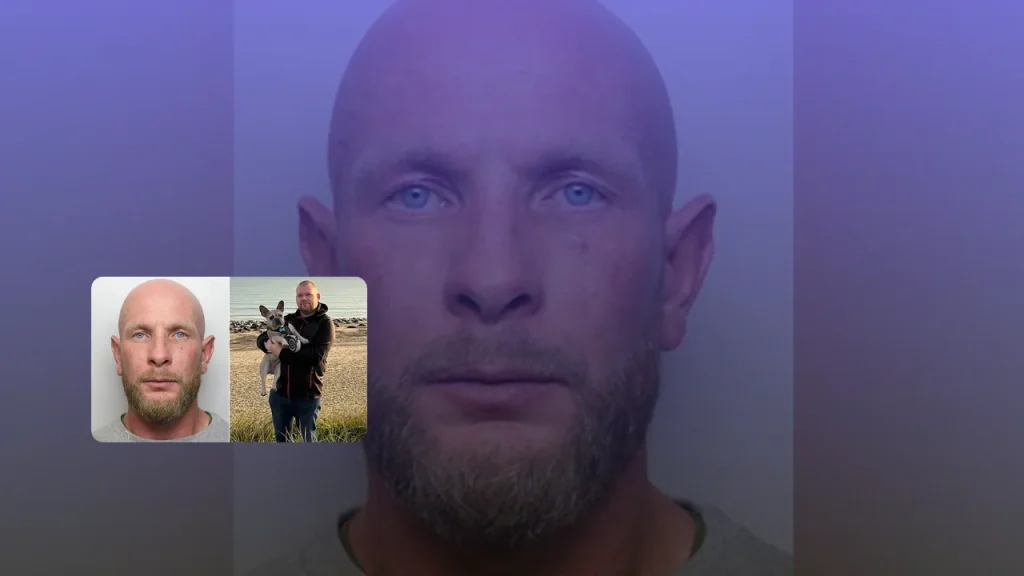
Who Is Billy Allison, the Man Convicted of Murder?
Billy Allison is a 36-year-old man from Shirley, Solihull, in the West Midlands.
He has been publicly associated with Raise the Colours, a British activist organization known for displaying Union flags and St George’s Cross flags in public spaces.
The organization has attracted attention for its nationalist messaging and activity concerning immigration.
Allison had appeared in public photographs and social media material connected with the group.
According to courtroom reporting, he also had experience participating in and winning boxing competitions.
His physical experience was relevant to the prosecution’s argument about the power, control, and intention behind the punches.
Allison stood approximately six feet five inches tall.
Prosecutors contended that the force he used against O’Gara and Cooper was deliberate rather than an uncontrolled accident.
Was Billy Allison a founder of Raise the Colours?
Some media accounts describe Allison as a founding member, while other reporting identifies him more generally as a member or activist.
His association with the group is well documented in contemporary reporting. His precise formal organizational status is less important to the criminal conviction and should not be treated as an essential finding of the jury.
What Happened to Adam Cooper, the Second Victim?
After striking O’Gara, Allison turned his attention to Adam Cooper, who was with O’Gara’s group.
Cooper, 62, was punched twice in the face.
He suffered a fractured eye socket and a broken nose.
During the trial, Cooper described the overwhelming force of the assault and said he had no opportunity to protect himself.
Prosecutors told the jury that Allison delivered all three punches against the two men within approximately six seconds.
The second attack resulted in a separate criminal charge under Section 18 of the Offences Against the Person Act 1861.
This provision concerns intentionally causing grievous bodily harm or unlawfully wounding with the relevant intent.
A Section 18 conviction is distinct from the less serious Section 20 offence, which does not require proof of an intention to cause really serious injury.
The jury found Allison guilty under Section 18.
That conviction carries a maximum penalty of life imprisonment, although the sentence imposed for Cooper’s injuries has not yet been determined.
What Evidence Led to Billy Allison’s Murder Conviction?
The prosecution presented several important categories of evidence.
1. CCTV footage of the dancefloor
Security-camera evidence showed the movements of Allison, O’Gara, and others before the assault.
Prosecutors argued that Allison deliberately approached O’Gara after the victim turned away.
The footage helped jurors assess whether the violence was sudden, accidental, defensive, or intentionally directed at the victims.
2. The severity of O’Gara’s injuries
Medical evidence established the extensive neck trauma and arterial damage caused by the punch.
The prosecution argued that the force involved was inconsistent with an ordinary minor assault.
However, the severity of an injury alone does not automatically establish the legal intent necessary for murder. The jury had to consider the broader evidence.
3. Witness testimony
O’Gara’s partner and Cooper described the unexpected nature of the violence.
Witness accounts supported the prosecution’s position that the victims had not threatened or physically provoked Allison.
4. Allison’s experience in boxing
The jury heard that Allison had previously participated in boxing events.
The prosecution used this background to argue that he understood the force and likely consequences of his actions.
Boxing experience does not automatically prove criminal intent, but it may be relevant when considered alongside how a particular assault was delivered.
5. Allison’s conduct after the attack
Following the assaults, Allison left the bar through a rear exit with Ben Cullen.
Court reporting described CCTV evidence showing the men exchanging T-shirts and moving through Lichfield.
Allison was eventually located at the Cathedral Hotel, where police arrested him at approximately 5 a.m.
The prosecution relied on events following the assaults as part of its wider account of Allison’s conduct.
These circumstances do not establish that Cullen committed the murder or that others accompanying Allison were criminally responsible.
Why Was Billy Allison Convicted of Murder Rather Than Manslaughter?
This is the most important legal question in the case.
Under the criminal law of England and Wales, murder does not always require proof that a defendant specifically wanted another person to die.
The Crown Prosecution Service explains that murder can be established where someone unlawfully causes another person’s death with the intention to kill or to cause grievous bodily harm.
Grievous bodily harm means really serious physical injury.
Therefore, a defendant may be convicted of murder even when the prosecution cannot prove that death was the intended outcome.
What was Allison’s defence?
Allison denied the murder charge and the Section 18 offence.
He admitted the alternative offences of manslaughter and causing grievous bodily harm under Section 20.
He testified that he regretted his actions and had not intended to cause serious injury or death.
He also accepted that the victims had not provoked him.
His position was essentially that he was responsible for unlawful violence and its consequences, but lacked the level of intent required for the more serious offences.
Why did the jury reject that position?
The jury convicted him of murder and Section 18 grievous bodily harm with intent.
The verdict establishes that jurors were satisfied beyond reasonable doubt that the necessary elements of those offences had been proved.
The evidence supporting the prosecution included the targeted nature of the violence, Allison’s fighting experience, the vulnerable location of the blows, and the circumstances surrounding the attacks.
The jury did not issue a detailed public explanation of how each individual juror assessed the evidence.
The crucial legal difference is intent to cause really serious injury, not whether Allison personally wished O’Gara would die.
This contrasts with other criminal cases in which a defendant is convicted of manslaughter rather than murder. For a U.S. comparison under different laws, see Laken Snelling Sentenced to 10 Years in Prison, What Happened in the Kentucky Newborn Death Case?.
Did Alcohol and Cocaine Affect Billy Allison’s Criminal Responsibility?
The court heard that Allison had been drinking and had taken cocaine before the attacks.
He suggested his judgment was affected by intoxication.
However, voluntary intoxication does not automatically excuse violent conduct under English criminal law.
The precise relevance of intoxication depends on the charged offence, the required mental element, and whether the prosecution has proved that element beyond reasonable doubt.
The prosecutor argued that intoxication did not prevent the jury from finding the necessary intent in Allison’s actions.
The jury ultimately convicted him of both offences requiring that higher level of intent.
The verdict should not be interpreted as a medical finding concerning Allison’s precise level of impairment.
Was the Murder Politically Motivated or Connected to Raise the Colours?
There is no established finding that Matthew O’Gara was murdered because of his political beliefs, ethnicity, nationality, or views on immigration.
Allison was associated with Raise the Colours, but that affiliation is distinct from the motive for the killing.
Court reporting established that jurors were not told about his connection to the organization.
That distinction is especially important because reporting on the verdict has emphasized his membership.
The criminal case focused on the violence at Ricco & Loren, the injuries, Allison’s intention, and the evidence establishing his responsibility.
The prosecution described the attack as unprovoked.
There is no verified finding that the killing was a hate crime, a politically organized attack, or an act directed by Raise the Colours.
Was there any apparent trigger for the violence?
During closing arguments, the prosecution discussed an earlier interaction involving O’Gara and Ryan Bridge on the dancefloor.
The evidence included a handshake and subsequent movements captured on CCTV.
Prosecutors suggested this interaction formed part of the sequence preceding Allison’s attack.
But the existence of an earlier social interaction does not establish a legally recognized provocation or excuse.
It also does not prove a wider political motive.
The court heard that Allison and the victims did not know one another.
Why Was Billy Allison Not Sentenced Immediately After the Verdict?
Following the November 18 convictions, Allison was remanded in custody.
His sentencing hearing was scheduled for January 5, 2027.
In serious criminal proceedings, courts may separate the verdict and sentencing stages to allow preparation of relevant material and consideration of statutory sentencing requirements.
The sentencing judge will address the mandatory life sentence for murder, the minimum term, and the separate Section 18 conviction.
The delay does not create uncertainty about the jury’s finding of guilt.
Allison has already been convicted.
How Long Could Billy Allison Go to Prison?
Allison must receive a life sentence for murder under English law.
The sentencing judge must determine the minimum term he must serve before he can become eligible for parole consideration, unless a whole-life order is imposed.
Under Schedule 21 of the Sentencing Act 2020, the minimum term depends on factors including the seriousness of the murder and applicable aggravating or mitigating circumstances.
Potentially relevant matters include the nature of the assault, the absence of provocation, any applicable findings concerning planning or vulnerability, and the additional serious violence against Cooper.
The court will decide which factors are legally established and applicable.
There is no confirmed minimum term in Allison’s case yet.
It would be inaccurate to report that he has already received 15, 20, 25, or 30 years.
Does a life sentence mean he can never be released?
Not necessarily.
Under the law of England and Wales, a mandatory life sentence normally includes a minimum period of imprisonment.
Once that minimum is served, release is not automatic.
The Parole Board must assess whether detention remains necessary for public protection.
If a life-sentence prisoner is released, the sentence continues, and the individual remains subject to licence conditions and possible recall.
A whole-life order is a separate outcome reserved for cases meeting stringent statutory criteria.
For comparison with the different U.S. system of indeterminate life sentences, see Bob Lee Murder Case, Why Nima Momeni Got 16 Years to Life, What Happened, and the Family’s Wrongful Death Lawsuit.
What Did Matthew O’Gara’s Family Say About the Guilty Verdict?
In a statement released through Staffordshire Police, O’Gara’s family thanked the emergency workers who attended him, the hospital staff who cared for him, and the investigators and court personnel involved in the case.
They also acknowledged the support they had received from his friends.
The family said the criminal proceedings had produced a measure of justice, but the verdict could not undo their loss.
Detective Inspector Lisa Holland, who led the investigation, emphasized that O’Gara did nothing to threaten Allison.
She described the assault as unprovoked and credited witnesses, the jury, and the victim’s family for their roles during the investigation and prosecution.
The family must now await sentencing to learn the minimum term imposed for the murder.
Billy Allison Murder Case Timeline
| Date | Development |
| May 24, 2026 | Allison attacks O’Gara and Cooper at Ricco & Loren in Lichfield |
| May 25, 2026 | Police investigation continues following Allison’s arrest |
| May 26, 2026 | O’Gara dies at Queen Elizabeth Hospital |
| May 28, 2026 | Allison appears at Stafford Crown Court on murder and GBH charges |
| September 1, 2026 | Allison pleads not guilty to murder and Section 18 GBH |
| October 28, 2026 | Prosecution opens the murder trial |
| November 2026 | Jury hears medical, CCTV, witness, and defence evidence |
| November 18, 2026 | Jury finds Allison guilty of murder and Section 18 GBH |
| November 19, 2026 | Allison remains remanded, awaiting sentencing |
| January 5, 2027 | Sentencing scheduled at Stafford Crown Court |
What Happens Next in the Billy Allison Murder Case?
The January 5 sentencing hearing is now the central upcoming legal event.
The judge will determine the applicable minimum term for murder and the punishment for the separate assault on Cooper.
The court may also hear victim personal statements addressing the effects of the crimes.
After sentencing, Allison may have avenues to seek permission to appeal his conviction or sentence under the rules governing criminal appeals in England and Wales.
An appeal would not automatically overturn the verdict.
Whether any appeal is filed, permitted, or successful remains unknown.
For a comparison of how criminal trial evidence, verdicts, and subsequent proceedings can develop under U.S. federal law, see Sandra Birchmore Case, Matthew Farwell’s Federal Murder Trial, Evidence and What Happens Next.
Frequently Asked Questions About Billy Allison and Matthew O’Gara
Who is Billy Allison?
Billy Allison is a 36-year-old man from Shirley, Solihull, and an activist associated with Raise the Colours. He was convicted of murdering Matthew O’Gara and seriously assaulting Adam Cooper on November 18, 2026.
Who was Matthew O’Gara?
Matthew O’Gara was a 44-year-old publican involved with The Plough in Huddlesford, Staffordshire. He died on May 26, 2026, after being punched in the neck at a Lichfield bar.
Why did Billy Allison kill Matthew O’Gara?
The court established that Allison carried out an unprovoked fatal attack. His precise personal motive was not conclusively established in the reported trial, and no political or racial motive was proved.
What happened to Adam Cooper?
Adam Cooper was punched twice during the same incident and suffered a fractured eye socket and nose. Allison was convicted of causing grievous bodily harm with intent.
Was Billy Allison convicted of murder or manslaughter?
He was convicted of murder. Although he admitted the lesser offence of manslaughter, the jury returned a guilty verdict on the murder charge.
Was Raise the Colours involved in the murder?
No organizational involvement has been established. Allison’s association with Raise the Colours was reported publicly, but the jury was not told about it during the trial.
Has Billy Allison been sentenced?
No. As of November 19, 2026, sentencing is scheduled for January 5, 2027.
Will Billy Allison get a life sentence?
Yes. Murder carries a mandatory life sentence in England and Wales. The judge has yet to determine the minimum term and address the separate GBH conviction.
Bottom Line: Murder Conviction Established, Sentencing Still Ahead
The November 18 verdict brings the central trial to a close in the killing of Matthew O’Gara.
Billy Allison was convicted of murder for the fatal neck punch and of intentionally causing grievous bodily harm to Adam Cooper during the same unprovoked incident.
The verdict establishes his criminal responsibility for both attacks.
His membership in Raise the Colours has attracted substantial media attention, but the available court reporting does not establish that the murder was politically motivated.
The next major development is January 5, 2027, when Stafford Crown Court is scheduled to impose sentence and determine the minimum prison term Allison must serve for murder.
Sources and Legal References
- Staffordshire Police, November 18, 2026: Man found guilty of murder following death of Matthew O’Gara. Official confirmation of the convictions, circumstances, family statement, and sentencing date.
https://www.staffordshire.police.uk/news/staffordshire/news/2026/november/man-found-guilty-of-murder-following-death-of-matthew-ogara/ - Crown Prosecution Service: Homicide: Murder, Manslaughter, Infanticide and Related Offences. Official legal guidance explaining the required intent and distinctions between homicide offences.
https://www.cps.gov.uk/prosecution-guidance/homicide-murder-manslaughter-infanticide-and-causing-or-allowing-death-or - Crown Prosecution Service: Offences Against the Person, Incorporating the Charging Standard. Official guidance concerning Section 18 and Section 20 GBH offences.
https://www.cps.gov.uk/prosecution-guidance/offences-against-person-incorporating-charging-standard - UK Sentencing Council: Life Sentences. Official explanation of mandatory life imprisonment, minimum terms, and parole eligibility.
https://sentencingcouncil.org.uk/about-sentencing/types-of-sentence/life-sentences/ - UK Legislation: Offences Against the Person Act 1861, Section 18.
https://www.legislation.gov.uk/ukpga/Vict/24-25/100/section/18 - UK Legislation: Sentencing Act 2020, Schedule 21.
https://www.legislation.gov.uk/ukpga/2020/17/schedule/21 - ITV News Central, October 28, 2026: Contemporaneous courtroom reporting on the prosecution opening, injuries, and defence pleas.
https://www.itv.com/news/central/2026-10-28/pub-owner-killed-by-punch-to-neck-in-unprovoked-and-senseless-attack - Press Association courtroom reporting, November 18, 2026: Additional trial evidence, CCTV findings, witness accounts, and jury verdict, carried by the Express & Star.
https://www.expressandstar.com/news/raise-the-colours-member-guilty-of-murdering-lichfield-publican-with-punch-to-neck-in-bar-9359858
Editorial note: The guilty verdict and sentencing date are supported by Staffordshire Police. More detailed trial testimony is attributed to contemporaneous courtroom reporting. The minimum prison term, any appeal, and the complete sentencing findings remain undetermined.
This article provides general legal information, not legal advice. English criminal law differs from United States criminal law.
By All About Lawyer — Legal Content Researcher
Last updated: November 19, 2026
About the Author
Israr Ahmad is a legal content researcher with 4+ years of experience covering class action settlements and consumer rights cases. He has researched and published coverage of 2,500+ settlements using verified court records, settlement administrator filings, and government sources. Learn more about Israr.