
Taxotere Lawsuit 2026, Cancer Survivors Allege Permanent Hair Loss and Eye Damage, What’s Happening Now and What You Can Do
You survived cancer. You were never told the chemotherapy drug you were given could permanently take your hair — or damage your eyesight forever. That is the experience at the heart of the Taxotere litigation, one of the longest-running pharmaceutical mass tort cases in the United States. As of April 2026, there were 683 lawsuits pending for hair loss and 159 pending for eye damage in Louisiana federal court, with litigation ongoing and no settlements announced.
This article explains what Taxotere is, what is being alleged, where the cases stand today, and — most importantly — what you can do if you or someone you love was affected.
What Is Taxotere — and Why Does It Matter?
Docetaxel, commonly known by its brand name Taxotere, is a chemotherapy drug that treats several cancer types, including breast and prostate cancer. It belongs to the taxane class of chemotherapy drugs and works by stopping cancer cells from dividing. Originally approved in 1996 to treat breast cancer, Taxotere has since received approval to treat several other cancers. Sanofi manufactures and distributes Taxotere.
Taxotere is administered to the patient intravenously in a clinic or hospital. Studies suggest that Taxotere is no more effective than alternative chemotherapy treatments that do not cause permanent alopecia — but Taxotere can cause permanent alopecia, while other chemotherapy drugs cause only temporary alopecia.
That distinction is the center of gravity for this entire legal fight: if patients had been told the truth about this specific risk, many say they would have asked for a different drug.
Two Lawsuits in One: Hair Loss AND Eye Damage
Most people have heard about the Taxotere hair loss lawsuits. But there is a second, separate litigation that fewer people know about — involving serious eye injuries. Understanding both is essential.
The Hair Loss Claims
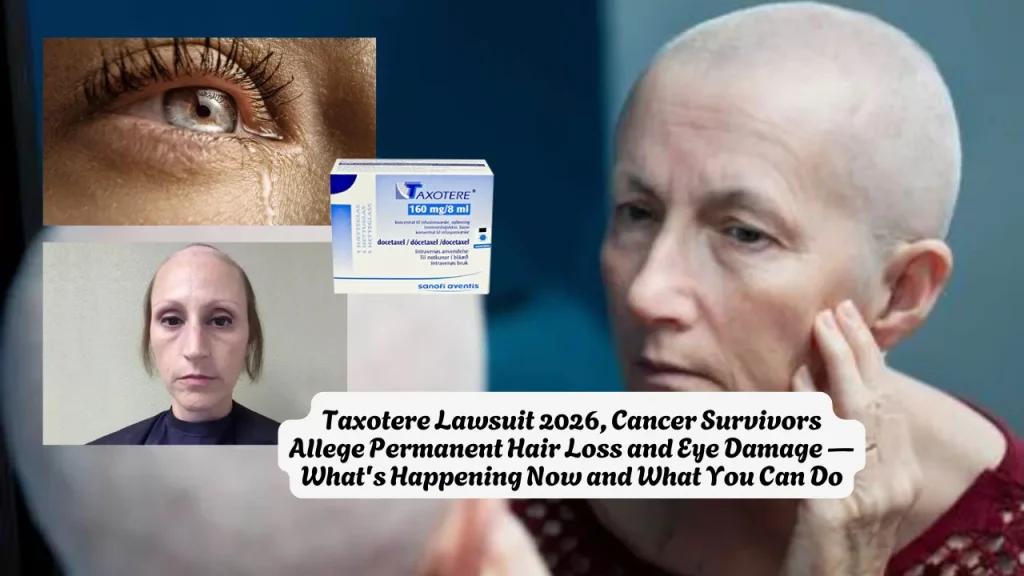
Many cancer survivors expected hair regrowth after completing chemotherapy. However, patients treated with Taxotere have reported permanent, irreversible hair loss on the scalp, eyebrows, eyelashes, and other body areas.
Temporary hair loss during chemotherapy is well-known and expected. What was not adequately disclosed, plaintiffs allege, is that Taxotere’s hair loss can be permanent — a condition medically called permanent alopecia. Manufactured by France-based Sanofi-Aventis, Taxotere underwent an FDA label revision in December 2015 adding a warning of permanent alopecia due to a significant number of cases of permanent hair loss being reported to the FDA.
The critical question the lawsuits ask is: why did that warning take so long? Sanofi did not include this risk on the U.S. label until 2015 — years after reports surfaced and warnings were issued in Europe and Canada.
Related article: Jury Awards $11.8 Million to Man Blinded by LAPD Projectile During 2020 Dodgers World Series Celebration
The Eye Injury Claims
Taxotere has been linked to tear duct damage, which can cause chronic watery eyes, infections, inflammation, and canalicular stenosis — a condition in which the tear ducts become narrowed or blocked.
To understand this simply: your eyes have tiny drainage channels that move tears away from the eye’s surface. Taxotere can damage or scar those channels. When they narrow or close, tears cannot drain properly. The result is constant, uncontrollable tearing — a condition called epiphora — that blurs vision, causes swelling and irritation, and makes everyday tasks difficult or impossible.
Reported eye injuries include lacrimal duct obstruction, canalicular stenosis, punctal stenosis, excessive tearing (epiphora), and blocked tear ducts. Some victims have required surgery to repair their tear ducts, while others have experienced irreversible vision loss or lasting vision problems that impact daily life.
The first study linking Taxotere to excessive eye watering was in the early 2000s. Researchers published the study in JAMA Ophthalmology, concluding epiphora is a common adverse effect of weekly docetaxel treatment, occurring in 77% of patients who received weekly docetaxel treatments.
The Core Legal Allegation: Sanofi Knew and Didn’t Tell You
Both the hair loss and eye injury claims rest on the same fundamental legal theory: failure to warn. Under U.S. pharmaceutical product liability law, drug manufacturers have a duty to disclose known risks to patients and doctors. If they knew about a serious risk and concealed or downplayed it, they can be held liable for the harm that results.
Taxotere lawsuits claim the manufacturer downplayed the side effects. Some even allege the drug maker offered bribes and training to employees to continue misrepresenting the drug’s safety and effectiveness. Many of the claimants further allege the company didn’t properly test the drug in the first place.
Plaintiffs argue that Sanofi knew about the risks of permanent eye damage, including excessive tearing and canalicular stenosis, yet did not adequately inform patients and healthcare providers about these hazards. Many believe that better warnings could have prevented some of the injuries suffered.
The Litigation Structure: Two Separate Federal MDLs
Because the number of lawsuits became enormous, a special federal legal procedure called Multi-District Litigation (MDL) was used to consolidate them. An MDL does not mean everyone is in a single class action — each plaintiff still has their own individual case. But all the cases are managed together before a single judge to save time and ensure consistent legal rulings.
Hair loss lawsuits are consolidated in federal MDL 2740, while eye injury lawsuits are consolidated in federal MDL 3023. Both MDLs are before Judge Jane Triche Milazzo in Louisiana federal court.
| MDL 2740 | MDL 3023 | |
| Issue | Permanent hair loss (alopecia) | Eye injuries / vision damage |
| Established | October 2016 | 2022 |
| Court | Eastern District of Louisiana | Eastern District of Louisiana |
| Judge | Jane Triche Milazzo | Jane Triche Milazzo |
| Active cases (April 2026) | 683 | 159 |
| Settlements reached | None | None |
Where Things Stand Today: The Honest Picture
The Taxotere litigation has had real setbacks that any affected person deserves to know about. Honesty matters here.
Hair Loss MDL — Tough Road, Still Active
Sanofi won two bellwether trials in the hair loss litigation — one in September 2019 and another in November 2021. In litigation, bellwether trials are test cases chosen to go to trial first. Their outcomes help both sides gauge how juries respond, and often influence whether the defendant chooses to settle the remaining cases.
In the most recent verdict, returned November 19, 2021, the jury found that Sanofi provided sufficient warning to a Louisiana woman, Elizabeth Kahn. Plaintiffs’ attorneys indicated the decision would be appealed, expressing confidence that future evidence would result in positive verdicts.
A District Court judge also dismissed approximately 200 hair loss lawsuits, claiming that the injuries occurred after the label update in 2015. However, litigation continues with hundreds of remaining cases.
Eye Injury MDL — Mixed Signals, Critical Moment
The eye injury litigation is more recent and the legal picture is more complicated.
In December 2025, in a major win for people who have filed lawsuits, the judge overseeing the Taxotere lawsuits denied Sanofi’s motion for summary judgment — meaning the cases against Sanofi can move forward toward trial.
However, in the same MDL: in April 2026, the judge overseeing the Taxotere eye injury lawsuits granted summary judgment to four generic manufacturers of the drug. This is an unfortunate development for people who filed lawsuits after taking generic versions of Taxotere. Lawsuits involving Sanofi still remain.
The total docket declined from 375 total cases in March 2026 to 159 total cases in April 2026 — a net reduction of 216 cases, which likely indicates dismissals, settlements, or other case resolutions.
In plain terms: if you took the brand-name Taxotere (made by Sanofi), your case has stronger footing. If you took a generic version of docetaxel, the April 2026 ruling is a significant setback and you should speak with an attorney immediately.
What Compensation Could Look Like
As of April 2026, there were no Taxotere lawsuit settlement payouts to date in either the hair loss or vision loss litigations. No official settlement fund exists yet. This litigation has not reached resolution.
However, for future settlements or verdicts, attorneys and legal analysts have offered estimates based on comparable pharmaceutical litigation. Although settlement amounts have not yet been finalized, legal analysts estimate that future payouts could range from $20,000 to over $400,000 per claimant, depending on the severity of damage and medical treatment required.
Factors that typically influence individual compensation in cases like this include:
- Severity of harm — permanent total baldness vs. partial hair thinning; complete tear duct blockage requiring surgery vs. mild tearing
- Documented medical treatment — surgeries, specialist visits, ongoing medications
- Impact on daily life and mental health — especially relevant for cancer survivors whose appearance and quality of life are directly affected
- Whether the brand-name drug (Sanofi’s Taxotere) or a generic was used
- Statute of limitations — whether the claim was filed within the required legal time window
Do You Qualify? Who Can File a Taxotere Lawsuit
You may be eligible to file or join a Taxotere lawsuit if you meet the following criteria:
For hair loss claims (MDL 2740):
- You received Taxotere (docetaxel) as part of cancer treatment
- You experienced permanent hair loss — not just temporary chemotherapy-related hair loss that grew back
- Your permanent hair loss affects the scalp, eyebrows, eyelashes, or other body areas
- You were not adequately warned that hair loss could be permanent
For eye injury claims (MDL 3023):
- You received Taxotere (docetaxel) as part of cancer treatment
- You developed chronic excessive tearing (epiphora), blocked or narrowed tear ducts (canalicular or punctal stenosis), blurred vision, or other lasting eye damage
- You received the brand-name Taxotere made by Sanofi (note: claims against generic manufacturers have recently been significantly narrowed)
Important: These claims are highly time-sensitive. Statutes of limitations — the legal deadlines to file — vary by state and by when you discovered or should have discovered the harm. Courts have dismissed cases that were filed too late. If you believe you qualify, do not wait.
What to Do If You or a Loved One Was Affected
Step 1: Document your medical history. Gather records of your cancer treatment, including the specific drugs you received, the dates, the dosages, and which facility administered them. Get copies of your pathology reports, chemotherapy orders, and pharmacy records.
Step 2: Document your injuries. Photographs of hair loss over time, ophthalmology records for eye symptoms, receipts for wigs, and records of any surgeries or procedures related to your symptoms are all valuable.
Step 3: Contact a mass tort attorney who handles Taxotere cases. Most offer free, no-obligation consultations and work on a contingency fee basis — meaning you pay nothing unless you win. An attorney can assess whether you received brand-name Taxotere or a generic and whether your claim remains viable given recent court rulings.
Step 4: Act quickly. The statute of limitations clock runs from different starting points in different states — some from when you finished treatment, others from when you first noticed permanent symptoms, others from when you reasonably should have known the drug could have caused your condition. Do not assume you have unlimited time.
The Bigger Picture: Why This Case Matters Beyond the Courtroom
Permanent hair loss may sound less severe than other drug injuries. But consider the context: these are overwhelmingly women who fought breast cancer, endured aggressive treatment, and were counting on their bodies to heal. To emerge from that battle permanently bald — especially when that outcome was never disclosed, and when alternative drugs without that risk existed — is a profound harm.
By contrast, plaintiffs only lost their hair. At first glance, losing your hair may seem somewhat trivial. But permanent hair loss can be just as mentally and emotionally devastating, especially for a woman recovering from breast cancer.
The eye injury cases carry their own devastating weight. Vision-related symptoms that require surgery, cause constant tearing, blur sight, and prevent normal daily activity represent a serious and lasting quality-of-life harm — again, one that plaintiffs allege was preventable with honest disclosure.
Sanofi is facing over 14,000 lawsuits over failure to warn that its Taxotere cancer treatment could lead to permanent hair loss. The company had revenue of approximately $40 billion in 2020. The disparity between corporate capacity and individual suffering is part of why this litigation resonates so widely.
Frequently Asked Questions
What is Taxotere and who makes it?
Docetaxel, commonly known by its brand name Taxotere, is a chemotherapy drug that treats breast cancer, prostate cancer, and other cancers. It belongs to the taxane class of drugs and works by stopping cancer cells from dividing. Sanofi manufactures and distributes Taxotere, which was originally approved by the FDA in 1996.
What are people suing Sanofi for?
Plaintiffs allege two main harms: permanent, irreversible hair loss (alopecia) and serious eye injuries including chronic tearing, blocked tear ducts, and vision damage. The central claim in both cases is that Sanofi did not include the risk of permanent hair loss on the U.S. label until 2015 — years after reports surfaced and warnings were issued in Europe and Canada.
Has anyone won money yet?
As of April 2026, there were no Taxotere lawsuit settlement payouts in either the hair loss or vision loss litigations. No settlement fund has been announced. The litigation remains active and ongoing.
What happened in the trials so far?
Sanofi won two bellwether trials in the hair loss litigation — one in September 2019 and another in November 2021. However, in December 2025, the judge denied Sanofi’s motion for summary judgment in the eye injury MDL, allowing those cases to continue toward potential trial.
I took a generic version of docetaxel, not the brand-name Taxotere. Can I still sue?
This is now a critical question. In April 2026, the judge overseeing the Taxotere eye injury lawsuits granted summary judgment to four generic manufacturers of the drug — an unfortunate development for people who filed lawsuits after taking generic versions. Lawsuits involving Sanofi still remain. If you took a generic, speak to an attorney as soon as possible to understand your options.
How much could I receive if the cases settle?
No official amounts have been set. Legal analysts estimate that future payouts could range from $20,000 to over $400,000 per claimant, depending on the severity of damage and medical treatment required. These are estimates only — no settlement has been reached.
Is it too late to file?
Potentially — depending on your state and circumstances. Statute of limitations rules vary. Some cases have already been dismissed for being filed too late. Consulting a mass tort attorney promptly is strongly advised. Most offer free case evaluations.
If you or a loved one is experiencing mental health distress related to cancer recovery, permanent hair loss, or vision problems, please consider speaking with a healthcare provider or counselor. Cancer survivorship organisations such as the American Cancer Society (cancer.org) offer free support resources.
Last Updated: April 17, 2026
This article is for informational purposes only and does not constitute legal or medical advice. Allegations in complaints are not findings of fact. All parties are presumed innocent unless and until proven otherwise in court. If you believe you have a claim, consult a licensed attorney qualified in pharmaceutical mass tort litigation.
About the Author
Israr Ahmad is a legal content researcher with 4+ years of experience covering class action settlements and consumer rights cases. He has researched and published coverage of 2,500+ settlements using verified court records, settlement administrator filings, and government sources. Learn more about Israr.