
Mario Alberto Morales ICE Indictment, Houston Grand Jury Charges ICE Officer With Aggravated Assault After SUV Strikes Miguel Parra Hernandez
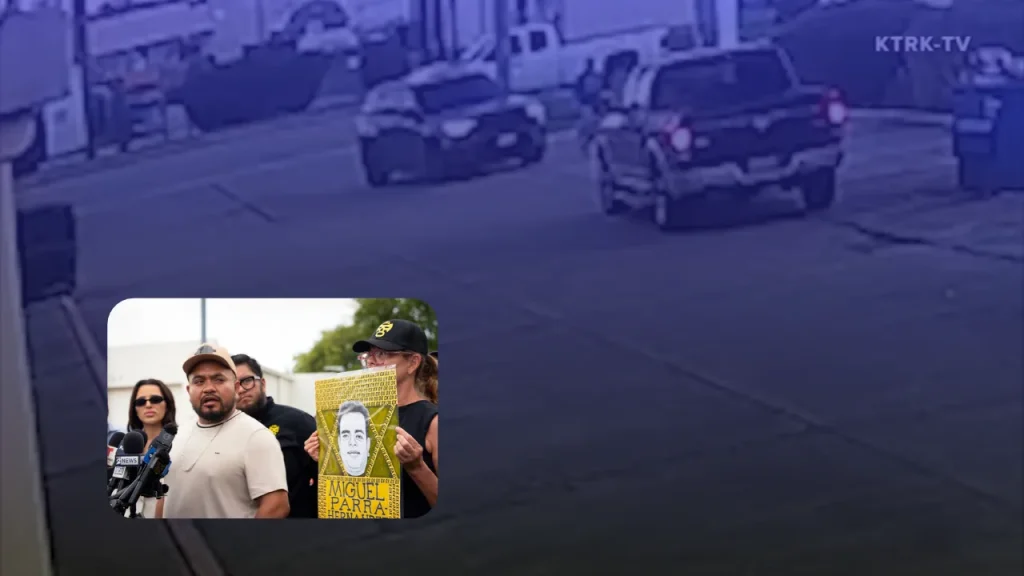
A Harris County, Texas, grand jury indicted U.S. Immigration and Customs Enforcement (ICE) officer Mario Alberto Morales on Friday, October 30, 2026. The charge is aggravated assault with a deadly weapon, reported as a second-degree felony. Prosecutors allege Morales drove an unmarked SUV into 48-year-old Miguel Parra Hernandez as he ran away during an immigration-enforcement operation in Houston on October 10, 2026.
ICE and Morales’ attorney dispute that account and call the collision an accident. Morales has not been convicted and is presumed innocent. This is a criminal prosecution, not a class action, so there is no settlement fund and no claim form.
READER ACTION BOX: What readers should know
- Follow official sources. Case updates will come from the Harris County District Attorney’s Office and the court record, not social media.
- If you were hurt in an enforcement encounter, talk to a licensed civil-rights or personal injury attorney soon. A claim against the federal government under the Federal Tort Claims Act must generally be presented in writing within two years (28 U.S.C. § 2401(b)).
- Save evidence. Keep videos, photos, medical records and the names of any witnesses.
- This article is about allegations. Nothing here is a finding that Morales committed a crime.
Mario Alberto Morales ICE Indictment: Quick Facts
| Detail | Information |
| Defendant | Mario Alberto Morales, 33 |
| Employer and role | ICE Enforcement and Removal Operations officer |
| Alleged victim | Miguel Parra Hernandez, 48, Mexican construction worker |
| Incident date | October 10, 2026, about 7:30 a.m. |
| Location | Near Texas Highway 6 and Clay Road, Harris County (Houston) |
| Vehicle | Unmarked black 2025 Jeep Grand Cherokee |
| Indictment date | October 30, 2026 |
| Charge | Aggravated assault with a deadly weapon (second-degree felony) |
| Prosecutor | Harris County District Attorney Sean Teare |
| Defense attorney | David Lindenmuth |
| Injuries reported | Broken leg (multiple fractures), ankle injuries, other trauma |
| Morales’ status | Not reported in custody as of October 30; attorney says he expects to surrender |
| ICE’s position | Says the allegation of intentional ramming is false |
| Conviction | None |
| Civil lawsuit | None identified |
| Settlement or claim form | None. This is a criminal case. |
What Happened on October 10, 2026? The Houston ICE Vehicle Incident
Around 7:30 a.m., ICE agents in unmarked vehicles tried to stop a truck driven by Miguel Parra Hernandez. According to authorities, he and a passenger ran on foot into a strip-mall parking lot. Morales, driving the unmarked Jeep, chased them.
According to investigators’ descriptions of surveillance and body-camera footage, the Jeep crossed a median, entered the parking lot, turned toward Parra Hernandez and struck him as he ran. A Harris County investigator’s sworn affidavit says the Jeep accelerated and lined up directly with him while his back was to the vehicle. The moment of impact is partly blocked from view by another vehicle in one video. Reports say the Jeep ran over both of his legs.
ICE says Parra Hernandez ran in front of the vehicle and calls the intentional-ramming allegation “reckless and false.”
What Does the ICE Body-Camera Video and 911 Call Show?
Authorities released additional body-camera footage and a 911 recording on October 30. According to news reports of the footage:
- Parra Hernandez cries out in Spanish that Morales ran over him.
- Morales answers that the man was “hit with a car,” and adds, “I was coming in and I hit him with the car.”
- In a 911 call, Morales reportedly told the dispatcher the man “hit my car” as he tried to get around him.
Acknowledging that a car struck someone does not by itself prove the collision was intentional. The legal question is Morales’ mental state, and the defense will argue he was trying to avoid another vehicle. The prosecution says the footage supports an intentional turn toward Parra Hernandez.
What Did District Attorney Sean Teare Say About the Evidence?
Teare called the evidence “as clear as any that I’ve ever prosecuted or investigated” and said Morales “aggressively steered his vehicle into” Parra Hernandez. He also said an ICE badge does not give anyone free rein to injure people or violate constitutional rights. He rejected ICE’s claim that local authorities lack jurisdiction, calling it “patently false.” These are the prosecutor’s statements, not court findings.
Who Is Miguel Parra Hernandez?
Teare said Parra Hernandez is a day laborer who does stucco work and has lived in the Houston area for more than 30 years. He said Parra Hernandez has no known criminal record and no active deportation order, and was driving to work when stopped. His supporters say he was not the target of the operation.
Reports say he required surgery and was recovering at a rehabilitation facility while remaining in ICE custody. Teare said his office would support U visa petitions for him and two other detainees involved.
Why Was ICE Following the Truck? Disputes About the Target’s Identity
ICE has said agents were targeting a man identified as José Mendoza Cervantes, whom the agency described as having a final removal order and prior arrests. Immigrant-rights group FIEL Houston disputed parts of that account. News reports say a family member told The New York Times the man pictured by ICE died in 2017. DHS had not publicly addressed that claim as of October 30. Teare said investigators found no evidence that Parra Hernandez was in a vehicle with ICE’s stated target.
A mistaken target does not by itself make Morales guilty of aggravated assault. The charge depends on his conduct and mental state. The identification question may still matter to whether the pursuit and force used were justified.
Why Did Harris County Investigators Say the Jeep Was Taken Away?
Teare said investigators were preparing to secure the Jeep and download its electronic data, but ICE personnel drove it from the scene before a search warrant could be executed. Reports say a court filing on October 23 stated investigators had not been given access to the vehicle.
Modern vehicles can store data such as speed, braking and acceleration, which could help show whether the driver braked or steered toward a person. The public documents show that investigators lacked access at that stage. They do not prove that any data was erased or destroyed. Teare also said two people already detained were in the back of Morales’ Jeep during the pursuit, and he questioned whether that followed normal safety practice.
Who Is Mario Alberto Morales?
Morales is a 33-year-old Brownsville, Texas, native who was hired by ICE during a major recruitment surge in August 2025. Reports say he previously worked as an ICE contractor transporting detainees and had applied unsuccessfully to the Border Patrol. His attorney describes him as a military veteran and pastor. The Houston Chronicle reported that he was placed on administrative leave, which is an employment measure and not a criminal finding.
Teare criticized the training of recent ICE hires at his news conference. Those are the prosecutor’s views, not judicial findings.
Related article: Riverchase Galleria Shooting, One Person Shot During Food Court Fight, Hoover Police Report No Active Threat
What Is Mario Alberto Morales Charged With Under Texas Law?
Assault: Texas Penal Code § 22.01. A person commits assault by intentionally, knowingly or recklessly causing bodily injury to another. Bodily injury includes physical pain or impairment.
Aggravated assault: Texas Penal Code § 22.02. Assault becomes aggravated when it causes serious bodily injury or the person uses or exhibits a deadly weapon. Prosecutors allege the Jeep was the deadly weapon.
Deadly weapon: Texas Penal Code § 1.07(a)(17). Includes anything that, in the way it is used or intended to be used, can cause death or serious bodily injury. A vehicle is not automatically a deadly weapon in every collision. It depends on how it was used.
Punishment: Texas Penal Code § 12.33. A second-degree felony carries two to 20 years in prison and a fine of up to $10,000. That is the statutory range if convicted, not a prediction of any sentence.
Justification defenses: Texas Penal Code Chapter 9. The defense may raise justification defenses, such as the rules on force used in making an arrest, as well as the argument that the collision was an accident and not intentional.
What prosecutors must prove. Beyond a reasonable doubt, they must show Morales acted with the required mental state, caused bodily injury and used the vehicle as a deadly weapon. An indictment is a formal accusation, not evidence of guilt.
Can Texas Prosecutors Charge a Federal ICE Officer?
ICE argues that local authorities cannot investigate federal officers acting in the course of their duties. Federal employment does not give blanket immunity from state criminal law, but federal law offers an officer ways to contest a state prosecution.
Federal officer removal: 28 U.S.C. § 1442. A federal officer sued or prosecuted in state court may seek to move the case to federal court. Morales’ attorney says he expects to seek that. In Mesa v. California, 489 U.S. 121 (1989), the Supreme Court held that removal requires the officer to raise a federal defense. Removal does not dismiss the charges.
Supremacy Clause immunity. Under In re Neagle, 135 U.S. 1 (1890), a federal officer can be shielded from state prosecution when acting under federal authority and doing what was necessary and proper to carry out federal duties. The core dispute here is whether the alleged collision was a lawful enforcement action or an unlawful use of a vehicle against a man running away. A federal court may have to decide that if the case moves.
What Federal Use-of-Force Rules Could Matter?
8 C.F.R. § 287.8. Immigration officers may use non-deadly force only when they have reasonable grounds to believe it is necessary. Deadly force is allowed only to protect the officer or others from imminent danger of death or serious physical injury.
Fourth Amendment and Graham v. Connor, 490 U.S. 386 (1989). Excessive-force claims are judged by objective reasonableness, looking at factors such as the seriousness of the suspected offense, any immediate threat and whether the person was fleeing. This civil-rights standard is separate from the Texas elements of aggravated assault, and the indictment is not a finding of a constitutional violation.
Can Miguel Parra Hernandez Get a U Visa or Sue for Damages?
U visa. A U visa (8 U.S.C. § 1101(a)(15)(U)) is for victims of qualifying crimes who suffered substantial harm and help law enforcement. Prosecutor support helps, but USCIS makes the final decision. It does not automatically grant status, stop detention or guarantee release.
Civil claims. The criminal case does not award him money. Possible civil routes include the Federal Tort Claims Act, which allows certain claims against the United States (28 U.S.C. § 1346(b)). It requires an administrative claim first (28 U.S.C. § 2675) within two years (28 U.S.C. § 2401(b)). The FTCA also has a special rule for certain intentional torts by federal law-enforcement officers (28 U.S.C. § 2680(h)). A damages claim against an individual federal officer directly under the Constitution faces major limits after Egbert v. Boule, 596 U.S. 482 (2022). No civil lawsuit by Parra Hernandez had been identified as of October 30, 2026.
What Rights Do the Defendant and Victim Have in the Texas Criminal Case?
Discovery: Texas Code of Criminal Procedure Art. 39.14. Known as the Michael Morton Act, it requires prosecutors to share evidence with the defense, which here could include video, vehicle data, radio traffic and medical records.
Victim rights: Texas Code of Criminal Procedure Chapter 56A. Crime victims generally have the right to notice of proceedings and to be heard at certain stages, such as through a victim impact statement.
Mario Alberto Morales ICE Indictment Timeline
| Date | Development |
| August 2025 | Morales is hired by ICE, according to reports. |
| October 10, 2026 | ICE pursuit near Highway 6 and Clay Road; Parra Hernandez is struck. |
| October 13, 2026 | District Attorney Teare announces an independent criminal investigation and questions ICE’s account. |
| October 23, 2026 | Court filing says investigators had not been given access to the Jeep. |
| October 30, 2026 | Grand jury returns the indictment; video and 911 audio are released. |
What Happens Next in the Morales Case?
- Arrest or surrender. Prosecutors said a warrant is expected, and Morales’ attorney says he will surrender once the case is assigned to a court.
- First appearance. Morales will be told of the charge and bond conditions will be set.
- Possible federal removal. He may file to move the case to federal court under 28 U.S.C. § 1442 and raise Supremacy Clause immunity.
- Pretrial motions and discovery. Both sides will contest the video, the vehicle-data dispute and the immunity questions.
- Trial or other resolution. If it goes to trial, prosecutors must prove each element beyond a reasonable doubt.
No trial date has been announced as of October 30, 2026.
Why the Morales ICE Indictment Matters
Reports describe Morales as believed to be the first federal immigration agent charged in Texas in connection with enforcement actions during the current administration’s intensified operations. The case also comes amid a separate investigation in the Houston area into a fatal ICE-related shooting in July 2026. That investigation is separate and does not decide the facts here. Advocates cite the Morales case as an example of excessive force. ICE and supporters of stricter enforcement call the charge politically motivated, and ICE has called it a “political stunt.” The broader question is how far local prosecutors can go in holding federal officers to state criminal law.
For more coverage of federal immigration enforcement and use-of-force cases, see:
- Judge Blocks Deportation Of Oscar Belgal After ICE Shooting
- Renee Good Lawsuit, Family Sues U.S. Government and Federal Officials Over January ICE Shooting
- ICE Re-Arrests Vasquez Perdomo Plaintiff In LA Immigration Raids Class Action Lawsuit
Mario Alberto Morales ICE Indictment FAQ
Who is Mario Alberto Morales?
A 33-year-old ICE Enforcement and Removal Operations officer indicted by a Harris County grand jury on October 30, 2026.
What is Mario Alberto Morales charged with?
Aggravated assault with a deadly weapon under Texas Penal Code § 22.02, reported as a second-degree felony.
How much prison time could Morales face?
If convicted of a second-degree felony, two to 20 years and a fine of up to $10,000. He has not been convicted.
What happened to Miguel Parra Hernandez?
He was struck by the ICE officer’s SUV in a parking lot while running away and suffered a broken leg, ankle injuries and other trauma. He required surgery and was recovering in a rehabilitation facility while in ICE custody.
Did the ICE officer hit him on purpose?
That is the prosecution’s allegation. ICE and Morales’ attorney say it was not intentional. A court has not decided the question.
What did Morales say after the collision?
According to news reports of the footage, he said the man “was hit with a car” and “I was coming in and I hit him with the car.” Those words acknowledge the impact but do not alone prove intent.
Can Texas prosecute a federal ICE officer?
Potentially, yes. The officer can seek to move the case to federal court under 28 U.S.C. § 1442 and raise Supremacy Clause immunity, but federal employment alone is not immunity.
Is Morales in jail?
He was not reported in custody as of October 30, 2026. His attorney says he expects to surrender after the case is assigned to a court.
Will Miguel Parra Hernandez get a U visa?
The district attorney said his office would support a U visa petition, but USCIS decides. Support does not guarantee approval or release from detention.
Can Miguel Parra Hernandez sue for compensation?
Possibly, including under the Federal Tort Claims Act, subject to strict deadlines and rules. No lawsuit had been identified as of October 30, 2026.
Is there a settlement or claim form?
No. This is a criminal prosecution, not a class action.
Sources and Legal References
- Texas Tribune, “ICE agent indicted after striking pedestrian with vehicle,” October 30, 2026
- ABC News, “ICE officer who struck man with vehicle during pursuit in Texas indicted: DA”
- Associated Press via ABC7, “An ICE officer has been charged after striking a man with a car in Houston”
- KPRC 2, “Harris County grand jury indicts ICE agent in crash that injured man”
- Texas Penal Code §§ 1.07, 12.33, 22.01 and 22.02
- Texas Code of Criminal Procedure Art. 39.14
- 28 U.S.C. § 1442, Federal Officer Removal
- 8 C.F.R. § 287.8, Standards for Immigration Enforcement Activities
- 28 U.S.C. §§ 1346(b), 2675 and 2401(b), Federal Tort Claims Act
Research note: Reporting generally describes the charge as one count of aggravated assault with a deadly weapon, a second-degree felony. The indictment itself was not independently reviewed, so this article does not describe the count-by-count text. Allegations about the video, the vehicle data and ICE’s target come from prosecutors, ICE and news reports and are not court findings.
Disclaimer: This article is general information, not legal advice. All criminal allegations remain unproven unless established in court.
Researched and written by Israr Ahmad, legal content researcher and founder of AllAboutLawyer.com. All facts verified against AP, Texas Tribune, ABC News and KPRC 2 reporting and statements by the Harris County District Attorney’s Office, as of October 30, 2026. Last Updated: October 30, 2026.
About the Author
Israr Ahmad is a legal content researcher with 4+ years of experience covering class action settlements and consumer rights cases. He has researched and published coverage of 2,500+ settlements using verified court records, settlement administrator filings, and government sources. Learn more about Israr.