
Renee Good Lawsuit, Family Sues U.S. Government and Federal Officials Over January ICE Shooting
Last updated: October 2, 2026
Renee Good’s family has filed two federal civil lawsuits over her January 2026 death during an Immigration and Customs Enforcement operation in Minneapolis. One lawsuit names the United States as the sole defendant under the Federal Tort Claims Act, while the second names ICE agent Jonathan Ross and several current or former federal officials individually.
The lawsuits were filed October 1, 2026, in the U.S. District Court for the District of Minnesota, nearly nine months after Good was fatally shot on January 7. The family alleges wrongful death, excessive force, negligence, battery, assault and other violations. The second complaint also alleges a broader conspiracy to interfere with civil rights under federal law.
The cases are active litigation, not settlements. There is no public settlement, claim program, class certification or general claim form for members of the public.
Renee Good Lawsuit Quick Facts
| Detail | What the filings show |
| Plaintiff | Brent Ganger, as trustee for Renee Good’s next of kin, and Becca Good |
| Deceased | Renee Nicole Macklin Good |
| Federal court | U.S. District Court for the District of Minnesota |
| FTCA case | Ganger v. United States, No. 26-cv-4230 |
| Filing date | October 1, 2026 |
| United States defendant | United States of America |
| Individual-defendant case | Companion civil-rights action against federal officials and agents |
| Individual defendants named | Jonathan Ross, Stephen Miller, Kristi Noem, Corey R. Lewandowski, Thomas D. Homan, Todd Lyons, Gregory Bovino and John Doe Federal Agents 1–10 |
| Main allegations | Wrongful death, excessive force, battery, assault, false imprisonment, negligence and civil-rights conspiracy |
| Federal statutes cited | Federal Tort Claims Act; 42 U.S.C. §§ 1985(3) and 1986; Fourth Amendment/Bivens claim |
| Current status | Newly filed; litigation pending |
| Settlement | None announced |
| Claim form | None |
| Public claims deadline | None |
| Class certification | None |
The law firm’s October 1 announcement confirms that both complaints were filed in the District of Minnesota and identifies the parties and claims.
What Happened to Renee Good on January 7, 2026?
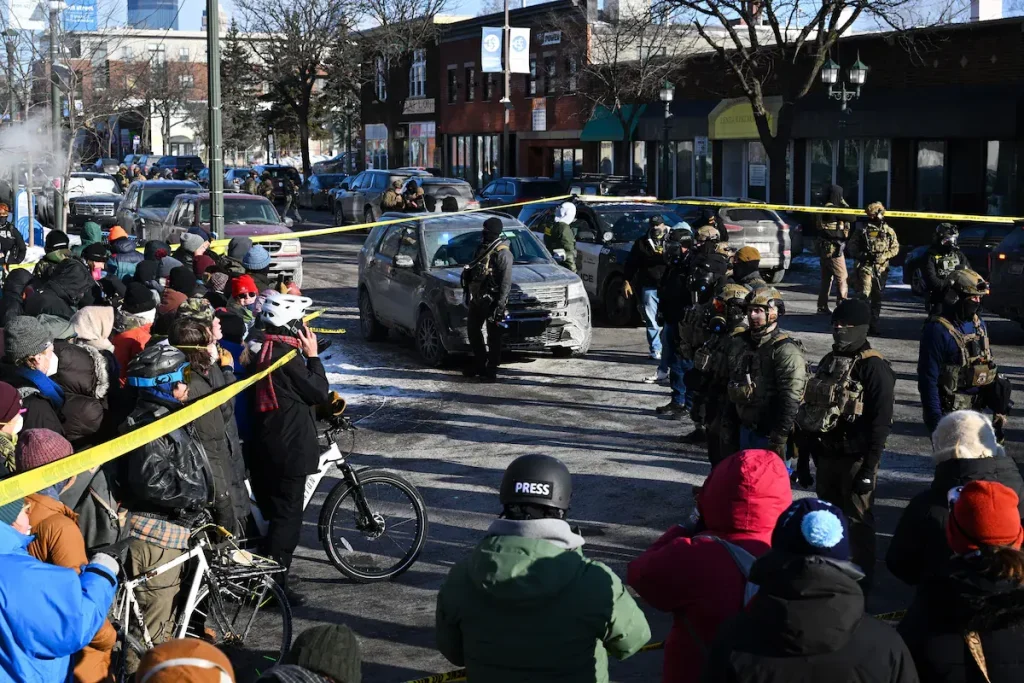
The lawsuits arise from the January 7 shooting of Renee Good in Minneapolis during an immigration-enforcement operation referred to as Operation Metro Surge.
According to the complaints, Good and her partner, Becca Good, were returning home after dropping their son at school when they encountered federal immigration agents in their south Minneapolis neighborhood. The family’s attorneys say Renee Good stopped her vehicle and honked to alert neighbors about the federal operation.
The complaint alleges that Becca Good exited the vehicle and began recording while Renee remained in the driver’s seat.
The family’s account says ICE agent Jonathan Ross approached the vehicle while recording the encounter on his cellphone. The complaint alleges that Good began moving her vehicle slowly away from Ross and that Ross fired three rounds, including shots through the driver’s-side window.
One of those shots struck Good in the head, according to the complaint. She was taken to Hennepin County Medical Center and was pronounced dead at approximately 10:30 a.m., according to the filing described by the family’s attorneys.
The factual circumstances surrounding the shooting remain contested.
Federal officials previously said Ross fired because he believed he and other officers were facing a threat from Good’s vehicle. The new lawsuits dispute that account and allege that Ross was not in the vehicle’s path when he fired.
Those competing accounts are important because the civil cases have only just been filed. The allegations in a complaint are not findings by the court.
What Does Renee Good’s Family Allege Against the United States?
The first lawsuit is brought against the United States of America under the Federal Tort Claims Act, or FTCA.
The case is identified as Ganger v. United States, No. 26-cv-4230, in the U.S. District Court for the District of Minnesota.
The complaint asserts a Minnesota wrongful-death claim based on alleged:
- battery;
- assault;
- false imprisonment;
- intentional infliction of emotional distress;
- negligence; and
- related conduct surrounding Good’s death.
The lawsuit also seeks damages connected to the losses suffered by Renee Good’s estate and family.
Becca Good is also seeking damages for the emotional harm she allegedly suffered after witnessing the shooting.
The FTCA case is different from a normal lawsuit against a state or local police department. The federal government has sovereign immunity except where Congress has waived it, and the FTCA provides a limited waiver for certain tort claims arising from the conduct of federal employees acting within the scope of their employment. The U.S. Department of Justice describes the FTCA as permitting certain claims for personal injury or death caused by the negligent or wrongful acts or omissions of federal employees.
What Does Renee Good’s Second Lawsuit Allege Against Jonathan Ross and Federal Officials?
The second complaint targets individual defendants rather than naming the United States as the defendant.
The named defendants are:
- Jonathan Ross;
- Stephen Miller;
- Kristi Noem;
- Corey R. Lewandowski;
- Thomas D. Homan;
- Todd Lyons;
- Gregory Bovino; and
- John Doe Federal Agents 1–10.
The complaint alleges that the defendants had individual roles connected to the federal operation that preceded Good’s death.
It also alleges that the broader enforcement operation was part of a coordinated effort that unlawfully targeted Minnesotans of Somali and Hispanic descent and people who observed or documented federal immigration enforcement.
Those allegations are disputed and have not been adjudicated by a court.
What Federal Civil-Rights Claims Are Included in the Renee Good Lawsuit?
The second complaint invokes 42 U.S.C. § 1985(3) and 42 U.S.C. § 1986, provisions associated with civil-rights conspiracies.
The complaint identifies two § 1985(3) theories involving alleged deprivation of equal protection, including allegations concerning people of Somali and Hispanic descent.
It also alleges a § 1986 claim based on an alleged failure to prevent the underlying conspiracy.
The complaint separately asserts a Fourth Amendment excessive-force claim against Ross under the legal theory associated with Bivens v. Six Unknown Named Agents.
The filing also includes Minnesota claims for wrongful death, battery, assault, false imprisonment, intentional infliction of emotional distress, negligence and negligent infliction of emotional distress.
Because these are newly filed claims, the court has not yet ruled that the alleged conspiracy existed or that any defendant violated Renee Good’s constitutional rights.
What Does DHS Policy Say About Deadly Force and Moving Vehicles?
The family’s lawsuit also points to federal use-of-force policies.
The Department of Homeland Security’s department-wide use-of-force policy states that deadly force may not be used solely to prevent a fleeing person’s escape. The policy permits deadly force when the officer reasonably believes the person poses a significant threat of death or serious physical harm and the force is necessary to prevent escape.
The policy also specifically addresses moving vehicles. It states that DHS law-enforcement officers are prohibited from firing at the operator of a moving vehicle unless the use of deadly force against that operator is justified under the policy’s deadly-force standards.
The Good family’s lawsuit alleges Ross’s actions violated those requirements.
That allegation will have to be evaluated during the litigation. The existence of a policy does not itself establish that a violation occurred.
Why Did Renee Good’s Family File Two Lawsuits?
The two lawsuits use different legal mechanisms and defendants.
The FTCA lawsuit seeks to hold the United States responsible for certain tort claims arising from the conduct of federal employees.
The second lawsuit attempts to impose individual liability on Ross and other defendants based on alleged constitutional violations, federal civil-rights conspiracy and Minnesota-law claims.
The family’s attorneys say the second case is intended to address not only the shooting itself but also the alleged conduct and decisions surrounding Operation Metro Surge.
The two cases therefore should not be treated as two separate claims programs for the public. They are related lawsuits brought by the same family and partner over the same death.
Is the Renee Good Lawsuit a Class Action?
No.
The October 1, 2026 filings are not a certified class action.
They are individual civil lawsuits brought by Renee Good’s family and partner. The complaints seek damages arising from Renee Good’s death and the alleged injuries to people directly involved.
There is no indication in the filings that the court has certified a class or that members of the general public can join the litigation through a claim form.
For that reason, this article should not describe the Renee Good lawsuits as a “class action.”
Can Other People File a Claim in the Renee Good Lawsuit?
There is currently no public claim form for other people to join these lawsuits.
The complaints were filed on behalf of Renee Good’s next of kin and Becca Good. The existence of the lawsuits does not create a general compensation program for people who experienced other ICE encounters or injuries during Operation Metro Surge.
Anyone who believes they have a separate legal claim arising from federal immigration enforcement should obtain advice about their own circumstances rather than assuming they are automatically included in the Good litigation.
How Does the Federal Tort Claims Act Affect the Renee Good Case?
The FTCA has specific administrative requirements.
The U.S. Department of Justice says an FTCA claim generally must first be presented to the appropriate federal agency. A Standard Form 95 is commonly used for that purpose, although DOJ says the form itself is not mandatory if the required information is otherwise properly presented.
The administrative claim must generally include a specific dollar amount, known as a “sum certain,” and must be presented within two years after the claim accrues.
If the agency denies the claim, the FTCA generally provides a six-month period for filing suit after the agency’s final denial. The statute also addresses what happens if the agency does not make a final disposition within six months.
The Good family’s lawsuit was filed against the United States under the FTCA, so those procedural requirements are relevant to the litigation.
The family’s attorneys state that the FTCA action seeks a bench trial, meaning the case would be decided by a judge rather than a jury on the FTCA claims.
What Happens Next in the Renee Good Lawsuits?
The next stages will involve ordinary federal civil litigation, although the cases raise significant questions concerning federal immunity and the availability of particular causes of action against federal officials.
The defendants will have opportunities to respond to the complaints.
The court could consider motions addressing issues such as jurisdiction, immunity, whether particular claims are legally available and whether the allegations are sufficient to proceed.
If claims survive early motions, the parties could proceed into discovery. That process can involve documents, testimony, video evidence, government records and other materials relevant to the shooting and the broader allegations.
The court could eventually decide claims through motions, settlement or trial.
At this early stage, there is no judgment establishing liability against the United States, Jonathan Ross or any of the other defendants.
What Should People Know About the Renee Good Case Right Now?
The most important point is that the October 1 filings start new civil litigation; they do not resolve the dispute.
There is no settlement amount to claim.
There is no public compensation fund.
There is no public claim deadline.
There is no class certification.
And there has been no court finding that the defendants committed the alleged constitutional or state-law violations.
For readers who have been following the January shooting, the significant development is that Renee Good’s family has now moved from investigating and publicly discussing the incident to pursuing damages through two federal civil lawsuits.
Readers should also distinguish these civil cases from any criminal investigation or potential criminal charges. A civil lawsuit can seek financial damages and other civil remedies without establishing criminal liability.
Renee Good Lawsuit FAQ
Is the Renee Good lawsuit a class action?
No. The October 1, 2026 lawsuits are individual civil actions brought by Renee Good’s family and partner. No class has been certified.
Who filed the Renee Good lawsuits?
Brent Ganger, Renee Good’s brother and trustee for her next of kin, and Becca Good, her partner, are the plaintiffs in both lawsuits. The filings represent claims connected to Renee Good’s three children, parents and siblings as described by her attorneys.
Who is being sued in the Renee Good FTCA case?
The FTCA case names the United States of America as the defendant. The case is identified as Ganger v. United States, No. 26-cv-4230.
Who is being sued individually in the Renee Good civil-rights case?
The complaint names Jonathan Ross, Stephen Miller, Kristi Noem, Corey R. Lewandowski, Thomas D. Homan, Todd Lyons, Gregory Bovino and John Doe Federal Agents 1–10.
What is Renee Good’s family alleging against Jonathan Ross?
The complaint alleges that Ross used excessive and unlawful deadly force when he shot Renee Good during the January 7, 2026 encounter. The family disputes the federal government’s account that the shooting was justified by a threat from Good’s vehicle.
Those allegations have not been adjudicated.
What federal law is cited in the Renee Good civil-rights lawsuit?
The second complaint invokes 42 U.S.C. §§ 1985(3) and 1986, as well as a Fourth Amendment excessive-force claim under the Bivens doctrine.
Is there a Renee Good lawsuit claim form?
No public claim form has been announced for the lawsuits.
These are not consumer settlement proceedings.
Is there a Renee Good lawsuit settlement?
No settlement has been announced in connection with the October 1, 2026 filings.
Is there a Renee Good lawsuit deadline?
There is no public class-action claim deadline because these lawsuits are not class actions and no public claims program has been established.
The FTCA has separate statutory administrative deadlines, but those requirements apply to the parties pursuing an FTCA claim and should not be confused with a public settlement deadline.
Can anyone affected by Operation Metro Surge join Renee Good’s lawsuit?
Not based on the filings currently available. The complaints do not establish a general public class or compensation program.
What happened to Renee Good in January 2026?
Renee Good was fatally shot by ICE agent Jonathan Ross in Minneapolis on January 7, 2026, during a federal immigration-enforcement operation. The circumstances of the shooting are disputed, and the family’s new lawsuits present allegations that differ from the federal government’s account.
Key Dates in the Renee Good Lawsuit
| Date | Event |
| January 7, 2026 | Renee Good was fatally shot during a federal immigration-enforcement operation in Minneapolis |
| April 2026 | Becca Good pursued a federal court proceeding concerning the return of her vehicle and evidence |
| July 2026 | Federal authorities provided evidence concerning the shooting, according to reporting on the investigation |
| October 1, 2026 | Two civil lawsuits were filed in the U.S. District Court for the District of Minnesota |
| October 2, 2026 | Litigation remains newly filed and pending |
What This Renee Good Lawsuit Means for Readers
The October 1 filings represent a significant new legal development in the Renee Good case, but they do not create a settlement or compensation program for the public.
The first lawsuit seeks to hold the United States responsible under the FTCA for alleged wrongful death and related Minnesota-law claims. The second seeks damages from individual federal officials and agents based on alleged civil-rights violations, excessive force and related state-law claims.
The allegations remain allegations unless and until a court determines otherwise.
For readers who want to understand the earlier shooting and the legal questions surrounding federal immigration enforcement, AllAboutLawyer previously covered the incident in “Breaking, ICE Agent Fatally Shoots Minneapolis Mother During Enforcement Operation—What We Know Right Now (January 2026)”. That earlier article provides the background to the January 7 shooting, while this update focuses on the new October 2026 lawsuits.
Readers should also remember that a federal civil lawsuit is not the same thing as a criminal prosecution. The newly filed cases seek civil remedies and damages; they do not themselves establish criminal guilt.
Informational disclaimer: This article is for general informational purposes only and is not legal advice. Court allegations are not findings of fact or liability. Anyone with a potential claim should consult a qualified attorney about the specific facts and deadlines applicable to their situation.
Sources and Footnotes
- Romanucci & Blandin, October 1, 2026 announcement and complaint materials concerning the two Renee Good lawsuits. (RB Law)
- U.S. District Court for the District of Minnesota, Ganger v. United States, No. 26-cv-4230, filed October 1, 2026, as reported from the filed case record. (Bloomberg Law)
- U.S. Department of Homeland Security, Department Policy on the Use of Force, including provisions governing deadly force and moving vehicles. (Department of Homeland Security)
- U.S. Department of Justice, Federal Tort Claims Act materials and Standard Form 95 requirements. (Department of Justice)
- AllAboutLawyer, “Breaking, ICE Agent Fatally Shoots Minneapolis Mother During Enforcement Operation—What We Know Right Now (January 2026),” for background on the January shooting. (All About Lawyer)
About the Author
Israr Ahmad is a legal content researcher with 4+ years of experience covering class action settlements and consumer rights cases. He has researched and published coverage of 2,500+ settlements using verified court records, settlement administrator filings, and government sources. Learn more about Israr.