
Kroger Zero Sugar Syrup Allulose Class Action Lawsuit, Newton v. The Kroger Co.
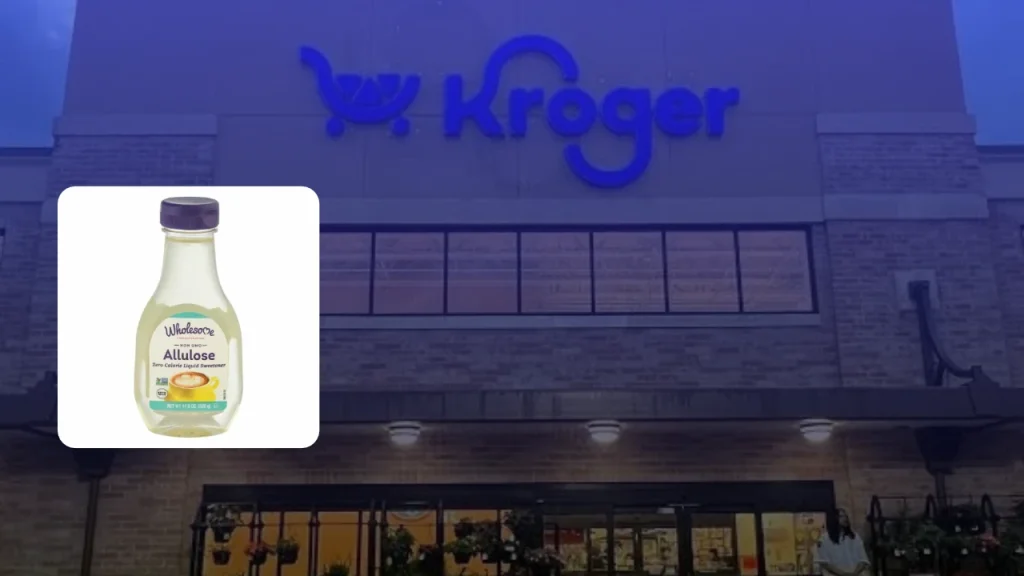
Kroger is facing a proposed class action over its Simple Truth maple-flavored syrup, which is labeled “Zero Sugar” and “0g Added Sugar” but contains allulose. The case is Newton v. The Kroger Co., No. 1:26-cv-12573 (N.D. Ill.), filed October 14, 2026. There is no settlement, no claim form, and no deadline. No class has been certified, and Kroger has not been found liable.
Michael Newton filed the lawsuit in the U.S. District Court for the Northern District of Illinois. The complaint alleges the syrup contains approximately 22 grams of allulose per serving, a sweetener the plaintiff argues counts as a sugar under federal food-labeling rules. He says the “Zero Sugar” claim misleads shoppers who are trying to limit sugar.
The suit follows the Seventh Circuit’s July 27, 2026 decision in Franco v. Chobani, which held that allulose is a sugar under the relevant federal regulation. The lawsuit challenges the product’s labeling, not the general safety of allulose.
Kroger Allulose Lawsuit: Quick Facts
| Detail | Information |
| Case name | Newton v. The Kroger Co. |
| Case number | 1:26-cv-12573 |
| Court | U.S. District Court, Northern District of Illinois |
| Filed | October 14, 2026 |
| Plaintiff | Michael Newton |
| Defendant | The Kroger Co. |
| Plaintiff’s attorney | Kevin Laukaitis, Laukaitis Law LLC |
| Product | Simple Truth maple-flavored syrup marketed as “Zero Sugar” |
| Main allegation | “Zero Sugar” and “0g Added Sugar” claims are misleading because the syrup contains allulose |
| Alleged allulose amount | About 22 grams per serving, according to the complaint as reported |
| Proposed classes | Illinois purchasers, plus purchasers in seven other states |
| Class certified? | No |
| Settlement or claim form | None identified as of October 27, 2026 |
| Current status | Early stage (complaint filed); no merits ruling identified |
What Is the Kroger “Zero Sugar” Syrup Lawsuit About?
The case is about the gap between what the front of a package promises and what federal labeling rules say about the ingredients.
Kroger sells the Simple Truth brand, including a maple-flavored syrup marketed with “Zero Sugar” and “0g Added Sugar” claims. According to the complaint, allulose is the syrup’s first-listed and predominant ingredient by weight. Newton argues that allulose is a monosaccharide, which is a type of sugar, so the zero-sugar marketing conflicts with federal and state labeling standards.
He also says he relied on the label, paid a price premium, and would not have bought the syrup, or would have paid less, had he understood its allulose content. The complaint describes the marketing as “health-washing”: presenting a product as healthier or better suited to sugar-conscious shoppers through claims that may not reflect its contents.
These are the plaintiff’s allegations. The court has not decided whether the label violates the law.
Why does the “0g Added Sugar” claim matter?
“Zero Sugar” is an overall sugar-content claim. “0g Added Sugar” refers to sugars added during processing under the nutrition-labeling rules. The two are related but legally distinct.
Under its enforcement-discretion policy, the FDA has allowed manufacturers to leave allulose out of the “Total Sugars” and “Added Sugars” lines on Nutrition Facts panels. But the Seventh Circuit’s Franco ruling separated that labeling policy from the regulatory definition of sugar used for “sugar free” claims. That distinction is at the heart of the Kroger case.
What Is Allulose, and Why Are There So Many Lawsuits?
Allulose, also called D-psicose, is a monosaccharide found naturally in small amounts in foods such as figs, raisins, and maple syrup. It can also be manufactured as a sweetener. It tastes like sugar but is metabolized differently and has far fewer calories, which makes it attractive for products marketed as low-calorie or sugar-conscious.
The legal conflict comes from two sources pulling in different directions:
- The FDA’s October 2020 guidance. The agency said it would use enforcement discretion and would not object if companies omitted allulose from Total Sugars and Added Sugars on Nutrition Facts labels. It also allowed 0.4 calories per gram for allulose. Many brands read this as support for “zero sugar” marketing.
- The regulations themselves. Under 21 C.F.R. § 101.60(c), a “sugar free,” “no sugar,” or “zero sugar” claim generally requires less than 0.5 grams of sugars per serving. Total sugars, under 21 C.F.R. § 101.9(c)(6)(ii), include free mono- and disaccharides, and allulose is a monosaccharide.
The FDA guidance did not formally change the regulation’s definition of sugar. It describes how the agency intends to enforce, and guidance documents are generally recommendations, not binding requirements.
For a similar case against another retailer, see our coverage of the Costco allulose class action over Kirkland Signature sugar-free drink mix.
What Did the Seventh Circuit Decide in Franco v. Chobani?
Newton’s argument leans heavily on Franco v. Chobani, LLC, No. 25-2087, decided July 27, 2026.
Consumers sued Chobani over its “Zero Sugar” yogurt, which contained four grams of allulose per serving. A federal district court dismissed the case on May 29, 2025, finding the claims preempted by federal law because of the FDA’s allulose guidance.
The Seventh Circuit reversed. It held that allulose is a sugar under the relevant regulation, that the FDA’s decision not to enforce certain labeling requirements did not rewrite the regulatory definition, and that the plaintiffs had plausibly alleged consumer deception. The case was allowed to proceed. The FDA itself took the position in the appeal that allulose is a sugar under its own rule.
You can read our full breakdown in the Franco v. Chobani Seventh Circuit ruling explained.
Does the Chobani decision mean Kroger has already lost?
No. The Northern District of Illinois sits inside the Seventh Circuit, so the appeals court’s reading of the regulation is binding there. That helps explain why so many of these suits are filed in Chicago. But Franco was decided at the motion-to-dismiss stage. It addressed whether the complaint could go forward, not whether Chobani was ultimately liable.
Kroger’s case still turns on its own label, Newton’s purchase and alleged injury, the consumer-protection laws involved, and whatever defenses Kroger raises.
What Federal Law Says About “Zero Sugar” Claims
A food generally cannot be labeled “sugar free,” “no sugar,” “zero sugar,” or similar terms unless it contains less than 0.5 grams of sugars per reference amount customarily consumed and per labeled serving, subject to the regulation’s other conditions. The rule also covers ingredients that are sugars or that consumers commonly understand to contain sugars. In some circumstances, the ingredient statement must carry an explanation that the ingredient adds only a trivial, negligible, or dietarily insignificant amount of sugar.
Newton argues that a product with about 22 grams of allulose per serving cannot lawfully be marketed as “Zero Sugar” simply because allulose may be left off the Total Sugars line under the FDA’s enforcement policy. That is the plaintiff’s interpretation, and no court has ruled on Kroger’s specific label.
What Does Newton Want From the Court?
Newton seeks to represent two proposed groups of people who bought the syrup for personal use:
- An Illinois class
- A multistate class covering Massachusetts, Michigan, Minnesota, Missouri, New Jersey, New York, and Washington
According to published summaries of the complaint, he asks for:
- A declaration that the challenged labeling is unlawful or misleading
- Restitution and compensation for economic losses
- Actual, compensatory, statutory, and punitive damages where legally available
- An order addressing the challenged marketing
- Attorneys’ fees and costs
- A jury trial
These class definitions come from the complaint and are not court-approved. A judge could narrow or reject them, and nothing requested has been awarded.
Who Could Be Affected by the Kroger Allulose Lawsuit?
The suit is a putative class action, which means one person is asking the court to let his case stand in for a larger group. The court has not agreed to that. If you bought the syrup, you are not part of any certified class today, and you do not need to file anything.
Whether anyone is eventually covered depends on the class definition the court approves, the product purchased, the purchase dates, the buyer’s location, and other legal requirements. Someone who bought a different Simple Truth product, another syrup brand, or a product without allulose should not assume this lawsuit covers that purchase.
Is There a Kroger Allulose Settlement or Claim Form?
No settlement or claim form was identified as of October 27, 2026.
This is a newly filed proposed class action, not an approved settlement. A class action generally moves through several stages: Kroger responds or moves to dismiss, the parties may exchange evidence, and the plaintiff may later ask the court to certify a class. Any class settlement would ordinarily need court approval and public notice before a claims process could begin. That can take months or years, and a case can be dismissed, narrowed, settled, or go to trial. There is no guarantee of money for consumers.
Be cautious of websites or messages claiming a Kroger allulose settlement is already paying out, or that you must pay a fee to register. No official claims process has been verified.
What Can Shoppers Do Right Now?
There is nothing to submit. In the meantime, you can:
- Keep receipts, order records, and packaging. Photos of the front label and ingredient list can help document a purchase if a court-approved process ever opens. Keeping records does not guarantee eligibility or payment.
- Read the ingredient list. Allulose appears by name.
- Follow the docket. Search Newton v. The Kroger Co., No. 1:26-cv-12573, through PACER or a public docket site.
- Talk to a licensed attorney if you have questions about your own rights. This article is information, not legal advice.
What Is Kroger Likely to Argue?
Kroger had not filed a response in the public docket listing reviewed for this article, so its position is not known. In allulose cases, defendants commonly raise issues such as:
- Whether the label is misleading when read as a whole, including the ingredient list and Nutrition Facts
- Whether the FDA’s guidance supports the claim
- Whether federal law preempts the state-law theories
- Whether the plaintiff suffered a legally recognized economic injury or paid a price premium
- Whether the proposed classes meet the requirements for certification
These are possible defenses, not confirmed arguments in this case. The preemption argument that won in the Franco district court is much weaker after the Seventh Circuit’s decision, but other factual and procedural issues remain open.
How the Kroger Case Fits Into the Allulose Litigation Wave
Kroger is one of many companies sued over allulose products carrying zero-sugar or sugar-free claims. Cases reported since the Franco decision include suits over:
- Liquid Death energy drinks
- David Protein products
- Liquid I.V. hydration products
- WK Kellogg’s Special K cereals
- KIND snack products
- Joyride candy, made by Project 7 Inc.
- Dunkin’ Zero energy drinks
- Target’s Up & Up Sugar-Free Hydration Supplement Powder, filed October 20, 2026 in the Northern District of Illinois
Related coverage on our site includes the Dunkin Zero allulose lawsuit, the Trader Joe’s and Welch’s allulose lawsuits, and the Target Up & Up hydration powder class action.
Each case involves its own product, plaintiff, defendant, and proposed class, so a result in one will not decide the others. Appellate rulings like Franco can, however, shape how courts read the underlying regulation.
Kroger Allulose Lawsuit Timeline
| Date | Development |
| October 2020 | FDA issues guidance on declaring allulose and its calories on Nutrition Facts labels |
| May 29, 2025 | District court dismisses Franco v. Chobani on preemption grounds |
| July 27, 2026 | Seventh Circuit reverses in Franco, holding allulose is a sugar under the regulation |
| October 14, 2026 | Newton v. The Kroger Co. filed in the Northern District of Illinois |
| October 26, 2026 | Top Class Actions publishes a report on the Kroger syrup suit |
| October 27, 2026 | No settlement, claim form, class certification, or merits ruling identified |
What Happens Next in Newton v. Kroger?
Expect Kroger to be served and to respond, often with a motion to dismiss. If the case survives, the parties move to discovery and then to a possible motion for class certification. A settlement, if one comes, would need court approval and notice to class members. We will update this article if the docket shows a ruling, a transfer, or a settlement. For background, see our guide to how putative class actions work.
Frequently Asked Questions
What is the Kroger allulose lawsuit about?
It alleges that Kroger’s Simple Truth maple-flavored syrup is misleadingly marketed as “Zero Sugar” and “0g Added Sugar” because it contains allulose, which the plaintiff argues is a sugar under federal labeling regulations.
What is the case number?
Newton v. The Kroger Co., No. 1:26-cv-12573, U.S. District Court for the Northern District of Illinois, filed October 14, 2026.
How much allulose does the syrup allegedly contain?
About 22 grams per serving, according to the complaint as reported. This is an allegation, not a court finding.
Who filed the lawsuit?
Michael Newton, represented by Kevin Laukaitis of Laukaitis Law LLC.
Does the lawsuit mean Kroger broke the law?
No. The allegations are unproven, and the court has not decided whether the label violates federal or state law.
Is allulose a sugar under federal law?
The Seventh Circuit held in Franco v. Chobani that it is, under the regulation defining total sugars. Separately, the FDA allows manufacturers to omit allulose from the Total Sugars and Added Sugars lines under its enforcement-discretion policy.
Can I claim money from the Kroger lawsuit?
Not at this stage. No settlement or claim form exists and no class has been certified.
Which states are in the proposed class?
Illinois, plus Massachusetts, Michigan, Minnesota, Missouri, New Jersey, New York, and Washington. These proposed definitions are not court-approved and may change.
Can Kroger settle the case?
The parties could negotiate a settlement, but none has been identified. Any class settlement would generally need court approval before a claims process could start.
Is this the same as the Chobani lawsuit?
No. Franco v. Chobani is a separate case over zero-sugar yogurt. Its reasoning is important to the Kroger theory, but it did not decide whether Kroger’s label is unlawful.
Sources and Legal Authorities
- Public docket: Newton v. The Kroger Co., No. 1:26-cv-12573 (N.D. Ill.) — https://dockets.justia.com/docket/illinois/ilndce/1:2026cv12573/509522
- Top Class Actions, “Allulose in ‘Zero Sugar’ Syrup Sparks Kroger Class Action Lawsuit,” October 26, 2026 — https://topclassactions.com/lawsuit-settlements/lawsuit-news/allulose-in-zero-sugar-syrup-sparks-kroger-class-action-lawsuit/
- Law360, “Kroger’s ‘Zero Sugar’ Syrup Draws Allulose Labeling Suit,” October 14, 2026 — https://www.law360.com/consumerprotection/articles/2538066/kroger-s-zero-sugar-syrup-draws-allulose-labeling-suit
- U.S. Court of Appeals for the Seventh Circuit, Franco v. Chobani, LLC, No. 25-2087, July 27, 2026 — https://media.ca7.uscourts.gov/cgi-bin/OpinionsWeb/processWebInputExternal.pl?Path=Y2026%2FD07-27%2FC%3A25-2087%3AJ%3AKirsch%3Aaut%3AT%3AfnOp%3AN%3A3580911%3AS%3A0
- U.S. FDA, Guidance for Industry: Declaration of Allulose and Calories from Allulose, October 2020 — https://www.fda.gov/regulatory-information/search-fda-guidance-documents/guidance-industry-declaration-allulose-and-calories-allulose-nutrition-and-supplement-facts-labels
- 21 C.F.R. § 101.60, Nutrient Content Claims — https://www.law.cornell.edu/cfr/text/21/101.60
- 21 C.F.R. § 101.9, Nutrition Labeling of Food — https://www.law.cornell.edu/cfr/text/21/101.9
- Sheppard Mullin, “Seventh Circuit Revives Nationwide ‘Zero Sugar’ Class Action, Holds Allulose Is a Sugar Under FDA Regulations”
- Foster Garvey, “The Allulose ‘Zero Sugar’ Ruling and Why It Matters for the Food and Beverage Industry”
- Keller and Heckman, The Daily Intake blog, coverage of the Chobani dismissal and later allulose suits
- Morrison Foerster, “Allulose Claims Face Growing Class Action Scrutiny”
- Manatt, Phelps & Phillips, “Zero Sugar, Real Risk: Allulose Litigation Is Heating Up”
- FoodNavigator, “Allulose-containing products claiming zero sugar threatened with growing litigation”
- Open Class Actions, coverage of Target Up & Up case, No. 1:26-cv-12870 (N.D. Ill.)
- ClaimDepot, coverage of the Joyride candy suit against Project 7 Inc.
Legal disclaimer: This article summarizes allegations in a proposed class action and relevant food-labeling authorities. It does not establish that Kroger violated the law or that consumers are entitled to compensation. It is general legal information, not legal advice, and does not create an attorney-client relationship. AllAboutLawyer.com is an informational website, not a law firm.
About the Author
Israr Ahmad is a legal content researcher with 4+ years of experience covering class action settlements and consumer rights cases. He has researched and published coverage of 2,500+ settlements using verified court records, settlement administrator filings, and government sources. Learn more about Israr.