
Costco Allulose Class Action Lawsuit Targets Kirkland Signature Sugar-Free Drink Mix
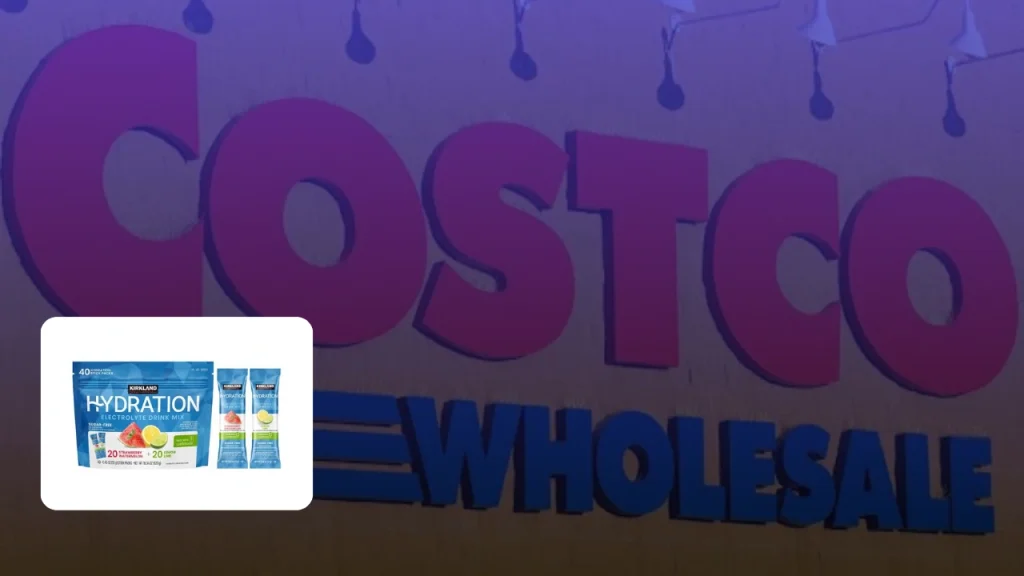
Costco is the latest company sued over the sweetener allulose. A putative class action filed in Washington federal court says the retailer’s Kirkland Signature Hydration Electrolyte Drink Mix is sold as sugar-free even though its first ingredient is allulose, which the lawsuit says counts as a sugar under federal labeling rules. Within about a day, nearly identical putative class actions were filed against Dunkin’ in Massachusetts and CVS in Rhode Island.
None of the three cases has a settlement, and no class has been certified in any of them. Nothing has been proven, and the companies had not yet filed responses as of October 16, 2026. There is no claim form to file and nothing to join right now.
Costco, Dunkin’ and CVS Allulose Lawsuits: Quick Facts
| Costco | Dunkin’ | CVS | |
| Case | Maldonado v. Costco Wholesale Corporation | Wells v. Dunkin’ Brands Inc., et al. | Colby v. CVS Health Corporation, et al. |
| Case No. | 2:26-cv-03702 | 1:26-cv-14463 | 1:26-cv-00717 |
| Court | U.S. District Court, Western District of Washington | U.S. District Court, District of Massachusetts | U.S. District Court, District of Rhode Island |
| Federal circuit | Ninth Circuit | First Circuit | First Circuit |
| Filed | September 30, 2026 | September 30, 2026 | October 1, 2026 |
| Plaintiff | Mason Maldonado (Illinois) | Phyllis C. Wells (Illinois) | Sue Colby |
| Product | Kirkland Signature Hydration Electrolyte Drink Mix | Dunkin’ Zero energy drinks | CVS Well Market “Sugar Free” Drink Mix Replenish |
| Claim at issue | “Sugar free” | “Zero sugar” and “0g of sugar” | “Zero Sugar” and “Sugar Free” |
| Status | Putative class action; no class certified | Putative class action; no class certified | Putative class action; no class certified |
| Settlement or claim form? | None | None | None |
What Does the Maldonado v. Costco Wholesale Corporation Class Action Allege?
Mason Maldonado, an Illinois resident, filed Maldonado v. Costco Wholesale Corporation on behalf of buyers of the Kirkland Signature drink mix. Costco is headquartered in Issaquah, Washington, which is why the case is in the Western District of Washington.
According to reporting on the complaint, allulose is listed as the first ingredient in both flavors of the mix. The label adds a note that allulose “adds a dietarily insignificant amount of sugar.” Maldonado argues that allulose is a monosaccharide and therefore a sugar under federal and Illinois labeling standards, so the product should not be sold as sugar-free. Reporting also says the Nutrition Facts panel lists 0 grams of total sugars and 7 grams of total carbohydrates per stick. Seven grams of total carbohydrates does not by itself show how much of that is allulose, and these details come from reporting on the complaint, not a court finding.
Maldonado says he would not have bought the mix, or would have paid less, had he known it contained sugar. He seeks compensation for shoppers who allegedly overpaid, restitution, attorneys’ fees, and an order requiring Costco to stop using the current labeling. News coverage describes the suit as a $5 million class action. The complaint also points to research linking allulose to stomach problems such as nausea, bloating and diarrhea. The lawsuit’s central claim is about labeling and consumer deception, not a ruling that allulose is unsafe. Costco has not publicly responded to the allegations.
Which Laws Apply to the Costco Allulose Class Action?
The laws below are the ones the case is built on or will likely turn on. Not every one is a claim in the complaint, so check the pleadings for the exact counts.
- Food labeling regulation, 21 C.F.R. § 101.60(c). A “sugar free,” “zero sugar” or similar claim generally requires less than 0.5 grams of sugars per serving. The rule also has conditions for ingredients that are sugars or that consumers understand to contain sugars, including a disclosure about a “dietarily insignificant amount of sugar.”
- Nutrition labeling regulation, 21 C.F.R. § 101.9(c)(6)(ii). It defines total sugars as free mono- and disaccharides. Allulose is a monosaccharide, which is the basis for the plaintiffs’ argument.
- FDA allulose guidance (October 2020). The FDA said it would exercise enforcement discretion and not object if manufacturers leave allulose out of the Total Sugars and Added Sugars lines on the Nutrition Facts panel. Allulose must still be counted in total carbohydrates, and manufacturers may use 0.4 calories per gram. The guidance is not a regulation and did not amend 21 C.F.R. § 101.60.
- Federal Food, Drug, and Cosmetic Act, 21 U.S.C. § 343 (misbranding). The FDCA generally gives private individuals no direct right to sue, so plaintiffs use federal labeling standards as the benchmark for state-law claims.
- Washington Consumer Protection Act, RCW 19.86. Washington’s consumer protection statute is cited in the case because Costco is based in Washington and the case is in Washington federal court.
- Illinois Consumer Fraud and Deceptive Business Practices Act, 815 ILCS 505/1 et seq. The plaintiff is an Illinois resident, and the complaint proposes an Illinois subclass.
- Unjust enrichment (common law). The theory is that Costco kept money paid because of the challenged label and it would be inequitable to keep it if the label is found misleading.
- Federal preemption, 21 U.S.C. § 343-1. This section preempts certain state food-labeling requirements that are not identical to federal ones. It is a likely defense in all three cases.
- Class Action Fairness Act, 28 U.S.C. § 1332(d). CAFA generally lets proposed class actions with more than $5 million in controversy be heard in federal court, which fits the $5 million figure in news coverage.
- Federal Rule of Civil Procedure 23. It sets the requirements for class certification, including numerosity, commonality, typicality, adequacy and, for damages classes, predominance and superiority.
Why Allulose Is Causing Sugar-Free Class Action Lawsuits Against Costco, Dunkin’ and CVS
Federal rules say a food can be labeled “sugar free” or “zero sugar” only if it has less than 0.5 grams of sugars per serving. Those rules define sugars as all free monosaccharides and disaccharides, and allulose is a monosaccharide (21 C.F.R. § 101.60(c)(1); 21 C.F.R. § 101.9(c)(6)(ii)).
Companies using allulose have leaned on the FDA’s 2020 guidance. That guidance covers how allulose is shown on the Nutrition Facts panel. It did not change the regulation on sugar-free claims, and the plaintiffs argue a separate front-of-package claim is a different question.
The Seventh Circuit took up the issue this summer in Franco v. Chobani, LLC, 184 F.4th 599 (7th Cir. 2026), decided July 27, 2026. The court held that allulose is a sugar under the federal regulation and that the FDA’s enforcement discretion does not shield a company from state-law consumer claims over a “Zero Sugar” label. It revived a case over Chobani’s zero-sugar yogurt, which had about four grams of allulose per serving. The Wells complaint cites Franco directly, and the new filings follow a wave of similar suits against other brands.
Franco is not binding on the courts hearing these three cases. It controls federal courts in Illinois, Indiana and Wisconsin, while the Costco case sits in the Ninth Circuit and the Dunkin’ and CVS cases in the First Circuit. Judges there can follow its reasoning but do not have to.
What Costco May Argue in Response to the Maldonado Class Action
Costco has not filed a response, so its defenses are unknown. Reporting on the case notes that Costco can point to the ingredient list, which names allulose, and to the FDA’s allulose guidance. It may also argue federal preemption under 21 U.S.C. § 343-1, challenge whether the proposed nationwide class can be certified when state consumer laws differ, and dispute that a reasonable shopper was misled.
The Kirkland label’s “dietarily insignificant amount of sugar” note also tracks wording that appears in 21 C.F.R. § 101.60(c). But the regulation’s conditions are listed together, and the first is the 0.5-gram limit, so a court will have to decide how the note fits with the rest. Whether the FDA guidance holds up outside the Seventh Circuit is the open question these cases will test.
Dunkin’ and CVS Were Sued Over the Same Ingredient
The Costco case is one of three filed within roughly 24 hours.
Dunkin’. Phyllis C. Wells of Chicago sued Dunkin’ Brands, Inc. and its parent Inspire Brands, Inc. on September 30, 2026. The complaint targets Dunkin’ Zero energy drinks, which Dunkin’ launched nationally on March 4, 2026 and advertises as having “0g of sugar.” It alleges a medium drink contains about 9 grams of allulose and a large about 11 to 13 grams, according to reporting on the complaint. Wells seeks damages, restitution, an order stopping the “zero sugar” claims, and attorneys’ fees. Her proposed class covers anyone who bought a Dunkin’ Zero drink from March 4, 2026 through the date a class is certified, plus an Illinois subclass. For the full breakdown of that case, read Dunkin Zero Allulose Lawsuit, “Zero Sugar” Claims Explained.
CVS. Colby v. CVS Health Corporation, et al. targets the CVS Well Market “Sugar Free” Drink Mix Replenish line. The complaint says the product is labeled “ZERO SUGAR” and listed as “Sugar Free” on CVS.com, shows 0g total sugars on its Supplement Facts panel, and lists allulose first among its inactive ingredients. Reporting says Colby bought the Watermelon flavor at a CVS store in Fresno, California, in June 2025. It was filed in Rhode Island because CVS Health and CVS Pharmacy are both based in Woonsocket.
Who Represents the Plaintiffs in the Costco, Dunkin’ and CVS Allulose Lawsuits?
| Case | Plaintiffs’ counsel |
| Maldonado v. Costco Wholesale Corporation | M. Anderson Berry, Gregory Haroutunian and Brook Garberding of Emery Reddy P.C.; Kevin Laukaitis and Maria Cristina Torres Short of Laukaitis Law LLC |
| Wells v. Dunkin’ Brands Inc., et al. | Matthew D. Patton of Patton Legal P.C.; Raina C. Borrelli and Samuel J. Strauss of Strauss Borrelli PLLC; Brian Levin of Levin Law P.A. |
| Colby v. CVS Health Corporation, et al. | Peter N. Wasylyk of Law Offices of Peter N. Wasylyk; Kevin Laukaitis of Laukaitis Law LLC |
These lawyers represent the plaintiffs in separate lawsuits. Their involvement does not mean a court has accepted the claims or that any consumer has been awarded compensation.
Costco, Dunkin’ and CVS Allulose Lawsuits: Timeline
| Date | Event |
| October 2020 | FDA issues allulose labeling guidance |
| March 4, 2026 | Dunkin’ launches Dunkin’ Zero energy drinks nationally |
| July 27, 2026 | Seventh Circuit decides Franco v. Chobani, holding allulose is a sugar under the federal regulation |
| September 30, 2026 | Maldonado v. Costco filed in the Western District of Washington; Wells v. Dunkin’ filed in the District of Massachusetts |
| October 1, 2026 | Colby v. CVS filed in the District of Rhode Island |
| October 16, 2026 | No class certified in any of the three cases; no settlements announced |
What Happens Next in the Costco Allulose Class Action?
The case is at its earliest stage. Likely steps include Costco’s response to the complaint, motions to dismiss (including preemption arguments), possible amended complaints, discovery and, if the case survives, a motion to certify a class under Federal Rule of Civil Procedure 23. A nationwide class also raises questions about which state consumer laws apply. The case could be dismissed, settle or go to trial, and the outcome cannot be predicted from the complaint alone. Rulings in the Dunkin’ and CVS cases may be informative, but each court will decide the case before it.
Can I Join the Costco Allulose Putative Class Action or Get Money?
There is nothing to sign up for right now. These are putative (proposed) class actions, so no class has been certified and no one has been formally notified. If a judge later certifies a class, people who bought the product would generally be included automatically and given a chance to opt out. If a settlement is eventually reached, a claim process would follow. Official court notices would explain who is covered and what to do. Do not pay anyone to “join” the lawsuit, and be cautious of any website advertising a Costco allulose settlement claim.
If you bought one of these products, keep receipts, card statements, app order history and dated photos of the label. This is general recordkeeping, not a guarantee of eligibility or recovery. For how claims work in general once a settlement exists, read How To Claim A Lawsuit Settlement? Guide To Getting Paid.
Frequently Asked Questions About the Costco Allulose Class Action Lawsuit
What is the Costco allulose class action about?
The putative class action Maldonado v. Costco Wholesale Corporation says Costco sold Kirkland Signature Hydration Electrolyte Drink Mix as sugar-free even though allulose, which the suit calls a sugar, is its first ingredient.
Is the Costco allulose lawsuit a settlement?
No. It was filed September 30, 2026, no class has been certified, and no settlement or claim form exists.
What is the Costco allulose lawsuit case number?
Case No. 2:26-cv-03702, in the U.S. District Court for the Western District of Washington.
Which Costco product is named in the lawsuit?
Kirkland Signature Hydration Electrolyte Drink Mix.
Is allulose a sugar under federal law?
The Seventh Circuit held in Franco v. Chobani that allulose is a sugar under the federal labeling regulation for “sugar free” claims. The FDA separately allows allulose to be left out of the Total Sugars line on the Nutrition Facts panel. Courts in the Costco, Dunkin’ and CVS cases have not ruled on the issue.
Does the Costco lawsuit claim allulose is unsafe?
No. The dispute is about labeling and alleged consumer deception. The lawsuit does not establish that allulose is unsafe or that the product causes injury.
Has Costco been found liable for misleading sugar-free labeling?
No. The allegations have not been proven, and no finding of liability exists.
Were Dunkin’ and CVS also sued over allulose?
Yes. Wells v. Dunkin’ Brands Inc., et al. (D. Mass., Case No. 1:26-cv-14463) targets Dunkin’ Zero drinks, and Colby v. CVS Health Corporation, et al. (D.R.I., Case No. 1:26-cv-00717) targets CVS’s Well Market sugar-free drink mix.
Are the three allulose lawsuits one combined case?
No. They are separate putative class actions in different federal courts, and no order combining them was identified.
Does the Seventh Circuit’s Franco v. Chobani decision decide the Costco case?
No. It is not binding in the Ninth or First Circuits, although those courts may consider its reasoning.
Update Log
- October 16, 2026: Article first published. Costco, Dunkin’ and CVS had not yet responded in court, and no class had been certified.
Sources and Court Records
- Maldonado v. Costco Wholesale Corporation, No. 2:26-cv-03702 (W.D. Wash.), docket
- Wells v. Dunkin’ Brands Inc., No. 1:26-cv-14463 (D. Mass. filed Sept. 30, 2026), docket
- Colby v. CVS Health Corporation, et al., No. 1:26-cv-00717 (D.R.I. filed Oct. 1, 2026), docket
- FDA, Declaration of Allulose and Calories from Allulose on Nutrition and Supplement Facts Labels (Oct. 2020)
- 21 C.F.R. § 101.60 and 21 C.F.R. § 101.9
- Franco v. Chobani, LLC, No. 25-2087, 184 F.4th 599 (7th Cir. July 27, 2026)
- Top Class Actions report on the Costco allulose lawsuit
AllAboutLawyer.com provides general legal information, not legal advice. The author is a legal content researcher, not a practicing attorney. The claims described are allegations, not findings of fact or liability, and laws vary by state. Consult a licensed attorney about your specific situation.
Researched and written by Israr Ahmad, legal content researcher and founder of AllAboutLawyer.com. All facts verified against the court dockets for the Costco, Dunkin’ and CVS cases, 21 C.F.R. Part 101, the FDA’s allulose guidance and the Seventh Circuit’s opinion in Franco v. Chobani, as of October 16, 2026. Last Updated: October 16, 2026.
About the Author
Israr Ahmad is a legal content researcher with 4+ years of experience covering class action settlements and consumer rights cases. He has researched and published coverage of 2,500+ settlements using verified court records, settlement administrator filings, and government sources. Learn more about Israr.