
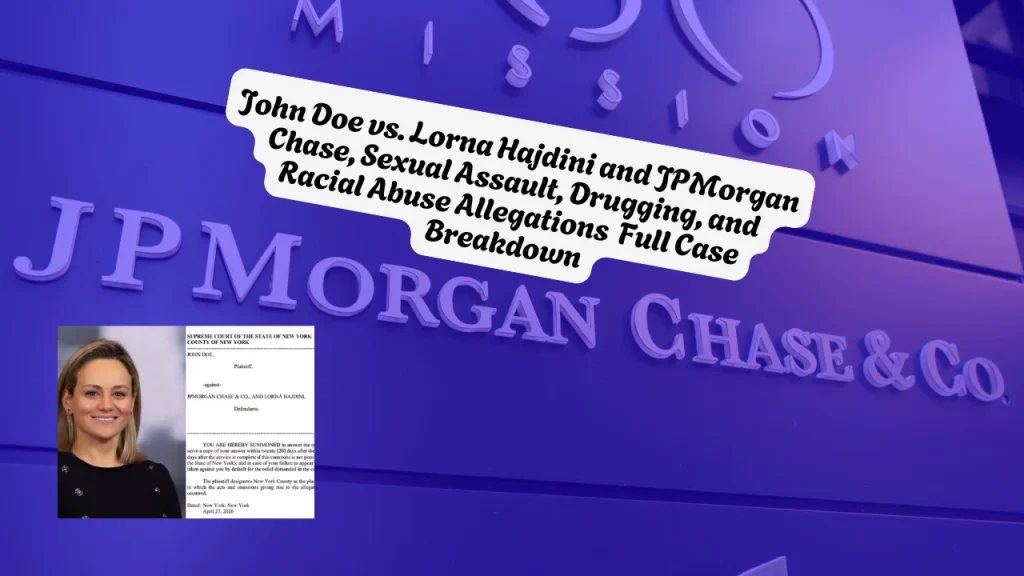
JPMorgan’s Lorna Hajdini Lawsuit Complaint Withdrawn, Plaintiff Identified, and What Happens Next
This article is an update to our original coverage published April 30, 2026. It incorporates new reporting published May 1–3, 2026, including the withdrawal of the original court filing and the identification of the plaintiff.
What is the JPMorgan Lorna Hajdini lawsuit about?
A former JPMorgan Chase banker filed a civil complaint in New York County Supreme Court in April 2026 accusing executive director Lorna Hajdini of sexual assault, drugging, and racial harassment. The original complaint was subsequently withdrawn for what was described as “corrections.” The plaintiff has since been publicly identified. Hajdini categorically denies all allegations. No criminal charges have been filed.
Quick Facts — John Doe vs. Lorna Hajdini & JPMorgan Chase (Updated May 3, 2026)
| Field | Detail |
| Plaintiff | Chirayu Rana, 35 (filed anonymously as “John Doe”) |
| Defendants | Lorna Hajdini; JPMorgan Chase & Co. |
| Case Type | Sexual Harassment / Racial Discrimination / Retaliation |
| Court | New York County Supreme Court |
| Date Filed | April 28, 2026 |
| Filing Status | Withdrawn for “corrections” as of May 1, 2026 |
| Legal Claims | Sexual assault, hostile work environment, racial discrimination, retaliation |
| Damages Sought | Lost earnings, emotional distress, reputational harm, punitive damages |
| Hajdini’s Position | Categorically denies all allegations; states she was never at the location where one alleged assault occurred |
| JPMorgan’s Position | Denies all claims; internal investigation found no supporting evidence |
| Plaintiff’s Attorney | Daniel J. Kaiser |
| Last Updated | May 3, 2026 |
What Has Changed Since the Lawsuit Was First Filed
The original complaint went viral within hours of being reported by the Daily Mail on April 29–30, 2026. By May 1, two significant developments had changed the story substantially.
First, the court filing was withdrawn for what the plaintiff’s side described as “corrections.” No amended complaint has been publicly filed as of May 3, 2026. Second, the plaintiff’s identity — kept anonymous in the filing — was reported by the New York Post and multiple other outlets. He has been identified as Chirayu Rana, 35, a former JPMorgan vice president who joined the bank’s leveraged finance team in spring 2024 and left the firm in late 2024. He is currently employed as a principal at Bregal Sagemount, a New York City-based private equity firm.
New details reported by the New York Post suggest that Hajdini was not Rana’s direct supervisor. Sources familiar with the matter said Hajdini reported to managing director Brandon Graffeo, while Rana worked under a different managing director, Jon Wolter — which, if accurate, would mean she would not have had direct control over Rana’s annual compensation or bonuses.
This matters legally. Several of the complaint’s most serious allegations centered on Hajdini’s alleged ability to control Doe’s promotion and pay. If they did not share a reporting line, that part of the complaint faces a credibility challenge — regardless of what else is alleged.
Related article: Brian Harpole Sues Candace Owens for Defamation Over Charlie Kirk Assassination Conspiracy Claims
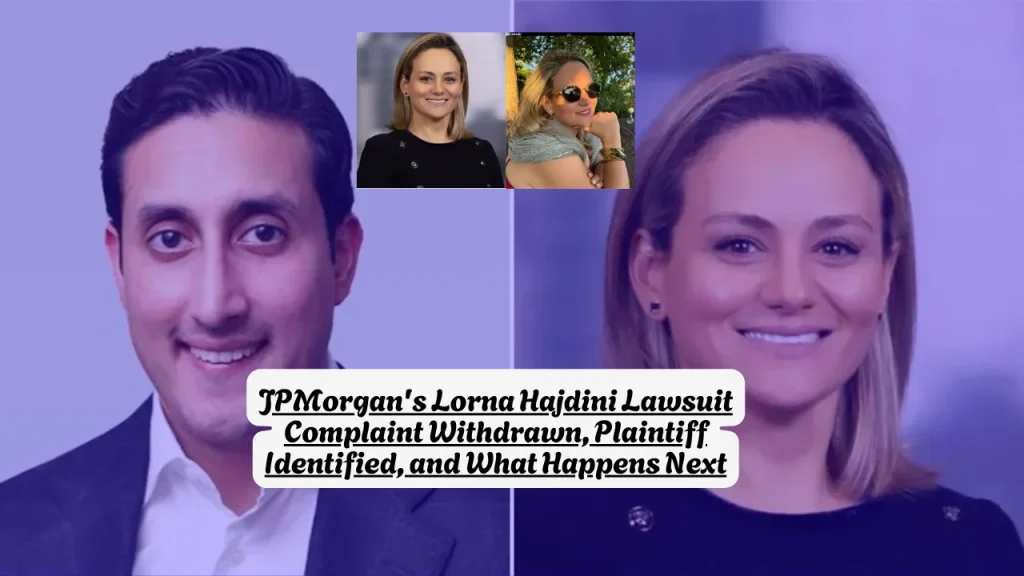
Who Is Chirayu Rana — the Man Behind the Lawsuit
Chirayu Rana, who previously served as a vice president at JPMorgan, is currently a principal at Bregal Sagemount, a New York City-based private equity firm. He is a Rutgers Business School alumnus and holds a Bachelor of Science in Finance.
Rana left JPMorgan in late 2024 and filed an internal harassment complaint in May 2025 seeking a multimillion-dollar severance, which was rejected.
Rana was the self-identified user behind a public exchange on the online legal advice platform AskALawyerOnCall.com about similar sexual harassment allegations approximately 10 months ago. During that conversation, Rana identified his alleged abuser as a man — in contrast to the allegations he laid out in the lawsuit filed against Hajdini, which has since been withdrawn for corrections.
These facts — reported by the New York Post and corroborated by other outlets — do not prove the allegations are false. Only a court can make that determination. But they are significant new context that was absent from the original filing and from initial news coverage.
What Lorna Hajdini and Her Legal Team Have Said
Hajdini has now responded publicly through her attorneys. Her legal team stated that she categorically denies the allegations, that she never engaged in any inappropriate conduct with this individual of any kind, and that she has never even been to the location where the alleged sexual assault supposedly took place.
Friends of Hajdini, who is still working at JPMorgan, said she is viewed internally as a top performer and that Rana had tarnished her with a complete fabrication.
These are statements from people on her side — not a court ruling. The case has not been decided. But the withdrawal of the original filing, combined with Hajdini’s direct denial citing a specific factual claim (that she was never at the alleged location), gives her defense a concrete starting point if and when an amended complaint is filed.
What JPMorgan’s Internal Investigation Found — and Why It Matters
He submitted a formal written complaint to JPMorgan in May 2025, detailing what he described as race- and gender-based harassment and severe sexual abuse. He claims the bank retaliated within days, placing him on involuntary leave and revoking his access to company systems.
JPMorgan’s internal review is not a neutral finding — the bank is a named defendant with an obvious interest in the outcome. That said, the process it described is relevant. JPMorgan’s internal investigation reviewed emails, phone records, and conducted employee interviews. The bank found no evidence supporting the allegations, and a spokesperson said numerous employees cooperated, but Rana refused to participate or provide key facts central to his claims.
Under New York law, an employee is not required to participate in an employer’s internal investigation. Refusing to do so is not an admission, and it does not automatically undermine a civil claim. But when a plaintiff later files a civil lawsuit and the employer can point to a documented refusal to cooperate, it creates a factual dispute that will have to be resolved through discovery and testimony — not press statements from either side.
If you are facing a similar situation at work — being pressured to stay silent during an internal investigation or facing retaliation after raising a complaint — speaking with an employment discrimination attorney is the most important step you can take. Most offer a free legal consultation.
The Allegation Timeline — What the Complaint Said Happened and When
The original complaint laid out a detailed chronology. Because it has been withdrawn, these allegations are no longer before the court in their current form — but they were widely reported and are part of the public record.
March 2024 — Chirayu Rana joins JPMorgan’s leveraged finance division.
May 2024 — Doe alleged Hajdini made an unsolicited sexual advance at his desk. The allegations escalated from there — he claimed she propositioned him on two occasions inside the office and linked his advancement, including a promotion to executive director, to complying with her demands.
Mid-to-Late 2024 — Among the most serious allegations, Doe claimed Hajdini admitted to drugging him with Rohypnol, along with an erection-enhancing substance, before having sex with him. The lawsuit also accused her of using her executive status to gain unauthorized access to his personal bank account to monitor his movements.
September 2024 — Hajdini allegedly berated Doe over his business performance and again threatened to sabotage his promotion if he refused her demands.
Late 2024 — Rana left JPMorgan.
May 2025 — Rana filed a formal internal harassment complaint. The complaint further alleges Doe received threatening anonymous calls after filing his grievance, including one voicemail purportedly from someone claiming to be a JPMorgan manager, and another threatening to contact immigration authorities about him and his family.
April 28, 2026 — Lawsuit filed in New York County Supreme Court.
May 1, 2026 — Filing withdrawn for “corrections.” Plaintiff identified publicly as Chirayu Rana. Hajdini issues categorical denial.
May 3, 2026 — No amended complaint has been publicly filed.
What the Withdrawal of the Complaint Actually Means Legally
A lot of people reading about this case online have taken the withdrawal to mean the case is over or that the allegations were proven false. Neither is accurate.
In New York civil practice, a plaintiff can voluntarily withdraw a complaint before the defendant has answered it. This is routine. It does not mean the case is dismissed permanently, and it does not mean a court found the allegations to be untrue. The original court filing was withdrawn for “corrections” shortly after details went viral. No criminal charges have been filed.
What it does mean is that an amended complaint — if one is filed — will be the document that actually governs the case. Any attorney advising a client on a case this high-profile would want to review the initial filing carefully before it became the permanent public record. Whether those “corrections” are minor or substantive is something only the plaintiff’s legal team knows right now.
The Retaliation Claim Against JPMorgan — Still the Most Legally Significant Allegation
Whatever happens with the harassment claims against Hajdini personally, the retaliation claim against JPMorgan Chase deserves separate attention.
Under the New York State Human Rights Law (Executive Law § 296), employers are prohibited from retaliating against employees who make good-faith internal complaints of harassment or discrimination. Placing an employee on involuntary leave and revoking system access within days of a formal internal complaint can, on its own, constitute actionable retaliation — even if the underlying harassment complaint is later disputed or not proven.
Rana’s timeline — formal complaint in May 2025, followed almost immediately by involuntary leave — fits the pattern courts look at in retaliation cases. The key legal question is causation: can he show the leave was a direct response to the complaint, rather than a pre-existing employment decision? That is exactly the kind of question discovery is designed to answer.
If you have been placed on leave or had your access revoked after raising a workplace complaint, a civil rights lawyer can tell you in one consultation whether what happened crosses a legal line — and many offer free consultations.
Related article: Texas Hemp Business Council vs. DSHS, Is Texas’ Smokable Hemp Ban Legal? Full Case Breakdown
How Cases Like This Typically Proceed in New York Courts
Sexual harassment and retaliation cases filed in New York County Supreme Court follow a standard civil litigation path — but ones involving a major financial institution and named executives tend to move slowly and generate significant discovery disputes.
If an amended complaint is filed, JPMorgan and Hajdini will each have the opportunity to file an answer or a motion to dismiss. A motion to dismiss does not mean the case ends — it means the defendant is arguing the complaint does not state a valid legal claim even if everything alleged were true. Courts rule on those motions, and losing one does not end a case.
If the case survives early motions, discovery begins. That means depositions of Hajdini, JPMorgan’s internal investigators, the two witnesses cited in the original complaint, and potentially others. Email and phone records would be subpoenaed. Personnel files would be reviewed. In a case this complex, discovery alone can take a year or more.
Employment cases at this level rarely go to trial. The overwhelming majority settle — either quietly before trial or sometimes during it. [VERIFY — settlement rate statistic if available from court data] Whether any settlement in this case would be disclosed publicly is uncertain; JPMorgan routinely includes confidentiality provisions in employment-related settlements.
Frequently Asked Questions
Has the JPMorgan Lorna Hajdini lawsuit been dropped for good?
No. The original filing was withdrawn for “corrections,” which is a voluntary procedural step in New York civil practice. It does not permanently end the case. An amended complaint can be refiled. As of May 3, 2026, no amended filing has appeared in the public docket.
Who is the plaintiff in the JPMorgan Hajdini lawsuit?
The plaintiff filed anonymously as “John Doe” in court. He has since been publicly identified by the New York Post and multiple other outlets as Chirayu Rana, 35, a former JPMorgan vice president currently working as a principal at Bregal Sagemount in New York City.
What did Lorna Hajdini say in response to the lawsuit?
Hajdini’s legal team issued a categorical denial, stating she never engaged in any inappropriate conduct with the plaintiff and had never been to the location where one of the alleged assaults supposedly took place. She remains employed at JPMorgan Chase.
Was JPMorgan’s internal investigation independent?
No. It was conducted by the bank — a named defendant in the lawsuit. JPMorgan said it reviewed emails, phone records, and employee testimony, and found no evidence of wrongdoing. Rana reportedly declined to participate. An employer’s internal investigation is not a neutral finding and does not bind a court.
Could this case also lead to criminal charges against Hajdini?
This is a civil lawsuit, not a criminal prosecution. However, allegations of drugging someone with Rohypnol without consent are serious enough that law enforcement could theoretically open a separate investigation. As of May 3, 2026, no criminal charges have been reported.
How long does a sexual harassment lawsuit in New York typically take to resolve?
Under the New York State Human Rights Law, a plaintiff generally has three years from the alleged misconduct to file a civil claim. [VERIFY] Cases of this complexity — involving a major institution and multiple defendants — typically take one to three years from filing to resolution, whether by settlement or trial.
Do I need a lawyer if I am facing workplace harassment in New York?
Yes, especially if your employer has already launched an internal investigation or placed you on leave. The timeline and how you document your complaint matters significantly. A workplace harassment attorney can advise you on your rights before you take any steps — most offer a free legal consultation.
What happens to the two witnesses cited in the original complaint?
The original complaint stated that two witnesses corroborated portions of Rana’s account. Since the complaint was withdrawn, it is unclear whether those witnesses will be called in any amended filing. If the case proceeds, both would likely be deposed during discovery.
Legal Terms Used in This Article
Hostile Work Environment: A workplace so permeated with discriminatory conduct, harassment, or intimidation that it unreasonably interferes with an employee’s ability to perform their job. Courts look at the severity and frequency of the conduct, not just isolated incidents.
Retaliation: When an employer punishes an employee for making a good-faith complaint about harassment or discrimination. Under New York law, this is a separate and independently actionable violation — even if the underlying harassment claim is not proven.
Civil Complaint: A legal document filed with a court that formally states a plaintiff’s claims against a defendant and the damages being sought. It is not a finding of fact. Everything in it is alleged, not proven.
Motion to Dismiss: A formal legal request asking a court to throw out a case before it reaches discovery, on the grounds that the complaint does not state a valid legal claim. Losing a motion to dismiss does not end a case.
Discovery: The pre-trial process in which both sides exchange evidence — documents, emails, records, and sworn depositions. In complex employment cases, this phase can last a year or more.
Punitive Damages: Money awarded by a court above and beyond actual losses, designed to punish especially egregious conduct and deter similar behavior in the future.
Statute of Limitations: The legal deadline by which a lawsuit must be filed. Under New York State Human Rights Law, the general deadline for workplace harassment claims is three years from the date of the alleged conduct.
What This Case Means for Workplace Harassment Law — Bigger Than One Lawsuit
This case has drawn attention well beyond the finance industry, and for good reason. Male victims of workplace sexual harassment are significantly underreported — both because of cultural stigma and because legal protections are less understood. Under federal Title VII and New York State Human Rights Law, the gender of the victim or perpetrator is legally irrelevant. Men have the same right to a harassment-free workplace as anyone else.
The case also highlights how retaliation works in practice. He claims the bank retaliated within days, placing him on involuntary leave and revoking his access to company systems. Whether that allegation holds up in court is yet to be determined. But the pattern — complaint filed, access revoked almost immediately — is exactly what employment lawyers look for when evaluating a retaliation claim.
You now know where this case stands, what the new developments mean legally, and what questions remain unanswered. If you are dealing with a similar situation at work — whether as a victim, an HR professional, or someone who witnessed misconduct — visit AllAboutLawyer.com to connect with an employment attorney in your area who can give you answers specific to your case.
Prepared by the AllAboutLawyer.com Editorial Team and reviewed for factual accuracy against verified news reporting from the New York Post, Washington Times, WION News, and court-sourced information as of May 3, 2026. Last Updated: May 3, 2026.
Disclaimer: This article is for informational purposes only and does not constitute legal advice. All allegations described are drawn from publicly available court filings and verified news reporting. They have not been proven in court. For advice regarding your specific situation, consult a qualified attorney licensed in your state.
About the Author
Israr Ahmad is a legal content researcher with 4+ years of experience covering class action settlements and consumer rights cases. He has researched and published coverage of 2,500+ settlements using verified court records, settlement administrator filings, and government sources. Learn more about Israr.