
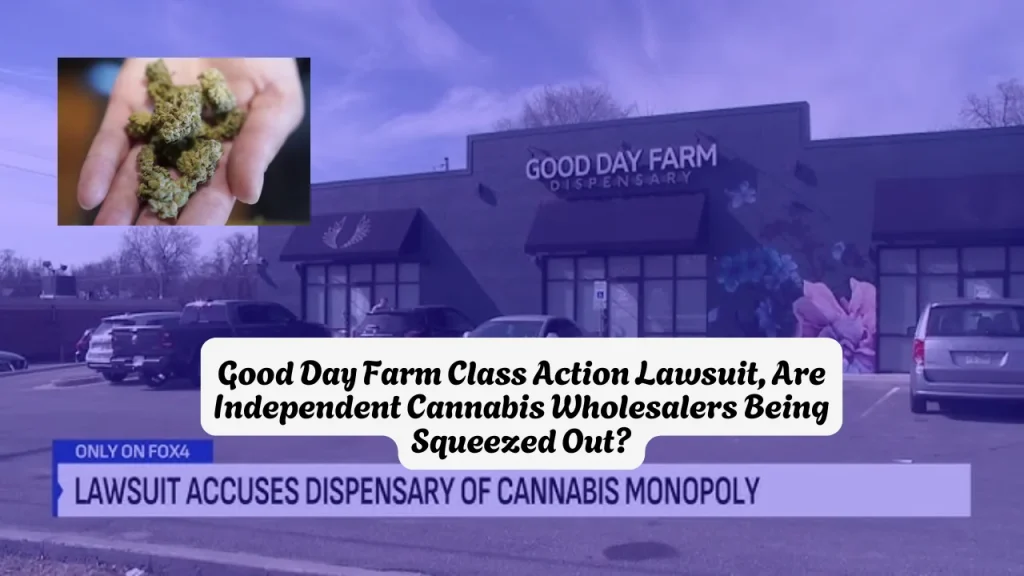
Good Day Farm Class Action Lawsuit, Are Independent Cannabis Wholesalers Being Squeezed Out?
Good Day Farm is facing a class action antitrust lawsuit filed in the Circuit Court of Jackson County, Missouri, alleging that the Arkansas-based cannabis company built an illegal stranglehold over Missouri’s $1.52 billion cannabis market. The lead plaintiffs — CPC of Missouri-Smithville, LLC and GF Saint Mary LLC — filed the suit on behalf of independent wholesalers who allege they have been harmed by a deliberate, coordinated, and unconstitutional scheme by Good Day Farm and its network of affiliated companies and investors. The case is still in early stages — no settlement exists, and no claim form is open.
Quick Facts — Good Day Farm Antitrust Lawsuit
| Field | Detail |
| Lawsuit Filed | April 28, 2026 |
| Defendant | Good Day Farm Retail Management LLC and affiliated entities |
| Alleged Violation | Missouri Antitrust Law; Missouri Constitution Article XIV (10% dispensary license cap) |
| Who Is Affected | Independent Missouri-licensed cannabis cultivators and wholesalers |
| Current Court Stage | Putative class action — class not yet certified |
| Court & Jurisdiction | Circuit Court of Jackson County, Missouri |
| Lead Law Firms | Feuerstein Kulick LLP and Bryan Cave Leighton Paisner LLP |
| Next Hearing Date | TBD — case newly filed as of April 28, 2026 |
| Official Case Website | mocannabisclass.org |
| Last Updated | April 30, 2026 |
What Is the Good Day Farm Lawsuit About? CPC of Missouri-Smithville LLC et al. v. Good Day Farm Retail Management LLC (Jackson County Circuit Court, 2026)
The lawsuit alleges that Good Day Farm and a network of companies, investors, and affiliated operators violated Missouri antitrust law and the Missouri Constitution by creating what the complaint calls the “GDF Cartel” — a coordinated network that owns, controls, or manages an unlawfully high share of Missouri dispensary licenses.
Here is the core of what plaintiffs say happened. Missouri’s Constitution bars any entity or group of entities under substantially common control from holding more than 10% of the state’s dispensary licenses. With 224 dispensaries currently licensed in Missouri, that cap works out to 22 dispensaries. The complaint alleges the Good Day Farm network controls at least 61 — nearly triple the legal limit.
To obscure that common control, the lawsuit claims Good Day Farm had investors put money into separate LLCs, which then acquired existing licensed cannabis businesses. Those deals usually involved a large cash payout to existing owners, who then handed over operational control — including licenses — to Good Day Farm-aligned managers and board members. The five brands allegedly operating as a single coordinated network are Good Day Farm (21 dispensaries), CODES (20), Greenlight (10), Fresh Karma (6), and 3Fifteen Primo (4). This is the kind of case that a consumer rights lawyer or antitrust attorney would classify as a market manipulation scheme — not just a regulatory dispute.
If you are an independent cannabis wholesaler in Missouri who has seen your orders cut, your shelf space shrink, or your margins compressed by Good Day Farm dispensaries, this lawsuit may directly affect you. This case mirrors broader concerns raised in Missouri cannabis antitrust litigation and consumer fraud lawsuits involving dominant market players using structural advantages to sideline independent competitors.
Are You Part of the Good Day Farm Class Action Lawsuit?
The question “is there a class action lawsuit against Good Day Farm” is exactly what independent wholesalers across Missouri are searching for right now. Here is how to know if this case involves you.
You may be part of this class if:
- You are a Missouri-licensed cannabis cultivator or manufacturer
- You sold or attempted to sell wholesale cannabis products to Good Day Farm-affiliated dispensaries
- You experienced reduced purchase orders, shelf access restrictions, or forced product reciprocity demands from Good Day Farm dispensaries
- You were compelled to purchase Good Day Farm-affiliated products as a condition of getting your own products stocked on their shelves
- You operate independently — not as part of the Good Day Farm network
You are likely NOT included if:
- You are a retail consumer who purchased cannabis from a Good Day Farm dispensary
- You are an investor in one of the Good Day Farm-affiliated LLCs
- You operate a dispensary under the Good Day Farm management umbrella
- You have no direct business relationship with any Good Day Farm-affiliated entity
Wholesalers who believe they have been financially harmed by the alleged cartel’s practices must actively join the litigation to be eligible for damages — automatic inclusion applies only for purposes of injunctive relief. If you believe you qualify, contact Feuerstein Kulick LLP or Bryan Cave Leighton Paisner LLP directly, or visit mocannabisclass.org for more information.
What Are Good Day Farm Plaintiffs Seeking in This Lawsuit?
This is not a payout article. No settlement exists. No legal settlement payout is available today. But here is what the plaintiffs have asked the court to do.
The lawsuit seeks both monetary damages and injunctive relief — asking the court to stop the alleged anticompetitive conduct and restore the “fair, competitive marketplace that Missourians voted for when they approved recreational cannabis in 2022.”
Related article: John Doe vs. Lorna Hajdini and JPMorgan Chase, Sexual Assault, Drugging, and Racial Abuse Allegations Full Case Breakdown
On the damages side, the complaint alleges the defendants’ collective market power depressed wholesale prices for independent Missouri cultivators and manufacturers by more than 20%. That figure has not been proven in court, but it forms the basis of the financial harm claim. This type of case — where market power is allegedly used to harm competing businesses — typically falls under Missouri’s antitrust statutes and allows plaintiffs to seek compensation for damages including lost profits and treble damages under state law.
If injunctive relief is granted, it could limit or unwind the business arrangements that plaintiffs allege allow common control over more dispensaries than Missouri’s Constitution permits, and could restrict alleged coordinated pricing, purchasing, and retail access practices.
No specific dollar amount has been confirmed in court filings. Any figures you may see elsewhere are estimates — not court-confirmed.
What Should You Do If You Were Affected by Good Day Farm?
If you are an independent Missouri cannabis wholesaler, here is what your options look like right now.
Most independent wholesalers are not automatically included for damages.
Unlike consumer class actions where class members often receive automatic inclusion, wholesalers who believe they have been financially harmed must join the litigation in order to receive damages. This is an important distinction — visiting mocannabisclass.org and registering your interest is the right first move.
Save everything.
If you have records of reduced orders from Good Day Farm dispensaries, emails about reciprocity demands, price pressure communications, or shelf access restrictions, preserve those documents now. They may be directly relevant to establishing your damages claim.
Monitor the case docket.
The case was just filed on April 28, 2026. A free legal consultation with a cannabis antitrust attorney is worth considering if you believe your business was harmed — especially before the class certification stage, when courts define exactly who is in and who is out.
Do not wait passively.
This is a putative class action — the class has not been certified yet. The sooner you connect with the plaintiffs’ legal team, the stronger your position may be.
Good Day Farm Class Action Lawsuit Timeline
| Milestone | Date |
| Lawsuit Filed | April 28, 2026 |
| Class Certification Motion | TBD — case newly filed |
| Defendants’ Response Due | TBD — no response filed as of April 30, 2026 |
| Last Major Court Ruling | TBD — no rulings issued yet |
| Next Scheduled Hearing | TBD — pending court scheduling order |
| Expected Settlement Timeline | TBD — litigation at earliest stage; no settlement discussions reported |
Frequently Asked Questions
Is there a class action lawsuit against Good Day Farm?
Yes. CPC of Missouri-Smithville, LLC and GF Saint Mary LLC filed a class action antitrust lawsuit on April 28, 2026, in the Circuit Court of Jackson County, Missouri, alleging Good Day Farm built an illegal network controlling at least 61 dispensaries — nearly triple the 22 permitted under Missouri’s Constitution. The case is active and in its early stages.
Do I need to do anything right now to be included?
Yes, if you want damages. Independent Missouri wholesalers are included in the class for injunctive relief automatically, but wholesalers who believe they have been financially harmed must join the litigation in order to receive damages. Visit mocannabisclass.org to take action.
When will a settlement be reached in the Good Day Farm case?
No timeline exists yet. The lawsuit was filed April 28, 2026, and no settlement discussions have been reported. Antitrust class actions of this complexity typically take one to three years to resolve, depending on whether the parties negotiate or proceed to trial.
Can I file my own individual lawsuit against Good Day Farm instead?
Yes, that option exists. You are not required to participate in the class action. If you believe your business suffered specific, documented harm from Good Day Farm’s alleged practices, consulting an employment class action settlement or antitrust attorney for an individual assessment is a legitimate choice. An attorney can advise you on whether your damages might warrant separate action.
How will I know if the Good Day Farm lawsuit settles?
Monitor mocannabisclass.org for updates. The plaintiffs’ legal team — Feuerstein Kulick LLP and Bryan Cave Leighton Paisner LLP — will post official updates there. You can also track the case through the Jackson County Circuit Court public docket.
Why can Good Day Farm operate under five different brand names if it controls them all?
That is precisely what the lawsuit challenges. The complaint alleges that Good Day Farm used third-party LLC structures to make its control appear indirect — investors were told upfront that management of their companies would be handled entirely by Good Day Farm, yet on paper each dispensary appeared to be independently owned. Missouri’s Constitution looks at substance over form when applying the 10% cap.
How did Good Day Farm allegedly suppress wholesale prices?
Because Good Day Farm dispensaries were compelled to buy cannabis products from their affiliated cultivators and manufacturers, independent wholesalers saw their orders shrink. One wholesaler reported a 50% drop in Good Day Farm purchases by July 2025 after Good Day Farm entered a new agreement with Greenlight in spring 2025. The complaint attributes a greater than 20% depression of wholesale prices to the alleged cartel’s collective market power.
Am I affected if I’m a Missouri cannabis consumer, not a wholesaler?
The current lawsuit is filed on behalf of independent wholesalers — not retail consumers. As a consumer, you are not a named class member. However, the alleged price suppression at the wholesale level and market consolidation could have downstream effects on retail pricing and product variety. No consumer claim form exists, and none is expected under the current complaint.
Sources & References
- Official Case Website: mocannabisclass.org
- Press Release (April 28, 2026): PR Newswire — Missouri Cannabis Cultivators File Class Action Against Good Day Farm
Prepared by the AllAboutLawyer.com Editorial Team and reviewed for factual accuracy against official court records and the official case website at mocannabisclass.org on April 30, 2026. Last Updated: April 30, 2026
Disclaimer: This article is for informational purposes only and does not constitute legal advice. Legal claims and outcomes depend on specific facts and applicable law. For advice regarding a particular situation, consult a qualified attorney.
About the Author
Israr Ahmad is a legal content researcher with 4+ years of experience covering class action settlements and consumer rights cases. He has researched and published coverage of 2,500+ settlements using verified court records, settlement administrator filings, and government sources. Learn more about Israr.