
Google Military Leave Reemployment Lawsuit, DOJ Sues Over USERRA Reemployment Violation
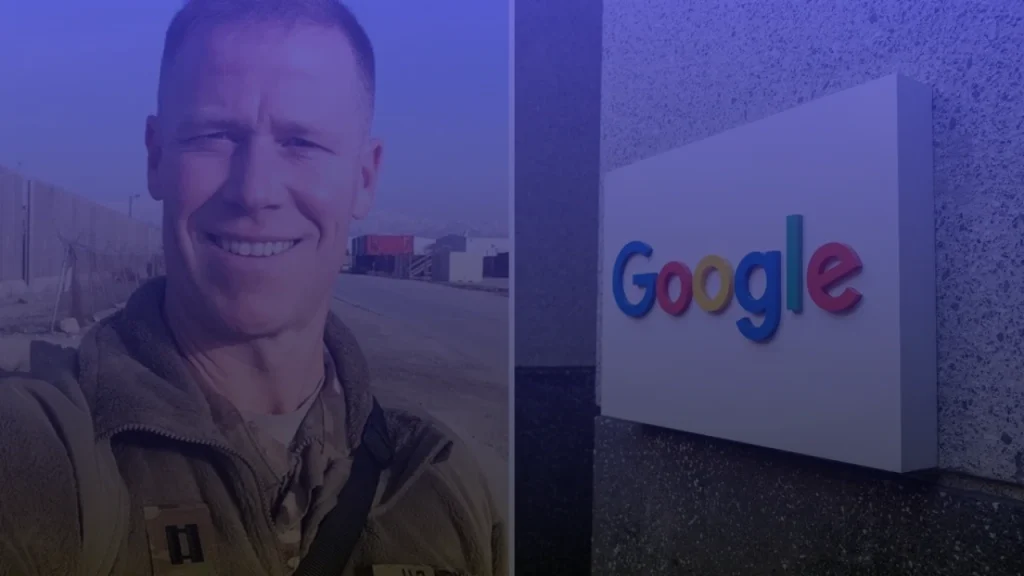
The U.S. Department of Justice has sued Google, alleging the company did not properly restore a former Army Reserve officer to his job after he returned from a year of military service. The lawsuit was filed on October 29, 2026, in the U.S. District Court for the Southern District of New York.
The case, Mark Davisson v. Google LLC, No. 1:26-cv-09465, is brought under the Uniformed Services Employment and Reemployment Rights Act of 1994 (USERRA). Its central question is narrow and practical: if an employer gives a returning reservist back the same salary and job title, has it met USERRA if the responsibilities and career opportunities that made the job meaningful are gone?
Google disputes the allegations. Nothing in the complaint has been proven in court, and no ruling, settlement or trial date has been announced.
Google Military Leave Lawsuit: Quick Facts
| Detail | Information |
| Case name | Mark Davisson v. Google LLC |
| Case number | 1:26-cv-09465 (26 Civ. 9465) |
| Filed | October 29, 2026 |
| Court | U.S. District Court, Southern District of New York |
| Plaintiff | Mark Davisson, former Google Cloud Key Account Executive and U.S. Army Reserve officer |
| Defendant | Google LLC |
| Filed by | U.S. Attorney’s Office for the Southern District of New York, on Davisson’s behalf |
| Law at issue | Uniformed Services Employment and Reemployment Rights Act of 1994 (USERRA) |
| Statute pleaded | 38 U.S.C. § 4313(a)(2)(A) |
| Main allegation | Google allegedly failed to restore Davisson to a position of like seniority, status and pay after military service |
| Military leave at issue | May 2022 to May 2023 |
| Termination | August 27, 2024, during a workforce reduction |
| Department of Labor investigation | Completed June 25, 2025, according to the complaint |
| Money demanded | Lost wages, benefits, interest and possible liquidated damages; no dollar figure stated |
| Class action? | No, this is an individual lawsuit |
| Claim form or deadline? | None. There is no settlement fund to claim from |
| Settlement | None announced |
| Google’s position | Disputes the claims |
What Is the Google Military Leave Lawsuit About?
USERRA is the federal law that protects the civilian careers of people who leave work for military service. It generally requires an employer to take a returning service member back in the job the person would have held if the military absence had never happened, or in a position of like seniority, status and pay.
The Justice Department says Google fell short of that standard when Davisson returned in May 2023. The complaint does not claim Google refused to take him back. It claims Google brought him back in name only: same title, same pay, but without the customer accounts he had managed before he left.
That is why this case is getting attention from reservists, National Guard members and employment lawyers. It tests whether “like status” under USERRA means more than a title and a paycheck.
Who Is Mark Davisson, the Former Google Employee?
According to the DOJ announcement and the federal complaint:
- He enlisted in the U.S. Army Reserve in May 2004 and was commissioned as an officer in December 2004.
- He served in Iraq and received a Bronze Star.
- He served in Afghanistan and received a Meritorious Service Medal.
- He holds a bachelor’s degree from the University of Virginia and an MBA from Stanford Graduate School of Business.
- Before Google, he worked in financial services and technology, including at Salomon Brothers, Morgan Stanley and Bloomberg.
- He joined Google in December 2019 as a Key Account Executive (KAE) in Google Cloud’s Financial Services Group.
Each KAE in his group was assigned a major customer account. That detail drives the whole case.
Which Google Cloud Accounts Did Davisson Manage Before Military Leave?
| Customer | Assigned | Role described in the complaint |
| BlackRock | January 2020 | Google Cloud Key Account Executive |
| Bridgewater Associates | January 2022 | Google Cloud Key Account Executive |
| Credit Suisse | January 2022 | Managed the U.S. business |
The complaint says Davisson was chosen for these accounts in part because of his financial-services background and his relationships at BlackRock. It adds that BlackRock signed its first multimillion-dollar cloud contract with Google in December 2021, while he managed the account.
The government’s point: these accounts were the substance of his job, not a side detail.
What Happened When Davisson Returned to Google in May 2023?
Davisson took approved military leave from May 2022 through May 2023, serving at U.S. Army Cyber Command at Fort Gordon, Georgia. While he was away, the complaint says another Key Account Executive, identified only as “Employee-1,” took over the BlackRock, Bridgewater and Credit Suisse accounts.
When Davisson asked to return in May 2023, Google reinstated him with the same title and pay. But according to the complaint:
- He did not get his former accounts back, and Employee-1 kept them.
- He was not assigned any other major customer account.
- For roughly six months he had no defined job responsibilities while he looked for another role inside Google.
- In January 2024, Google moved him to its Digital Assets sales team, where he supported colleagues who managed accounts rather than managing one himself.
Why Does Keeping the Same Salary and Title Matter Under USERRA?
The Justice Department argues that USERRA protects status, not just compensation. Under the federal regulation at 20 C.F.R. § 1002.193, status can include opportunities for advancement, general working conditions, job location, shift assignment, rank and responsibility.
If account ownership was part of what made a Key Account Executive job what it was, the government says, taking it away while keeping the title does not restore the employee to a position of like status. Google disputes that framing, and the court has not decided it.
Was Davisson Fired After Another Military Leave in 2024?
Davisson took a second approved military leave from May 13, 2024, to June 14, 2024. On May 29, 2024, while he was still on leave, Google told him he would be terminated as part of a workforce reduction affecting the Digital Assets team. The termination was set for August 27, 2024, unless he found another Google position first.
After returning on June 15, 2024, he applied for about 10 internal positions through August 26 and was not offered one. Google ended his employment on August 27, 2024. On information and belief, the complaint also alleges that Employee-1, who held his former accounts, was not affected by the reduction.
Does the Lawsuit Claim Google Fired Davisson Because of His Military Service?
Not as a separate claim. The complaint describes the termination as part of a team-wide workforce reduction. The violation it specifically pleads is the failure to restore Davisson to a position of like status in May 2023 under 38 U.S.C. § 4313(a)(2)(A). It discusses USERRA’s broader anti-discrimination and anti-retaliation protections, but it does not set out a standalone retaliation claim under 38 U.S.C. § 4311 over the 2024 layoff.
That difference matters for readers comparing this case to other military-leave disputes: a reemployment claim and a discrimination or retaliation claim are legally different.
Related article: Toast FTC Lawsuit, Hidden Fees, Cancellation Charges and Subscription Traps Alleged
Timeline: From Military Leave to DOJ Lawsuit Against Google
| Date | Event |
| December 2019 | Davisson joins Google Cloud as a Key Account Executive |
| May 2022 | Begins approved military leave at U.S. Army Cyber Command |
| May 2023 | Returns to Google and requests reemployment |
| January 2024 | Moved to the Digital Assets sales team |
| May 13 to June 14, 2024 | Second period of approved military leave |
| May 29, 2024 | Google notifies him of planned termination |
| August 27, 2024 | Google terminates his employment |
| October 15, 2024 | Davisson files a USERRA complaint with the Department of Labor |
| June 25, 2025 | DOL’s VETS investigation completes; Google is advised of a violation, according to the complaint |
| July 30, 2025 | Davisson requests referral to the Attorney General |
| October 29, 2026 | DOJ files suit in the Southern District of New York |
How Did a Department of Labor Complaint Turn Into a DOJ Lawsuit Against Google?
USERRA complaints against private employers start with the Department of Labor’s Veterans’ Employment and Training Service (VETS). Davisson filed his complaint on October 15, 2024. The complaint says VETS finished its investigation on June 25, 2025, and advised Google it was in violation of USERRA.
A VETS finding is not a court judgment. Google can contest every allegation in federal court.
When a complaint is not resolved, the service member can ask for referral to the Attorney General. Under 38 U.S.C. § 4323, the Attorney General may then represent the individual and file suit if the statutory conditions are met. Davisson requested referral on July 30, 2025. The suit was signed by Assistant Attorney General Harmeet K. Dhillon, U.S. Attorney James M. McDonald and Assistant U.S. Attorney Danielle J. Marryshow.
What Does USERRA Require Employers to Do for Returning Service Members?
USERRA is codified at 38 U.S.C. §§ 4301 to 4335. It covers private employers and state and local governments, and it protects members of the Armed Forces, including the Reserve and National Guard.
Military leave. Employers generally must allow qualifying military leave. Employees generally must give advance notice, written or verbal, unless military necessity or circumstances make notice impossible or unreasonable.
Right to return (38 U.S.C. § 4312). An eligible employee generally has a right to be reemployed if the person left for qualifying service, gave notice unless excused, stayed within the five-year cumulative service limit (with exceptions), applied on time, and did not receive a disqualifying discharge. The five-year limit counts cumulative qualifying absences from one employer. It does not cap military service itself.
The job you get back (38 U.S.C. § 4313). After service of more than 90 days, the employee generally must be placed in the position the person would have attained without the interruption, or a position of like seniority, status and pay. This is known as the escalator principle, and it is the provision at the center of the Google case.
Seniority and benefits (38 U.S.C. § 4316). Returning employees generally receive the seniority and seniority-based rights they would have earned if continuously employed. During service they are treated as on furlough or leave and receive the non-seniority benefits given to employees on comparable leave.
No discrimination or retaliation (38 U.S.C. § 4311). Employers may not deny hiring, reemployment, retention, promotion or benefits because of military service or obligations, and may not retaliate against someone who asserts USERRA rights.
Does USERRA Require an Employer to Give Back the Exact Same Job?
Not always. The test is what position the employee would have held if employment had continued without the military break. If a job genuinely changed or disappeared because of a real reorganization or layoff that would have happened anyway, the escalator principle can account for that. According to Department of Labor guidance, the correct position can differ from the old one depending on genuine economic circumstances.
In the Google case, the government points to the transfer of Davisson’s accounts to another executive, his months without account responsibility, and that executive’s continued employment. Those facts are allegations. Google will get to present its own explanation.
What Is the Government Asking Google to Do in the Davisson Lawsuit?
The complaint does not name a dollar figure. It asks the court for:
- Reinstatement as a Key Account Executive in Google’s Financial Services Group, responsible for the BlackRock and Bridgewater accounts or a comparable group of key accounts.
- Lost wages and benefits, plus interest, in amounts the court would determine from the evidence.
- Liquidated damages, which under USERRA can equal the lost wages and benefits but only if the court finds the violation was willful. They are not automatic.
- Policy and training changes, including USERRA training for employees and managers and nondiscriminatory workplace policies.
- A jury trial on issues that a jury may decide.
What Is Google’s Response to the Military Leave Lawsuit?
Google has rejected the claims. A company spokesperson told Reuters on October 29, 2026, that Google disagrees with the complaint’s claims and takes compliance with employment laws, including USERRA, seriously. Google has not admitted any violation.
The case is at its opening stage, and Google has yet to file a formal answer or motion. The questions most likely to matter include:
- What position Davisson would have held had he never taken military leave.
- Whether account ownership was a core part of that position’s status.
- Why the accounts were not returned to him in 2023.
- Whether the Digital Assets role was comparable under USERRA.
- Whether the workforce reduction would have reached him regardless of his service.
- Whether any violation was willful, which controls liquidated damages.
What Happens Next in Mark Davisson v. Google LLC?
As of October 30, 2026, the only public filing identified is the original complaint. No ruling or schedule has been announced. In a typical federal case, the next steps are:
- Formal service of the lawsuit on Google.
- Google’s answer or a motion to dismiss.
- A court-ordered schedule.
- Discovery, including document exchange and depositions.
- Possible settlement talks or summary-judgment motions.
- Trial, if the case is not resolved earlier.
There is no settlement fund, claim form or payout date. Other Google employees do not automatically join the case.
How Is the Google USERRA Lawsuit Different From Other Military Leave Cases?
USERRA covers several kinds of workplace protection, and recent lawsuits show how different those disputes can be.
The ECI USERRA Lawsuit, Fired Guardsman Sues Over Deployment involves an employee who alleges Electrical Components International terminated him after he disclosed deployment obligations. That is a discharge dispute, not a restoration-to-position dispute.
The Sun Country $1,550,000 Pilot 401(k) Settlement, No Claim concerns retirement contributions for pilots who performed military service, which falls under USERRA’s pension protections.
The Alaska Airlines $500K Settlement, No Claim Needed resolved a separate dispute over vacation accrual during certain military leaves.
The Google case differs from all three: it is a reemployment-position claim brought by the federal government for one individual.
What Should You Do If Your Employer Did Not Restore Your Job After Military Leave?
A service member who returns and believes the job or benefits were not properly restored should preserve records showing what changed:
- The job description and performance reviews from before leave.
- Written notice of military service, orders and service dates.
- Your request to return to work and the employer’s reinstatement letter.
- Emails showing changes to your duties, accounts, territory or reporting line.
- Pay and benefits records before and after leave.
- Records of internal applications and any layoff or termination notices.
- Information on how comparable coworkers’ roles changed.
How Do You File a USERRA Complaint With the Department of Labor?
Complaints against private employers go to the Department of Labor’s Veterans’ Employment and Training Service (VETS). If the matter is not resolved, you may ask VETS to refer it to the Attorney General for possible representation. USERRA also allows a private civil action in certain circumstances, and federal law does not set a filing deadline for USERRA claims, though waiting can make evidence harder to gather. A qualified employment attorney can advise on your specific situation.
Official guidance is available on the Department of Labor’s USERRA page and in the USERRA Pocket Guide.
Frequently Asked Questions About the Google Military Leave Lawsuit
Why is the Justice Department suing Google?
The DOJ alleges Google violated USERRA by failing to restore Mark Davisson to a position of like status after a year of military service. It says he kept his title and pay but lost responsibility for the customer accounts he previously managed.
Who is Mark Davisson?
He is a former Google Cloud Key Account Executive and U.S. Army Reserve officer who served at U.S. Army Cyber Command in Georgia from May 2022 to May 2023, according to the complaint.
Did Google fire Mark Davisson?
Yes. Google terminated him on August 27, 2024, as part of a workforce reduction affecting its Digital Assets team.
Did Google fire Davisson because of his military service?
The complaint does not plead that as a separate claim. The government’s pleaded claim is that Google failed to restore him to a position of like status in 2023. Google disputes the allegations.
Is the Google military leave lawsuit a class action?
No. It is an individual USERRA lawsuit. Other employees are not automatically included and cannot file a claim through this case.
Is there a Google military leave settlement or claim form?
No. As of October 30, 2026, no settlement has been announced and there is no claim form or deadline.
How much money is Davisson seeking from Google?
The complaint states no dollar amount. It seeks reinstatement, lost wages and benefits, interest, possible liquidated damages and workplace policy and training changes.
Did the Department of Labor find that Google violated USERRA?
The complaint says VETS completed its investigation on June 25, 2025, and advised Google it was in violation of USERRA. That is an agency investigation outcome described in the lawsuit, not a court judgment.
Does USERRA require employers to pay employees during military leave?
Generally no. USERRA does not require ordinary wages during military service, but employees on military leave must receive the benefits given to employees on comparable nonmilitary leave, and employers cannot force them to use accrued vacation.
How long do I have to ask for my job back after military service?
It depends on the length of service. For service of 1 to 30 days, you generally report on the next scheduled workday after travel and rest. For 31 to 180 days, you generally have 14 days to apply. For more than 180 days, you generally have 90 days. Special rules apply for service-related hospitalization and other circumstances.
Bottom Line: Why the Google USERRA Lawsuit Matters
The DOJ says Google restored Mark Davisson’s title and salary in May 2023 but not the account responsibilities and career path that came with the job. Google denies wrongdoing. No court has decided whether the job he came back to was legally comparable, and the case is only days old.
What happens next could clarify how USERRA’s “like status” requirement applies when a returning service member keeps the title but, allegedly, loses the work.
Sources
- U.S. Department of Justice, SDNY, U.S. Attorney Files Lawsuit Against Google for Violating USERRA, October 29, 2026.
- Original Complaint, Mark Davisson v. Google LLC, No. 1:26-cv-09465 (S.D.N.Y. filed October 29, 2026).
- Reuters, US files lawsuit claiming Google wouldn’t give employee new job following military leave, October 29, 2026.
- 38 U.S.C. § 4311, discrimination and reprisal.
- 38 U.S.C. § 4312, reemployment rights.
- 38 U.S.C. § 4313, reemployment positions.
- 38 U.S.C. § 4316, seniority and benefits.
- 38 U.S.C. § 4323, enforcement against private employers.
- 20 C.F.R. § 1002.193, reemployment position and status.
- U.S. Department of Labor, USERRA Pocket Guide and Know Your Rights Under USERRA.
Researched and written by Israr Ahmad, legal content researcher and founder of AllAboutLawyer.com. All facts verified against the DOJ SDNY press release, the filed complaint, Reuters reporting, 38 U.S.C. §§ 4311 to 4323 and 20 C.F.R. § 1002.193, as of October 30, 2026. Last Updated: October 30, 2026.
This article is for informational purposes only and does not constitute legal advice. Laws vary by state and individual circumstances differ. For advice about your specific situation, consult a qualified attorney. The allegations in Mark Davisson v. Google LLC have not been proven in court, and Google disputes them.
About the Author
Israr Ahmad is a legal content researcher with 4+ years of experience covering class action settlements and consumer rights cases. He has researched and published coverage of 2,500+ settlements using verified court records, settlement administrator filings, and government sources. Learn more about Israr.