
Toast FTC Lawsuit, Hidden Fees, Cancellation Charges and Subscription Traps Alleged
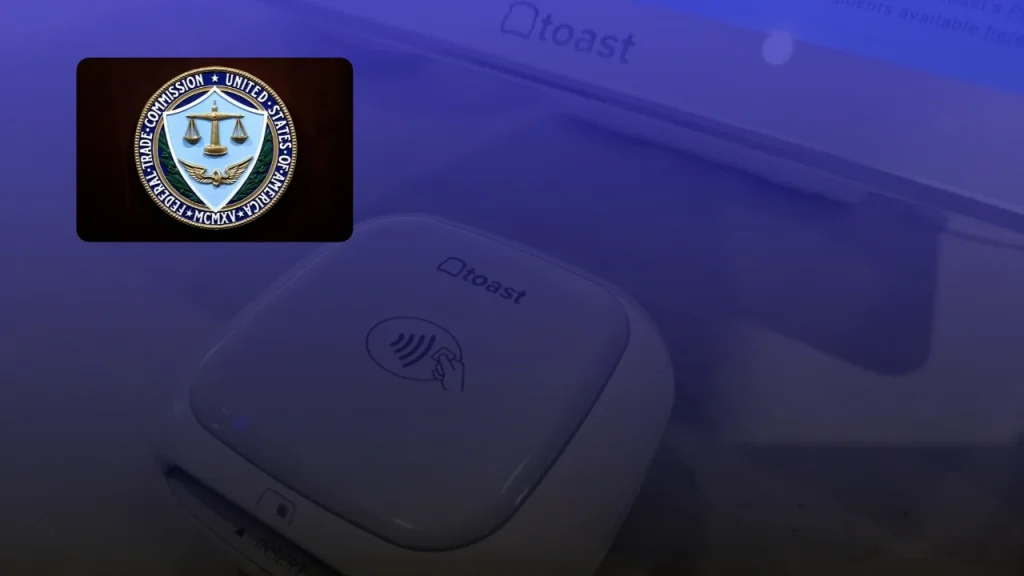
The Federal Trade Commission, seven state attorneys general and California officials from Los Angeles County and San Francisco have sued Toast, the restaurant technology company. They allege Toast charged restaurants hidden fees, enrolled them in unwanted add-ons, made cancellation difficult and advertised customer support that restaurants could not reliably reach.
The case, Federal Trade Commission et al. v. Toast, Inc. et al., No. 3:26-cv-12705, was filed October 29, 2026, in the U.S. District Court for the Northern District of California. Toast strongly disputes the allegations and says it will defend the case.
This is a government enforcement action, not a private class action. As of October 30, 2026, there is no settlement, no refund program, no claim form and no payment deadline. None of the allegations below has been proven in court.
Toast FTC Lawsuit: Quick Facts
| Detail | Information |
| Case name | Federal Trade Commission et al. v. Toast, Inc. et al. |
| Federal case number | 3:26-cv-12705 |
| FTC matter number | 252 3101 |
| Filed | October 29, 2026 |
| Court | U.S. District Court, Northern District of California |
| Main defendant | Toast, Inc. |
| Other entities named | Toast Processing Services LLC, Stratex Holdco LLC, Strategy Execution Partners LLC, Xtra Chef LLC and others; Toast Capital LLC is listed in the FTC’s case registry |
| Plaintiffs | FTC; attorneys general of Colorado, Florida, Illinois, Iowa, Nebraska, Oklahoma and Utah; Los Angeles County Counsel and San Francisco City Attorney for California |
| Federal laws | FTC Act Section 5 and the Restore Online Shoppers’ Confidence Act (ROSCA) |
| State laws | State consumer-protection and false-advertising laws |
| Alleged cancellation charges | $5,318.87 and $17,030.74 in two customer examples |
| Relief requested | Permanent injunction, monetary relief, restitution and civil penalties |
| Toast’s position | Disputes the claims; says ROSCA does not apply to negotiated business contracts |
| Class action? | No |
| Claim form | None |
| Settlement | None announced |
| Status | Pending; complaint stage |
Defendant note: The FTC’s case registry lists Toast Capital LLC as a defendant. The first-page caption of the filed complaint does not separately list it, but paragraph 27 identifies Toast Capital as part of the alleged common enterprise.
Why Is the FTC Suing Toast?
Toast sells restaurant point-of-sale (POS) systems, payment processing, payroll, software add-ons and financing through Toast Capital. Toast says nearly 200,000 business locations run on its platform.
The FTC does not claim it is illegal for Toast to charge for software or payment processing. The complaint challenges how certain fees and contract terms were allegedly presented, how add-ons were billed, and how hard it was to leave. The FTC says at least tens of thousands of consumers complained to the agency or to Toast about these issues.
How Does the FTC Say Toast’s $0 Pay-as-you-Go Pricing Misled Restaurants?
Toast advertised starter kits with $0 upfront hardware and $0 monthly software under its Pay-as-you-Go plan, with the cost recovered through higher card-processing fees. According to the complaint, the alternative Traditional plan showed hardware costing more than $1,000 for some kits and about $69 per month in software fees, with lower processing fees.
The FTC alleges the “free” plan carried costs that were not clearly shown at sign-up:
- 120-day hardware rule. Customers who did not begin processing payments within 120 days had to return the hardware or pay its full retail value.
- $85 monthly inactivity fee. Enrollment material said customers needed at least one card transaction within 90 days of purchase to avoid it. The FTC says restaurants that temporarily close still owed $85 per month.
- Higher processing fees that, the FTC says, did not prevent later hardware, inactivity and termination charges.
The complaint says these terms sat in small-print boxes or the merchant agreement rather than the main enrollment screen.
What Is Toast’s $150-Per-Month Early Termination Fee?
The complaint says customers who canceled early could be charged $150 for every remaining month of the contract. On 12 remaining months, that is $1,800.
The FTC alleges the fee was not clearly disclosed during online enrollment. Customers allegedly had to find it in Section 8.4, on page 12 of a 25-page merchant agreement. The government also says the fee could apply no matter how many years a restaurant had paid the higher Pay-as-you-Go processing rates.
Whether a fee appearing in a signed contract counts as adequate disclosure is one of the questions the court will decide.
What Are the $5,318.87 and $17,030.74 Toast Cancellation Charges?
The complaint cites two customer reports:
- A restaurant business was allegedly charged a $5,318.87 early termination fee after canceling following four years, and Toast reportedly refused to refund it.
- Another business said it canceled before receiving equipment or using any Toast software but received a $17,030.74 invoice scheduled for automatic withdrawal from its bank account.
These are individual complaints quoted in the government’s filing. They are not court findings, not a refund fund, and not amounts any other customer can claim.
What Is the Toast $0.99 Online Order Fee?
The FTC alleges Toast added a $0.99 fee to online orders over $10 placed through its ordering channels. It began appearing at some locations around September 2021 and reached all Toast restaurant customers by at least June 2023.
According to the complaint:
- The money went to Toast, not the restaurant, on top of subscription and processing fees restaurants already paid.
- The fee was folded into a receipt line labeled “Taxes & Fees,” and diners had to click a small tooltip to see an explanation.
- Restaurants could not opt out or control how it appeared, and some owners said diners blamed them for it.
- Toast rolled the fee back in late July 2023 after criticism from restaurants and industry observers.
No refund program for people who paid the fee has been announced.
Did Toast Enroll Restaurants in Add-On Subscriptions Without Consent?
The FTC alleges Toast billed restaurants for add-ons they did not knowingly request. Toast’s add-ons include timekeeping, payroll, payroll tax filing, email marketing, inventory tools, kiosks and kitchen display systems. The complaint lists Toast Kiosk at $100 per device per month and Kitchen Display Systems at $35 per device per month.
The complaint says restaurants reported charges for services they did not remember approving and continued billing for months after asking to remove them. It cites a March 2024 internal Toast discussion about Email Marketing, in which an employee reportedly acknowledged customers discovering the charge and being billed after asking to turn it off. The FTC argues this means Toast charged businesses without express, informed consent.
Reporting on the case also describes Toast subscriptions averaging around $900 per month depending on terminals and add-ons. That figure should be checked against the complaint before it is relied on.
Related article: Medieval Times Lawsuits, Former Queen’s Harassment Case, Union Fight and Horse Allegations
Why Does the FTC Call Toast’s Cancellation Process a Subscription Trap?
The complaint says restaurants could enroll in Toast online but could not cancel their core subscription online. Subscriptions allegedly renewed automatically for one- or two-year terms. Cancelling allegedly required several steps:
- Written notice at least 30 days before renewal. The FTC says this deadline appeared only in the merchant agreement. Some businesses reportedly sent notices and got no reply while billing continued.
- Contact Customer Care. Customers were allegedly asked why they were leaving and pitched offers to stay. One customer reported waiting more than two hours for a supervisor while charges continued.
- The “churn line” and Account Deactivation Form. Customers were allegedly transferred to an internal cancellation team and had to stay on the phone for roughly 15 minutes to complete a form. The complaint says those who could not stay on the call could not proceed.
- Internal approval. Toast’s Account Operations team still had to process the request, which the FTC says created further delays and continued charges.
The complaint acknowledges Toast began rolling out an online Subscriptions Hub in March 2025. The FTC says it mainly let some customers request removal of add-ons, still required internal approval, and did not let customers cancel the core subscription online.
Toast Payroll allegedly had a separate process: written email notice at least 90 days before the term ended, a case opened in Salesforce, a Payroll Deactivation Form and manual deactivation by Customer Care.
How Do Toast Capital Loans Affect Restaurants That Want to Leave Toast?
The FTC alleges that restaurants with Toast Capital loans could not switch POS providers without Toast Capital’s advance permission, which it could withhold. Canceling the Toast subscription or switching without permission could allegedly be treated as an “Event of Default,” allowing Toast Capital to demand the full loan balance at once.
The government says this left restaurants choosing between keeping an unwanted subscription and risking immediate repayment, possibly alongside an early termination fee. This is a disputed allegation, not a ruling.
Does Toast’s 24/7/365 Support Promise Match What Restaurants Got?
Toast advertises 24/7/365 support and “real people with real solutions.” The FTC alleges the support restaurants received did not consistently match that promise. The complaint cites:
- Long waits and repeated transfers between departments.
- Cases marked resolved without fixing the problem.
- Promised follow-ups that allegedly never came.
- Delays lasting weeks or months.
- Limited hours for key teams, including the cancellation and Toast Capital care teams, and quarterly blackout periods for tax support.
One restaurant owner said a Saturday call never reached the team that could help, costing the business thousands of dollars in card transactions. Toast has not admitted that its support claims were misleading.
Which States Joined the FTC’s Toast Lawsuit?
| Jurisdiction | Plaintiff representative |
| Colorado | Attorney General |
| Florida | Attorney General |
| Illinois | Attorney General |
| Iowa | Attorney General |
| Nebraska | Attorney General |
| Oklahoma | Attorney General |
| Utah | Attorney General |
| California | Los Angeles County Counsel and San Francisco City Attorney |
The states assert their own consumer-protection and false-advertising laws, including California’s Unfair Competition Law and False Advertising Law, and join the federal ROSCA claims. State remedies can include injunctions, restitution, damages, disgorgement and civil penalties.
What Laws Does the FTC Say Toast Violated?
FTC Act, Section 5 (15 U.S.C. § 45). Prohibits unfair or deceptive acts or practices. The FTC alleges misleading pricing and support claims and charges made without informed consent. For unfairness, the FTC must show substantial consumer injury that customers could not reasonably avoid and that is not outweighed by benefits.
Restore Online Shoppers’ Confidence Act (15 U.S.C. §§ 8401 to 8405). Enacted in 2010, ROSCA regulates online negative-option subscriptions, where failing to cancel counts as permission to keep charging. Sellers must clearly disclose material terms before taking billing information, obtain express informed consent, and provide a simple way to stop recurring charges.
Why Is Toast Challenging the ROSCA Claim?
Toast says ROSCA targets consumer subscription practices and should not apply to negotiated business-to-business agreements, and that no court has held otherwise. It also says the FTC disregarded information about how restaurant customers negotiate their contracts. The FTC’s position is that the online subscriptions and recurring charges fall within ROSCA. The court has not ruled either way, and this may be the central legal fight in the case.
What Is Toast’s Response to the FTC Lawsuit?
On October 29, 2026, Toast said it strongly disagrees with the allegations and will vigorously defend itself. It said it cooperated with the FTC’s review since mid-2025 and tried to resolve the matter before litigation, and that the lawsuit does not change its customer service, pricing or support. Toast has not admitted wrongdoing.
What Is the FTC Asking the Court to Order Toast to Do?
The complaint seeks a permanent injunction, monetary relief and restitution, civil penalties under state law, and other relief. An injunction could require changes to fee disclosures, add-on consent, billing authorization, cancellation procedures and support advertising. These are requested remedies. No court has ordered Toast to pay or change anything.
Can Restaurants Get Their Money Back From the Toast Lawsuit?
Possibly, if the government proves violations and the court orders restitution or another financial remedy. But no refund process exists today, and the $5,318.87 and $17,030.74 figures are not a fund.
Restaurants that believe they were affected should keep:
- Merchant agreements, amendments and original pricing proposals.
- Enrollment screenshots, invoices and bank statements showing automatic withdrawals.
- Cancellation emails, chats, Account or Payroll Deactivation Forms and support case numbers.
- Toast Capital loan agreements and repayment notices.
- Receipts showing the $0.99 order fee, if applicable.
The filing does not void existing contracts, so do not stop paying or cancel on the assumption that it does; consider talking to a qualified attorney first. Concerns can be reported to the FTC’s fraud and consumer complaint portal and your state attorney general’s consumer-protection office. Do not pay anyone offering to register you for a Toast lawsuit payout, because no such registration exists.
Is the Toast FTC Lawsuit a Class Action?
No. It is a government enforcement action. No class has been certified, and there is no settlement administrator, registration site, claim form or deadline.
Other enforcement and subscription cases show how different the remedies can be:
- FTC and 20 States Sue Dollar General Over Alleged Register Overcharges, What the Lawsuit Says and What Shoppers Can Do is another joint FTC and state action over alleged deceptive practices.
- Uber One Class Action Lawsuit, Jesus v. Uber Technologies Says Customers Were Enrolled in Paid Memberships Without Consent is a private lawsuit over recurring subscriptions and cancellation problems.
- Premier Martial Arts $1.85 Million FTC Settlement, Franchise Rule Case, Who Qualifies and Franchise Cancellation Rights is a resolved FTC case involving business-practice changes.
These are separate cases and do not decide the Toast outcome.
Latest Court Status in FTC v. Toast: October 30, 2026
The complaint was filed October 29, 2026. The FTC’s case page lists the matter as pending. No judgment, settlement, refund process, claim form or scheduling order has been identified.
Next steps to watch: formal service on Toast, Toast’s answer or motion to dismiss, initial scheduling orders, and any early dispute over whether ROSCA covers Toast’s commercial agreements. If the government succeeds, the court could order practice changes and monetary relief. If Toast wins on the legal claims, the requested remedies could be limited or denied.
Frequently Asked Questions About the Toast FTC Lawsuit
Why did the FTC sue Toast?
The FTC and states allege Toast used misleading pricing and support claims, charged for unwanted add-ons, imposed poorly disclosed fees, made cancellation difficult and restricted some Toast Capital borrowers from switching providers.
When was the Toast lawsuit filed and what is the case number?
It was filed October 29, 2026, in the Northern District of California as No. 3:26-cv-12705. The FTC matter number is 252 3101.
What is the $5,318.87 Toast cancellation fee?
It is an early termination charge a restaurant reportedly received after canceling following four years, as cited in the complaint. It is an allegation, not a court-ordered refund.
What was the $17,030.74 Toast invoice?
It is an invoice a business said it received after canceling before getting equipment or using Toast software, according to the complaint.
Did Toast charge a $0.99 fee on online orders?
The FTC alleges so, saying it applied to orders over $10, appeared under “Taxes & Fees,” and went to Toast. The complaint says Toast rolled it back in late July 2023.
What is the Toast $85 monthly fee?
The complaint describes an $85 monthly inactivity fee on the Pay-as-you-Go plan, avoidable by completing a card transaction within 90 days of purchase.
Can Toast Capital demand early loan repayment if a restaurant leaves Toast?
The FTC alleges Toast Capital loan terms treated canceling or switching POS providers without permission as a default that could accelerate repayment. Toast disputes the lawsuit, and the court has not ruled.
Has Toast admitted wrongdoing?
No. Toast says it strongly disagrees and will defend the case.
Is there a Toast lawsuit settlement or refund?
No settlement has been announced and no refund program has been approved. Any future payments would depend on the outcome or a court-approved resolution.
Does the lawsuit force Toast to stop charging fees right now?
No immediate court order has been identified. The government has requested an injunction, but the court has not ruled.
Bottom Line: What the Toast FTC Lawsuit Means for Restaurant Owners
The case goes well beyond one $0.99 fee or one cancellation invoice. The FTC and states challenge Toast’s pricing disclosures, add-on consent, cancellation process, support advertising and the link between Toast Capital loans and staying on Toast. The key legal question may be whether ROSCA applies to negotiated business-to-business agreements.
Toast denies the allegations. Until a court rules, restaurant owners should preserve agreements, invoices and cancellation records.
Sources
- Federal Trade Commission, Toast case page, Matter No. 252 3101.
- Complaint, FTC et al. v. Toast, Inc. et al., No. 3:26-cv-12705 (N.D. Cal. filed October 29, 2026).
- FTC press release, FTC and States Take Action Against Toast Inc., October 29, 2026.
- Toast, official response to the FTC lawsuit, October 29, 2026.
- Reuters, FTC, States Sue Toast Over Fees and Deceptive Subscription Practices, October 29, 2026.
- Restore Online Shoppers’ Confidence Act, 15 U.S.C. §§ 8401 to 8405.
- FTC Act Section 5, 15 U.S.C. § 45.
- FTC ReportFraud.
Researched and written by Israr Ahmad, legal content researcher and founder of AllAboutLawyer.com. All facts verified against the FTC case page, the filed complaint, the FTC press release, Toast’s October 29, 2026 statement and Reuters reporting, as of October 30, 2026. Last Updated: October 30, 2026.
This article is for informational purposes only and does not constitute legal advice. Laws vary by state and individual circumstances differ. For advice about your specific situation, consult a qualified attorney. The allegations in the FTC complaint have not been established by a court, and Toast disputes them.
About the Author
Israr Ahmad is a legal content researcher with 4+ years of experience covering class action settlements and consumer rights cases. He has researched and published coverage of 2,500+ settlements using verified court records, settlement administrator filings, and government sources. Learn more about Israr.