
Trump Administration’s Draft Assessment Says Painting the Eisenhower Executive Office Building White Would Diminish Its Historic Character
Quick Facts: Why Is the Eisenhower Executive Office Building Trending?
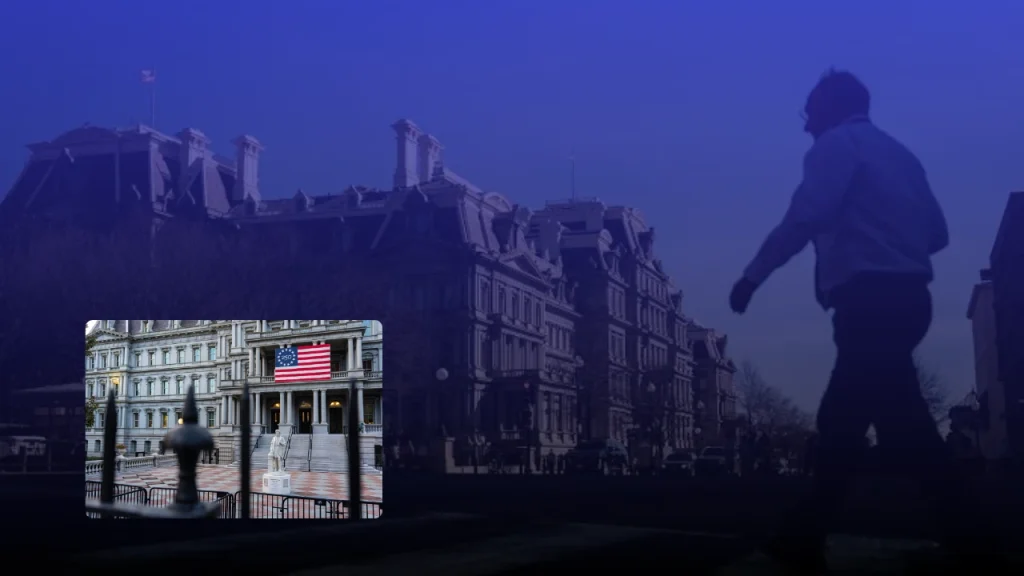
On October 16, 2026, the Office of Administration (OA) in the Executive Office of the President published a draft environmental assessment (EA) of its plan to paint the gray granite exterior of the Eisenhower Executive Office Building (EEOB) white. According to the Associated Press, the draft acknowledges that painting would diminish the building’s historic character and adversely affect nearby historic properties. The administration still lists painting as its preferred option. The project is reported to cost at least $7.5 million.
The finding is about historic character. It does not say the paint will necessarily damage the granite. The draft says the mineral silicate paint should be breathable enough to make moisture damage unlikely, while acknowledging that safe removal needs more testing.
| Detail | What is known |
| Building | Dwight D. Eisenhower Executive Office Building, next to the White House, Washington, D.C. |
| Built | 1871 to 1888 (designed by Alfred B. Mullett); National Historic Landmark |
| Proposal | Clean and repair the granite, paint it white with mineral silicate paint (courtyards excluded) and add facade lighting |
| Reported cost | At least $7.5 million (estimate) |
| Draft EA published | October 16, 2026 (Federal Register, Docket OA-2026-0001) |
| Comment deadline | November 16, 2026 |
| Lawsuit | Cultural Heritage Partners, PLLC et al. v. Trump et al., No. 1:25-cv-03969 (D.D.C.) |
| Status | Draft review and litigation ongoing; no final project decision |
What Does the Draft Assessment Say?
The OA’s notice says the project aims to repair a deteriorating facade, citing granular disintegration, delamination, spalling, cracking, salt accumulation and biological growth. It also says the gray exterior looks “dark, drab” next to the White House and that the project would visually align the two, consistent with Executive Order 14344, Making Federal Architecture Beautiful Again.
According to press reports on the draft, it also finds that:
- Painting would diminish historic character. Covering the granite changes the design, materials and appearance of a French Second Empire landmark.
- Neighboring properties would be affected. The Treasury Building and Lafayette Square Historic District would be adversely affected because the long-standing visual relationship among the large stone buildings flanking the White House would change.
- There is a no-paint option. A cleaning-and-lighting alternative would not harm historic character, though officials say it would not make the building look like the White House.
- Physical damage is uncertain, not established. The paint is expected to be permeable, but removal without damaging the stone requires more testing.
What Are the Four Alternatives?
| Alternative | What it involves | Historic effect |
| Exterior Painting (preferred) | Conservation cleaning and stone repair, then paint the whole facade white (courtyards excluded); add lighting | Adverse, per the draft |
| Partial Painting | Paint upper-floor walls only; leave the granite foundation unpainted | Still changes appearance |
| Cleaning and Lighting | Gentle cleaning and new lighting, no paint | No adverse effect, per the draft |
| No Action | No cleaning or painting | Deterioration continues |
The notice says the cleaning would follow the Secretary of the Interior’s Standards for the Treatment of Historic Properties, and invites suggestions for more alternatives.
Why Does Trump Want the Building Painted?
The stated purposes are repair and visual alignment with the White House. The draft treats the color change as a goal in itself, which is why the cleaning-and-lighting option was not selected. The central dispute is that the administration favors a visible change in appearance, while preservationists want the original granite retained.
What Is the Lawsuit About?
Cultural Heritage Partners, the DC Preservation League and other plaintiffs sued in the U.S. District Court for the District of Columbia. They argue the administration cannot proceed without complying with federal environmental and preservation laws, and cannot avoid those obligations by shifting the project from the General Services Administration to the Office of Administration. They also challenge preparatory work, including paint testing, before the court resolves the dispute. These are the plaintiffs’ claims, not court findings.
What did the judge decide in August?
According to the Washington Post, in August 2026 Judge Dabney L. Friedrich declined to stop limited paint tests, finding the plaintiffs had not shown the small tests would cause irreparable harm, and cautioned that the court could step in if the work went further. That was not approval of full-scale painting, and the underlying legal questions remain open.
Which Federal Laws Are Involved?
National Environmental Policy Act (NEPA, 42 U.S.C. §§ 4321 to 4347)
NEPA requires federal agencies to evaluate the environmental effects of major federal actions and consider alternatives. An environmental assessment is a shorter review used to decide whether a fuller environmental impact statement is needed.
National Historic Preservation Act (NHPA)
Section 106 of the NHPA (54 U.S.C. § 306108) requires federal agencies to consider the effects of their undertakings on historic properties and to consult affected parties. For National Historic Landmarks, Section 110(f) (54 U.S.C. § 306107) requires agencies to undertake planning and actions to minimize harm to the extent possible. Section 106 procedures are in 36 C.F.R. Part 800, and 36 C.F.R. § 800.8 allows agencies to fold Section 106 review into the NEPA process, which is what OA says it is doing.
The administration’s legal position
The October 16 notice states that the OA is “not a Federal agency” and so is not required to follow NEPA or the NHPA, and that, because the EEOB is on White House grounds, it is exempt from the NHPA under Section 107. It adds that OA is following both processes voluntarily. It also cites Section 590 of Public Law 100-461, which lets the OA Director accept gifts and services for the building’s renovation and creates a Treasury fund for that purpose.
The plaintiffs’ response, and the legal tests
The plaintiffs disagree that the exemption covers the EEOB and that the OA is beyond these laws. Courts have treated the question of whether an Executive Office of the President unit is an “agency” as fact-specific, asking whether it has substantial independent authority (see Meyer v. Bush, 981 F.2d 1288 (D.C. Cir. 1993)), while the President personally is not an “agency” under the Administrative Procedure Act (Franklin v. Massachusetts, 505 U.S. 788 (1992)). Reporting says the D.C. historic preservation officer has also questioned whether the building is within the exemption. Neither the draft EA nor the lawsuit has resolved these questions.
How Much Will It Cost?
The reported estimate is at least $7.5 million, covering cleaning, repair, paint and lighting. The figure comes from press reports and is not in the Federal Register notice. The final cost depends on the alternative chosen, testing results and contracts, none of which have been set.
How Can the Public Comment?
The OA asks for comments on the scope of the analysis, alternatives, and relevant information or studies by November 16, 2026 (a 30-day period).
- Online: Regulations.gov, Docket OA-2026-0001
- Email: the address in the Federal Register notice; include the docket number in the subject line
- Privacy: comments, including names and addresses, are posted publicly. You may ask OA to withhold personal information, but it cannot guarantee that.
- Consulting party status: individuals and organizations with a demonstrated interest can ask to become NHPA consulting parties under 36 C.F.R. § 800.2(c)(5). The OA decides who qualifies.
Comments do not automatically stop the project or require a particular alternative.
What Happens Next?
Watch for: (1) the close of comments on November 16; (2) OA’s decision on which alternative to pursue and whether it issues a final EA; (3) further technical testing on paint removal; (4) rulings in the D.C. lawsuit. If the court finds that the NEPA or NHPA procedures apply, it could require additional review before work proceeds. If it accepts the administration’s position, the project could move ahead on the administration’s own timetable. Neither outcome should be assumed.
Why This Dispute Matters
The EEOB is a National Historic Landmark, and the case tests whether a unit of the Executive Office of the President must follow preservation and environmental review procedures when it alters a historic building on White House grounds. The answer could affect how other projects under the OA are treated.
For related legal disputes over changes to historic federal sites, see All About Lawyer’s articles National Trust for Historic Preservation vs. Trump White House Ballroom Lawsuit, Case Breakdown and Latest Update and Lincoln Memorial Reflecting Pool Lawsuit, Blue Paint Fight Hits Court. They are separate cases.
Eisenhower Executive Office Building Paint Plan: Frequently Asked Questions
Did the administration admit painting would damage the building?
Not physically. The draft says painting would diminish the building’s historic character and affect nearby historic properties. It says the paint is unlikely to trap moisture, but that removal needs more testing.
Why does Trump want it painted white?
The stated reasons are repairing the deteriorating facade and making the building visually match the White House.
How much will it cost?
At least $7.5 million, as reported. It is an estimate, not a final figure.
Is the building a National Historic Landmark?
Yes. It was built from 1871 to 1888 in the French Second Empire style.
What are the alternatives?
Full painting (preferred), partial painting, cleaning and lighting only, and no action.
What is the lawsuit about?
The plaintiffs say the project cannot go ahead without the federal environmental and preservation reviews they argue are required. The administration disputes that those laws apply.
Did a judge approve painting the whole building?
No. In August 2026 a judge allowed only limited paint testing to continue. The main legal dispute is unresolved.
Why does the administration say it can proceed?
It says the Office of Administration is not a federal agency under NEPA or the NHPA and that the building is covered by the NHPA’s White House grounds exemption. It is following the procedures voluntarily.
When is the comment deadline?
November 16, 2026, on Regulations.gov Docket OA-2026-0001 or by email as the notice describes.
Has the court permanently stopped the project?
No permanent order blocking the project was found in the sources reviewed.
Conclusion: A Documented Historic Cost, an Unresolved Legal Fight
The administration’s own draft assessment acknowledges that painting the Eisenhower Executive Office Building white would diminish its historic character, yet it still favors painting. Whether the project must go through full federal review, and whether it can proceed, is in the hands of the court and the final administrative decision. The next key date is the November 16 comment deadline.
Sources and Official Records
- Office of Administration, Notice of Availability of an Environmental Assessment for Exterior Improvements to the Eisenhower Executive Office Building and Request for Consulting Parties, 91 Fed. Reg. 65714 (Oct. 16, 2026): https://regulations.justia.com/regulations/fedreg/2026/10/16/2026-21236.html
- Regulations.gov, Docket OA-2026-0001: https://www.regulations.gov/docket/OA-2026-0001
- Associated Press, Painting Eisenhower Building Would Diminish Historic Character (October 16, 2026): https://apnews.com/article/eisenhower-building-eeob-painting-trump-historic-135de120468dd1c5abb394a38ec3110a
- The Washington Post, Trump Administration Admits Painting Eisenhower Building Would Harm Landmark (October 16, 2026): https://www.washingtonpost.com/style/2026/10/16/trump-administration-admits-painting-eisenhower-building-would-harm-landmark/
- The Washington Post, Judge Allows Limited Eisenhower Building Paint Tests (August 2026): https://www.washingtonpost.com/politics/2026/08/18/trump-washington-renovations-eisenhower-building-paint/dadb1662-9b1a-11f1-9cc4-2dc9b46e2d5c_story.html
- Cultural Heritage Partners, EEOB litigation page: https://culturalheritagepartners.com/eeob/
- CourtListener docket, Cultural Heritage Partners, PLLC v. Trump, No. 1:25-cv-03969 (D.D.C.): https://www.courtlistener.com/docket/71918245/cultural-heritage-partners-pllc-v-trump/
- 42 U.S.C. §§ 4321 to 4347; 54 U.S.C. §§ 306107, 306108; 36 C.F.R. Part 800; Pub. L. 100-461, § 590; Exec. Order 14344; Meyer v. Bush, 981 F.2d 1288 (D.C. Cir. 1993); Franklin v. Massachusetts, 505 U.S. 788 (1992)
This article provides general legal information, not legal advice. It separates findings in the draft assessment from disputed legal claims and unresolved litigation. Information reflects public records and reporting available as of October 17, 2026.
About the Author
Israr Ahmad is a legal content researcher with 4+ years of experience covering class action settlements and consumer rights cases. He has researched and published coverage of 2,500+ settlements using verified court records, settlement administrator filings, and government sources. Learn more about Israr.