
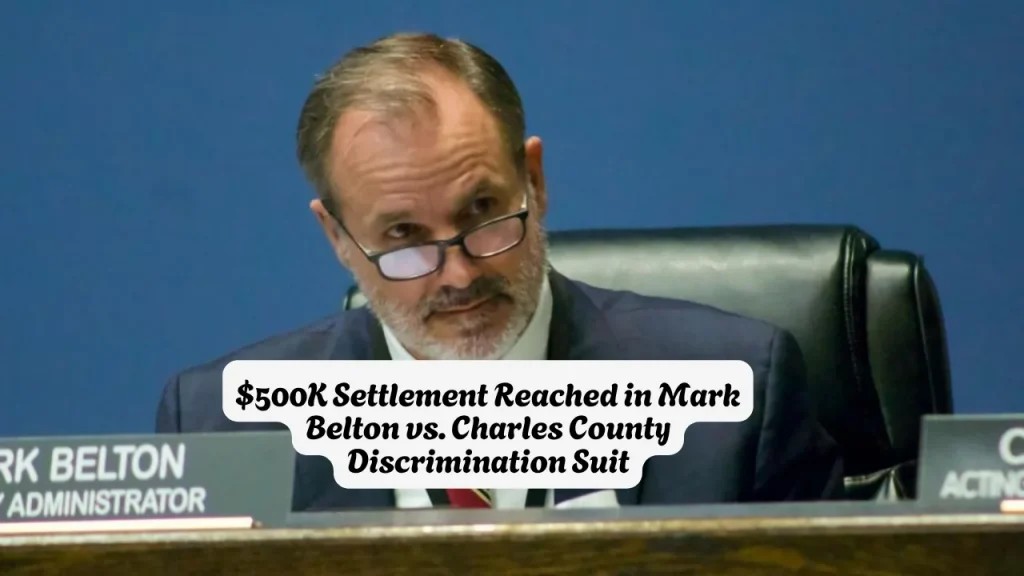
Half-Million Dollar Settlement Reached in Mark Belton vs. Charles County Discrimination Suit
On April 13, 2026, a long-standing legal battle between Charles County Administrator Mark Belton and the Charles County Board of Commissioners officially concluded. Belton filed a voluntary dismissal of his federal discrimination lawsuit following a $550,000 settlement agreement. The lawsuit, which originally sought a staggering $105 million in damages, alleged a years-long pattern of racial discrimination and harassment by specific members of the Board. While the settlement resolves all active claims, it does not constitute an admission of wrongdoing by the county or the individual commissioners involved.
Quick Facts
| Field | Detail |
| Plaintiff | Mark Belton (Charles County Administrator) |
| Defendant | Charles County Board of Commissioners |
| Settlement Amount | $550,000 |
| Original Damages Sought | $105,000,000 |
| Dismissal Date | April 13, 2026 |
| Core Allegations | Racial discrimination, harassment, and retaliation |
| EEOC Finding | “Reasonable cause” to support discrimination claims |
The Root of the Lawsuit – “Reasonable Cause”
The road to this settlement began in 2019 and escalated significantly in December 2025 when Belton filed his 14-count federal complaint.
- The Initial Complaint: Belton alleged that a specific County Commissioner (Thomasina Coates) engaged in a pattern of racial harassment and verbal assaults against him.
- The Investigation: An independent probe by an outside law firm substantiated Belton’s claims and found that counter-accusations made by the Commissioner against Belton were “not true.”
- EEOC Involvement: Before the federal suit was filed, the U.S. Equal Employment Opportunity Commission (EEOC) investigated the matter and found reasonable cause to believe that Belton had been subjected to discrimination. This finding provided the critical legal leverage that led to the eventual $550,000 payout.
Breakdown of the Settlement Terms
The final agreement is a “global” resolution intended to wipe the slate clean for the county government:
- Financial Payout: The county (likely through its insurance pool) will pay Belton $550,000.
- Release of Claims: Belton has released all claims against the defendants in both their official and individual capacities.
- No Admission of Guilt: The settlement explicitly states it is a compromise to avoid further litigation costs and is not an admission that the county violated any laws.
- Breach of Contract: A separate claim for breach of contract was dismissed “without prejudice.” This means that while no breach has occurred yet, Belton retains the right to sue again if his employment contract is violated in the future.
Related article: NZXT to Grant Ownership of Rental PCs in $3.45M “Predatory” Lending Settlement
Why It Matters to Charles County Residents
This case has been a significant drain on county resources and has caused deep divisions within the Board of Commissioners.
- Legal Costs: Beyond the $550,000 settlement, the county has spent hundreds of thousands of dollars on independent investigators and outside legal counsel over the last four years.
- Governance Impact: The lawsuit led to “Prompt and Remedial Actions” that limited communication between the Administrator and certain Commissioners, a highly unusual arrangement for local government operations.
- Closure: The dismissal allows the county to refocus on administration without the looming threat of a $105 million judgment.
Frequently Asked Questions
Did Mark Belton lose his job?
No. Mark Belton remains the Charles County Administrator. The settlement resolves the past discrimination claims but does not end his current employment contract.
Why was the payout $550,000 if he asked for $105 million?
Initial lawsuit figures are often “aspirational.” Settlements are typically based on documented emotional distress, legal fees, and the calculated risk of going to a jury trial. $550,000 is a substantial sum for an employment discrimination case in Maryland.
Who is paying the settlement?
Typically, these settlements are paid through the Local Government Insurance Trust (LGIT) or a similar municipal insurance pool, though a portion may come from the county’s general fund.
“Missing Pillars” of Legal Reporting
- Discovery Insights: During the preliminary stages, it was revealed that internal “Prompt and Remedial Action” (PRA) orders were ignored by certain commissioners, which bolstered Belton’s claims of a “hostile work environment.”
- Bellwether Context: This case is a bellwether for high-level political appointee rights. It tests the limits of “sovereign immunity” for elected officials when their actions toward staff cross the line into racial harassment.
- Objector Status: There are no legal objectors to this settlement as it is a private agreement between the plaintiff and the county. However, some local taxpayers have voiced concerns over the use of public funds to settle a dispute caused by an elected official’s behavior.
- Tax Implications: While payouts for physical injury are tax-free, settlements for employment discrimination and “emotional distress” without physical injury are generally considered taxable income by the IRS.
- Attorney Fee Breakdown: A significant portion of the $550,000 will likely go toward Belton’s legal team, with standard contingency fees in Maryland ranging from 33% to 40%.
Last Updated: April 14, 2026
Disclaimer: This article is for informational purposes only and does not constitute legal advice. Legal claims and outcomes depend on specific facts and applicable law. For advice regarding a particular situation, consult a qualified attorney.
About the Author
Israr Ahmad is a legal content researcher with 4+ years of experience covering class action settlements and consumer rights cases. He has researched and published coverage of 2,500+ settlements using verified court records, settlement administrator filings, and government sources. Learn more about Israr.