
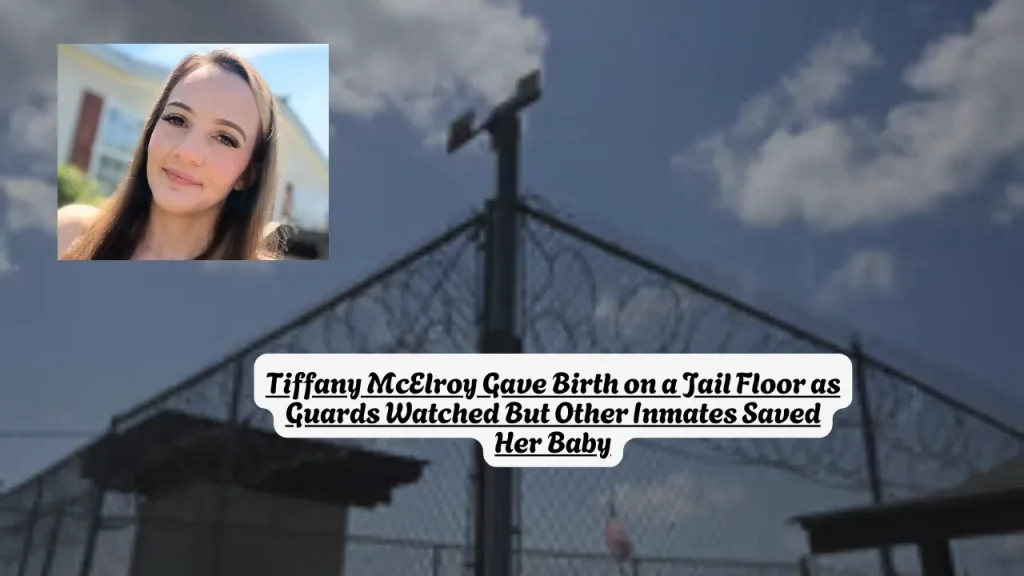
Tiffany McElroy Gave Birth on a Jail Floor as Guards Watched But Other Inmates Saved Her Baby
Three days after Tiffany McElroy was taken to an Alabama jail just north of the Florida state line, she felt her water break. Her baby was coming several weeks early, and McElroy — 26 at the time — would later learn she was experiencing a pregnancy complication that could deteriorate into sepsis.
She told a guard her water had broken. What happened next is now the subject of a federal civil rights lawsuit.
Quick Facts
| Detail | Information |
| Who | Tiffany McElroy, now 28 |
| Where | Houston County Jail, Dothan, Alabama |
| When | May 26, 2024 |
| Filed In | U.S. Middle District of Alabama |
| Defendants | 20, including guards, a nurse, a physician’s assistant, and the county sheriff |
| Legal Representation | Pregnancy Justice and the Southern Poverty Law Center |
| Status | Active — filed May 2026 |
What the Guards Did When She Said Her Water Broke
A guard who checked on McElroy that morning accused her of urinating on herself and told her to go back to her cell. Over the next 24 hours, the complaint alleges, McElroy was at the mercy of jail staff members who failed to call 911 as other inmates beat their cell windows and tables, begging for help. Health professionals, according to the lawsuit, provided McElroy with only a diaper and Tylenol as pain racked her body and she feared for her baby.
Kathy Youngblood, a former deputy at the jail and one of the defendants in the suit, was the one who notified her supervisor when McElroy’s water broke. Her supervisor dismissed it: “They told me it wasn’t time for her, that she was playing, that there wasn’t nothing going on,” Youngblood said. Youngblood called the incident “barbaric” in an interview with NBC News, saying: “I tried to help her, but I was told I was going to be fired if I did help her, so I could not assist.”
How Other Inmates Delivered the Baby
As McElroy’s contractions intensified during the night, she screamed. When contractions were about three minutes apart, an inmate asked a guard to call 911. The suit alleges that a supervisor instructed a guard not to intervene because “the jail could be held accountable if anything happened to Tiffany or her baby.”
A fellow inmate ultimately helped McElroy as she pushed out a baby girl who wasn’t breathing. Two women in her pod worked to resuscitate the newborn, sucking mucus from her mouth and rubbing her until she began to cry.
McElroy said she remembers the women kissing her and encouraging her through the delivery. After the birth, the complaint says, staff members berated other inmates for helping. One guard used a disability slur and called an inmate “stupid” for assisting. Another guard threatened to tase a different inmate if she didn’t return to her bay. The jail later punished the women for helping, the suit alleges.
“At the end of the day, I felt like I was made to give birth like an animal,” McElroy told NBC News.
Related article: Pizza Hut Dragontail Lawsuit, One Franchisee Says the AI Destroyed Their Business and They’re Suing for $100 Million
The Medical Aftermath
McElroy said she was unable to deliver her placenta after giving birth. She was in shock as paramedics placed her on a stretcher and took her to the hospital. Her daughter was admitted to the neonatal intensive care unit, while McElroy remained in the hospital for three days. McElroy, the lawsuit says, was diagnosed with anemia from blood loss during delivery.
McElroy’s daughter is now nearly two years old. McElroy describes her as a happy toddler with a “diva” temperament. The child’s paternal grandmother has temporary custody. McElroy has since been released from custody and is working in the hospitality industry.
Why She Was in Jail in the First Place
McElroy was arrested after she was accused of endangering her unborn child through substance use, a felony under Alabama law. Court records show she later pleaded guilty.
Alabama’s chemical endangerment law was initially meant to target people exposing children to dangerous chemicals in meth cook houses, but the state’s Supreme Court has since interpreted it to also apply to pregnant women who use drugs — a practice opposed by the American College of Obstetricians and Gynecologists. From 2022 to 2024, at least 192 people in Alabama were charged with pregnancy-related crimes, according to a report from Pregnancy Justice.
What the Lawsuit Alleges the Jail Did Wrong
From her arrival at the facility, jailers didn’t follow their own procedures for pregnant inmates, the suit alleges. Officials told McElroy to take a top bunk bed, in violation of a policy saying pregnant inmates should be assigned bottom bunks to prevent injuries and falls.
The filing alleges that what happened that day was the result of multiple failures at the Houston County Jail, including a system in which budget-wary local officials prioritized cost savings over ensuring adequate care for inmates. Twenty defendants — including guards on duty while McElroy was in labor, a nurse, a physician’s assistant, and the county sheriff — are named in the complaint and accused of violating her constitutional rights.
The Houston County Sheriff’s Office did not respond to requests for comment. Brandon Shoupe, the Houston County Commission chairman, declined to comment citing the pending litigation.
This Is Not an Isolated Case in Alabama
A national investigation by Bloomberg Law and NBC News found dozens of women who were jailed, often for low-level offenses, and suffered miscarriages or excruciating births in dirty cells. Some babies died. Several who survived were afflicted with infections or long-term health problems. Two women died.
Last year, officials in Etowah County — north of Houston County — settled a lawsuit also brought by Pregnancy Justice on behalf of a woman who gave birth alone in a jail shower.
The organization representing McElroy is not a stranger to controversy itself. In April 2026, the Southern Poverty Law Center was indicted on federal fraud charges unrelated to this case. You can read our coverage of that case here: Southern Poverty Law Center Federal Fraud Indictment Lawsuit.
What Her Lawyers Are Saying
Karen Thompson, the legal director for Pregnancy Justice, said: “Ms. McElroy was basically being tortured over the course of hours, and that should really make all of the hairs stand up on everybody’s necks, regardless of what people think about people who are incarcerated. I think we can all agree this is not the way to treat a pregnant person, and this most certainly is not the way to treat someone in labor and delivery.”
Thompson also noted that no one in that cell should have been forced into the role of an emergency midwife. The women who helped McElroy are the reason she believes she and her daughter are alive. She said she remains in touch with some of them.
Frequently Asked Questions
What is the legal basis for McElroy’s lawsuit?
The lawsuit is a federal civil rights claim filed under 42 U.S.C. § 1983, which allows individuals to sue government officials for violating their constitutional rights. The Eighth Amendment prohibits cruel and unusual punishment, including deliberate indifference to serious medical needs — a standard the Supreme Court established in Estelle v. Gamble (1976).
Can someone still in jail sue for medical neglect?
Yes. Incarcerated people retain constitutional rights under the Eighth Amendment. Jail officials have a legal duty to provide adequate medical care. Ignoring a woman in active labor and experiencing a dangerous pregnancy complication can meet the legal standard of deliberate indifference.
What happens to the lawsuit next?
The case is in early litigation in the U.S. Middle District of Alabama. The twenty defendants will have the opportunity to respond to the complaint. Discovery, depositions, and pre-trial motions typically follow before any trial or settlement.
Do I need a lawyer to file a civil rights claim against a jail?
Civil rights cases against government entities are complex. Organizations like Pregnancy Justice and the ACLU sometimes take cases without charge. A private civil rights attorney can also evaluate whether a case qualifies. For general guidance on how lawsuit settlements work, see: How To Claim a Lawsuit Settlement.
Disclaimer: This article is for general informational and educational purposes only and does not constitute legal advice. Laws vary by state and jurisdiction. For advice about your specific situation, consult a qualified attorney.
Prepared by the AllAboutLawyer.com Editorial Team and reviewed for factual accuracy against official legal sources. Last Updated: May 14, 2026.
About the Author
Israr Ahmad is a legal content researcher with 4+ years of experience covering class action settlements and consumer rights cases. He has researched and published coverage of 2,500+ settlements using verified court records, settlement administrator filings, and government sources. Learn more about Israr.