
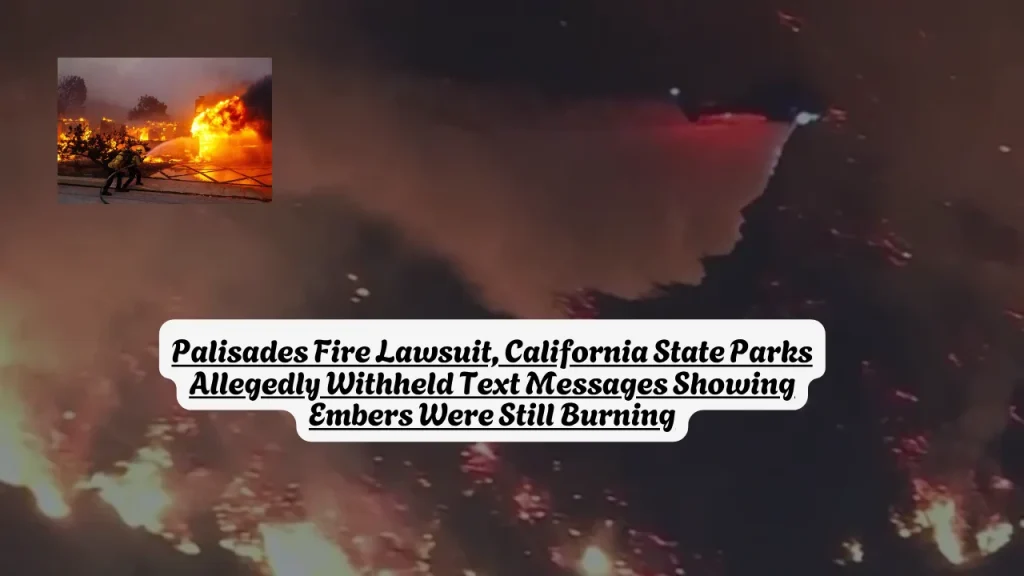
Palisades Fire Lawsuit, California State Parks Allegedly Withheld Text Messages Showing Embers Were Still Burning
California is accused of failing to turn over text messages and emails to a judge about prior knowledge of smoke long before the deadly Palisades Fire fully ignited. In December, a court ordered California State Parks to turn over all text messages and emails. However, the agency allegedly did not, leaving them out of the case.
When the messages were finally produced, plaintiffs’ attorneys say what they found changed everything.
Quick Facts
| Field | Detail |
| Case Name | Grigsby et al. v. City of Los Angeles / State of California (coordinated) |
| Court | Los Angeles Superior Court |
| Defendants | California State Parks, City of Los Angeles, LADWP, others |
| Plaintiffs | Thousands of Palisades Fire victims |
| Original Fire | Palisades Fire — January 7, 2025 |
| Precursor Fire | Lachman Fire — January 1, 2025 |
| Key Allegation | California State Parks withheld court-ordered text messages showing smoldering embers before the Palisades Fire ignited |
| Current Status | Active litigation — discovery phase |
| Next Hearing | May 20, 2026, Spring Street Courthouse, Los Angeles |
| Last Updated | May 14, 2026 |
The Palisades Fire Lawsuit: What It Is About
Thousands of victims of the January 2025 fire are suing the city and state, alleging government failures to completely extinguish an earlier blaze led to the Palisades Fire. Plaintiffs say crews failed to fully extinguish the Lachman Fire, which authorities say was intentionally started January 1, 2025. The fire killed 12 people, burned more than 23,000 acres, and destroyed about 6,800 buildings.
The arsonist accused of starting the Lachman Fire, Jonathan Rinderknecht, 29, has been charged in federal court with destruction of property by means of fire, arson affecting property used in interstate commerce, and timber set afire. The criminal case against him is separate from this civil lawsuit.
The central legal claim against the state rests not on who started the Lachman Fire, but on what California State Parks did — and failed to do — in the six days between the Lachman Fire and the Palisades Fire. According to state parks’ own operations manual: “Areas of a park unit which have burned will remain closed until appropriate department staff have inspected the area and rectified any public safety, property or resource protection issues.” Lead plaintiffs’ attorney Roger Behle says the park was never closed and people were able to hike through while embers in the hillside remained active.
What the Withheld Text Messages Said
State Parks employees documented smoke and smoldering roots. LAFD firefighter Scott Pike testified that he saw ash and smoldering embers in the area — saying the ground was so hot he did not want to use his gloved hand and instead kicked it with his boot, exposing red-hot coals still smoldering.
After firefighters left, two California State Parks employees went to the same area and photographed it. The employees were asked by their manager what they saw that day and, in a text message, responded: “I told her there was smoke, smoldering roots popping up here and there, and we had to take care of that.” What the employees saw was in the same area where the Bureau of Alcohol, Tobacco, Firearms and Explosives later determined the Palisades Fire started — five days later. The state is accused of failing to turn over those photos.
Attorney Roger Behle described the moment his team received the messages: “To our shock, they were confirmations by these two people that they saw smoldering roots and embers at the Lachman Fire burn scar on January 2. These were not innocuous text messages that they inadvertently failed to give to us. These were critical pieces of evidence.” He added: “These are damning text messages that prove our case. It proves the state knew there were smoldering embers and a dangerous condition on its property in the days leading up to the Palisades Fire, and yet it did nothing.”
The Text Sent Hours Before the Palisades Fire Ignited
The withheld evidence extends beyond January 2. On January 7 — hours before the Palisades Fire ignited — a state parks employee texted colleagues: “Wow, the burn scar is doing its best Dust Bowl impression. Be safe out there.”
Behle’s interpretation of that message is direct: “Until you know for certain whether it’s ash or smoke or something else, you go out and investigate it. It’s your obligation. When you see this, you’ve got to go out, call the LAFD back, call CAL FIRE out. They don’t want us to see the evidence that proved our case against them. And these text messages proved there were things happening on their land in the days and even hours leading up to the Palisades Fire that, had they acted, the Palisades Fire would not have happened at all.”
What Firefighter Testimony Adds to the Case
The text messages corroborate sworn deposition testimony that predates them. LAFD firefighter Scott Pike, a 23-year veteran, was working an overtime shift on January 2 when he helped with the mop-up of the Lachman Fire. Text messages from firefighters at the scene described the ground still smoldering and rocks hot to the touch. One firefighter texted that the battalion chief had been told it was a “bad idea” to leave. “And the rest is history,” that firefighter wrote.
Related article: $3M LuxUrban Hotels Securities Settlement, Do You Qualify for a Payment? Deadline to Claim is August 10
Firefighter Tommy Kitahata said in his deposition that crews were told state personnel would monitor the burn site after they left. “They’ll have state park people looking at the area,” Kitahara said he was told. The newly surfaced text messages now directly contradict any suggestion that monitoring occurred.
A State Parks ranger deposed in the case admitted that when she hiked up to the fire site and took photos, she saw “evidence of smoldering” still occurring but did not think it necessary to close the park. She also said she did not communicate her observations to anyone else.
What California State Parks Says
In a statement to NewsNation, California State Parks said it “has and will continue to comply with all court orders surrounding discovery in this case.”
The agency has previously denied wrongdoing throughout this litigation. A spokesperson called prior deposition video releases “deceptively edited” and the claims “baseless.” The agency has stated that “California State Parks is not a firefighting agency and does not direct the fire response,” and that “the fire in question was deemed by LAFD to be fully contained a few hours after it was started by an arsonist.”
LAFD commanders have similarly maintained the Lachman Fire was fully extinguished when crews departed.
The Broader Litigation Picture
This discovery fight over text messages is one piece of a lawsuit that has survived every effort by both the state and the City of Los Angeles to shut it down. On May 6, 2026, the California Court of Appeal denied writ petitions filed by both the State of California and the City of Los Angeles, which had appealed a trial court’s denial of their demurrers to the fire victims’ master complaint. The lawsuits are now heading into full discovery.
The next hearing is scheduled for May 20, 2026, at the Spring Street Courthouse in downtown Los Angeles. For Palisades residents, the appeals court ruling means the fight over what happened before, during, and after the fire will move deeper into discovery — where questions about smoldering hot spots, empty reservoirs, power infrastructure, staffing decisions, and City Hall’s public record of the disaster are expected to be tested under oath.
The litigation covers far more than the Lachman Fire. Separate claims allege the Santa Ynez Reservoir was empty during the fire due to delayed maintenance — a gap that allegedly hampered firefighting when it mattered most. At least one lawsuit also alleges an energized LADWP power line caused a second blaze during the January 7 wind event. For background on how California wildfire lawsuits work and what victims have recovered in prior cases, see our coverage of the PG&E wildfire lawsuit and settlement.
Frequently Asked Questions
What is the Palisades Fire lawsuit about?
Thousands of victims who lost homes and businesses in the January 2025 Palisades Fire are suing the City of Los Angeles, California State Parks, the Los Angeles Department of Water and Power, and other agencies. The central claims are that government failures — including not fully extinguishing the Lachman Fire and leaving a water reservoir empty — turned a manageable blaze into one of the most destructive fires in Los Angeles history.
What did California State Parks allegedly withhold?
A court ordered California State Parks in December to turn over all text messages and emails. The agency allegedly did not fully comply. When messages were finally produced, they included texts from two employees documenting smoke and smoldering roots at the Lachman burn scar on January 2 — in the same area where the ATF later determined the Palisades Fire originated five days later.
Is there a class action claim form for Palisades Fire victims?
Not at this stage. The litigation is in the discovery phase — no settlement has been reached and no claim form exists. Palisades Fire victims who lost property should consult a qualified attorney about their individual legal options before any applicable statute of limitations runs.
What law governs the state’s duty in this case?
Plaintiffs argue California’s own Department of Parks and Recreation operations manual required State Parks to close the burned area and inspect it for public safety hazards after the Lachman Fire. The legal theory against the state is that it breached its duty as a landowner — separate from any firefighting responsibility.
What is the California inverse condemnation doctrine?
Inverse condemnation is a California legal doctrine that allows private citizens to hold government entities financially responsible for property damage caused by public infrastructure or public land, even without proving intentional wrongdoing. It is the same doctrine used in PG&E wildfire cases. Plaintiffs in the LADWP portion of this lawsuit are using an inverse condemnation theory.
When is the next court date?
The case is set to go before a judge May 20, 2026.
Sources & References
- NewsNation Vargas Reports — California withheld Palisades Fire text messages, lawsuit alleges: newsnationnow.com
Disclaimer: This article is for informational purposes only and does not constitute legal advice. Laws vary by state and jurisdiction. For advice about your specific situation, consult a qualified attorney.
Prepared by the AllAboutLawyer.com Editorial Team and reviewed for factual accuracy against official court reporting and primary news sources. Last Updated: May 14, 2026.
About the Author
Israr Ahmad is a legal content researcher with 4+ years of experience covering class action settlements and consumer rights cases. He has researched and published coverage of 2,500+ settlements using verified court records, settlement administrator filings, and government sources. Learn more about Israr.