
Walmart Great Value Stevia Lawsuit, 94.44% Erythritol Found in Packets, California Shopper Claims False Advertising
Walmart Stevia Lawsuit
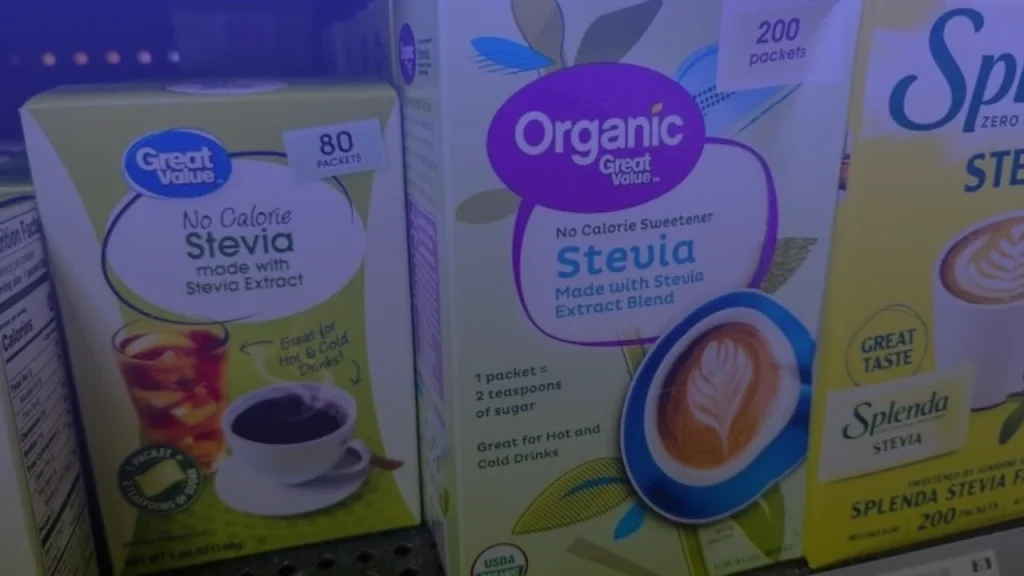
Walmart Inc. is facing a putative class action alleging that its Great Value No Calorie Stevia products mislead shoppers by advertising “made with Stevia Extract” while laboratory testing commissioned by the plaintiff’s lawyers allegedly found the products are mostly erythritol, a sugar alcohol.
Lee Ann Winter, a California resident, filed Winter v. Walmart Inc., Case No. 3:26-cv-12448, on October 23, 2026, in the U.S. District Court for the Northern District of California. Her attorney is Frederick J. Klorczyk III of Kamberlaw LLC.
Quick Facts: Winter v. Walmart Inc.
| Item | Detail |
| Case | Winter v. Walmart Inc., No. 3:26-cv-12448 |
| Court | U.S. District Court, Northern District of California |
| Filed | October 23, 2026 |
| Plaintiff | Lee Ann Winter (Rohnert Park, California) |
| Defendant | Walmart Inc. |
| Plaintiff’s counsel | Frederick J. Klorczyk III, Kamberlaw LLC |
| Products | Great Value No Calorie Stevia Packets; Great Value No Calorie Stevia Sweetener Sugar Substitute |
| Alleged erythritol content | 94.44% (80-count packets); 59.12% (9.8-oz container) |
| Proposed class | California citizens who bought the products in California in the 4 years before filing |
| Class certified? | No |
| Settlement, claim form or deadline | None |
What shoppers should know right now:
- No class has been certified.
- Walmart has not been found liable.
- No settlement, payout, claim form or claim deadline exists.
- The laboratory results are allegations in the complaint, not court-verified findings.
This is a newly filed false-advertising lawsuit, not an approved refund program.
What Is the Walmart Great Value Stevia Lawsuit About?
The complaint challenges three front-of-package statements on two Walmart Great Value sweeteners:
- The word “Stevia” in large, stylized lettering.
- The statement “made with Stevia Extract.”
- The words “No Calorie.”
Winter alleges these statements make a reasonable shopper believe the sweetness comes substantially from stevia extract. She says the products are actually formulated mainly with erythritol, with only trace amounts of rebiana (stevia leaf extract).
What Does Winter’s Complaint Say Walmart Misrepresented?
The complaint does not hide the fact that erythritol is listed on the label. It admits erythritol is the first ingredient on both products. The core allegation is that the front-of-package marketing creates a misleading overall impression about the main sweetening ingredient, and that shoppers would not necessarily read the back panel to correct it.
Winter says she would not have bought the products, or would have paid less, had she known the alleged composition.
Why Does Stevia Versus Erythritol Matter to Walmart Shoppers?
Some shoppers choose stevia because they want a plant-derived high-intensity sweetener. Others avoid sugar alcohols because of digestive sensitivity or taste preferences. The complaint argues consumers should be able to make that choice from accurate packaging.
The lawsuit is primarily about alleged economic harm. It is not a personal-injury case for heart attacks, strokes or other medical conditions.
Which Walmart Great Value Products Are Named in the Stevia Lawsuit?
| Product | Size tested per complaint | Alleged erythritol |
| Great Value No Calorie Stevia Packets | 80-count box | 94.44% |
| Great Value No Calorie Stevia Sweetener Sugar Substitute | 9.8-ounce container | 59.12% |
The complaint defines the challenged products to include both lines in all sizes and formats. The numerical test results, however, are reported only for the two sizes above.
Great Value No Calorie Stevia Packets
Per the complaint, the ingredient list reads: erythritol, rebiana (stevia leaf extract), natural flavors. Testing of the 80-count package allegedly found 94.44% erythritol, with only trace rebiana.
Great Value No Calorie Stevia Sweetener Sugar Substitute
Per the complaint, the ingredient list reads: erythritol, dextrose with maltodextrin, rebiana (stevia leaf extract), natural flavors. Testing of the 9.8-ounce container allegedly found 59.12% erythritol, with the remainder mostly dextrose and maltodextrin and only trace rebiana.
Does the Walmart Lawsuit Cover Every Great Value Sweetener?
No. It names two Great Value stevia product lines. It is not a lawsuit against every Walmart sweetener, every stevia product Walmart sells, or other brands.
What Did the Plaintiff’s Laboratory Testing Allegedly Find About Walmart’s Stevia Products?
According to the complaint, Winter’s lawyers commissioned an independent laboratory to test the products in April 2026. The complaint says the lab held ISO/IEC 17025:2017 accreditation and FDA Laboratory Accreditation for Analysis of Foods (LAAF). It describes sugar-alcohol analysis by Liquid Chromatography Refractive Index Detection (LC-RID) and cites AOAC Official Methods 980.13 and 982.14 and AACC Method 80-40.
| Tested Walmart product | Erythritol (alleged) |
| 80-count stevia packets | 94.44% |
| 9.8-ounce stevia container | 59.12% |
Does FDA Laboratory Accreditation Mean the FDA Approved These Test Results?
No. Accreditation describes the lab’s qualifications. It does not mean the FDA performed the tests, verified the findings or declared Walmart’s products mislabeled. Walmart can still challenge whether the samples represent every formulation, batch, size and time period in the proposed class.
Does 94.44% Erythritol by Weight Mean the Walmart Stevia Products Are Mostly Erythritol Sweetness?
Not necessarily, and this is the most important scientific nuance in the case.
The ingredient that weighs the most is not always the ingredient that supplies the most sweetness. The FDA lists steviol glycosides (the sweeteners derived from stevia leaves) as roughly 200 to 400 times sweeter than table sugar, while sugar alcohols such as erythritol range from roughly 25% to 100% of the sweetness of sugar. A manufacturer can pair a very small amount of a high-intensity sweetener with a large amount of a bulking ingredient.
That does not automatically defeat Winter’s claim. Her argument is that the products contain only trace stevia and that the overall front label misleads. But a 94.44% weight figure alone does not prove erythritol supplies 94.44% of the sweetness. The court may need to examine:
- The actual amount of rebiana in each product.
- The relative sweetness contributed by each ingredient.
- The function of erythritol, dextrose and maltodextrin as bulking agents.
- What a reasonable consumer understands from the front label.
- Whether the back-panel ingredient list changes that impression.
Source: FDA, Aspartame and Other Sweeteners in Food.
Does Walmart’s Ingredient List Under 21 C.F.R. §101.4 Defeat the Stevia Lawsuit?
Walmart’s likely argument is that erythritol is disclosed. Under 21 C.F.R. §101.4(a)(1), ingredients must generally be listed in descending order of predominance by weight, so a shopper who reads the list sees erythritol before rebiana.
What Does Winter Argue About the Ingredient List?
Winter relies on Williams v. Gerber Products Co., 552 F.3d 934 (9th Cir. 2008). In that case the Ninth Circuit held that reasonable consumers are not necessarily expected to look beyond a misleading front-of-package representation to the ingredient list to learn the truth.
What Is Walmart’s Likely Counterargument?
Walmart can argue that “made with Stevia Extract” does not promise that stevia is the only or predominant ingredient, and that using stevia together with a bulk sweetener is consistent with the statement. The legal question is how the entire package would be understood by a reasonable consumer. No court has accepted or rejected either argument in this case.
What Does 21 C.F.R. §101.18(b) Say About Naming One Ingredient on a Food Label?
This federal rule is highly relevant and is often missed in coverage of this case. 21 C.F.R. §101.18(b) provides that a food made from two or more ingredients may be misleading if it is designated by a name that includes or suggests the name of one or more, but not all, of its ingredients, even when all ingredients are listed elsewhere on the label.
Whether the “Stevia” and “made with Stevia Extract” statements on Walmart’s Great Value packaging fall within that principle is an argument plaintiffs commonly make in food-labeling cases. It is a legal question for the court, and the complaint’s reliance on it should be confirmed against the filed document.
Does the Federal Food, Drug, and Cosmetic Act Affect the Walmart Stevia Lawsuit?
Yes, indirectly. The federal Food, Drug, and Cosmetic Act treats food as misbranded if its labeling is false or misleading in any particular (21 U.S.C. §343(a)(1)). There is no private right to sue under the federal Act, so plaintiffs bring state-law claims instead.
Could Federal Preemption Under 21 U.S.C. §343-1 Be a Walmart Defense?
Possibly. 21 U.S.C. §343-1(a) bars states from imposing food-labeling requirements that are “not identical” to federal requirements. Defendants in California food-labeling cases often argue preemption. Plaintiffs typically respond that their state-law claims simply enforce the same prohibition on misleading labels that federal law already imposes. Whether preemption applies here has not been decided.
What California Laws Is Winter Using Against Walmart?
The complaint asserts five causes of action under California law.
California Unfair Competition Law, Business and Professions Code §17200
The UCL prohibits unlawful, unfair or fraudulent business practices and unfair, deceptive, untrue or misleading advertising. Remedies are generally limited to restitution and injunctive relief under §17203, not general damages. Claims under the UCL carry a four-year statute of limitations under §17208, which matches the four-year class period Winter proposes.
Source: Cal. Bus. & Prof. Code §17200.
California False Advertising Law, Business and Professions Code §17500
The FAL prohibits untrue or misleading advertising, including statements a business knows or should know are misleading. Remedies are provided under §17535. Winter argues “Stevia” and “made with Stevia Extract” create an inaccurate impression about the primary sweetening ingredient.
Source: Cal. Bus. & Prof. Code §17500.
California Consumers Legal Remedies Act, Civil Code §1770
The CLRA protects consumers against specified deceptive practices in the sale of goods. The complaint invokes:
- §1770(a)(5): representing that goods have characteristics, ingredients or qualities they do not have.
- §1770(a)(7): representing that goods are of a particular standard, quality or grade when they are not.
- §1770(a)(9): advertising goods with intent not to sell them as advertised.
Available remedies are set out in Civil Code §1780, which includes actual damages, injunctive relief, restitution and, in some cases, punitive damages. A CLRA claim generally must be filed within three years under §1783.
Why Does the May 19, 2026 Notice Letter to Walmart Matter?
Civil Code §1782(a) generally requires a consumer to send written notice, by certified or registered mail, and allow 30 days for the business to correct the alleged violation before seeking CLRA damages. The complaint says Winter’s attorneys sent Walmart a notice letter on May 19, 2026, and that Walmart did not provide appropriate relief within 30 days. Whether the notice satisfied every legal requirement is for the court to decide.
Source: Cal. Civ. Code §1770.
Breach of Express Warranty, California Commercial Code §2313
An express warranty can arise from an affirmation of fact or description of goods that becomes part of the basis of the bargain. Winter argues “made with Stevia Extract” was such a description and that the products did not conform. Warranty claims generally carry a four-year limitations period under Commercial Code §2725.
Source: Cal. Com. Code §2313.
Quasi-Contract and Unjust Enrichment Against Walmart
Winter argues Walmart received money through allegedly misleading representations and that retaining it would be inequitable. She seeks restitution or disgorgement. Walmart may argue this claim is unavailable alongside the statutory claims.
What Is the California Sherman Law, and Could It Apply to Walmart’s Stevia Labels?
California’s Sherman Food, Drug, and Cosmetic Law incorporates federal food-labeling requirements into state law. Under Health & Safety Code §110660, food is misbranded if its labeling is false or misleading in any particular, and §110390 prohibits false or misleading advertisement of food. Plaintiffs in California food-labeling cases frequently cite these provisions as the “unlawful” prong of the UCL.
The five causes of action pleaded in Winter v. Walmart are the UCL, FAL, CLRA, express warranty and quasi-contract. Whether the Sherman Law is cited as a predicate for the UCL claim should be confirmed against the complaint itself.
What Legal Standards Will the Northern District of California Apply in Winter v. Walmart?
What Is the “Reasonable Consumer” Test Under California Law?
The UCL, FAL and CLRA claims generally turn on whether members of the public are likely to be deceived by the label. The Ninth Circuit applies a “reasonable consumer” standard in cases such as Williams v. Gerber, 552 F.3d 934 (9th Cir. 2008), and Ebner v. Fresh, Inc., 838 F.3d 958 (9th Cir. 2016). This standard requires more than a mere possibility that a label might confuse some unreasonable consumer.
What Economic Injury Must Winter Show?
Under Kwikset Corp. v. Superior Court, 51 Cal. 4th 310 (2011), a consumer who pays more than they otherwise would because of a misleading label can have economic injury sufficient for standing under the UCL and FAL.
Can Winter Seek Restitution in Federal Court Against Walmart?
In Sonner v. Premier Nutrition Corp., 971 F.3d 834 (9th Cir. 2020), the Ninth Circuit held that a plaintiff seeking equitable restitution under California consumer statutes in federal court must show she lacks an adequate legal remedy. Walmart may raise this argument against the UCL and unjust-enrichment claims.
What Must the Proposed Class Show Under Federal Rule of Civil Procedure 23?
For a class to be certified, Winter must satisfy Rule 23(a) (numerosity, commonality, typicality and adequacy) and Rule 23(b)(3) (common questions predominate and a class action is superior). Walmart may also challenge the complaint under Rule 12(b)(6), and claims sounding in fraud may be tested under Rule 9(b)‘s particularity requirement.
Why Is Winter v. Walmart in Federal Court Under the Class Action Fairness Act?
The complaint invokes the Class Action Fairness Act (28 U.S.C. §1332(d)). CAFA generally permits federal jurisdiction over class actions with at least 100 proposed class members, minimal diversity, and more than $5 million in aggregate claims, subject to statutory exceptions. The complaint alleges these requirements are met.
That $5 million threshold is a jurisdictional allegation. It is not a settlement amount and does not predict any individual payment.
Who Filed the Walmart Great Value Stevia Lawsuit?
The named plaintiff is Lee Ann Winter, a California citizen who lives in Rohnert Park. According to the complaint, she bought the Great Value products at Walmart stores in Rohnert Park roughly every month or two over about three years. She most often bought a 200-count package of Great Value No Calorie Stevia Packets for approximately $11, and her most recent purchase was in spring 2026.
She says she read the front label, relied on “Stevia,” “made with Stevia Extract” and “No Calorie,” and understood the sweetness came substantially from stevia extract.
Who Could Qualify for the Walmart Stevia Lawsuit Class in California?
The complaint proposes this class:
All citizens of California who, within four years prior to the filing of the initial Complaint, purchased Defendant’s Products in the State of California and who do not claim any personal injury from using the Products.
Eligibility Requirements Proposed Against Walmart
- You are a California citizen. The proposed class is not nationwide.
- You bought the products in California. Purchases made in other states are not included in the proposed definition.
- You bought a named Great Value product. Either Great Value No Calorie Stevia Packets or Great Value No Calorie Stevia Sweetener Sugar Substitute, in any size or format.
- You bought within about four years before October 23, 2026.
- You do not claim personal injury from the products.
Who Is Excluded From the Proposed Class?
Walmart and its affiliates, entities in which Walmart has a controlling interest, government entities, people in bankruptcy or discharged within the prior three years, and the assigned judge and certain relatives.
Important: The judge has not certified this class. These are the plaintiff’s proposed requirements, not a court-approved definition.
What Is the Walmart Stevia Lawsuit Timeline?
| Date | Development |
| 2023 to 2026 | Plaintiff says she regularly bought the products |
| April 2026 | Lawyers commissioned laboratory testing |
| May 19, 2026 | Pre-suit CLRA notice letter sent to Walmart |
| October 23, 2026 | Winter filed the complaint; docket opened as No. 3:26-cv-12448 |
| October 26, 2026 | Summons issued and initial case-management scheduling order entered |
| November 7, 2026 | No class certification or merits ruling reported |
Has Walmart Responded to the Stevia Lawsuit?
No public substantive answer or motion from Walmart was located in the court records reviewed. No ruling has found that Walmart violated California consumer protection law, and Walmart’s position should not be described as an admission or a denial without a company statement or court filing.
What Happens Next in Winter v. Walmart Inc.?
- Service of the complaint and Walmart’s response.
- A possible motion to dismiss.
- Initial discovery.
- Scrutiny of the laboratory methodology and product formulations.
- Expert evidence on composition and sweetness.
- Class-certification briefing under Rule 23.
- Possible mediation or settlement talks.
- Trial if the case is not resolved earlier.
No trial date or settlement deadline has been announced.
What Is the Erythritol Health Controversy in the Walmart Stevia Lawsuit?
The complaint references concerns about erythritol, including a 2023 NIH-funded study that examined associations between circulating erythritol levels and cardiovascular events, and possible digestive discomfort.
Did the Study Prove Erythritol Causes Heart Attacks?
No. The research found an association between higher blood erythritol levels and cardiovascular risk. An association does not establish that eating erythritol causes heart attacks or strokes. The FDA has said the observational studies it reviewed did not establish a causal link and that it would continue monitoring the science.
Is Winter v. Walmart a Product-Injury Lawsuit?
No. It primarily seeks economic relief, and the proposed class excludes people who claim personal injury. It should not be read as a lawsuit offering compensation for medical conditions. Anyone with health concerns about a sweetener should speak with a qualified health professional.
Sources: NIH, Erythritol and Cardiovascular Events; FDA, Aspartame and Other Sweeteners in Food.
Does “No Calorie” on Walmart’s Great Value Stevia Label Violate FDA Rules?
The presence of erythritol alone does not establish that “No Calorie” is false. Under 21 C.F.R. §101.9(c)(1)(i)(F), FDA regulations assign erythritol a caloric value of zero for nutrition-label calculations. The lawsuit’s main theory concerns the stevia representation and the alleged primary sweetening ingredient, not whether a no-calorie product can contain erythritol.
Does FDA Approval of Erythritol Make Walmart’s Label Legally Accurate?
No. Whether an ingredient is permitted and whether marketing is accurate are separate questions. A company can use a lawful ingredient and still face a consumer-protection claim over misleading advertising. Equally, the lawsuit does not establish that erythritol is dangerous or that Walmart’s products are mislabeled.
Sources: 21 C.F.R. §101.4; 21 C.F.R. §101.9.
Does the Walmart Stevia Lawsuit Offer a Refund or Settlement Payment?
No. As of November 7, 2026:
- No settlement has been announced.
- No settlement fund or administrator exists.
- No individual payout has been established.
- No official claim form is available.
- No claim deadline has been set.
The complaint asks for damages, restitution or disgorgement, attorneys’ fees, costs, interest and an order stopping the alleged advertising. Those are requests, not awards.
What Should California Walmart Shoppers Do Now?
Consider keeping Walmart receipts, app or online order history, card statements, photos of packaging, product names and sizes, and purchase dates and store locations. These may help if the case reaches class certification or a later settlement that requires proof of purchase. Do not submit personal information or pay fees to any website promising a Walmart stevia settlement payout, because none exists.
Walmart Great Value Stevia Lawsuit: Frequently Asked Questions
What is the Walmart stevia lawsuit about?
A putative class action alleging Walmart’s Great Value stevia products are deceptively marketed as “made with Stevia Extract” when plaintiff-commissioned testing allegedly found they are mostly erythritol.
Who filed the lawsuit against Walmart and what is the case number?
Lee Ann Winter filed Winter v. Walmart Inc., No. 3:26-cv-12448, in the U.S. District Court for the Northern District of California on October 23, 2026. Her attorney is Frederick J. Klorczyk III of Kamberlaw LLC.
How much erythritol did the testing allegedly find in Great Value stevia?
94.44% in the 80-count packets and 59.12% in the 9.8-ounce container, according to the complaint.
Which Walmart Great Value products are involved?
Great Value No Calorie Stevia Packets and Great Value No Calorie Stevia Sweetener Sugar Substitute, in all sizes and formats, according to the complaint.
Does Walmart’s label list erythritol?
Yes. The complaint acknowledges erythritol is listed first on both products. The dispute is whether the prominent stevia marketing is misleading despite that disclosure.
Does the lawsuit say Walmart’s products contain no stevia?
No. It alleges only trace amounts of rebiana and that the products are primarily sweetened with erythritol.
Does erythritol cause heart attacks, according to the FDA?
The lawsuit cites research raising cardiovascular questions. The FDA says the observational studies it reviewed did not establish a causal link.
Who could qualify for the proposed Winter v. Walmart class?
California citizens who bought either named product in California during the four years before October 23, 2026, and who do not claim personal injury.
Can people outside California join the Walmart stevia lawsuit?
Not under the class definition currently proposed in the complaint.
Has the court certified the Winter v. Walmart class?
No. The court has not certified any class.
Is there a Walmart stevia claim form, refund or deadline?
No. There is no settlement, claim form, administrator, payout or claim deadline.
Has Walmart admitted the allegations in Winter v. Walmart?
No admission has been reported, and no court has found Walmart liable.
Can Walmart get the stevia lawsuit dismissed?
Walmart may challenge the complaint through a motion to dismiss or other procedures. Winter must show her pleaded facts support the claims and that the proposed class meets Rule 23.
Does the lawsuit affect other Great Value products?
No. It concerns the two named Great Value stevia product lines only.
What Happens Next in the Walmart Great Value Stevia Lawsuit?
The case is at its earliest stage. The central issue is whether Winter can show that Walmart’s front-label stevia statements were likely to mislead reasonable consumers even though erythritol is listed first. Walmart may challenge the complaint, the testing methodology, the economic-injury allegations, federal preemption and the proposed class definition. The court will then decide whether the case can proceed for California purchasers or only for Winter.
For shoppers, the current position is simple: there is no settlement, no payout and no claim form. Preserve purchase records and follow the docket instead of relying on websites promising refunds.
Related AllAboutLawyer Coverage
- Bucked Up Class Action Lawsuit, Ruchman v. DAS Labs Alleges Protein Drinks Contain Less Than 25 Grams
- Hershey Lawsuit, Reese’s False Advertising Claims & Settlement Status
- Nordic Ware “Made in USA” Lawsuit, Did You Overpay for Bakeware Based on a False Claim?
These cases involve different products, defendants and claims. Their settlements and eligibility rules do not apply to the Walmart stevia lawsuit.
Sources and Court Records
Primary lawsuit documents
- Original Complaint, Winter v. Walmart Inc., filed October 23, 2026
- Courthouse News Service, Walmart Sued Over Stevia Sweetener Labeling
- Public Case Activity, Winter v. Walmart Inc.
California law
- Cal. Bus. & Prof. Code §17200 (UCL)
- Cal. Bus. & Prof. Code §17500 (FAL)
- Cal. Civ. Code §1770 (CLRA)
- Cal. Civ. Code §1782 (CLRA notice)
- Cal. Com. Code §2313 (express warranty)
Federal regulations, science and case law
- 21 C.F.R. §101.4, ingredient listing
- 21 C.F.R. §101.9, nutrition labeling
- FDA, Aspartame and Other Sweeteners in Food
- NIH, Erythritol and Cardiovascular Events
- Williams v. Gerber Products Co., 552 F.3d 934 (9th Cir. 2008)
This article is for general information only and is not legal advice. AllAboutLawyer.com is a legal information website, not a law firm. The complaint’s allegations and plaintiff-commissioned test results have not been established by a court.
Researched and written by Israr Ahmad, legal content researcher and founder of AllAboutLawyer.com. All facts verified against the original complaint, public docket information, FDA and NIH publications and the cited California statutes, as of November 7, 2026. Last Updated: November 7, 2026.
About the Author
Israr Ahmad is a legal content researcher with 4+ years of experience covering class action settlements and consumer rights cases. He has researched and published coverage of 2,500+ settlements using verified court records, settlement administrator filings, and government sources. Learn more about Israr.