
New York Car Subscription Fee Ban, Can Automakers Still Charge for Heated Seats and Built-In Features?
No. New York did not ban every car subscription, and the law is not in effect yet. On November 23, 2026, Governor Kathy Hochul signed S9348A/A10411A (Chapter 414 of the Laws of 2026), which adds Section 198-d to the New York General Business Law. It bars manufacturers, dealers and their agents from offering a subscription service for a vehicle feature when the hardware is already in the car and the feature would work after activation without any ongoing cost or support from the manufacturer, dealer or a third party.
Heated seats are the example written into the law. Navigation updates, infotainment, satellite radio, in-car Wi-Fi, telematics, roadside assistance, software-dependent driver assistance and cellular-dependent connected services are exempt.
The law takes effect on the 90th day after enactment. By the statute’s wording that is February 21, 2027, but the governor’s announcement has been reported as giving February 27, 2027. See the explanation below.
This is a state consumer-protection law, not a class action. There is no settlement fund, refund portal or claim form.
New York Vehicle Subscription Law Quick Facts
| Detail | Information |
| Bills | S9348A (Sen. James Skoufis) / A10411A (Assemblymember William B. Magnarelli) |
| Law | Chapter 414 of the Laws of 2026; adds General Business Law § 198-d |
| Signed | November 23, 2026 |
| Protected people | Purchasers and lessees of a motor vehicle, other than for resale |
| Who is restricted | Manufacturers, dealers and their agents |
| Core rule | No subscription service for a covered feature that uses hardware already installed and would work without ongoing cost or support |
| Maximum civil penalty | $250 per point of sale for each violation |
| Rulemaking | New York Department of State may issue rules |
| Effective date (statute) | 90th day after enactment, which is February 21, 2027 |
| Effective date (reported from the governor’s announcement) | February 27, 2027 |
| Refunds or claim form | None established |
| Scope | New York State only |
Official bill page: S9348A on nysenate.gov.
Why Did New York Ban Some Car Subscription Fees?
Many cars now ship with hardware that software can turn on or off. The sponsor’s memo points to heated seats, entertainment options, enhanced navigation and hands-free driving. It cites BMW’s reported 18-a-monthheatedseatchargeinseveralcountriesandFord’sBlueCruiseoptions(800 a year or $75 a month when added later, according to the memo’s reporting). The stated goal is to stop the practice before it becomes standard and to improve price transparency.
BMW later dropped the heated seat subscription. New York had passed similar bills in 2025 (S5708 and A1095), but they were vetoed. The 2026 version was amended before it passed and was signed.
When Does the New York Car Subscription Law Take Effect?
Section 2 of the law says it takes effect on the ninetieth day after it becomes law. Counting from the November 23, 2026 signing, that is February 21, 2027.
Reports of the governor’s announcement say February 27, 2027. I could not find an explanation for the six-day gap. The enacted text controls, but businesses and consumers should watch for guidance from the Department of State before relying on either date in a dispute.
The law also lets agencies make and complete implementing rules before the effective date.
Which Car Subscriptions Does Section 198-d Prohibit?
Under Section 198-d(b), no manufacturer, dealer or agent may offer a consumer a subscription service for a motor vehicle feature that meets both of these conditions:
- It uses components and hardware already installed when the consumer buys or leases the vehicle.
- It would function after activation without ongoing cost to or support by the dealer, manufacturer or any third-party service provider.
What Counts as a “Motor Vehicle Feature”?
The law defines it as any convenience or safety function on the vehicle, including but not limited to heated seats, that typically is offered to a consumer as an upgrade at the time of purchase or lease. That wording matters. The law is aimed at upgrade-type features sold separately, not every function in a car.
What Counts as a “Subscription Service”?
A service provided in exchange for a recurring payment, such as weekly, monthly or annual charges. Payments under a retail installment contract or lease contract for the vehicle itself are not subscriptions.
Related article: New Bankruptcy Law 2026, Chapter 13 Debt Limit Rises to $2.75 Million — Who Qualifies Now?
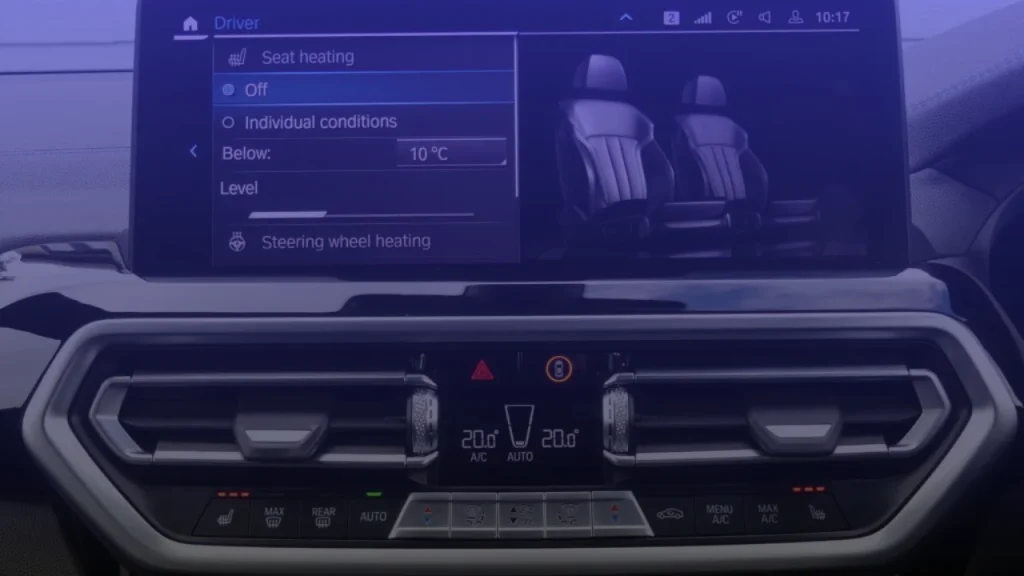
Examples of Features That Could Be Affected
| Feature | Likely treatment |
| Built-in heated seats | Named in the law; covered if both conditions are met |
| Heated steering wheel, ventilated seats, seat massage | Could be covered if they run on installed hardware without ongoing support |
| Remote start that runs on local hardware such as a key fob | Could be covered |
| Remote start or climate control through a smartphone and cellular connection | May fall under the connected-services exemption |
| Hardware-based performance upgrades | Depends on how they are sold and delivered |
This table applies the statute’s test. It is not an official list, and no agency has ruled on any specific product.
Which Car Subscriptions Remain Legal in New York?
Section 198-d(c)(1) says the law does not apply to:
| Exempt category |
| Navigation system updates |
| Infotainment features |
| Satellite radio |
| In-vehicle Wi-Fi |
| Telematics services |
| Roadside assistance |
| Software-dependent driver assistance or driver automation features |
| Vehicle-connected services that rely on cellular or other data networks for continued operation |
An exempt subscription can still be challenged under other laws, such as advertising, billing or contract rules.
Are BMW Heated Seat Subscriptions Illegal in New York?
A recurring subscription for ordinary heated seats on installed hardware would generally fall within the law once it takes effect. The law does not say BMW currently charges New York drivers unlawful fees. BMW dropped its heated seat subscription in 2023, and it can still sell services that fit the exemptions.
Does the Law Ban Toyota and Other Remote Start Subscriptions?
Not automatically. Toyota offers Remote Connect services and its documentation ties some remote start functions to connected-service subscriptions. Whether a particular remote start charge is covered depends on how the feature works:
| Remote start method | Possible treatment |
| Local, preinstalled key-fob hardware needing no network | Could be covered |
| Smartphone remote start that needs cellular service | May be exempt as a connected service |
| Cloud-based remote climate control | May be exempt |
| Key-fob start that requires a subscription authorization | Needs closer technical and legal review |
Putting independent hardware inside a connected-service bundle doesn’t automatically make it exempt, and installed hardware alone doesn’t prove a violation. No New York agency has ruled on a specific Toyota configuration. For another connected-car issue, see Toyota Car Tracking Lawsuit, Federal Judge Orders Arbitration as Privacy Case Moves Forward.
Does the Law Cover Tesla Full Self-Driving, Ford BlueCruise or GM Super Cruise?
Generally not. The law exempts software-dependent driver assistance and driver automation features, which describes services such as Tesla’s Full Self-Driving (Supervised), Ford BlueCruise and GM Super Cruise. The law does not require those companies to give the features away because cameras, sensors or computers are installed, and the exemption does not say the products are fully autonomous or excuse them from vehicle safety and consumer protection laws.
Can Automakers Still Charge a One-Time Fee to Activate a Feature?
The enacted text is narrower than some descriptions of it. The prohibition in Section 198-d(b) is about offering a subscription service, which the law defines as a recurring payment. The sponsor’s memo and the governor’s announcement also mention “post-purchase fees,” but the operative text does not expressly ban every one-time activation charge.
Whether a one-time payment is lawful may depend on the purchase or lease contract, whether the feature was advertised as included, what the consumer was told, whether the payment is truly non-recurring, and other New York consumer protection laws. Regulations or court decisions may clarify this. Don’t assume optional upgrades are now free.
Does the Law Apply to Used Cars and Leases?
The law protects a “consumer,” defined as a purchaser or lessee who is not buying for resale. It doesn’t say it covers only new vehicles, but it defines “manufacturer” by reference to new vehicles and uses the Vehicle and Traffic Law definitions of “dealer” and “motor vehicle.” How it applies to used vehicles, to cars bought before the effective date and to cars bought outside New York is unresolved.
Does the Law Cancel Monthly Car Payments?
No. Payments under a retail installment contract or lease are excluded from the “subscription service” definition. Keep paying your loan or lease.
What Happens to Existing Car Subscriptions?
The law does not set a transition process for subscriptions that started before it takes effect, and it does not automatically refund past payments. If you pay for a built-in feature now, keep your agreement and payment records and ask the company for written clarification. Don’t stop unrelated loan or lease payments over a feature dispute.
Can Automakers Charge for Safety Recall Software Updates?
Section 198-d(c)(2) says the law does not stop a manufacturer or dealer from providing software updates, as long as it does not charge a fee for an update that remedies a safety-related defect it must provide at no cost.
The statute cites “Section 573.6 of Title 49 of the United States Code.” That appears to be a citation error, because 49 CFR § 573.6 is a federal regulation on defect and noncompliance reports. The federal recall remedy statute is 49 U.S.C. § 30120. Check recalls on your vehicle at NHTSA.gov/recalls. The law does not make routine updates, maintenance or repairs free.
What Are the Penalties for Violating Section 198-d?
A manufacturer, dealer or agent that fails to comply faces a civil penalty of up to $250 per point of sale for each violation. That is a penalty on the business, not a $250 payment to consumers. The Department of State may issue rules to carry out and enforce the law. The law does not lay out a detailed penalty formula.
Can You Sue Over Illegal Car Subscription Fees in New York?
Section 198-d sets civil penalties but does not expressly create a private right to sue under it. Other New York laws may offer remedies depending on the facts:
- General Business Law § 349 bars deceptive acts and practices. A private plaintiff who proves one generally may recover actual damages or $50, whichever is greater, and courts may award attorney’s fees. Check the current text, because the Attorney General’s powers under this section have been broadened by recent amendments.
- General Business Law § 350 bars false advertising, which could matter if a dealer advertised a feature as included.
- Contract and warranty rights under your purchase or lease agreement.
A violation of § 198-d would not automatically prove a § 349 claim. For a related dispute about dealer fees, see Stream Auto Outlet FTC Settlement, Did Long Island Car Buyers Pay Hidden Fees?.
How to Report a Prohibited Car Subscription Fee
- Identify the feature and whether it runs on installed hardware or on a connected service.
- Gather your sales contract, lease, window sticker and equipment list.
- Save invoices, bank statements, app screenshots and advertisements.
- Ask the manufacturer or dealer in writing why the subscription is required and whether it relies on an exemption.
- Ask for cancellation or reimbursement if appropriate, and get the answer in writing.
- File a complaint with the New York Department of State Division of Consumer Protection (cpp.dos.ny.gov) or the New York Attorney General (ag.ny.gov/file-complaint/consumer).
A complaint does not guarantee a refund.
Does the New York Law Apply Nationwide?
No. Chapter 414 is a New York statute. Drivers in other states don’t get these protections, though manufacturers could choose to change their policies more widely.
What Should New York Dealers and Automakers Do Before February 2027?
- Separate features that run on installed hardware from services that need ongoing software or network support.
- Review subscription agreements, bundles, renewals and point-of-sale disclosures.
- Be clear with buyers about what is included in the price.
- Watch for Department of State rules and for clarification of the effective date.
These are suggested compliance steps. The law does not set a required disclosure form.
Laws Involved in the New York Vehicle Subscription Ban
| Law | Relevance |
| Chapter 414 of the Laws of 2026 (S9348A/A10411A) | The enacting law, signed November 23, 2026 |
| N.Y. General Business Law § 198-d | Defines vehicle feature subscriptions, sets the prohibition, the exemptions and the $250 per point of sale penalty |
| N.Y. Vehicle and Traffic Law §§ 125 and 415 | Supply the definitions of “motor vehicle” and “dealer” |
| N.Y. General Business Law § 349 | Deceptive acts and practices; possible private remedy |
| N.Y. General Business Law § 350 | False advertising |
| 49 U.S.C. § 30120 | Federal recall remedy requirements |
| 49 CFR § 573.6 | Federal defect and noncompliance reporting rule that § 198-d(c)(2) appears to mean to cite |
Timeline
| Date | Development |
| 2025 | Earlier versions (S5708 and A1095) vetoed |
| March 4, 2026 | S9348 introduced |
| April 15, 2026 | Amended as S9348A |
| June 4, 2026 | Passes the Senate (A10411 substituted; vote 57 to 3) |
| November 13, 2026 | Delivered to the governor |
| November 23, 2026 | Signed as Chapter 414 |
| February 21, 2027 | 90th day after enactment (effective date under the statute) |
| February 27, 2027 | Effective date reported from the governor’s announcement |
New York Car Subscription Ban FAQ
Are heated seat subscriptions illegal in New York?
They will be once the law takes effect, if the seats use installed hardware and would work after activation without ongoing cost or support.
Is the law in effect now?
No. It takes effect 90 days after the November 23, 2026 signing, which is February 21, 2027 by the statute’s wording. The governor’s announcement has been reported as giving February 27, 2027.
Can Toyota still charge for remote start?
Possibly. Remote start that needs a cellular connection may be exempt. Remote start on independent local hardware could be covered.
Does the law ban Tesla FSD or Ford BlueCruise subscriptions?
No. Software-dependent driver assistance and driver automation features are exempt.
Can I claim a $250 refund?
No. The $250 is the maximum civil penalty per point of sale for each violation by a business, not a payment to drivers.
Can automakers still charge for optional equipment at purchase?
The law doesn’t generally bar charging for equipment at the time of purchase or lease.
Will I get a refund for past subscription payments?
The law doesn’t create automatic refunds. You may have other remedies depending on your contract and the facts.
Can automakers still charge for satellite radio and in-car Wi-Fi?
Yes. Both are exempt.
Is there a class action settlement?
No. This law creates no settlement fund or claim form.
Sources Reviewed
- New York State Senate, Bill S9348A (2025-2026), including bill text, sponsor memo and action history (nysenate.gov/legislation/bills/2025/S9348/amendment/A)
- New York State Assembly Bill A10411A (nysenate.gov/legislation/bills/2025/A10411/amendment/A)
- Governor Hochul’s November 23, 2026 announcement, as reported by WRGB/CBS6 Albany, WBNG and other outlets
- New York General Business Law §§ 349 and 350
- New York Vehicle and Traffic Law §§ 125 and 415
- 49 U.S.C. § 30120 and 49 CFR § 573.6
- Toyota Connected Services documentation (toyota.com/connected-services/)
- New York Department of State Division of Consumer Protection (cpp.dos.ny.gov)
Update log: November 27, 2026 — Article published.
This article is for informational purposes only and does not constitute legal advice. Laws vary by state and individual circumstances differ. For advice about your specific situation, consult a qualified attorney. The manufacturer examples are illustrative and do not establish that any company has violated New York law.
Researched and written by Israr Ahmad, legal content researcher and founder of AllAboutLawyer.com. All facts verified against the New York Senate’s page for S9348A (bill text, sponsor memo and action history), the governor’s announcement as reported by news outlets, and the cited New York and federal statutes, as of November 27, 2026. Last Updated: November 27, 2026.
About the Author
Israr Ahmad is a legal content researcher with 4+ years of experience covering class action settlements and consumer rights cases. He has researched and published coverage of 2,500+ settlements using verified court records, settlement administrator filings, and government sources. Learn more about Israr.