
Bucked Up Class Action Lawsuit, Ruchman v. DAS Labs Alleges Protein Drinks Contain Less Than 25 Grams
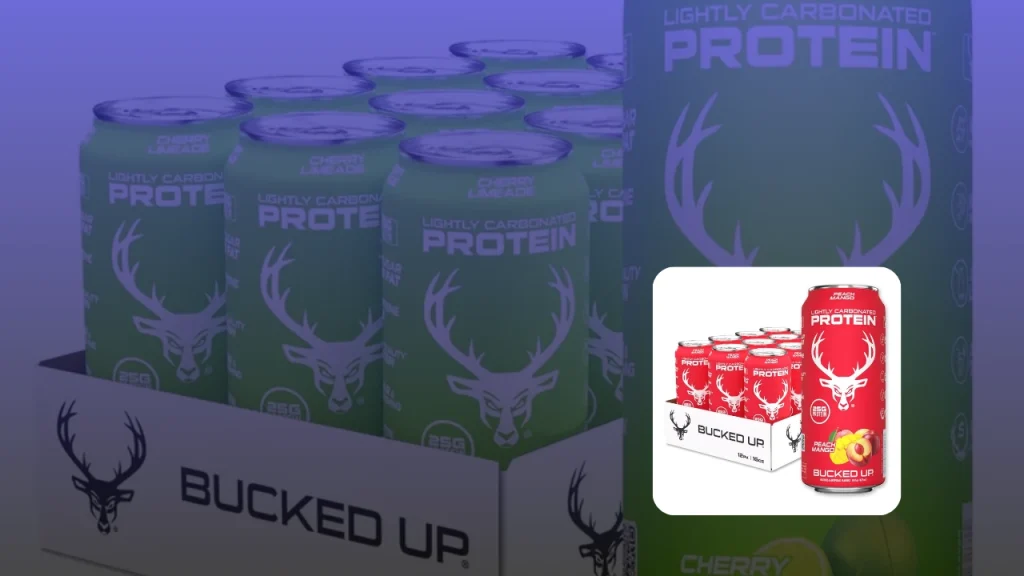
A California consumer says Bucked Up’s Lightly Carbonated Protein drinks contain less protein than the 25 grams printed on the can. His lawsuit, Ruchman v. DAS Labs LLC d/b/a Bucked Up, Case No. 2:26-cv-05871, is pending in the U.S. District Court for the Central District of California.
Quick takeaway: This is a proposed class action, not a settlement. No class has been certified, there is no claim form, and no money is available to claim today. The testing figures come from the plaintiff’s complaint, DAS Labs disputes them, and no court has ruled on whether the drinks are mislabeled. If you bought these drinks, keep your receipts and watch the docket.
Bucked Up Class Action Lawsuit: Quick Facts
| Item | Detail |
| Case name | Ruchman v. DAS Labs LLC d/b/a Bucked Up |
| Case number | 2:26-cv-05871 |
| Court | U.S. District Court, Central District of California |
| Judge | Christina A. Snyder (discovery matters: Magistrate Judge Stephanie S. Christensen) |
| Filed | June 1, 2026 |
| Plaintiff | Daniel Ruchman |
| Plaintiff’s attorney | Charles C. Weller of Charles C. Weller APC |
| Defendant | DAS Labs LLC, doing business as Bucked Up |
| Product | Bucked Up Lightly Carbonated Protein drinks (protein soda) |
| Label claim at issue | 25 grams of protein per can |
| Main allegation | The drinks contain less protein than the label states |
| Proposed class | California consumers who bought the drinks in the four years before filing |
| Class certified? | No |
| Settlement or claim form? | None. The official court docket is listed in the Sources section |
| Status | Early stage. A motion to dismiss was filed August 10, 2026; no ruling had been reported as of October 17, 2026 |
What Does the Bucked Up Protein Lawsuit Allege?
Ruchman claims the drinks contain fewer grams of protein than the 25 grams advertised. He says he bought the Rainbow Candy flavor at a Vitamin Shoppe in Thousand Oaks, California, in January 2026, to help meet his fitness and protein-intake goals, and that he relied on the 25-gram claim.
The complaint relies on third-party laboratory testing. According to a review of the pleading by the supplement-industry site PricePlow, the complaint reports results from EMSL Analytical across five flavors, at roughly 82% to 90% of the stated protein. On a 25-gram label, that is about 20.5 to 22.5 grams per serving. These are the plaintiff’s allegations and have not been tested in court.
The lawsuit argues that people who count protein grams use labels to plan meals and meet daily goals, and that consumers would have paid less, or bought something else, if they had known the actual amount.
Bucked Up markets the product as a clear, lightly carbonated, ready-to-drink protein made with whey isolate, with 25 grams of protein per serving and zero sugar.
Why the testing will be a major fight
The court may have to consider the lab methods, how many cans and flavors were tested, whether the samples match what consumers bought, and whether the results meet the standards that apply to protein labeling (see the FDA section below). None of that has been decided.
DAS Labs’ Response
DAS Labs filed a motion to dismiss on August 10, 2026. As PricePlow describes the brief, it makes one narrow argument: Ruchman cannot seek equitable restitution because he has not explained why ordinary money damages would not be enough. It does not challenge the lab testing, the sampling method, or federal preemption. That is a procedural challenge to the type of relief sought, not a finding about how much protein is in the drinks.
A hearing before Judge Snyder was set for mid-September 2026. No ruling had been reported in the sources reviewed as of October 17, 2026. The live federal docket should be checked for the current status.
Bucked Up’s Ryan Gardner told PricePlow that the company’s own testing produced different results from the complaint’s table. The company did not release that testing and said it could not share specifics while the case is active. That is a company statement, not evidence in the court record. PricePlow labels its post as sponsored, so readers should weigh it accordingly and rely on the court filings for the exact wording.
Related article: DOJ Seeks to Disqualify Judge Ana Reyes in East Potomac Golf Links Lawsuit, Full Legal Breakdown
Which Laws Does the Lawsuit Rely On?
The complaint asserts California consumer-protection claims, breach of express warranty, and unjust enrichment. Here is what each means and what the plaintiff must prove.
| Claim | Law | What it covers |
| Consumers Legal Remedies Act (CLRA) | Cal. Civ. Code § 1750 et seq.; § 1770(a) lists prohibited practices, including representing that goods have characteristics or a standard or quality they do not have | Deceptive practices in consumer sales. Damages claims generally require pre-suit written notice to the seller under Cal. Civ. Code § 1782 |
| Unfair Competition Law (UCL) | Cal. Bus. & Prof. Code § 17200 | “Unlawful, unfair or fraudulent” business practices and misleading advertising. Remedies are limited to restitution and injunctions, not damages |
| False Advertising Law (FAL) | Cal. Bus. & Prof. Code § 17500 | Advertising that is untrue or misleading, or that a company should know is misleading |
| Breach of express warranty | Cal. Com. Code § 2313 | A seller’s factual statement about a product that becomes part of the basis of the sale |
| Unjust enrichment | California common law | A claim that the defendant should not keep a benefit obtained through a misleading representation |
Filing these claims does not prove a violation. Ruchman must prove each element, and the court has made no findings.
Why “equitable restitution” matters: the Sonner rule
The motion to dismiss rests on a federal rule. In Sonner v. Premier Nutrition Corp., 971 F.3d 834 (9th Cir. 2020), the Ninth Circuit held that a federal court cannot award equitable restitution under California consumer laws unless the plaintiff shows that legal remedies, such as money damages, are inadequate. DAS Labs argues Ruchman has not done that. If the court agrees, equitable claims could be dismissed even though damages-based claims continue. That is a question about remedies, not about the protein.
What Does Federal Food-Labeling Law Say About Protein?
Protein-label cases are harder to win than most label cases because federal rules control how protein is declared.
- Nutrition labeling: 21 C.F.R. § 101.9 requires the number of grams of protein per serving on the Nutrition Facts label. Section 101.9(c)(7) sets how protein content is calculated, and FDA guidance explains that the calculation for percent Daily Value differs from the calculation for grams.
- Compliance standards: 21 C.F.R. § 101.9(g) sets how FDA checks whether a label value is accurate, including the number of samples analyzed and tolerance thresholds for different nutrients. How those rules apply to protein, and to the testing in this case, is a legal and technical question the parties are likely to dispute. This article does not take a position on it.
- Misbranding and private suits: The Federal Food, Drug, and Cosmetic Act treats false or misleading labeling as misbranding (21 U.S.C. § 343(a)), but only the federal government can enforce the Act directly (21 U.S.C. § 337(a)). Private plaintiffs therefore sue under state law, which leads to preemption fights.
- Preemption: Under 21 U.S.C. § 343-1(a), states generally cannot impose nutrition-labeling requirements that are not identical to federal requirements.
The existence of these rules does not mean the FDA has found Bucked Up mislabeled. This is a private lawsuit.
Why Protein-Label Cases Are Hard to Win: Durnford and Scheibe
- Durnford v. MusclePharm Corp., 907 F.3d 595 (9th Cir. 2018): The Ninth Circuit held that federal law preempts state-law claims attacking the amount of protein when the label follows the FDA-approved calculation method. The court left room for claims about what the protein is or where it comes from.
- Scheibe v. ProSupps USA, LLC (9th Cir. 2025): According to PricePlow’s summary, the court held that a single preliminary lab test can be enough to keep a mislabeling case alive at the start, without the FDA’s full 12-sample protocol. That case involved carbohydrates and calories in a BCAA drink, not protein.
Neither side has argued preemption in the filings reviewed, and neither case decides the Bucked Up dispute.
Who Is Covered by the Proposed Class?
Ruchman wants to represent California consumers who bought Bucked Up Lightly Carbonated Protein drinks in the four years before the complaint was filed. The four-year period matches California’s UCL limitation period (Cal. Bus. & Prof. Code § 17208).
Important points:
- This is a proposed class, not a certified class. The judge must find that the requirements of Federal Rule of Civil Procedure 23 are met, including common questions, typicality, and, for a damages class, that common questions predominate. Protein-label cases often fight over whether a lab result for some cans proves a problem for every flavor and batch.
- Buyers outside California fall outside the proposed class. Other states may have their own consumer-protection laws, and a lawyer can advise on those.
- Class membership is not a lawsuit you join. If a class is certified or a settlement is reached, a court-approved notice would explain what to do.
Can Customers File a Claim or Get Money Now?
No. There is no settlement, no claim form, no payment amount, and no claim deadline. Be cautious about sites that describe this case as a settlement or promise payments. Verify any supposed settlement against a court order and an authorized settlement administrator before giving out personal or financial information.
What to keep if you bought the drinks
- Receipts, order confirmations, or store purchase history
- Photos of the can and its Nutrition Facts label
- The flavor and, if visible, lot or batch codes
- Any ads or product descriptions you relied on
These do not guarantee eligibility or payment. They may help document your purchase if a notice or claim process ever opens.
Time limits for individual claims
If you want to bring your own claim, deadlines apply. In California, the general periods are four years for UCL claims (Cal. Bus. & Prof. Code § 17208), three years for CLRA claims (Cal. Civ. Code § 1783), three years for FAL claims (Cal. Code Civ. Proc. § 338(a)), and four years for express warranty claims (Cal. Com. Code § 2725). Rules about when the clock starts can vary. An attorney licensed in your state can tell you what applies to you.
Related Protein-Label Lawsuits
The same plaintiff and attorney filed similar protein-label complaints in 2026 against other ready-to-drink brands, according to PricePlow’s review. Ruchman v. RAW Nutrition was filed April 7, and Ruchman v. RYSE Up Sports Nutrition was filed May 21. Both rely on EMSL testing. Each company is defending its own case, each product is different, and the outcome in one does not control the others.
For more on a related case, read our article: Raw Nutrition Sued Over Protein Shakes: Are You Affected?
Key Dates in Ruchman v. DAS Labs
| Date | Event |
| December 2025 | Plaintiff’s side says the lab testing of Bucked Up drinks took place |
| January 2026 | Ruchman says he bought the Rainbow Candy flavor in Thousand Oaks, California |
| April 7, 2026 | Ruchman v. RAW Nutrition filed (related case) |
| May 21, 2026 | Ruchman v. RYSE Up Sports Nutrition filed (related case) |
| June 1, 2026 | Complaint filed in the Central District of California |
| August 10, 2026 | DAS Labs files motion to dismiss |
| Mid-September 2026 | Hearing on the motion scheduled before Judge Snyder |
| October 17, 2026 | No ruling, class certification, or settlement reported in the sources reviewed |
What Happens Next?
Possible next steps include a ruling on the motion to dismiss, an amended complaint, discovery on the testing and sales data, a motion for class certification, and possible settlement talks. Each step can change the case. Nothing in this list is guaranteed to happen.
Frequently Asked Questions
What is the Bucked Up class action lawsuit about?
It alleges that Bucked Up Lightly Carbonated Protein drinks contain less protein than the 25 grams advertised per can. Plaintiff Daniel Ruchman says the label influenced his purchase and wants to represent California consumers.
Who is being sued?
DAS Labs LLC, doing business as Bucked Up. The case is Ruchman v. DAS Labs LLC d/b/a Bucked Up, No. 2:26-cv-05871, in the Central District of California.
When was the lawsuit filed?
June 1, 2026.
Does the lawsuit prove the drinks contain less than 25 grams?
No. The testing figures come from the complaint. DAS Labs says its own testing differs, and no court has ruled on the label’s accuracy.
Is there a Bucked Up settlement or claim form?
No. No settlement has been announced and no claim process exists.
Can people outside California join?
Not at this stage. The proposed class is limited to California purchasers, and no class has been certified.
Who is the judge, and who is the plaintiff’s attorney?
Judge Christina A. Snyder is assigned. Daniel Ruchman is represented by Charles C. Weller of Charles C. Weller APC.
What is DAS Labs arguing?
Its August 10, 2026 motion argues Ruchman cannot seek equitable restitution because he has not shown that money damages would be inadequate. The company also says its own testing differs from the complaint’s.
Has the FDA found Bucked Up mislabeled?
No. The FDA has made no such finding in the sources reviewed. This is a private consumer lawsuit.
Why do protein-label cases often fail?
Federal law can preempt state claims about protein amounts when the label follows the FDA’s method (Durnford). Plaintiffs also need reliable testing that supports claims across products and batches.
When will the case be resolved?
No resolution date has been set. Timing depends on court rulings, discovery, and any settlement talks.
About This Article
This article was researched and written by Israr Ahmad, a legal content researcher, from the court docket, the complaint and motion as reported, statutes, regulations, and the news and industry reporting listed below. It reflects information available as of October 17, 2026. Court records change, so check the federal docket before relying on the status described here.
This article is general legal information, not legal advice. AllAboutLawyer.com is a consumer legal-information website, not a law firm, and the author is not an attorney. Allegations in a complaint are not findings of liability. Consult a licensed attorney about your own situation and deadlines.
Sources
- U.S. District Court docket, Ruchman v. DAS Labs LLC, No. 2:26-cv-05871 (C.D. Cal.): https://dockets.justia.com/docket/california/cacdce/2:2026cv05871/1022790
- Federal court PACER system (current filings and orders): https://ecf.cacd.uscourts.gov/
- Top Class Actions, “Bucked Up class action lawsuit alleges less protein in drinks than advertised,” October 2026: https://topclassactions.com/lawsuit-settlements/lawsuit-news/bucked-up-class-action-lawsuit-alleges-less-protein-in-drinks-than-advertised/
- PricePlow, “One Lawyer, Thirteen Brands, Over a Dozen Protein Lawsuits, and Zero Rulings on Protein Accuracy,” August 23, 2026 (sponsored post; describes the complaint, the motion to dismiss, and related cases): https://blog.priceplow.com/industry-news/protein-lawsuits
- DAS Labs’ motion to dismiss memorandum, August 10, 2026 (as posted by PricePlow): https://blog.priceplow.com/wp-content/uploads/ruchman-v-das-labs-12-1-mtd-memorandum-2026-08-10.pdf
- Bucked Up, official protein soda product page: https://www.buckedup.com/carbonated-protein-soda
- SportLife Distribution, DAS Labs Bucked Up Protein RTD product page: https://sportlifedistribution.com/our-products/product-categories/beverage-product-categories/rtd-protein-drink-2/das-labs-bucked-up-protein-rtd/
- 21 C.F.R. § 101.9, Nutrition labeling of food: https://www.law.cornell.edu/cfr/text/21/101.9
- FDA, nutrition labeling guidance for industry: https://www.fda.gov/food/nutrition-food-labeling-and-critical-foods/industry-resources-changes-nutrition-facts-label
- California Civil Code § 1770 (CLRA): https://law.justia.com/codes/california/code-civ/division-3/part-4/title-1-5/chapter-3/section-1770/
- California Business and Professions Code § 17200 (UCL): https://law.justia.com/codes/california/code-bpc/division-7/part-2/chapter-5/section-17200/
- California Business and Professions Code § 17500 (FAL): https://law.justia.com/codes/california/code-bpc/division-7/part-3/chapter-1/article-1/section-17500/
- Cal. Bus. & Prof. Code § 17208; Cal. Civ. Code §§ 1782, 1783; Cal. Code Civ. Proc. § 338(a); Cal. Com. Code §§ 2313, 2725 (verify current text on the California Legislative Information website, leginfo.legislature.ca.gov)
- 21 U.S.C. §§ 337(a), 343(a), 343-1(a) (Federal Food, Drug, and Cosmetic Act); Fed. R. Civ. P. 23
- Durnford v. MusclePharm Corp., 907 F.3d 595 (9th Cir. 2018); Sonner v. Premier Nutrition Corp., 971 F.3d 834 (9th Cir. 2020); Scheibe v. ProSupps USA, LLC (9th Cir. 2025)
About the Author
Israr Ahmad is a legal content researcher with 4+ years of experience covering class action settlements and consumer rights cases. He has researched and published coverage of 2,500+ settlements using verified court records, settlement administrator filings, and government sources. Learn more about Israr.