
Vance Says 9 Universities Face J-1 Visa Investigations, What International Students and Researchers Need to Know
On October 8, 2026, Vice President JD Vance announced that the Trump administration is investigating nine universities over their use of J-1 exchange visitor visas. Vance said the schools are bringing in foreign researchers to undercut the wages of American graduate students and researchers. Department of Labor Inspector General Anthony D’Esposito said subpoenas have already been served.
If you are an international student, a J-1 researcher, a prospective applicant or a parent, the first thing to know is what this announcement is not. It is not a ban on international students, it does not cancel any visa, and no university has been found to have broken the law. It is an investigation of institutions, and individual students are not named targets.
This article explains what was announced, who is most exposed, how the J-1 and F-1 visas differ, which laws apply and what to do now. It is part of our Immigration Law coverage and sits alongside our reporting on the same day’s H-1B and PERM suspension.
Quick Facts: The Vance J-1 Visa Investigation of Nine Universities
| Detail | What is known as of October 9, 2026 |
| Announcement date | October 8, 2026 |
| Announced by | Vice President JD Vance, with Labor Department Inspector General Anthony D’Esposito |
| Other officials present | Labor Secretary Keith Sonderling and Attorney General Todd Blanche |
| Number of universities | Nine |
| Visa program at issue | J-1 exchange visitor program |
| Main allegation | Universities use J-1 holders to undercut American wages on federally funded research |
| Figure Vance cited | J-1 holders fill about 61% of federally funded research positions at these schools versus a 38% national average |
| Wage claim | Vance said an American researcher earns about $20,000 more a year than a J-1 counterpart |
| Subpoenas | Served, according to D’Esposito |
| Scope of inquiry | Whether foreign influence, improper financial relationships or visa abuse are compromising federally funded research |
| Findings of wrongdoing | None announced |
| Nationwide J-1 suspension | No. The probe targets the nine universities’ use of the program |
| Cancelled student visas | None announced |
| Claims process for students | None. This is a government investigation, not a class action or settlement |
The 61% and 38% figures are Vance’s. STAT reported that it asked the White House for the underlying data and did not immediately receive an explanation, so treat the figures as claims, not established findings.
Which 9 Universities Are Under Investigation by the Labor Department?
Vance named these schools:
- Harvard University
- Yale University
- Stanford University
- Brown University
- University of Pittsburgh
- University of California, Davis
- California Institute of Technology (Caltech)
- Arizona State University
- Massachusetts Institute of Technology (MIT)
Responses so far have been cautious. The University of Pittsburgh confirmed it received a subpoena from the Department of Labor with questions about its participation in federal visa programs. Stanford told The Hill it complies with all applicable visa laws and will cooperate. Yale said it is committed to full compliance with federal visa rules and will review the documents once received. STAT reported that Harvard and MIT also confirmed subpoenas, and that MIT said its J-1 holders were vetted and authorized by the U.S. government.
A subpoena is a legal demand for records. Receiving one does not mean a school did anything wrong.
Does the J-1 Investigation Mean International Students at Harvard, Yale or MIT Will Lose Their Visas?
No, not automatically. Nothing announced cancels a student’s visa, status or enrollment. Three things are easy to confuse, and they are not the same:
- An investigation: investigators gather records to find out whether rules were broken.
- A finding: an agency or court concludes, after a process, that a violation occurred.
- An individual immigration action: the government acts on a particular person’s visa or status.
The announcement is at the first stage and concerns institutions. Students keep their status by following the rules attached to their own visa category.
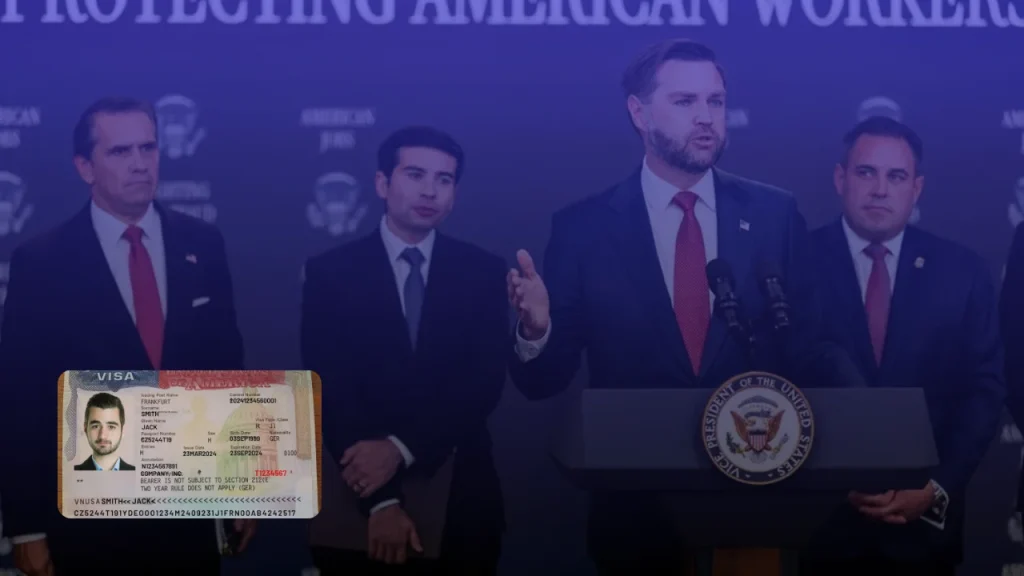
J-1 vs. F-1 Visas: Which International Students Are Most Affected?
Most international degree students hold F-1 status, not J-1. The two categories work differently.
| Issue | F-1 student visa | J-1 exchange visitor visa |
| Purpose | Full-time academic study | Approved exchange program: students, research scholars, professors, trainees and others |
| Document | Form I-20 from the school | Form DS-2019 from a designated program sponsor |
| Who oversees compliance | Designated school official | Sponsor’s responsible officer |
| Tracked in | SEVIS | SEVIS |
| Typical research role | Assistantships as part of the program; practical training | Often the core of the program, especially for postdocs and visiting scholars |
| Focus of this probe | No F-1 investigation announced | Yes, the universities’ use of J-1 |
Based on what has been announced, the groups with the most direct connection are:
- J-1 research scholars and postdoctoral researchers paid from federal grants. Officials specifically questioned how these appointments are used and paid.
- J-1 professors, visiting scholars and short-term scholars hosted by the nine universities.
- J-1 college and university students, who are covered by the program but were not the focus of the officials’ remarks.
F-1 students at these schools are not the stated subject of the investigation. For more background on student and work categories, see our Visas guide.
Why Is the Administration Investigating Harvard, Yale, Stanford and the Other Universities?
Vance said some of the country’s most elite universities use J-1 visas to bring in foreigners to undercut wages. D’Esposito said investigators will examine whether foreign influence, improper financial relationships or visa abuse are compromising federally funded research, and that no school will get a free pass because of its prestige.
Two points of context help readers judge the claims:
- A higher share of foreign researchers does not by itself prove a violation. Many research fields have large international postdoctoral populations.
- Paying a J-1 researcher less than another researcher is not automatically unlawful. The J-1 program does not use the H-1B Labor Condition Application and prevailing-wage system, which is part of why officials focus on it. Whether any specific appointment broke a rule depends on the program category, the sponsor’s obligations and the grant terms.
None of the reporting reviewed for this article names a particular country as a target. Officials framed the concern as foreign influence and visa use at the nine named schools.
What Federal Laws Govern J-1 Visas, Federal Research Grants and Foreign Funding?
These are the main legal authorities relevant to the investigation. Listing a law here does not mean any school violated it.
Immigration and Nationality Act: the J classification
The J classification comes from INA § 101(a)(15)(J), 8 U.S.C. § 1101(a)(15)(J). It covers participants in exchange programs designated by the State Department. It is not a general work visa.
Exchange Visitor Program regulations, 22 C.F.R. Part 62
The State Department designates J-1 sponsors and sets the rules in 22 C.F.R. Part 62. Provisions most relevant here:
- 22 C.F.R. § 62.20: professors and research scholars. Participation is generally limited to five years, and a two-year bar on repeat participation applies in many cases.
- 22 C.F.R. § 62.23: college and university students, including academic training rules.
- 22 C.F.R. § 62.16: employment of exchange visitors. Work is limited to what the program permits.
- 22 C.F.R. § 62.14: termination of participation and SEVIS reporting by sponsors.
- 22 C.F.R. § 62.50: sanctions the State Department can impose on sponsors.
The two-year home residency rule
Many J-1 holders are subject to INA § 212(e), 8 U.S.C. § 1182(e), which can require two years in the home country before certain visa changes or a green card. Whether it applies depends on funding source, skills lists and other facts.
Inspector General subpoena power
The Inspector General Act, now codified at 5 U.S.C. §§ 401–424, authorizes inspectors general to subpoena documents. That is the tool D’Esposito says he used. A subpoena recipient can negotiate scope or challenge it, and the Inspector General can ask a federal court to enforce it.
Federal grant rules and fraud statutes
If investigators allege that grant funds were misused or that institutions misrepresented who worked on a grant, the laws that may come into play include:
- 2 C.F.R. Part 200 (Uniform Guidance), which governs how federal grant money may be charged, including personnel costs.
- False Claims Act, 31 U.S.C. §§ 3729–3733, which covers knowingly false claims for federal money.
- 18 U.S.C. § 1001, false statements in federal matters.
- 18 U.S.C. § 1546 and 8 U.S.C. § 1324c, fraud and misuse of immigration documents.
Foreign gift and contract reporting, Section 117
Section 117 of the Higher Education Act, 20 U.S.C. § 1011f, requires covered universities to report foreign gifts and contracts from a single foreign source that total $250,000 or more in a calendar year. D’Esposito’s reference to foreign financial relationships suggests investigators may look at this area, but no Section 117 violation has been alleged.
Labor and wage law
If a worker believes they were underpaid, the usual federal route runs through the Department of Labor’s Wage and Hour Division. See our Wage and Hour guide. Note that this investigation does not create a wage-claim process for anyone.
Could the Investigation Affect Research Assistantships, Postdocs, Scholarships and Funding?
Possibly in the long run. Nothing announced cancels funding. Realistic risks depend on what investigators find:
- Universities may become more cautious about sponsoring new J-1 researchers, which could cause delays or extra paperwork.
- Individual appointments tied to disputed grant charges could be reviewed.
- Federal agencies could attach conditions to grants if problems are found.
If your position or funding changes, ask for the change in writing and ask whether it affects your enrollment, program dates, work authorization or immigration documents.
Should Prospective International Students Avoid Applying to These Nine Universities?
The announcement alone is not a reason to avoid them. No university has lost its authority to enroll students or sponsor visas. Before paying a nonrefundable deposit, ask the school’s international office whether the investigation has changed anything about sponsorship, onboarding or timelines in your program. Compare offers on program quality and funding as you would otherwise, and watch for official updates.
What Should Current F-1 and J-1 Students Do Now?
- Confirm your category. Check your I-20 (F-1) or DS-2019 (J-1) and the program category listed on it.
- Contact the right office. F-1 students: your designated school official. J-1 participants: your sponsor’s responsible officer.
- Keep documents current. Keep copies of your passport, visa, I-20 or DS-2019, I-94, SEVIS records, appointment letters and any written change notices.
- Follow your status rules. Maintain full-time enrollment or your program activities, and work only as authorized.
- Plan travel carefully. Carry your documents and a current travel signature. If you must travel, check with your international office first, because entry decisions are made at the border.
- Do not act on rumors. Do not withdraw, quit a position or cancel an enrollment because of a headline.
- Get legal help if you receive a notice. If you get a status or SEVIS notice, talk to your international office and a licensed immigration attorney. Our Deportation guide explains what happens if status problems escalate.
How Is This Different From the H-1B, PERM and Student Visa News of 2026?
It is separate from, though part of the same enforcement push as, other announcements:
- The October 8 suspension of Microsoft and seven other employers from the PERM program, covered in Microsoft H-1B Suspension News, J.D Vance Announces PERM Green Card Suspension, What Workers Need to Know.
- The litigation over the $100,000 H-1B payment, covered in 19 States Sue Trump Over Proposed $100K H1B Visa Fee: What Visa Holders Need to Know and H1B Visa Lawsuit, Trump’s $100K Fee and Major Discrimination Cases 2025.
- Visa revocations, covered in State Department Revokes 250,000 Visas: What It Means.
- The adjustment-of-status challenge in Trump Green Card Policy Lawsuit, USCIS Rules Challenged Over Adjustment of Status and RFE Denials.
Each rests on different legal authority. A fee, a suspension and an investigation should not be treated as one rule. If you hold a J-1 now and want a longer-term path, the Green Card page explains the main routes. Disputes between institutions and the federal government are tracked in our Government & Civil Rights section.
What Could Happen Next in the Labor Department’s J-1 Investigation?
- Universities respond to subpoenas, possibly after negotiating scope.
- Investigators review records on research appointments, funding and foreign ties.
- Other agencies, including the State Department, which designates and oversees J-1 sponsors, could become involved.
- Schools could face findings, referrals or no action at all.
- More universities could be added, as officials have suggested broader scrutiny.
No timeline has been announced.
Frequently Asked Questions About the J-1 Investigation of Harvard, Yale, MIT and Six Other Universities
Are international students at Harvard, Yale or MIT losing their visas?
No. No visa cancellations were announced. The investigation is of the universities’ use of the J-1 program, and no finding of wrongdoing has been made.
Does the J-1 investigation affect F-1 students?
No F-1 investigation was announced. F-1 students should keep following their existing rules and watch for notices from their designated school official.
Which universities did JD Vance name?
Harvard, Yale, Stanford, Brown, the University of Pittsburgh, UC Davis, Caltech, Arizona State University and MIT.
What is the difference between a J-1 and an F-1 visa?
F-1 is for full-time academic study at a school that issues Form I-20. J-1 covers approved exchange programs, including research scholars and some students, with Form DS-2019 issued by a sponsor.
Who is investigating the nine universities?
Anthony D’Esposito, the Labor Department’s Inspector General, said his office served subpoenas. Vance, Labor Secretary Keith Sonderling and Attorney General Todd Blanche appeared at the announcement.
Could J-1 researchers at these universities lose their jobs?
No job losses were announced. Individual appointments could change if investigators find problems, but that is speculation at this stage.
Can I file a claim or get back pay because of this investigation?
No. There is no claims process. Individual wage disputes go through normal channels such as the Labor Department’s Wage and Hour Division.
Is the J-1 program being suspended nationwide?
No. Reporting says the investigation focuses on these universities’ use of the program, not the whole J-1 program.
Are Chinese or other specific nationalities being targeted?
None of the reporting reviewed names a country. Officials described the concern as foreign influence and visa use at the nine schools.
Should I transfer or withdraw my application?
Not because of the announcement alone. Confirm with your international office whether anything in your own program has changed.
What are the penalties if a university is found to have violated the rules?
That depends on the findings. Possible consequences range from no action to sanctions on J-1 sponsor designations, grant conditions, or civil or criminal exposure under the statutes listed above. None has been proposed.
Does a subpoena mean a university is guilty?
No. A subpoena is a demand for records.
Disclaimer: This article is general legal information, not legal advice. AllAboutLawyer.com is not a law firm. Allegations described here are unproven. For advice about your visa, consult a licensed immigration attorney or your school’s international office. Need general guidance? Visit Ask a Lawyer.
Sources
- The Harvard Crimson, “Vance Announces Investigation Into Harvard, Eight Other Universities Over Alleged Visa Fraud,” October 9, 2026
- The Hill, “Vance says 9 universities will be investigated over foreign visas,” October 8, 2026
- Forbes, “Trump Administration Investigating Nine Universities For J-1 Visa Fraud,” October 8, 2026
- WESA, “Vance says Pitt among 9 schools under investigation for use of visas, school confirms subpoena,” October 8, 2026
- STAT, “Trump administration investigates universities for J-1 visa fraud,” October 8, 2026
- U.S. Department of State, Exchange Visitor Program and F-1 versus J-1 guidance (j1visa.state.gov; travel.state.gov)
- 8 U.S.C. §§ 1101(a)(15)(J), 1182(e), 1324c; 18 U.S.C. §§ 1001, 1546; 20 U.S.C. § 1011f; 31 U.S.C. §§ 3729–3733; 5 U.S.C. §§ 401–424; 2 C.F.R. Part 200; 22 C.F.R. Part 62
Researched and written by Israr Ahmad, legal content researcher and founder of AllAboutLawyer.com. All facts verified against news reporting from The Harvard Crimson, The Hill, Forbes and WESA, the U.S. Department of State’s exchange visitor rules, and the text of the cited federal statutes and regulations, as of October 9, 2026. Last Updated: October 9, 2026.
Researched and written by Israr Ahmad, legal content researcher
About the Author
Israr Ahmad is a legal content researcher with 4+ years of experience covering class action settlements and consumer rights cases. He has researched and published coverage of 2,500+ settlements using verified court records, settlement administrator filings, and government sources. Learn more about Israr.