
Microsoft H-1B Suspension News, J.D Vance Announces PERM Green Card Suspension, What Workers Need to Know
Short answer: On October 8, 2026, the U.S. Department of Labor (DOL) announced that it is suspending Microsoft, Adobe, Cognizant, Infosys, Tata Consultancy Services, Wipro, HCL and Capgemini from the Permanent Labor Certification (PERM) program. DOL said it will not accept new PERM applications or process pending ones involving those companies. This is not a ban on H-1B visas, it does not automatically cancel anyone’s H-1B status, and it is not a court finding of fraud. But it can seriously disrupt employer-sponsored green-card cases that depend on PERM.
Microsoft H-1B and PERM Suspension: Quick Facts
| Question | What the public record shows |
| What happened? | DOL suspended Microsoft (and seven other companies) from the PERM labor-certification program |
| Announcement date | October 8, 2026 |
| Who announced it? | Labor Secretary Keith Sonderling and Vice President JD Vance, with other administration officials |
| Other companies named | Adobe, Cognizant, Infosys, Tata Consultancy Services (TCS), Wipro, HCL, Capgemini |
| What is suspended? | Acceptance of new PERM applications and processing of pending PERM applications involving the named companies |
| Is PERM an H-1B visa? | No. PERM is a labor-certification step toward certain employer-sponsored green cards |
| Are existing H-1B visas canceled? | No automatic cancellation has been announced |
| Are approved PERMs or I-140s automatically revoked? | The announcement does not say so |
| Will workers be deported? | No. A PERM suspension is not a removal order |
| Main allegation | Administration alleges abuse of H-1B and green-card programs and displacement of U.S. workers |
| Microsoft’s response | Microsoft disputes the characterization; says most recent H-1B filings were extensions or changes of status for current employees |
| Is fraud proven? | No. Allegations and investigations are not a judicial or final agency finding |
| H-1B statute | INA § 101(a)(15)(H)(i)(b), 8 U.S.C. § 1101(a)(15)(H)(i)(b); INA § 214, 8 U.S.C. § 1184 |
| PERM statute | INA § 212(a)(5)(A), 8 U.S.C. § 1182(a)(5)(A) |
| PERM regulations | 20 C.F.R. Part 656 |
| H-1B labor rules | INA § 212(n), 8 U.S.C. § 1182(n); 20 C.F.R. Part 655, Subpart H |
| Green cards most affected | Employer-sponsored EB-2 and EB-3 cases that require labor certification |
| Official resources | U.S. Department of Labor (dol.gov, flag.dol.gov for PERM); USCIS (uscis.gov); U.S. Department of State Visa Bulletin (travel.state.gov) |
| Consumer settlement / claim form | None. This is a government enforcement action, not a class action settlement |
What Exactly Did the Government Do?
DOL suspended Microsoft and the other named employers from the Permanent Labor Certification Program, commonly called PERM. According to officials, the Department will not accept new PERM filings from these companies and will not process pending applications involving them.
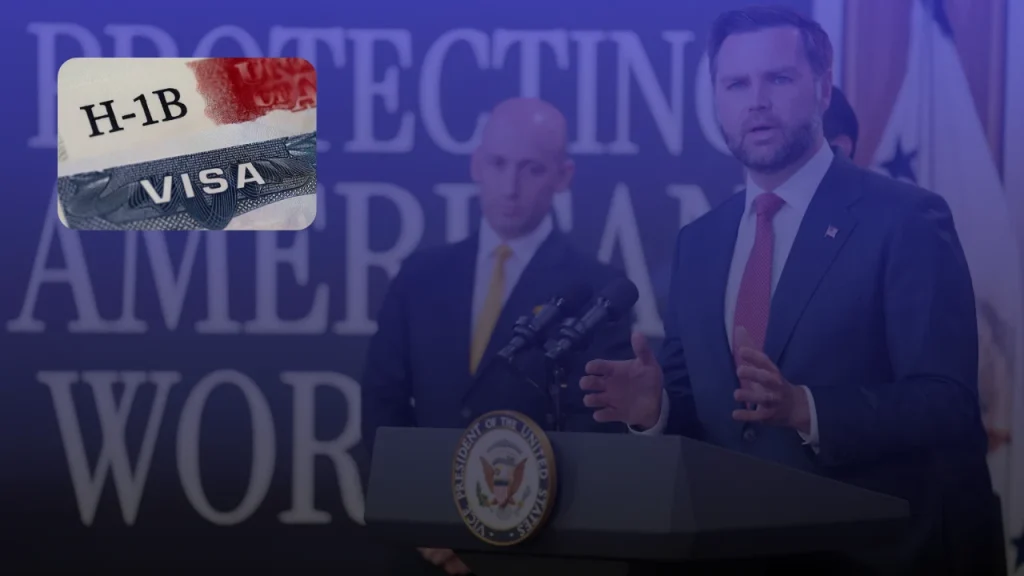
Vice President JD Vance singled out Microsoft. He said the company laid off roughly 6,000 American workers while receiving thousands of H-1B approvals (he cited about 6,300) and nearly 3,000 green-card-related approvals. He described the result as replacing each laid-off U.S. worker with “one and a half foreign indentured servants,” according to news reports of the announcement.
What the record does and does not show:
- The suspension is an administrative enforcement action tied to alleged abuse and ongoing investigations.
- As of October 9, 2026, publicly reported information does not show a criminal conviction, civil judgment, or final adjudicated finding that Microsoft committed PERM or H-1B fraud.
- Statements by officials are allegations and policy positions. Accurate reporting treats them as such unless an agency or court makes a formal finding.
What Microsoft Says
Microsoft has disputed the administration’s characterization. According to news reports, the company said roughly 80% of its H-1B applications in the most recent fiscal year were extensions or changes of status for current employees, not new overseas hires, and that foreign hires are a small share of its U.S. workforce.
This matters legally. An H-1B petition can be an initial petition, an extension, an amendment, a change of employer, or a change of status. The raw number of H-1B approvals tied to a company does not by itself show how many Americans were displaced.
Supporters of the program also point to compensation. Reported figures put Microsoft’s median H-1B salary far above national H-1B medians (figures near $177,000 have been cited). Critics respond that high salaries do not answer whether recruitment was genuine or whether workers were laid off in the same occupations. Both positions are claims that would need evidence in specific cases.
H-1B, PERM and the Green Card: Three Different Things
| Step | What it is | Who handles it |
| H-1B | Temporary work status in a “specialty occupation” | USCIS (petition), DOL (Labor Condition Application) |
| PERM | Labor certification showing no sufficient able, willing, qualified and available U.S. workers, and no adverse effect on wages | DOL |
| I-140 | Immigrant petition for the worker | USCIS |
| I-485 or consular processing | Final step to permanent residence once a visa number is available | USCIS or State Department |
A typical employer-sponsored path looks like this:
H-1B status → PERM → I-140 → priority date becomes current → I-485 (or consular processing) → green card
The October 8 action targets the PERM step. It is not the same as revoking H-1B status, denying an I-140, or terminating an I-485.
Why PERM is controlled by the employer
PERM is filed by the employer, not the worker. A worker generally cannot file it independently. So if an employer is blocked from the program, workers who have not yet had a PERM filed cannot simply proceed on their own through that employer.
Which green cards depend on PERM?
PERM is generally required for EB-2 (advanced degree or exceptional ability) and EB-3 (skilled workers, professionals, other workers) cases under 8 U.S.C. § 1153(b)(2) and (b)(3), unless an exception applies.
PERM is not required for:
- EB-1A extraordinary ability (8 U.S.C. § 1153(b)(1)(A); 8 C.F.R. § 204.5(h))
- EB-1B outstanding professors and researchers
- EB-1C multinational executives and managers
- EB-2 National Interest Waiver (NIW) (8 U.S.C. § 1153(b)(2)(B)(i))
- Certain Schedule A occupations (20 C.F.R. § 656.5), which use a different labor-certification route
The Law Behind PERM
The statute and regulations
The labor-certification requirement comes from INA § 212(a)(5)(A), 8 U.S.C. § 1182(a)(5)(A). An employer must show that:
- there are not sufficient U.S. workers who are able, willing, qualified and available at the time and place needed; and
- employing the foreign worker will not adversely affect the wages and working conditions of similarly employed U.S. workers.
The procedures are in 20 C.F.R. Part 656, which sets out the following key rules.
| Rule | What it covers |
| 20 C.F.R. § 656.10 | Employer obligations, including notice of filing and attestations; certain attestations are made under penalty of perjury (18 U.S.C. § 1621) |
| 20 C.F.R. § 656.17 | Basic filing and recruitment requirements for professional and non-professional positions |
| 20 C.F.R. § 656.17(e) | Recruitment steps for professional occupations, including a state workforce agency job order, ads, and additional recruitment steps; recruitment must fall within a defined window before filing |
| 20 C.F.R. § 656.17(h) | Job requirements must generally be those normal to the occupation unless justified by business necessity; limits on foreign-language requirements |
| 20 C.F.R. § 656.17(k) | Special rules when the employer has laid off U.S. workers in the occupation or a related occupation within six months before filing: the employer must notify and consider the laid-off workers |
| 20 C.F.R. § 656.30(b) | An approved labor certification is valid for 180 days to file the I-140 |
| 20 C.F.R. § 656.31 | Applications involving fraud or willful misrepresentation; DOL authority to take action against employers |
| 20 C.F.R. § 656.32 | Revocation of approved labor certifications |
| 20 C.F.R. § 656.40 | Prevailing wage determinations |
Layoffs and PERM: what the rules actually say
Because the administration emphasized Microsoft’s layoffs, § 656.17(k) is central. A company with recent layoffs is not automatically barred from filing PERM. The regulation requires extra steps: notifying potentially qualified laid-off U.S. workers and considering them for the position. A “layoff” for this purpose is generally an involuntary separation without cause or prejudice.
The October 8 suspension goes further than ordinary case-by-case review by stopping new and pending filings for named employers. The legal authority DOL relies on for such a blanket suspension is something affected parties and courts may examine (see below).
Can an employer set unusual job requirements?
Employers may set legitimate requirements, but they must generally be normal for the occupation unless supported by business necessity. DOL scrutinizes tailored requirements that appear designed to exclude U.S. applicants. Rejecting a qualified U.S. applicant is only permitted for lawful, job-related reasons that the employer can document.
What if fraud is alleged?
Under 20 C.F.R. §§ 656.31 and 656.32, DOL can take action where an application involves fraud or willful misrepresentation, and can revoke certifications in appropriate cases. These provisions require findings tied to specific applications. A news announcement is not itself such a finding.
The Law Behind the H-1B Program
Core statutory framework
| Provision | What it does |
| INA § 101(a)(15)(H)(i)(b), 8 U.S.C. § 1101(a)(15)(H)(i)(b) | Creates the H-1B classification for specialty occupations |
| INA § 214(i), 8 U.S.C. § 1184(i) | Defines “specialty occupation” |
| INA § 214(g), 8 U.S.C. § 1184(g) | Annual cap (65,000 regular plus 20,000 U.S. advanced-degree exemption), cap exemptions, and the six-year limit in § 1184(g)(4) |
| INA § 214(n), 8 U.S.C. § 1184(n) | H-1B portability |
| INA § 212(n), 8 U.S.C. § 1182(n) | Labor Condition Application (LCA) requirements, required-wage rules, and enforcement |
| 8 C.F.R. § 214.2(h) | DHS H-1B regulations |
| 20 C.F.R. Part 655, Subpart H | DOL rules for LCAs and H-1B enforcement |
The LCA and required wage
Before filing an H-1B petition, the employer must file an LCA (Form ETA-9035) with DOL. The employer attests, among other things, that it will pay the required wage (the higher of the actual wage paid to similarly employed workers or the prevailing wage), that working conditions will not adversely affect similarly employed U.S. workers, and that there is no strike or lockout.
Extra obligations for certain employers
Under INA § 212(n)(1)(E)–(G), employers classified as H-1B dependent (generally, a high percentage of H-1B workers in the workforce, with thresholds varying by company size) or found to be willful violators have additional obligations. These include:
- attesting that they have not displaced a similarly employed U.S. worker within 90 days before or after filing an H-1B petition, and
- making good-faith recruitment efforts with specified steps.
These non-displacement rules are narrower than the public debate often suggests. They do not create a general prohibition on laying off an American worker and later hiring an H-1B worker for a different role. The analysis depends on the employer’s classification, the job, the timing and the facts.
Penalties for violations
INA § 212(n)(2), 8 U.S.C. § 1182(n)(2), allows DOL to impose civil money penalties and debarment from the H-1B, PERM and certain other immigration programs. Escalating penalties apply for willful violations, with the most severe reserved for willful violations involving displacement of U.S. workers. The statute also protects whistleblowers from retaliation. Penalty amounts are adjusted periodically for inflation.
Wage-weighted selection and recent H-1B changes
DHS adopted a wage-weighted selection process for the H-1B cap lottery beginning with FY 2027 registrations, giving higher wage levels more chances of selection. Separately, the administration has pursued other H-1B measures, including a $100,000 payment requirement on certain new petitions that has been the subject of litigation. Its current status has changed through court rulings, so readers should confirm the latest position with USCIS or an attorney before relying on any fee rule.
What Is New: The September 2026 Executive Order and Project Firewall
Executive Order of September 18, 2026
On September 18, 2026, the President issued an executive order titled “Enhancing Program Integrity and Interagency Coordination in the H-1B Nonimmigrant Visa Program.” According to the order’s text, it directs agencies to coordinate more closely on LCAs, H-1B petitions, visas and admission decisions, to consider whether an employer has conducted layoffs affecting similarly situated U.S. workers, and to review previously submitted LCAs for possible action under INA § 212(n)(2)(G). It also references INA § 274B (8 U.S.C. § 1324b), which addresses certain unfair immigration-related employment practices.
Project Firewall
DOL launched Project Firewall in September 2025 as an H-1B enforcement initiative focused on wages, working conditions and compliance. The Microsoft action fits a broader pattern of increased scrutiny of H-1B employers, LCAs, PERM recruitment, layoffs and outsourcing.
Other enforcement activity
Officials have also announced investigations connected to universities and student work programs, which are separate from the corporate PERM suspensions. The details of those matters are outside the scope of this article.
The combined effect is a shift toward employer-wide compliance review: layoffs, H-1B filings, LCA wage compliance, PERM recruitment and green-card sponsorship are being examined together.
What the Suspension Means, Stage by Stage
The effect depends on where the worker’s case stands.
| Your situation | What the suspension may mean |
| H-1B, no PERM started | Microsoft may be unable to start the normal EB-2/EB-3 route while the suspension lasts. Consider timing against your six-year limit and alternatives. |
| PERM pending | Most directly affected. DOL has said it will not process pending applications involving named companies. Do not assume the case is moving normally. |
| PERM approved, I-140 not yet filed | A certification is valid for 180 days to file the I-140 (20 C.F.R. § 656.30(b)). Confirm promptly with the employer’s immigration team that the I-140 has been or will be filed on time. |
| I-140 approved | The announcement does not say approved I-140s are revoked. Your priority date and Visa Bulletin position become the key issues. |
| I-485 pending | Different stage. The announcement does not say pending adjustment applications are terminated. INA § 204(j) job portability may apply after the I-485 has been pending 180 days, subject to conditions. |
| Near the six-year H-1B limit | Most urgent. Check whether you qualify for AC21 extensions or need another pathway. |
| Already a green card holder | A PERM suspension does not itself change permanent resident status. |
Workers should rely on written case records, not rumors, and should confirm the exact status of each filing.
The Six-Year H-1B Limit and AC21 Extensions
Under 8 U.S.C. § 1184(g)(4), H-1B status is generally limited to six years. Congress created exceptions through the American Competitiveness in the Twenty-First Century Act (AC21), as amended:
- AC21 § 106(a) (Pub. L. 106-313, as amended by Pub. L. 107-273): one-year extensions beyond six years if at least 365 days have passed since a qualifying labor certification application or I-140 was filed and the green-card process remains pending.
- AC21 § 104(c): extensions of up to three years at a time for beneficiaries of an approved I-140 who are blocked from final processing only by per-country visa limits.
Implementing rules are found in 8 C.F.R. § 214.2(h)(13). This is why early PERM filing matters: a worker who has not reached a qualifying stage when the six-year clock ends may have far fewer options. Workers from countries with long employment-based backlogs, particularly India and China, are especially exposed to delays.
If a Microsoft H-1B Worker Is Laid Off
The immigration consequences of a layoff are separate from the PERM suspension.
- Grace period: Under 8 C.F.R. § 214.1(l)(2), an H-1B worker may have a grace period of up to 60 consecutive days after employment ends, or until the authorized stay expires, whichever is shorter. During this time the worker may seek a new employer, apply to change status, or prepare to depart.
- Portability: Under 8 U.S.C. § 1184(n), a qualifying H-1B worker can begin working for a new employer once the new employer properly files a nonfrivolous H-1B petition, subject to statutory conditions.
- Do not assume that staying in the U.S. after termination automatically preserves lawful status.
Calling H-1B workers “indentured servants” is a political characterization, not a legal category. In law, portability exists, though losing a job still has serious practical consequences.
Can a Worker Get a Green Card Without Microsoft’s PERM?
Possibly, depending on qualifications.
- Change employers. A new employer not subject to the suspension may be able to start PERM. Before leaving, get advice on how the move affects any existing PERM, I-140 or I-485. INA § 204(j) portability applies only at certain stages and to “same or similar” occupations.
- EB-1A extraordinary ability. Self-petition is allowed, but the standard is high and not an easy substitute for ordinary software roles.
- EB-2 National Interest Waiver. Evaluated under Matter of Dhanasar, 26 I&N Dec. 884 (AAO 2016). The worker must first qualify for EB-2 and then show the proposed endeavor has substantial merit and national importance, the worker is well positioned to advance it, and waiving the job offer benefits the United States. Working in a high-demand field is not enough by itself.
- EB-1B or EB-1C. Available only to workers who fit those narrow categories.
- Other options. Depending on the case, other statuses or categories may apply.
Could Microsoft or the Other Companies Challenge the Suspension?
Possibly. The vehicle would depend on the written DOL action and the legal authority it cites. Potential theories include the Administrative Procedure Act, 5 U.S.C. §§ 701–706 (including whether the action is arbitrary, capricious, contrary to law or in excess of statutory authority), the PERM regulations, due-process arguments about notice and an opportunity to respond, and limits on agency authority. Immigration law gives the executive branch broad discretion, so the outcome is uncertain and no prediction is possible from a news announcement alone.
Possible Legal Exposure if Misrepresentation Were Proven
If investigators were to establish that someone knowingly submitted materially false information, several laws could become relevant, depending on the facts:
| Law | Subject |
| 18 U.S.C. § 1001 | Knowingly and willfully making materially false statements in federal matters |
| 18 U.S.C. § 1621 | Perjury (PERM attestations are made under penalty of perjury) |
| 18 U.S.C. § 1546 | Fraud and misuse of visas, permits and other immigration documents |
| 18 U.S.C. § 371 | Conspiracy |
| 8 U.S.C. § 1324c (INA § 274C) | Immigration-related document fraud |
| 8 U.S.C. § 1182(a)(6)(C)(i) | Inadmissibility for fraud or willful misrepresentation |
| 8 U.S.C. § 1182(n)(2) | H-1B civil penalties and debarment |
| 20 C.F.R. §§ 656.31–656.32 | PERM fraud determinations and revocation |
None of these should be read as proof that Microsoft or any other company violated them. The government would have to prove the elements through evidence.
Related but separate laws include INA § 274A (8 U.S.C. § 1324a) on employment verification and unlawful hiring, and INA § 274B (8 U.S.C. § 1324b) on unfair immigration-related employment practices, including discrimination based on citizenship status or national origin in covered circumstances.
How This Differs From Other 2026 Immigration Developments
Several different developments are easy to confuse:
- The Microsoft/PERM suspension (October 8, 2026): employer-specific suspension from DOL labor certification.
- The H-1B executive order (September 18, 2026): directs agency coordination and layoff scrutiny.
- The $100,000 H-1B payment requirement: a separate policy that has been in litigation, with a changing legal status.
- The wage-weighted H-1B lottery rule: affects cap selection beginning FY 2027.
- The green-card adjustment-of-status lawsuit: a separate federal challenge to USCIS policies. See our coverage: Trump Green Card Policy Lawsuit, USCIS Rules Challenged Over Adjustment of Status and RFE Denials.
- Employment-based visa backlogs: per-country and category limits under 8 U.S.C. §§ 1151–1153.
Each operates under different legal authority and should not be merged into one rule.
For broader context on related federal immigration actions, see:
- State Department Revokes 250,000 Visas: What It Means
- H1B Visa Lawsuit, Trump’s $100K Fee and Major Discrimination Cases 2025
- 19 States Sue Trump Over Proposed $100K H1B Visa Fee: What Visa Holders Need to Know
- Trump Accounts for Kids (separate federal policy coverage)
Three Common Misunderstandings
1. “Microsoft is banned from H-1B visas.” Not what was announced. The suspension is from PERM, a separate DOL program. Microsoft’s ability to employ H-1B workers is governed by separate H-1B rules.
2. “Every Microsoft green card is canceled.” Too broad. The announcement concerns new and pending PERM applications. It does not say approved PERMs, approved I-140s or pending I-485s are automatically revoked.
3. “6,000 layoffs prove 6,000 Americans were replaced.” A layoff count and an H-1B approval count measure different things. Proving displacement requires evidence about specific jobs, workers, wages, recruitment and timing.
What H-1B Workers at Affected Companies Should Do Now
Ask the immigration department or your attorney, in writing where possible:
- Has my PERM been filed? On what date?
- Is it pending, audited, certified, withdrawn or unresolved?
- Has my I-140 been filed or approved?
- What is my priority date, and is it current on the Visa Bulletin?
- How much H-1B time have I used and when does my six-year limit end?
- Do I qualify for an AC21 extension?
- If sponsorship stops, is another pathway (EB-1, NIW, new employer) realistic for me?
- How would changing employers affect my existing case?
Also: keep copies of all filings and receipts, track your I-94 and status expiration dates, and speak with a licensed immigration attorney before making any employment decision.
For employers
Review LCA and PERM compliance, recruitment documentation, layoff-related obligations under § 656.17(k), and non-displacement attestations for H-1B dependent employers. Expect closer audit scrutiny.
For U.S. workers
If you believe an employer violated H-1B rules, complaints can be raised with the DOL Wage and Hour Division. Concerns about citizenship-status or national-origin discrimination in hiring can be raised with the Department of Justice, Immigrant and Employee Rights Section. H-1B whistleblowers have statutory anti-retaliation protection.
What Could Happen Next
- Duration: Officials have not announced a fixed end date; Vance indicated it would last as long as necessary.
- Litigation: Affected companies could seek review under the APA.
- Case-level investigations: DOL could examine recruitment records, layoffs and wage data.
- Expansion: Officials have suggested more employers could face scrutiny; reports noted that Meta, Amazon and Google were not on the announced list.
- Worker moves: Some workers may leave for other sponsors.
- Congress: Lasting changes to H-1B or employment-based immigration would require legislation.
Bottom Line
The October 8, 2026 action suspends Microsoft and seven other employers from PERM, a critical step in many employer-sponsored green-card cases. It is not a ban on H-1B visas, does not automatically cancel existing H-1B status, and is not a finding of fraud. The administration says the companies abused immigration programs and harmed American workers. Microsoft disputes that characterization.
For workers, the key question is not “Is Microsoft banned from H-1B?” It is: Where exactly is my green-card case, how much H-1B time do I have left, and what pathway remains if my employer cannot move my PERM forward?
Frequently Asked Questions
Is Microsoft banned from H-1B visas?
No. The October 8, 2026 action suspended Microsoft from the DOL’s PERM labor-certification program. No blanket cancellation of Microsoft’s H-1B program has been announced.
Can Microsoft still employ H-1B workers?
The PERM suspension does not itself prohibit Microsoft from employing H-1B workers. H-1B employment remains governed by H-1B law and regulations.
Does the suspension cancel existing H-1B visas?
No automatic cancellation has been announced.
What is PERM?
PERM is DOL’s Permanent Labor Certification process, governed by INA § 212(a)(5)(A) and 20 C.F.R. Part 656. It is generally required before an employer can sponsor a worker for EB-2 or EB-3 permanent residence.
Does PERM equal a green card?
No. After PERM, the employer generally files an I-140, the worker waits for a visa number, and then completes adjustment of status or consular processing.
What happens if my PERM is pending?
DOL has said it will not process pending applications involving the named companies, so pending cases may be delayed or stalled.
What happens if my PERM is already approved?
The announcement does not say approved certifications are revoked. A certification is generally valid for 180 days to file the I-140, so confirm the filing status promptly.
What if I have an approved I-140 or pending I-485?
The announcement does not say these are terminated. Your priority date, Visa Bulletin position and INA § 204(j) portability rules become important.
Can I get a green card without PERM?
Sometimes, through categories such as EB-1A, EB-1B, EB-1C or an EB-2 National Interest Waiver, if you qualify.
Can I stay in the U.S. beyond six years on H-1B?
Possibly, under AC21 §§ 104(c) and 106(a), if your green-card process has reached the required stage.
What happens if Microsoft lays off an H-1B worker?
The worker may have a grace period of up to 60 days under 8 C.F.R. § 214.1(l)(2) and may be able to move to a new employer through H-1B portability under 8 U.S.C. § 1184(n).
Can H-1B workers switch employers?
Qualifying workers can use portability, but the effect on an existing green-card case must be reviewed separately.
Will workers be deported because of the PERM suspension?
No. The suspension is not a removal order. Status depends on each person’s individual circumstances.
Did Microsoft commit immigration fraud?
The administration has alleged abuse and cited investigations. The announcement is not a conviction or court finding.
Why did JD Vance criticize Microsoft?
Vance said Microsoft laid off thousands of American workers while benefiting from H-1B and green-card programs. Microsoft disputes the characterization.
Which companies are affected?
Microsoft, Adobe, Cognizant, Infosys, Tata Consultancy Services, Wipro, HCL and Capgemini.
Can the suspended companies challenge it?
Potentially, for example under the Administrative Procedure Act, depending on the written action and the authority cited.
Does this affect people who are already green card holders?
No. Lawful permanent resident status is not changed by a PERM suspension.
Legal Information Disclaimer
This article is for general informational purposes only and is not legal advice. AllAboutLawyer.com is not a law firm and does not represent Microsoft, any H-1B worker, any U.S. worker or the federal government. Reading this article does not create an attorney-client relationship. Immigration law is highly fact-specific and changes quickly. Government allegations, investigations and enforcement actions are not findings of fraud or wrongdoing unless established by the appropriate agency or court. For advice about your own case, consult a licensed immigration attorney.
Sources and Legal Authorities
News and government announcements
- Reuters, October 8, 2026: reporting on the suspension of Microsoft, Adobe, Infosys and others from PERM, and the explainer on the skilled foreign tech workers’ green card program
- Associated Press, October 8, 2026: reporting on Vice President Vance’s statements and the Microsoft suspension
- The Verge, Al Jazeera, RTÉ and The New Indian Express, October 2026: coverage of the announcement and Microsoft’s response
- White House, “Enhancing Program Integrity and Interagency Coordination in the H-1B Nonimmigrant Visa Program,” September 18, 2026
- U.S. Department of Labor, H-1B Program and Project Firewall pages
- U.S. Department of State, “Restriction on Entry of Certain Nonimmigrant Workers”
Statutes and regulations
- 8 U.S.C. § 1101(a)(15)(H)(i)(b); 8 U.S.C. § 1153(b); 8 U.S.C. § 1154; 8 U.S.C. § 1182(a)(5)(A); 8 U.S.C. § 1182(a)(6)(C)(i); 8 U.S.C. § 1182(n); 8 U.S.C. § 1184(g), (i), (n); 8 U.S.C. § 1255; 8 U.S.C. § 1324a; 8 U.S.C. § 1324b; 8 U.S.C. § 1324c
- 18 U.S.C. §§ 371, 1001, 1546, 1621
- 5 U.S.C. §§ 701–706 (Administrative Procedure Act)
- 20 C.F.R. Part 655, Subpart H; 20 C.F.R. Part 656 (including §§ 656.5, 656.10, 656.17, 656.30, 656.31, 656.32, 656.40)
- 8 C.F.R. §§ 204.5, 205.1, 214.1(l)(2), 214.2(h)
- American Competitiveness in the Twenty-First Century Act (AC21), Pub. L. 106-313, and Pub. L. 107-273
- Matter of Dhanasar, 26 I&N Dec. 884 (AAO 2016)
- Legal Information Institute (Cornell Law School): 8 U.S.C. §§ 1153 and 1184; 8 C.F.R. § 214.2
Statements about the October 8, 2026 announcement reflect news reports available as of the update date above. Verify current status with official government sources.
By Israr Ahmad, Legal Content Researcher | AllAboutLawyer.com Last updated: October 9, 2026
This article is general legal information based on public reporting and primary legal sources. It is not legal advice. Facts are developing, and government allegations are not findings of wrongdoing.
About the Author
Israr Ahmad is a legal content researcher with 4+ years of experience covering class action settlements and consumer rights cases. He has researched and published coverage of 2,500+ settlements using verified court records, settlement administrator filings, and government sources. Learn more about Israr.