
JD Vance Says 9 Universities Face Federal Investigation Over J-1 Visas, What the Law Requires
The Trump administration has opened investigations into nine major U.S. universities over alleged misuse of J-1 exchange-visitor visas. The investigations raise questions about international researchers, university hiring and pay practices, federal research grants, and protections for American workers.
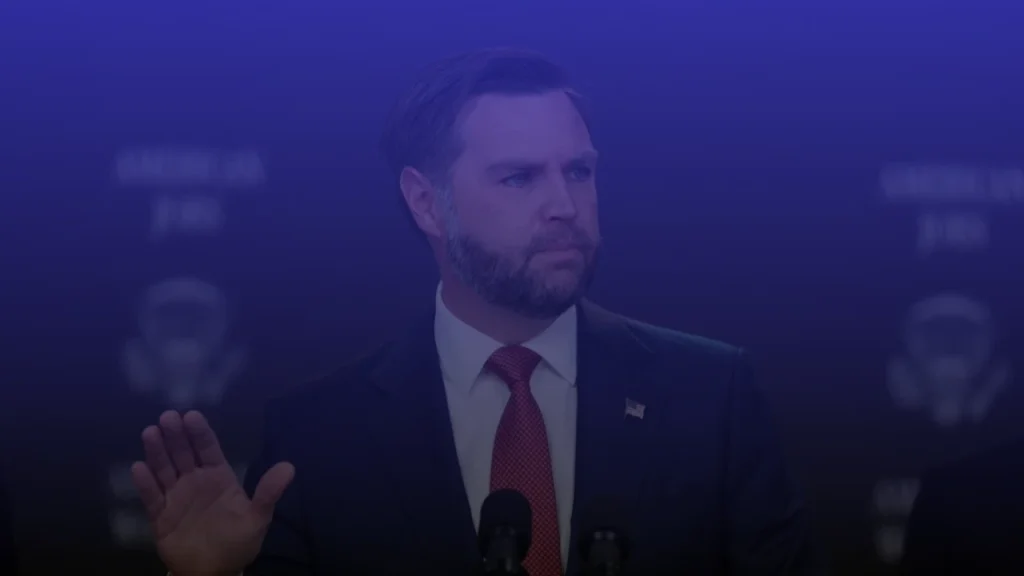
Vice President JD Vance announced the investigations on October 8, 2026. The Department of Labor’s Office of Inspector General (DOL OIG), led by Inspector General Anthony P. D’Esposito, is examining whether universities used J-1 visas to hire foreign researchers at lower cost, potentially undercutting American graduate students and researchers, and whether foreign influence or improper financial relationships are compromising federally funded research. D’Esposito said subpoenas have already been issued.
The universities named are Harvard University, Yale University, Stanford University, Brown University, the California Institute of Technology (Caltech), Arizona State University, the Massachusetts Institute of Technology (MIT), the University of Pittsburgh, and the University of California, Davis.
An investigation and a subpoena are not findings of fraud. Several universities have said they are reviewing the requests or that they comply with federal visa rules, and the government has not publicly established that any of the nine violated the law. This is a federal administrative and investigative action, not a civil lawsuit or class action, and there is no public claims process for individuals.
The key legal question is not whether universities employ international researchers. It is whether any university or program sponsor violated the rules governing the J-1 system and the federal research funding attached to it.
Quick Facts: The Nine-University J-1 Visa Investigation
| Detail | What the public record shows |
| Announcement date | October 8, 2026 |
| Announced by | Vice President JD Vance, with DOL Inspector General Anthony P. D’Esposito |
| Investigating office | U.S. Department of Labor Office of Inspector General |
| Universities named | Harvard, Yale, Stanford, Brown, Caltech, Arizona State, MIT, University of Pittsburgh, UC Davis |
| Visa category at issue | J-1 Exchange Visitor (research scholars, professors, postdoctoral researchers) |
| Core allegation | Universities used J-1 researchers to undercut wages of American graduate students and researchers |
| Additional focus | Foreign influence, improper financial relationships, integrity of federally funded research |
| Figures cited by officials | About 61% J-1 use on federally funded research vs. a claimed 38% national average (administration claims; not independently verified) |
| Subpoenas | Inspector general says they have been issued |
| Findings of fraud | None announced against any of the nine universities |
| Effect on individual J-1 holders | No blanket visa cancellation announced |
| Main legal sources | INA \u00a7 101(a)(15)(J) (8 U.S.C. \u00a7 1101(a)(15)(J)); 22 C.F.R. Part 62 |
| Related foreign-funding law | Higher Education Act \u00a7 117 (20 U.S.C. \u00a7 1011f) |
| Public claims process | None |
| What happens next | Subpoena responses, document review, possible further enforcement |
Which Universities Are Being Investigated?
| University | What is publicly known |
| Harvard University | Confirmed receiving a subpoena and said it is reviewing it |
| Yale University | Said it will review the documents and is committed to complying with federal visa rules |
| Stanford University | Said it complies with applicable visa laws and will cooperate |
| Brown University | Named in the investigation; no finding of wrongdoing announced |
| California Institute of Technology | Named in the investigation; no finding of wrongdoing announced |
| Arizona State University | Named in the investigation; no finding of wrongdoing announced |
| Massachusetts Institute of Technology | Confirmed receiving what it described as a broad subpoena |
| University of Pittsburgh | Named in the investigation; no finding of wrongdoing announced |
| University of California, Davis | Named in the investigation; no finding of wrongdoing announced |
The public record is not equally detailed for every university. Confirming that a school received a subpoena is not an admission of misconduct, and the absence of a public statement does not show guilt. The full scope of each subpoena and the investigation timeline have not been made public.
What Did JD Vance and the Labor Department Say?
Vance argued that universities are using J-1 visas too heavily to bring in foreign researchers instead of hiring American graduate students and researchers. He cited figures that J-1 holders fill roughly 61 percent of federally funded research positions at the named schools, compared with about 38 percent nationally. He also asserted that American researchers cost universities about $20,000 more per year than comparable J-1 researchers, and that the visas were being used to undercut American wages.
Inspector General D’Esposito said the investigation will examine whether foreign influence, improper financial relationships, or visa abuse are compromising federally funded research. Officials also referred to a DOL OIG “Visa Fraud Strike Team” as part of broader enforcement efforts.
These numbers are the administration’s claims. STAT reported that it asked the White House and the vice president’s office for clarification of the figures and did not immediately receive answers. A high share of foreign researchers does not by itself prove visa fraud, wage violations, or discrimination against U.S. workers. Investigators would need evidence tied to specific appointments, wage practices, funding conditions, or representations made to the government.
At the same press event, the administration also announced action against certain companies, reportedly including Microsoft, in the permanent labor certification (PERM) process that precedes many employment-based green cards. That is a separate action under different legal authority and is not part of the university J-1 investigation.
What Is a J-1 Visa?
The J-1 is a nonimmigrant visa for participants in designated exchange-visitor programs. Its legal basis is Immigration and Nationality Act (INA) \u00a7 101(a)(15)(J), 8 U.S.C. \u00a7 1101(a)(15)(J). The program is administered mainly by the U.S. Department of State’s Exchange Visitor Program, under regulations at 22 C.F.R. Part 62.
Categories include professors and research scholars, short-term scholars, students in eligible exchange programs, teachers, trainees, and specialists. Postdoctoral researchers commonly use the research-scholar category. J-1 participants are sponsored by designated program sponsors, which are often universities or affiliated organizations, and the sponsor issues the Form DS-2019 that supports the visa application.
Under 22 C.F.R. \u00a7 62.20, the professor and research-scholar categories exist to support research, teaching, lecturing, consultation, and academic exchange.
J-1 vs. H-1B: Why the Difference Matters
| Issue | J-1 exchange visitor | H-1B specialty occupation |
| Main purpose | Educational and cultural exchange | Temporary employment in a specialty occupation |
| Statute | INA \u00a7 101(a)(15)(J) | INA \u00a7 101(a)(15)(H)(i)(b) |
| Principal regulations | 22 C.F.R. Part 62 | 8 C.F.R. \u00a7 214.2(h); 20 C.F.R. Part 655 |
| Wage framework | No Labor Condition Application; pay set by sponsor and program terms | Labor Condition Application with wage attestations under INA \u00a7 212(n), 8 U.S.C. \u00a7 1182(n) |
| Typical academic use | Postdocs, visiting scholars, exchange | Specialty jobs, including some university research roles |
| Oversight | Designated sponsors; State Department | USCIS, Department of Labor, others |
| Leads to a green card automatically? | No | No |
This distinction matters because J-1 holders are generally not covered by the H-1B Labor Condition Application wage requirements. Paying a J-1 researcher less than an American colleague is therefore not automatically a violation of those H-1B rules. This investigation should not be described as an H-1B investigation.
What Laws Apply?
Which laws matter depends on what investigators actually find. Here is each source of law and its limits.
1. INA \u00a7 101(a)(15)(J), 8 U.S.C. \u00a7 1101(a)(15)(J)
This creates the J nonimmigrant classification. A university cannot treat J-1 status as a general-purpose work permit. The visa holder must take part in a qualifying exchange program. But employing J-1 researchers is lawful and common, and it is not itself evidence of abuse.
2. 22 C.F.R. \u00a7 62.20: Professors and Research Scholars
This regulation covers eligibility, permitted activities, documentation, program sites, and duration. Research scholars generally must carry out their exchange activity at sites recorded in the Student and Exchange Visitor Information System (SEVIS). Ordinary participation in the category is limited to five years, subject to the regulation’s rules and exceptions. Investigators could compare a scholar’s records, assignments, site, and sponsor documentation against these requirements.
3. 22 C.F.R. \u00a7 62.16: Employment
This addresses employment by exchange visitors. Compensation from the sponsor or an appropriate designee is allowed when the work is part of the exchange program, while unauthorized employment can violate program status and lead to termination. The practical question is whether researchers did the work and received the pay their programs authorized. A salary gap between two researchers does not by itself show unauthorized employment.
4. 22 C.F.R. Part 62: Sponsor Obligations and Sanctions
Part 62 also sets out sponsor responsibilities, including recordkeeping, reporting, insurance, and oversight of participants, and it contains sanctions provisions (including \u00a7 62.50) that can lead to corrective action or loss of designation for serious sponsor noncompliance. Investigators could examine whether sponsors kept accurate records and documented program activities truthfully.
5. INA \u00a7 212(e), 8 U.S.C. \u00a7 1182(e): Two-Year Home Residency Requirement
Some J-1 participants are subject to a requirement to return to their home country for two years before changing to certain other statuses. It does not decide whether a university broke the law, but it shapes what happens to individual researchers.
6. Inspector General Authority and Administrative Subpoenas
Inspectors general have authority under the Inspector General Act (now codified at 5 U.S.C. \u00a7\u00a7 401\u2013424), including the power to subpoena records, to investigate fraud, waste, and abuse in their agencies’ programs. A subpoena is a compulsory demand for information within its lawful scope. It is not an indictment, a court judgment, or a determination that fraud occurred.
7. Federal Grant Conditions: 2 C.F.R. Part 200
Federal research funding from agencies such as NIH, NSF, and the Department of Energy is governed by the terms of each award and by the Uniform Administrative Requirements, Cost Principles, and Audit Requirements at 2 C.F.R. Part 200. Recipients must comply with cost principles, reporting rules, and conflict-of-interest and disclosure requirements. Material noncompliance can lead to corrective action, repayment demands, suspension, or debarment.
8. Research Security and Foreign Influence
National Security Presidential Memorandum 33 (NSPM-33) and agency implementations require research institutions to manage disclosure of outside relationships and foreign support. Officials have tied the foreign-influence part of this investigation to those concerns. A researcher being foreign-born or having international collaborators does not by itself violate any of these rules.
9. Higher Education Act \u00a7 117, 20 U.S.C. \u00a7 1011f
Covered institutions must report foreign gifts and contracts valued at $250,000 or more, individually or combined from the same foreign source in a calendar year, including the source and value and any restricted or conditional terms. The Secretary of Education can enforce compliance through a civil action. The J-1 announcement does not establish that any of the nine universities violated Section 117, and it is not known whether foreign-funding disclosures are part of any subpoena.
What Does “Visa Fraud” Mean in This Context?
Visa fraud can describe several kinds of alleged misconduct, such as knowingly misstating a researcher’s activities, submitting inaccurate program documentation, concealing unauthorized employment, or making false statements in federal records. Possible legal theories, which are not charges, include:
| Law | What it covers | Important limit |
| 18 U.S.C. \u00a7 1001 | Knowingly and willfully making materially false statements to the federal government | The government must prove the statutory elements; an inaccurate record alone is not enough |
| 18 U.S.C. \u00a7 1546 | Fraud and misuse of visas and other immigration documents | Requires the conduct and intent specified in the applicable subsection |
| 18 U.S.C. \u00a7 371 | Conspiracy to commit a federal offense or defraud the United States | Requires proof of an agreement and the other elements |
| 31 U.S.C. \u00a7\u00a7 3729\u20133733 (False Claims Act) | Knowingly submitting false claims for federal funds | Requires a material false statement or claim tied to federal money |
| 8 U.S.C. \u00a7 1182(a)(6)(C)(i) | Inadmissibility for fraud or willful misrepresentation to obtain immigration benefits | Applies to individual immigration determinations |
| 8 U.S.C. \u00a7 1324c | Certain immigration-related document fraud | Applies only where the specific conduct fits the statute |
| 22 C.F.R. Part 62 | Sponsor and participant compliance | Regulatory noncompliance is not a criminal conviction |
As of October 9, 2026, the public reporting reviewed for this article does not show that any of the nine universities has been criminally charged.
Can Universities Be Investigated for Paying J-1 Researchers Less?
The government can investigate employment and pay practices. Whether paying a J-1 researcher less than a comparable American researcher breaks the law depends on the specific requirements and facts. Because the J-1 program has no Labor Condition Application, investigators would look at program terms, employment authorization, funding restrictions, institutional policy, and other applicable law. Other federal and state laws, such as minimum wage and overtime rules under the Fair Labor Standards Act, apply to employees regardless of visa status where they cover the job. The legal question is not whether a foreign researcher earns less. It is whether the employer violated an obligation that applies to that job or program.
Could Hiring Foreign Researchers Violate Anti-Discrimination Law?
It depends on the facts. Title VII of the Civil Rights Act of 1964 (42 U.S.C. \u00a7 2000e et seq.) bars covered employers from discriminating on the basis of race, color, religion, sex, or national origin. It does not require universities to prefer American citizens over qualified foreign nationals, and hiring international researchers is not itself national-origin discrimination.
INA \u00a7 274B, 8 U.S.C. \u00a7 1324b, prohibits certain unfair immigration-related employment practices, including some citizenship-status and national-origin discrimination in hiring and recruitment, subject to coverage rules and exceptions. If investigators found evidence that a university unlawfully discriminated against U.S. workers, these statutes could apply, but that would be a separate legal finding from J-1 compliance.
Could a University Lose Its Ability to Sponsor J-1 Researchers?
Potentially, if the government establishes a qualifying violation and acts under the exchange-visitor rules. The State Department administers the program and has authority over sponsor designation and sanctions. A serious sponsor-compliance problem could affect an institution’s ability to sponsor exchange visitors, depending on the findings and procedures.
But no blanket cancellation of the nine universities’ J-1 programs has been announced. A university’s sponsor status and an individual researcher’s immigration status are related but distinct questions.
What Happens to International Researchers at These Universities?
The announcement does not by itself revoke any researcher’s visa or require anyone to leave the United States. Researchers should keep these separate:
- A visa stamp in a passport, which is used to seek entry
- Immigration status in the United States
- The Form DS-2019 and the underlying exchange program
- Any separate authorization for particular employment activities
Researchers should not assume they have lost status because their university is under investigation, and they should not assume an institutional investigation can never affect their program. Anyone who receives a notice from a sponsor or an immigration agency should review it promptly with the university’s international office or a qualified immigration attorney.
Can the Universities Challenge the Subpoenas?
They may have options, depending on the scope of the subpoenas and the authority behind them. A university can preserve records, respond through counsel, and, if it believes a demand is unlawful, overbroad, or unduly burdensome, seek modification or contest enforcement through the applicable procedure.
The Administrative Procedure Act, 5 U.S.C. \u00a7\u00a7 701\u2013706, can give a route to judicial review of certain final agency actions, but not every investigative step is reviewable and the APA does not automatically stop an investigation. Universities could also contest any eventual findings or sanctions through available administrative or judicial review. No outcome can be predicted from the announcement alone.
Could the Investigation Affect Federal Research Funding?
Potentially, depending on what investigators find and which authority the government invokes. Violations of grant terms can lead to corrective actions, repayment demands, or restrictions on future awards where authorized, and more serious misconduct could lead to civil or criminal proceedings if the evidence supports the elements. But an investigation is not a funding suspension. The announcement does not show that federal grants to the nine universities have been canceled. Watch for specific agency notices, award amendments, or compliance determinations.
What Could This Mean for American Graduate Students and Researchers?
This is the central policy question. The administration argues universities may be using J-1 visas to cut labor costs and displace American researchers, and if investigators find specific violations, enforcement or changes in hiring practice could follow. But any effect on American researchers is not yet established. Universities often recruit abroad because fields require specialized training, and international collaboration is part of many federally funded projects. The legal task is to determine whether the universities complied with the law while preserving legitimate exchange and research programs.
Is This Part of a Broader Immigration Policy Push?
Yes. The investigation fits a broader increase in scrutiny of employment-based and academic immigration. On September 18, 2026, President Trump issued an executive order titled “Enhancing Program Integrity and Interagency Coordination in the Administration of the H-1B Nonimmigrant Visa Program,” directing agencies to coordinate more closely on H-1B petitions and labor-condition applications. That order concerns H-1B, not J-1. The administration has also taken separate steps involving employer-sponsored green cards, including the PERM action noted above. These operate under different legal authorities and should not be treated as one universal visa ban.
What Happens Next?
The inspector general may review employment records, visa documentation, research assignments, and funding relationships. Universities may respond to subpoenas, explain their practices, and challenge requests they believe the law does not support. The investigation could end with no action, corrective measures, administrative proceedings, or referrals if evidence warrants. Developments to monitor:
- Subpoena details: what records and time periods are covered.
- University responses: further statements or challenges to the requests.
- Specific allegations: whether the government identifies particular visa filings, appointments, or arrangements.
- Agency findings: whether the inspector general issues findings or refers evidence for further action.
- Sponsor status: whether any university’s J-1 designation is formally affected.
- Research funding: whether a funding agency issues a notice about a specific award.
- Court proceedings: whether any university challenges a subpoena or a final agency action.
Until those details emerge, it would be inaccurate to say the universities have been found guilty of fraud or that international researchers there face immediate removal.
Current Status as of October 9, 2026
The administration has announced investigations into nine universities over alleged misuse of J-1 exchange-visitor visas. The DOL inspector general says subpoenas have been issued and that the work will examine possible visa abuse, improper financial relationships, foreign influence, and the integrity of federally funded research. Harvard and MIT have confirmed receiving subpoenas, and Yale and Stanford have said they will cooperate or that they comply with visa rules.
No finding of fraud against any of the nine universities has been announced. The announcement does not cancel any J-1 visas, cancel federal grants, or establish a wage-law violation. This article will be updated as agencies disclose more or take formal action.
Frequently Asked Questions
Which nine universities are being investigated over J-1 visas?
Harvard, Yale, Stanford, Brown, Caltech, Arizona State University, MIT, the University of Pittsburgh, and UC Davis.
Why is JD Vance calling for these investigations?
Vance alleges universities are using J-1 visas to hire foreign researchers at lower cost and potentially displace American workers. The inspector general is also examining foreign influence and the integrity of federally funded research.
Have the universities been found guilty of visa fraud?
No. As of October 9, 2026, no finding of fraud has been announced against any of the nine. An investigation and a subpoena are not proof of wrongdoing.
What is a J-1 visa?
A nonimmigrant visa for participants in designated exchange-visitor programs, including professors, research scholars, and some students and trainees.
Is a J-1 visa the same as an H-1B visa?
No. J-1 is tied to an exchange program and H-1B generally covers specialty-occupation employment. They have different requirements, and H-1B has Labor Condition Application wage rules that J-1 does not.
Can the government investigate how much J-1 researchers are paid?
Yes, investigators can examine employment arrangements and compliance with applicable laws and program rules. A salary difference alone does not establish fraud or a wage violation.
Will international researchers at these universities lose their visas?
Not automatically. Individual consequences would depend on specific agency action and the person’s circumstances.
Can a university lose its J-1 sponsorship authority?
Potentially, if a qualifying violation is established and the State Department takes action under Part 62. No such action has been announced.
What does Section 117 of the Higher Education Act require?
It generally requires covered institutions to report foreign gifts and contracts of $250,000 or more, with exceptions. The J-1 investigation does not itself establish a Section 117 violation.
Can universities challenge the subpoenas?
Depending on the subpoena’s authority and scope, they may be able to seek modification or contest enforcement through the applicable legal process.
Does this mean federal research grants will be canceled?
Not automatically. Any grant consequences depend on the specific award, the applicable rules, and any separate agency action.
What should current J-1 researchers do?
Follow communications from their university’s international office, keep immigration documents and program records current, and get qualified legal advice if they receive a notice affecting their status or appointment.
Disclaimer: This article provides general legal information, not legal advice. It distinguishes the administration’s allegations from established findings. The investigation is ongoing, and legal consequences may change as agencies disclose more information or take formal action. Universities, researchers, and others with questions about visa compliance or federal research rules should consult qualified immigration and research-compliance counsel.
Sources
Recent reporting and official statements
- STAT: Trump administration investigates universities for J-1 visa fraud
- Public statements by Vice President JD Vance and DOL Inspector General Anthony P. D’Esposito at the October 8, 2026 press event
- Reuters: State Department investigating Harvard’s participation in the Exchange Visitor Program
Primary legal sources
- Immigration and Nationality Act \u00a7 101(a)(15)(J), 8 U.S.C. \u00a7 1101
- 22 C.F.R. \u00a7 62.20: Professors and research scholars
- 22 C.F.R. \u00a7 62.16: Employment
- 20 U.S.C. \u00a7 1011f: Disclosures of foreign gifts
- 18 U.S.C. \u00a7 1001: False statements
- 18 U.S.C. \u00a7 1546: Fraud and misuse of visas and other immigration documents
- 8 U.S.C. \u00a7 1324b: Unfair immigration-related employment practices
- 5 U.S.C. \u00a7\u00a7 701\u2013706: Administrative Procedure Act
Researched and written by Israr Ahmad, legal content researcher, AllAboutLawyer.com | Last updated: October 9, 2026
This article is general legal information based on public announcements and reporting. It is not legal advice. AllAboutLawyer.com is a U.S. consumer legal information site, not a law firm.
About the Author
Israr Ahmad is a legal content researcher with 4+ years of experience covering class action settlements and consumer rights cases. He has researched and published coverage of 2,500+ settlements using verified court records, settlement administrator filings, and government sources. Learn more about Israr.