
Cassidy Hutchinson Faces Reported DOJ Indictment Push Over Her January 6 Testimony, What Federal Law Requires
Former Trump White House aide Cassidy Hutchinson is now at the center of a federal criminal investigation tied to the sworn testimony she gave the House Select Committee to Investigate the January 6th Attack on the United States Capitol.
According to reporting from Punchbowl News, the Justice Department is seeking a federal indictment accusing her of lying to Congress, and a federal grand jury has reportedly begun hearing evidence. The same reporting says the Justice Department’s Civil Rights Division presented that evidence and that Hutchinson has not been subpoenaed to appear before the grand jury.
One point has to be clear from the start: as of October 9, 2026, Cassidy Hutchinson has not been publicly indicted, charged or convicted of anything. What exists today is an investigation, reported grand jury activity and a reported push for charges. The Justice Department has not publicly confirmed any of it.
The legal question is much narrower than the political fight over January 6: can prosecutors prove beyond a reasonable doubt that Hutchinson knowingly and willfully made a materially false statement under oath? Showing that her account was disputed, incomplete or contradicted by someone else is not enough. This article walks through the statutes, the case law, the deadlines and the court rulings that will decide whether this investigation ever becomes a prosecution.
Quick Facts: The Cassidy Hutchinson DOJ Investigation
| Detail | What the Record Shows |
| Person under investigation | Cassidy Hutchinson |
| Former role | Special assistant to White House Chief of Staff Mark Meadows |
| Key testimony | June 28, 2022, live hearing before the House January 6 Select Committee |
| Total committee interviews | Six transcribed interviews, plus the public hearing (per a House Administration subcommittee release) |
| Alleged conduct | False statements to Congress / perjury |
| Current development | DOJ reportedly seeking an indictment; grand jury reportedly hearing evidence |
| DOJ unit reported to be involved | Civil Rights Division |
| Indictment filed? | No, not as of October 9, 2026 |
| Convicted? | No |
| Most directly relevant statute | 18 U.S.C. § 1621 (perjury) |
| Maximum prison term under § 1621 | 5 years |
| Maximum fine for an individual | Up to $250,000 under 18 U.S.C. § 3571 |
| Statute of limitations | 5 years under 18 U.S.C. § 3282(a) |
| Congressional referral | Rep. Barry Loudermilk, reported March 2026, backed by House Judiciary Chairman Jim Jordan |
| Federal court ruling | September 24, 2026 order by Judge Jeffrey Kuntz quashing the BBC subpoena |
| Related civil case | Bobulinski v. Hutchinson, No. 1:25-cv-00771 (D.D.C.), dismissed without prejudice March 24, 2026 |
Why Is the Justice Department Investigating Cassidy Hutchinson?
The investigation grows out of Hutchinson’s testimony before the January 6 committee. She worked for Mark Meadows during the final stretch of the first Trump administration, which put her close to senior staff on January 6, 2021.
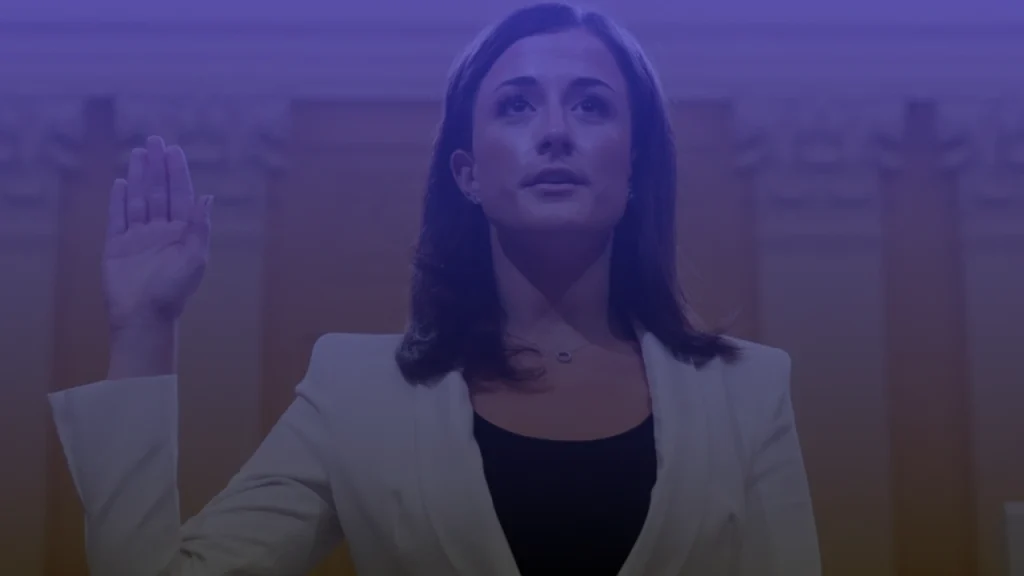
On June 28, 2022, she testified live and under oath. Her account included what she said she had been told about President Trump’s reaction when he was told he could not go to the Capitol, including a claim, relayed to her secondhand, about an incident in the presidential vehicle. People involved publicly disputed that account, and Republican critics have attacked it ever since.
Hutchinson did not testify only once. According to a House Administration subcommittee release, the committee conducted six transcribed interviews of her. Attorney Stefan Passantino represented her in the first three. She then hired new counsel and testified three more times. Judge Kuntz, in the September 24, 2026 order discussed below, cited the fact that she had already given more than 30 hours of sworn testimony to Congress.
Rep. Barry Loudermilk’s House Administration subcommittee issued a report in December 2024 that challenged parts of her account. It also asked the Justice Department to look at Liz Cheney for possible witness tampering, based on Cheney’s contacts with Hutchinson while she was represented by Passantino. No DOJ action against Cheney has been announced. Loudermilk later made a referral aimed at Hutchinson, and The New York Times reported in April 2026 that DOJ had begun looking into whether she lied under oath.
A referral from Congress does not charge anyone with a crime. It asks the Justice Department to look at conduct. Prosecutors alone decide whether to investigate, seek an indictment or decline.
What Federal Laws Apply to Lying to Congress?
Three federal statutes matter most here, and a fourth is relevant to the surrounding allegations.
18 U.S.C. § 1621: Federal Perjury
Section 1621 is the most direct fit. It covers a person who, after taking an oath before a competent tribunal, officer or person, willfully and contrary to that oath states something material that the person does not believe to be true. The penalty is a fine, imprisonment of up to five years, or both. Hutchinson’s committee testimony was sworn, so the oath element would not be the hard part.
18 U.S.C. § 1001: False Statements
Section 1001(a) makes it a crime to knowingly and willfully make a materially false statement in a matter within the jurisdiction of the federal government. It carries up to five years in prison. Congress limited how § 1001 reaches the legislative branch. Under § 1001(c), it applies to administrative matters and to “any investigation or review” conducted under the authority of a congressional committee or subcommittee, consistent with House or Senate rules. A prosecutor could argue that the January 6 committee’s work falls within that language, so a charge under § 1001 is possible. Only an indictment would show which statute DOJ actually chooses.
18 U.S.C. § 1505: Obstruction of Congressional Proceedings
Section 1505 covers corruptly influencing, obstructing or impeding the due and proper exercise of Congress’s power of inquiry. It carries up to five years and is sometimes charged alongside false-statement counts.
18 U.S.C. § 1512(b): Witness Tampering
This statute covers corruptly persuading another person to influence, delay or prevent testimony. It is not aimed at Hutchinson. It is the statute behind the December 2024 referral concerning Liz Cheney, and it carries a maximum of 20 years.
Why 18 U.S.C. § 1623 Does Not Apply
Readers sometimes expect the “false declarations” statute, § 1623, to be the one. It is not. Section 1623 applies only to proceedings before or ancillary to a court or grand jury. Testimony to a congressional committee falls under § 1621 or § 1001 instead. That matters because § 1623 has a more relaxed proof standard than § 1621, and that more relaxed standard would not be available to prosecutors here.
What Would Prosecutors Have to Prove Under 18 U.S.C. § 1621?
Perjury is not the crime of being wrong. The Supreme Court described the offense in United States v. Dunnigan, 507 U.S. 87 (1993), as false testimony on a material matter given with willful intent to deceive, as opposed to confusion, mistake or faulty memory. Applied to Hutchinson, prosecutors would need to establish each of the following.
- A sworn statement. She testified under oath. This element is the easiest.
- Falsity. They must identify the exact statement alleged to be false and prove it was false.
- Knowledge. They must prove she did not believe the statement to be true when she made it.
- Willfulness. They must prove the falsehood was deliberate rather than a mistake, a misunderstanding or a memory lapse.
- Materiality. The statement must have had a natural tendency to influence, or be capable of influencing, the decision of the body it was made to. See Kungys v. United States, 485 U.S. 759 (1988). Under United States v. Gaudin, 515 U.S. 506 (1995), materiality is a question for the jury.
Until an indictment names specific statements, the public cannot judge whether any of these elements can be met.
The Two-Witness Rule in Federal Perjury Cases
A § 1621 conviction traditionally cannot rest on the testimony of a single witness contradicting the defendant. The Supreme Court recognized this common-law requirement in Weiler v. United States, 323 U.S. 606 (1945): the government generally needs more than one witness, or one witness plus independent corroborating evidence. This is a real hurdle in a case built on private conversations in the West Wing, and it is one reason § 1621 perjury cases are harder to win than ordinary false-statement cases. The rule does not apply to § 1623 or § 1001 in the same way, which is why the charging choice matters.
Secondhand Testimony and Perjury
A good deal of Hutchinson’s most dramatic testimony described what other people told her. The legal question in that situation is different from “did the event happen?” If she accurately reported what she was told, the fact that the person who told her was wrong, or that other witnesses disagree with the underlying event, does not make her statement false. Prosecutors would have to show she misreported what she heard, or claimed knowledge she did not have, and that she knew it.
The Literal Truth Defense
Under Bronston v. United States, 409 U.S. 352 (1973), a witness cannot be convicted of perjury for an answer that is literally true, even if it is misleading or evasive. The burden is on the questioner to ask a precise follow-up. Transcripts from six interviews and a public hearing give defense lawyers a lot of text to parse for exactly this kind of argument.
Can Cassidy Hutchinson Still Be Indicted? The Five-Year Statute of Limitations
Yes, potentially. For most non-capital federal offenses, 18 U.S.C. § 3282(a) sets a five-year limit, and perjury and false statements fall under it. The clock runs from each allegedly false statement. For the June 28, 2022 hearing, the five years would run out on June 28, 2027. Her earlier and later transcribed interviews each have their own dates and their own deadlines. As of October 9, 2026, the limitations period has not run on the hearing testimony.
What Did a Federal Judge Say About Hutchinson’s DOJ Investigation?
Hutchinson’s own court filing is what first confirmed the investigation in a public record. In Donald Trump’s defamation case against the BBC, the BBC sought to depose her. On September 24, 2026, U.S. District Judge Jeffrey Kuntz quashed the subpoena, describing her as “presently the subject of a criminal investigation” by the Justice Department. The order noted that Hutchinson said DOJ is investigating her and that she would invoke her Fifth Amendment right if compelled to testify. It also pointed to the more than 30 hours of sworn congressional testimony she had already given, and it left open the possibility that the BBC could seek her testimony again if circumstances change.
The ruling did not find that she lied, and it did not find that she told the truth. It decided only that forcing her to sit for the deposition was not warranted in that case.
How the Fifth Amendment Applies to Cassidy Hutchinson
The Fifth Amendment protects a person from being compelled to give testimony that could incriminate her. Under Hoffman v. United States, 341 U.S. 479 (1951), a witness can invoke the privilege when an answer could furnish a link in the chain of evidence needed to prosecute her. Invoking the privilege is not an admission of guilt, and a criminal jury cannot be told to treat it that way.
The privilege has limits. Prosecutors can compel testimony by granting immunity under 18 U.S.C. § 6002, though a grant of immunity for a person they are investigating for perjury would be unusual. Anything Hutchinson says in any forum while she is under investigation could also be used against her, which is why her lawyers would likely advise her to say as little as possible.
Is the Grand Jury Process Secret?
Largely, yes. Federal Rule of Criminal Procedure 6(e) imposes secrecy on grand jury proceedings for prosecutors, jurors and court personnel, but not on witnesses. That is why so much of what is known comes from reporting by “people familiar with the matter” rather than official statements. An indictment requires the agreement of at least 12 grand jurors under Rule 6(f). Grand juries can also decline to indict, which has happened in several recent high-profile cases.
The Justice Department’s standard practice is to neither confirm nor deny investigations, and it has not publicly confirmed this one.
Could Hutchinson Argue the Prosecution Is Politically Motivated?
If she is indicted, her lawyers could be expected to argue that the case is a product of political retaliation. A claim of selective or vindictive prosecution is legally difficult. In United States v. Armstrong, 517 U.S. 456 (1996), the Supreme Court set a demanding standard for even getting discovery on a selective-prosecution claim, requiring a showing that similarly situated people were not prosecuted. Courts start from a strong presumption that prosecutors act properly. Still, the unusual features of this matter, including the Civil Rights Division’s reported role and the timing following a congressional referral, would likely be litigated.
Her critics make the opposite argument: that false testimony to Congress should be prosecuted no matter who is in office, and that the January 6 committee leaned heavily on secondhand accounts without enough corroboration. The courts, not either side’s talking points, will decide whether the evidence meets the legal standard.
What Happened in Anthony Bobulinski’s Lawsuit Against Cassidy Hutchinson?
This case is separate from the criminal investigation, and it should not be read as evidence about her congressional testimony. Anthony Bobulinski sued Hutchinson in the U.S. District Court for the District of Columbia, alleging defamation, defamation by implication and false-light invasion of privacy over statements in her memoir, Enough (Simon & Schuster, 2023). On March 24, 2026, U.S. District Judge Emmet G. Sullivan granted Hutchinson’s motion to dismiss. The dismissal was without prejudice, which means the court did not rule on whether the statements were true. It held that the claims as pleaded did not satisfy the legal requirements.
For a related look at how courts handle defamation claims arising out of January 6, see our coverage in Ray Epps Vs. Fox News Defamation Lawsuit, The Full Story And Final Outcome.
What Happens If a Grand Jury Indicts Cassidy Hutchinson?
An indictment is a formal accusation. It is not evidence of guilt, and she would be presumed innocent. If charges are filed, the next steps would normally look like this:
- Indictment unsealed or announced, identifying the statute or statutes and the specific statements alleged to be false.
- Initial appearance and arraignment in federal court. Venue for testimony given in Washington would likely be the U.S. District Court for the District of Columbia.
- Pretrial motions, including motions to dismiss for insufficient charging language, for lack of materiality, on limitations grounds, or for selective or vindictive prosecution.
- Discovery, including the committee transcripts and any grand jury material the government must turn over.
- Plea negotiations or trial, where the government must prove every element beyond a reasonable doubt to a unanimous jury.
- Sentencing and appeal, only after a conviction.
She would have the Sixth Amendment right to counsel, the right to confront witnesses and the right not to testify.
Is Cassidy Hutchinson Going to Prison?
Nothing in the public record supports that conclusion. There is no publicly announced indictment, no conviction and no sentence. The maximum under § 1621 is five years, which is a ceiling and not a prediction. An actual sentence would depend on the charges, the verdict and the federal sentencing guidelines.
Why This Case Matters Beyond January 6
Congress depends on sworn testimony to investigate the executive branch, and perjury law is one of the few tools that gives that testimony teeth. But the same law can be used as a weapon if a later administration or a rival political party decides it dislikes what a witness said. The safeguards, including the willfulness requirement, the materiality element, the two-witness rule and the five-year deadline, exist to keep a disputed account from automatically becoming a crime.
For anyone who may testify before Congress, the practical lessons are consistent: consult independent counsel early, understand the difference between “I don’t recall” and a false statement, keep contemporaneous records, and correct mistakes promptly.
What Is Cassidy Hutchinson’s Legal Status as of October 9, 2026?
Cassidy Hutchinson is the subject of a Justice Department criminal investigation, a fact acknowledged in a federal court order on September 24, 2026. DOJ is reportedly seeking an indictment, and a grand jury is reportedly hearing evidence. She has not been charged. The next significant event is not a conviction or a sentence. It is whether prosecutors actually obtain and file an indictment, and what statements it accuses her of making.
Cassidy Hutchinson DOJ Investigation: Frequently Asked Questions
Has Cassidy Hutchinson been indicted?
No. As of October 9, 2026, there is no public indictment. Reporting says DOJ is seeking one and that a grand jury has begun hearing evidence.
What is Cassidy Hutchinson accused of?
She is reportedly being investigated for allegedly making false statements under oath to the House January 6 Select Committee in 2022. No court has found that she did.
Which federal law covers lying to Congress, and does it apply to Hutchinson?
18 U.S.C. § 1621 (perjury) and 18 U.S.C. § 1001 (false statements) are the two main candidates. Section 1623 does not apply because it covers only court and grand jury proceedings.
Does being wrong count as perjury under 18 U.S.C. § 1621?
No. Prosecutors must prove a willful, knowingly false statement on a material matter. A mistake, a misunderstanding or faulty memory is not enough, according to United States v. Dunnigan.
What is the two-witness rule in Hutchinson’s potential perjury case?
Under Weiler v. United States, a § 1621 conviction generally requires more than the contradiction of one witness, meaning a second witness or independent corroborating evidence.
What is the statute of limitations for Hutchinson’s January 6 testimony?
Five years under 18 U.S.C. § 3282(a). For her June 28, 2022 hearing testimony, that period would end on June 28, 2027.
Why did Judge Jeffrey Kuntz quash the BBC subpoena for Cassidy Hutchinson?
In his September 24, 2026 order, Judge Kuntz cited her status as the subject of a DOJ criminal investigation, her stated intent to invoke the Fifth Amendment, and the more than 30 hours of sworn testimony she had already given to Congress.
Can Cassidy Hutchinson plead the Fifth Amendment?
Yes, if answering could incriminate her. Under Hoffman v. United States, the privilege covers answers that could furnish a link in a chain of evidence for prosecution.
Did the Bobulinski ruling find that Cassidy Hutchinson lied to Congress?
No. Judge Emmet Sullivan dismissed Bobulinski v. Hutchinson without prejudice on March 24, 2026, without ruling on whether any statement was true. The case concerned her memoir, not her congressional testimony.
How much prison time could Cassidy Hutchinson face if convicted of perjury?
Up to five years under § 1621, plus a fine of up to $250,000. No conviction or sentence exists.
Who made the congressional referral against Cassidy Hutchinson?
Rep. Barry Loudermilk, who chairs the House Administration subcommittee that issued a December 2024 report disputing parts of her testimony. The referral was reported in 2026 with House Judiciary Chairman Jim Jordan’s support.
Sources and Primary References
Statutes and rules
- 18 U.S.C. § 1001, False statements
- 18 U.S.C. § 1505, Obstruction of proceedings before Congress
- 18 U.S.C. § 1512, Tampering with a witness
- 18 U.S.C. § 1621, Perjury generally
- 18 U.S.C. § 1623, False declarations before grand jury or court
- 18 U.S.C. § 3282, General statute of limitations
- 18 U.S.C. § 3571, Sentence of fine
- 18 U.S.C. § 6002, Immunity generally
- Federal Rule of Criminal Procedure 6, The Grand Jury
Court decisions
- United States v. Dunnigan, 507 U.S. 87 (1993)
- Kungys v. United States, 485 U.S. 759 (1988)
- United States v. Gaudin, 515 U.S. 506 (1995)
- Weiler v. United States, 323 U.S. 606 (1945)
- Bronston v. United States, 409 U.S. 352 (1973)
- Hoffman v. United States, 341 U.S. 479 (1951)
- United States v. Armstrong, 517 U.S. 456 (1996)
- Bobulinski v. Hutchinson, No. 1:25-cv-00771 (D.D.C. Mar. 24, 2026)
Government and congressional records
News reporting
- Punchbowl News, DOJ seeks indictment of Cassidy Hutchinson
- Law&Crime, Judge quashes BBC subpoena of Cassidy Hutchinson
- Newsweek, Ex-Trump White House aide confirms DOJ is investigating her
Disclaimer: This article is for general information only and is not legal advice. An investigation or reported indictment effort is not a finding of guilt, and Cassidy Hutchinson is presumed innocent.
Researched and written by Israr Ahmad, legal content researcher and founder of AllAboutLawyer.com. All facts verified against the U.S. Code (18 U.S.C. §§ 1001, 1505, 1512, 1621, 3282), the January 6 Select Committee Final Report, the court docket in Bobulinski v. Hutchinson, the September 24, 2026 order in the BBC subpoena matter, and current news reporting, as of October 9, 2026. Last Updated: October 9, 2026.
By Israr Ahmad, Legal Content Researcher, AllAboutLawyer.com
About the Author
Israr Ahmad is a legal content researcher with 4+ years of experience covering class action settlements and consumer rights cases. He has researched and published coverage of 2,500+ settlements using verified court records, settlement administrator filings, and government sources. Learn more about Israr.