
The Chosen Lawsuit 2026, Why 16,000 Early Investors Were Bought Out and Are Seeking More Money
A proposed class action claims 5&2 Studios, the company behind the series The Chosen, forced more than 16,000 early investors to sell their shares at $3.75 each, far below what they were worth. The studio denies wrongdoing, and no court has ruled on the claims.
The case is Christopher Garabedian v. 5&2 Studios, Inc., No. 2026-0821-NAC, filed June 23, 2026, in the Delaware Court of Chancery. Garabedian says he invested $300,000 in 2019. He alleges that a March 2026 reverse stock split pushed out thousands of minority shareholders without paying them the fair value of their shares.
The case is back in the news because Season 6 of The Chosen premiered on Amazon Prime Video on November 15, 2026.
Status as of November 16, 2026: the case is pending. No class has been certified, and no settlement, additional payment, or claim form has been announced. Everything below describes allegations and company positions, not proven facts.
The Chosen Lawsuit: Quick Facts
| Detail | Information |
| Case | Garabedian v. 5&2 Studios, Inc. |
| Case number | 2026-0821-NAC |
| Court | Delaware Court of Chancery |
| Filed | June 23, 2026 |
| Plaintiff | Christopher Garabedian |
| Defendant | 5&2 Studios, Inc. |
| Investors affected | More than 16,000, according to the complaint |
| Challenged transaction | March 30, 2026 reverse stock split |
| Buyout price | $3.75 per original share |
| Split ratio | 173,750 old shares for one new share |
| Main legal claim | Delaware General Corporation Law § 155(2) |
| Class certified? | No |
| Settlement or claim form? | None announced |
Why Is The Chosen Being Sued?
The lawsuit is about a corporate restructuring, not the show’s content. Many shareholders bought in during the early crowdfunding that financed the first season, and those purchases gave them real equity in the production company. In March 2026, 5&2 Studios completed a transaction that eliminated its minority Series B shareholders.
Garabedian argues that the people who helped finance the show’s early success were forced out at an unfairly low price. The central question is whether $3.75 per share was the fair value Delaware law requires. The suit does not challenge the show’s religious content or accuse its cast of anything.
How Did the Company Remove More Than 16,000 Shareholders?
It used a reverse stock split, which combines many existing shares into fewer new ones. A typical reverse split might turn ten old shares into one. Here, the ratio was 173,750 old shares for one new share.
Anyone holding fewer than 173,750 shares could not receive a whole new share. Instead, they were paid $3.75 in cash per original share, and their ownership was canceled. The payment was mandatory, so investors could not choose to keep their stake. Garabedian says he held 150,000 shares and was the largest individual Series B investor, yet he was still below the cutoff.
| Shares owned | Cash at $3.75 per share |
| 100 | $375 |
| 500 | $1,875 |
| 1,000 | $3,750 |
| 10,000 | $37,500 |
The company’s March 30, 2026 SEC filing confirms the 1-for-173,750 ratio and the $3.75 price.
Why Did the Studio Want to Go Private?
According to its SEC disclosures, remaining a reporting company was expensive. Although its shares did not trade on a major exchange, the company still had SEC reporting duties. Management estimated that ending them would save roughly $3.5 million to $3.7 million a year before taxes, and said the deal gave holders of thinly traded stock a way to cash out.
Garabedian does not argue that going private is illegal in itself. He challenges the price and the process.
Why Does the Investor Say the Studio Was Undervalued?
The complaint says the company earlier explored a deal with outside investors, and that potential buyers submitted preliminary indications implying a value of roughly $145 million to $150 million. It alleges management then moved away from an outside sale toward a transaction that let insiders keep control, and that the value used for the shareholder cash-out was about $52.9 million.
| Reference point | Amount |
| Earlier preliminary third-party indications (per complaint) | About 145M–150M |
| Implied value in the March 2026 cash-out | About $52.9M |
| Payment per original share | $3.75 |
Does This Prove the Studio Was Worth $150 Million?
No. Those early figures were non-binding, and the complaint itself acknowledges the proposed values changed. An expression of interest is not a closed sale. Valuations also turn on projected cash flow, debt, production costs, and risk. The court has not decided what the company was worth.
Did Executives or Advisers Benefit From the Buyout?
The complaint alleges conflicts of interest. It says about $10.4 million was paid to holders of “phantom units,” an equity-linked compensation arrangement for certain leaders. It also says Goldman Sachs, the financial adviser, had a $2.5 million fee that depended on the reverse split closing, which Garabedian argues compromised its fairness analysis.
These are contested allegations, not findings.
What Did the Company’s Independent Committee Conclude?
5&2 Studios says an independent special committee, advised by legal and financial professionals including Goldman Sachs, reviewed the deal and found $3.75 fair. The proxy statement describes a discounted cash-flow analysis indicating an equity value of about $3.00 to $3.83 per share, with $3.75 near the top of that range.
Garabedian disputes the projections, assumptions, and alleged conflicts behind that analysis. That dispute is likely at the heart of the case.
Why Was the Shareholder Vote Held During Holy Week?
The vote took place on March 30, 2026, the day after Palm Sunday. The complaint says nearly 80% of Series B shareholders did not participate, argues the timing made it hard for many investors to review the proposal, and says too little time passed between final communications and the meeting. It also says insiders controlled about 92% of the voting power, which limited what minority holders could do.
Low turnout and an awkward date do not by themselves make a vote unlawful. The company reported that shareholders approved the transaction, and its SEC filing confirms the outcome.
Related article: Apex Bank Lawsuit 2026, Why Tennessee Senator Kerry Roberts Is Seeking $50 Million
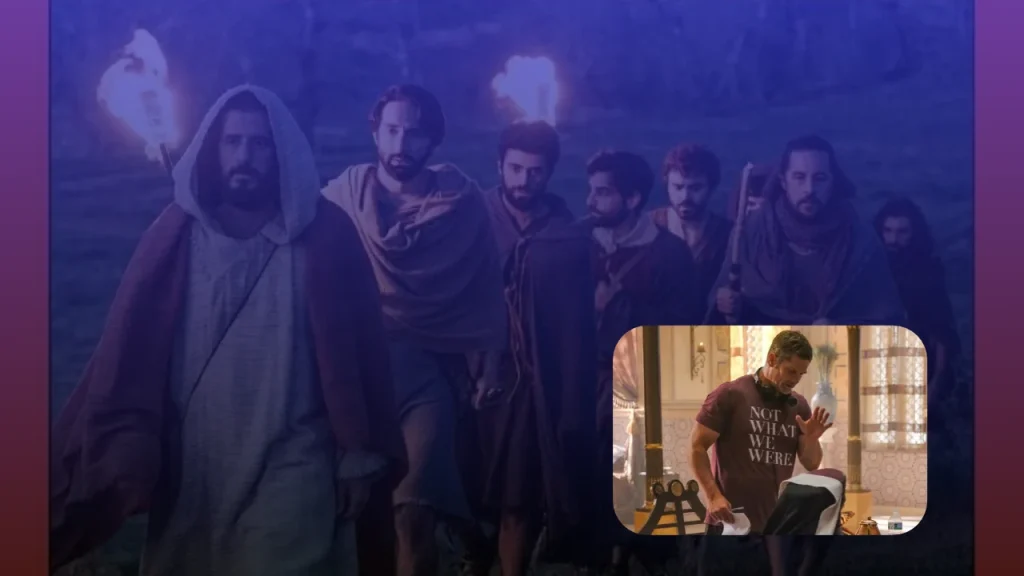
What Has Dallas Jenkins Said?
Jenkins, the creator and director of The Chosen, has rejected the allegations. In a July 2026 public response, he called suggestions of impropriety categorically false and said the company followed its legal and financial obligations.
In a March 24, 2026 shareholder letter, he gave an example: an original $100 investment had already returned a $120 dividend and would receive another $187.50 in the buyout, for $307.50 in total.
Why Would Investors Be Unhappy If They Made Money?
Because the lawsuit is about fair value, not whether anyone lost money. An investor can earn more than they put in and still argue the forced sale price was too low, for instance because of future seasons, licensing, and theatrical releases. The company’s position is that the price was fair and that going private served legitimate business goals.
A profitable investment does not automatically prove a price was fair. But disappointment about missed future profit does not automatically prove a legal violation either.
What Law Is the Studio Accused of Violating?
The verified complaint relies mainly on 8 Del. C. § 155(2). When a corporation does not issue fractional shares, that section lets it pay cash for them, and the cash must reflect the fair value of the fractional interests. Garabedian says 5&2 did not meet that standard.
Two related points help avoid confusion:
- Section 242 governs amendments to a corporation’s certificate of incorporation, which a reverse split requires. Getting shareholder approval for the amendment is a separate question from whether the cash-out price was fair.
- Federal going-private rules also applied. The company filed a Schedule 13E-3 and terminated its SEC reporting registration. But the complaint centers on Delaware law, and this should not be described as a proven federal securities-fraud case.
For a different kind of investor case, compare the AppLovin Securities Class Action, Investors Sue Over AI Growth Claims, which involves federal securities-fraud allegations.
How Does a Class Action Work Here?
The case was filed as a proposed class action under Delaware Court of Chancery Rule 23. Filing it does not create a class. The court must first decide whether the case meets the requirements for class treatment, such as whether the group is large enough, shares common questions, and is fairly represented by the named plaintiff. Until that happens, Garabedian is the only plaintiff, and the other former shareholders are not formally part of the case.
Who Could Be Included in the Proposed Class?
The proposed class concerns former 5&2 Studios shareholders whose shares were eliminated in the March 2026 reverse split. Someone may fall within it if they:
- Owned eligible 5&2 Studios shares before the March 30, 2026 transaction
- Had those shares canceled in the reverse split
- Received cash instead of keeping their ownership
- Are not excluded by any class definition the court eventually approves
Watching the show does not make you eligible. The case concerns equity investors only.
Investing vs. Donating
The Chosen has used more than one financing model. Crowdfunding participants who bought shares became owners. Others gave charitable donations, for example through the Come and See Foundation, which supports the series’ production and distribution. A donation is not automatically an equity investment, and someone who only donated is not necessarily in this class.
Can Investors Get More Money?
Possibly, but nothing has been approved. The plaintiff asks the court to find that $3.75 was below fair value and to award the difference, plus interest and litigation costs. There is no settlement fund, no approved payment amount, and no claim deadline.
Any recovery would depend on the court’s rulings, the final class definition, damages calculations, and how a judgment or settlement is distributed. A settlement can also happen without any finding of wrongdoing.
Is There a Claim Form?
No. Be skeptical of any website or message claiming you can file for extra payment in this case right now. If you were a shareholder, keep your original investment records, ownership statements, notices about the reverse split, and proof of the cash you received. Those documents could matter if the case moves forward.
For contrast, the WEBTOON $10.05M Securities Class Action Settlement, Who Qualifies, How Payments Are Calculated and How to File by December 14, 2026 is an investor case with an actual settlement and claims process. Nothing comparable exists for The Chosen.
Is Dallas Jenkins Personally Being Sued?
The Delaware complaint names 5&2 Studios, Inc. as the defendant. Jenkins appears throughout because of his leadership role and his communications with shareholders, but this is not a personal damages suit against him. The claim is about the company’s statutory duty to pay fair value.
Is This Connected to the Angel Studios Dispute?
No. Angel Studios helped distribute early seasons of the show, and the two sides later fell into a contract and distribution dispute that went to arbitration and ended the distribution agreement. According to Angel Studios’ SEC disclosures, the parties settled their remaining disputes on July 11, 2025. That matter is separate from the 2026 investor class action.
Will the Lawsuit Affect Season 6 or Season 7?
There is no verified evidence that the lawsuit has halted production or distribution. Season 6 began streaming on Prime Video on November 15, 2026, with a theatrical conclusion planned for 2027, and the final season, Season 7, has progressed through production. The case is about ownership and valuation, not the show’s creative or distribution plans.
Timeline
| Date | Development |
| 2019 | Early shareholders invest |
| 2024–2025 | Company explores going-private alternatives |
| December 2025 | Board approves proposed reverse split |
| March 17, 2026 | Definitive proxy statement filed |
| March 24, 2026 | Jenkins sends shareholder letter |
| March 30, 2026 | Shareholders approve the reverse split; minority shares cashed out |
| June 23, 2026 | Garabedian files proposed class action |
| July 2026 | Jenkins publicly denies wrongdoing |
| November 15, 2026 | Season 6 premieres |
What Happens Next?
The court will focus on whether 5&2 Studios met Delaware’s fair-value requirement. That may involve disputes over the financial projections, valuation methods, the sale process, the special committee, and the alleged conflicts. The company may challenge whether the complaint states a valid claim and defend its valuation. Next steps could include rulings on motions, discovery, a class certification decision, settlement talks, or trial. The plaintiff is represented by Bleichmar Fonti & Auld LLP.
For another example of how a pending investor case differs from an available settlement, see Coastal Financial (CCB) Securities Class Action, Lead Plaintiff Deadline Is December 1, 2026 (Not a Settlement).
The Chosen Lawsuit: Frequently Asked Questions
Why is The Chosen being sued in 2026?
An early investor alleges that 5&2 Studios unfairly cashed out more than 16,000 shareholders at $3.75 per share in a March 2026 reverse stock split.
Who filed the lawsuit?
Christopher Garabedian filed the proposed class action on June 23, 2026, in the Delaware Court of Chancery.
How much money did shareholders receive?
$3.75 for each original share that was canceled. Total payments depended on how many shares each person held.
Did investors lose their original money?
Not necessarily. Some received more than they invested. The lawsuit asks whether they were paid the full fair value of their shares.
Is Dallas Jenkins accused of wrongdoing?
The complaint discusses his role in company decisions, but 5&2 Studios is the named defendant. Jenkins denies any impropriety.
Has the studio been found liable?
No. No court has ruled on the claims.
Is there a settlement or claim form?
No. None has been announced, and no claim deadline exists.
Will the lawsuit cancel The Chosen?
There is no indication that it will. Season 6 premiered on November 15, 2026, and the final season is in production.
Can I join the lawsuit?
No class has been certified, so there is nothing to join yet. If you were a shareholder, keep your records and consider speaking with a qualified attorney about your options.
Latest Update: November 16, 2026
The lawsuit remains a dispute about ownership, valuation, and the treatment of minority shareholders. Garabedian says the $3.75 buyout violated Delaware law because the shares were worth substantially more. The studio says the deal was reviewed by an independent committee, fairly priced, and properly approved. No settlement, compensation award, or claim deadline has been announced. Former shareholders should keep their records and follow the Delaware Court of Chancery docket for updates.
Sources and Court Documents
- Garabedian v. 5&2 Studios, Verified Class Action Complaint, June 23, 2026 (PDF)
- Bleichmar Fonti & Auld, Case Information
- 5&2 Studios, SEC Form 8-K confirming the March 30, 2026 reverse split
- 5&2 Studios, Definitive Proxy Statement
- 5&2 Studios, Dallas Jenkins’ March 24, 2026 shareholder letter
- 5&2 Studios, SEC registration termination filing
- Delaware Code Title 8, § 155 (Fractional Shares)
- Delaware Code Title 8, § 242 (Certificate Amendments)
- Angel Studios, 2025 Annual Report (The Chosen arbitration disclosures)
- Amazon, Prime Video November 2026 releases
Source note: The complaint shows what the plaintiff alleges, not what is true. The SEC filings confirm the transaction, the vote, and the company’s valuation disclosures. Case status reflects publicly available materials reviewed through November 16, 2026.
Disclaimer: This article provides general legal information, not legal or investment advice. The lawsuit is a proposed class action, and no court has found 5&2 Studios liable. Former shareholders should consult a qualified attorney about their individual rights.
Last reviewed: November 16, 2026.
Researched by AllAboutLawyer.com, Legal Content Research.
About the Author
Israr Ahmad is a legal content researcher with 4+ years of experience covering class action settlements and consumer rights cases. He has researched and published coverage of 2,500+ settlements using verified court records, settlement administrator filings, and government sources. Learn more about Israr.