
Is the Tesla Roadster Thrust Street Legal? U.S. Laws, Thrusters, Track Rules and What Buyers Need to Know (2026)
The Tesla Roadster Thrust’s street legality has not been confirmed. Tesla calls this version “Race Ready” and says it includes rear-mounted cold-gas thrusters, but it has not publicly established that the final production car will be approved for ordinary public-road use in any state.
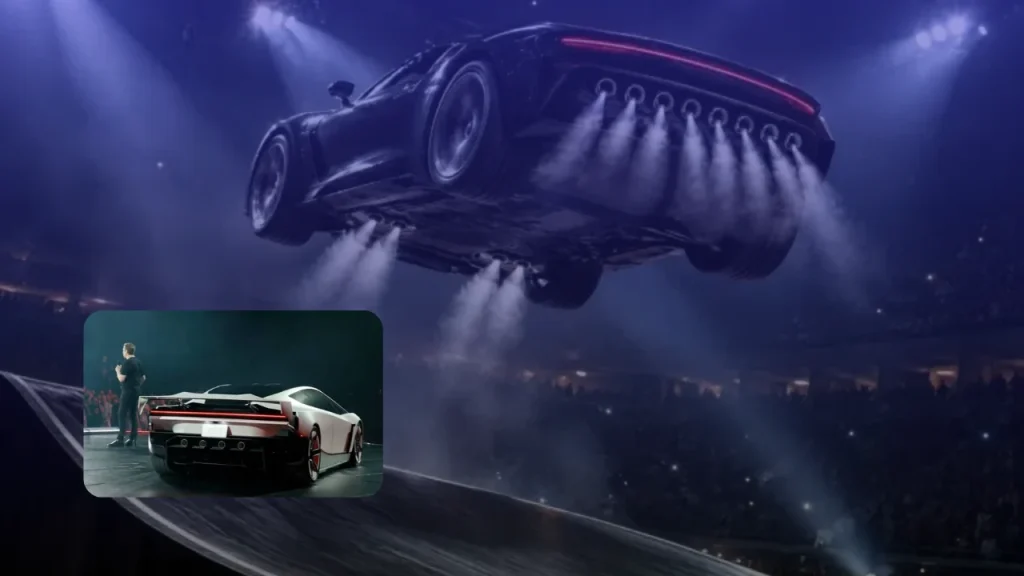
Tesla unveiled three versions of its redesigned Roadster on October 15, 2026: Performance (“Road Ready”), Thrust (“Race Ready”) and Rocket (“Air Ready”). Reporting on Tesla’s reservation page says the Rocket version is not approved for public-road use. The Thrust version’s status is less clear. “Race Ready” is a serious warning sign, but it is a marketing label, not proof that the car is legally barred from every public road.
Paying Tesla’s reservation fee does not establish that the Thrust can be registered or legally driven on public roads. The deciding factors will be the final vehicle’s federal certification, its installed equipment and your state’s registration rules. For the wider picture across all three versions, read our companion guide, Is the Tesla Roadster Street Legal? Federal Rules and Laws in All 50 States (2026).
Quick Facts: Tesla Roadster Thrust Street-Legal Status
| Question | What is known as of October 16, 2026 |
| Manufacturer | Tesla, Inc. |
| Unveiling | October 15, 2026 |
| Tesla’s description | “Race Ready”; described as a limited release |
| Seating | Two seats |
| Special equipment | Rear-mounted cold-gas thrusters, active aerodynamics and a multimode suction system |
| Reported acceleration claim | 0 to 60 mph in under 0.9 seconds (reported, not independently verified) |
| Is Thrust confirmed street legal? | No public confirmation identified |
| Is Thrust explicitly declared not approved for public roads? | No such explicit restriction was verified for Thrust; the Rocket version carries that disclaimer |
| Federal framework | Applicable Federal Motor Vehicle Safety Standards (FMVSS) and manufacturer certification |
| State registration | Depends on the state and the final production vehicle |
| Production target | 2028; Tesla does not guarantee delivery |
| Reported reservation amount | $250,000 for Thrust; a reservation amount, not a confirmed final price |
Tesla’s Roadster reservation page, its U.S. Roadster Reservation Agreement and Reuters’ October 15, 2026, report are the main sources for these facts.
What Makes the Tesla Roadster Thrust Different From the Performance and Rocket Versions?
| Tesla version | Advertised equipment | Road-use description |
| Performance | Active aerodynamics and multimode suction system | “Road Ready” |
| Thrust | Performance equipment plus rear-mounted cold-gas thrusters | “Race Ready”; street legality unconfirmed |
| Rocket | Performance and thruster equipment plus a full flight system | “Air Ready,” invite-only; reported as not approved for public roads |
The Performance version is the one Tesla positions as a road car. Our guide Is the Tesla Roadster Performance Street Legal? What U.S. Drivers Need to Know (2026) covers it in detail. The Thrust version should not inherit Performance’s “road-ready” status, and it should not automatically be treated as identical to Rocket either. Tesla describes Rocket as having a full flight system, while Thrust is described as a two-seat, race-oriented car with acceleration thrusters.
Does the Tesla Roadster Thrust Actually Have Rocket Thrusters?
Yes. Tesla’s published description says the Thrust version includes acceleration thrusters, and the October 2026 demonstration showed a Roadster using cold-gas propulsion hardware developed with SpaceX. Cold-gas thrusters expel stored pressurized gas through nozzles to create thrust, which is different from sending motor torque to the tires. Reporting described the system as using pressurized air and multiple nozzles alongside a separate suction system.
Does “Race Ready” Mean the Tesla Roadster Thrust Is Track-Only?
Not necessarily. “Race Ready” is a product description, not a legal classification. Some versions of high-performance models can be registered for roads, while others are meant only for tracks. Tesla has not clearly confirmed the Thrust version’s final public-road status in the materials reviewed, so it would be premature to say either that every Thrust car will be street legal or that every Thrust car will be track-only.
What Reports Say About Whether the Thrust Version Is Street Legal
Business Insider reported on October 16, 2026, that it was unclear whether the two thruster-equipped versions, Thrust and Rocket, would be street legal, and it contrasted Performance’s “Road Ready” label with Thrust’s “Race Ready” label. The Verge’s event coverage reported that Tesla later acknowledged the demonstrated Roadster would not be road legal, though that passage does not make clear whether it applies only to Thrust or to the demonstration vehicle generally. An Associated Press headline likewise said the Roadster’s thrusters and suction system are “not for public roads yet.”
Those reports are important warnings. They do not establish a permanent, nationwide ban on every possible Thrust configuration. The accurate position is that the Thrust version’s public-road status is unresolved, and the demonstration car may differ from what Tesla eventually delivers.
Federal Laws That Apply to the Tesla Roadster Thrust
49 U.S.C. § 30112: The Ban on Selling Noncompliant New Vehicles
Under 49 U.S.C. § 30112, and subject to statutory exceptions, a person may not manufacture for sale, sell, offer for sale, introduce into interstate commerce or import a new motor vehicle that does not comply with applicable federal motor vehicle safety standards. The Thrust is a new configuration with unusual equipment, so the question is whether the finished production car complies. Tesla cannot establish that by calling it a supercar, demonstrating its acceleration or taking reservations.
49 U.S.C. § 30115 and 49 C.F.R. Part 567: Manufacturer Certification
Section 30115 requires the manufacturer to certify compliance with the applicable standards, and 49 C.F.R. Part 567 requires a permanent certification label stating that the vehicle conforms to the FMVSS in effect on its manufacture date. NHTSA’s certification guidance explains the label.
NHTSA does not individually pre-approve each new passenger car. The U.S. system relies on manufacturer self-certification, with NHTSA investigating and enforcing. A buyer should look at the actual production vehicle’s certification documents, not wait for a document called an “NHTSA street-legal approval.”
49 C.F.R. Part 571: Which FMVSS Could Matter for a Thruster-Equipped Roadster?
The FMVSS are compiled in 49 C.F.R. Part 571. They cover subjects such as lighting (FMVSS 108), rear visibility and mirrors (FMVSS 111), brakes (FMVSS 135), occupant crash protection (FMVSS 208), side impact (FMVSS 214), roof crush (FMVSS 216), glazing (FMVSS 205), tires (FMVSS 109 and 139), low-speed pedestrian sound for electric vehicles (FMVSS 141) and electric-vehicle electrical safety (FMVSS 305). An electric powertrain does not exempt the Thrust from these, and neither does a track-oriented design.
I identified no federal standard written specifically for cold-gas thrusters on a passenger car. That does not make them automatically legal. It means the analysis runs through the standards that apply to the finished vehicle, NHTSA’s authority over safety defects, and state equipment and traffic law.
Federal Exemptions Under 49 U.S.C. §§ 30113 and 30114 and 49 C.F.R. Part 555
A manufacturer that cannot meet a standard can ask NHTSA for a temporary exemption under 49 U.S.C. § 30113 and 49 C.F.R. Part 555. By statute these cover no more than 2,500 vehicles in any 12-month period, last for a limited term and require the applicant to meet specific criteria. Section 30114 allows limited exemptions for vehicles used for show or display, which are not general permission to drive a nonconforming car. The public record reviewed does not show that Tesla has sought either kind for the Thrust.
49 U.S.C. § 30122: Making Safety Systems Inoperative
Under 49 U.S.C. § 30122, certain businesses may not knowingly make inoperative a safety device or element installed in compliance with a federal standard. This provision can matter if a shop or owner modifies a certified car. It is one reason removing or altering hardware is not a guaranteed legal fix.
Recalls and Penalties: 49 U.S.C. §§ 30118–30120, 30165 and 30166
Once cars are on the road, 49 U.S.C. §§ 30118–30120 require manufacturers to notify owners and NHTSA of safety defects and noncompliance and to remedy them. NHTSA investigates under § 30166, and § 30165 provides civil penalties for violations, including selling a noncompliant new vehicle. Penalty amounts are adjusted periodically, so check the current figure with NHTSA.
Do DOT Hazardous Materials Rules Apply to the Thruster Gas Tank?
The U.S. Department of Transportation’s Hazardous Materials Regulations (49 C.F.R. Parts 171–180) govern the transportation of compressed gas in commerce, including cylinder requirements. Whether and how they apply to a gas tank built into a car and used by an onboard system is not established in the reporting reviewed. That is a question for Tesla’s compliance documentation, not something to assume either way.
Do Cold-Gas Thrusters Make the Tesla Roadster Thrust Illegal on Public Roads?
Not under a single universal rule just because a car has thrusters. The answer depends on the design, how the system operates, the manufacturer’s certification and state requirements. Key questions are:
- Can the thrusters activate while driving on public roads? Tesla has not published enough detail on operating limits for the Thrust.
- Could the system create a hazard for nearby traffic or pedestrians? Regulators weigh the risk to occupants and other road users, and the outcome depends on the final engineering.
- Will Tesla certify the complete vehicle with the thrusters installed? The car must be assessed as sold, not as a version without the acceleration system.
- Will a state DMV accept it? A federally certified car still has to meet state registration and road-use rules.
There is no verified blanket federal rule saying every car with compressed-gas thrusters is forbidden on public roads. There is also no verified finding that the Thrust’s complete system will satisfy every requirement.
Does the Under-0.9-Second Acceleration Claim Make the Thrust Illegal?
No. A sub-0.9-second 0-to-60 mph claim is a performance figure, not a legal classification. Very quick acceleration does not disqualify an otherwise compliant car, but no driver can cite a car’s capabilities to justify speeding, reckless driving or unsafe maneuvers.
Could Tesla Make the Roadster Thrust Street Legal by Changing the Design or Locking the Thrusters?
Potentially, depending on what changes are needed and whether the finished car can meet every requirement. Tesla could limit thruster functions, revise equipment or offer different production configurations, but those are possibilities, not announced plans.
Some commentary has suggested Tesla could use software geofencing to disable the thrusters on public roads. No Tesla statement in the materials reviewed confirms that. Even if Tesla did build such a lock, it would not by itself show that the car is certified for roads. The legal question is the vehicle’s configuration, not only whether a driver activates a feature.
Is the Tesla Roadster Thrust Street Legal With the Thrusters Turned Off?
Not enough information is public to say. Switching a feature off does not automatically make a nonconforming car compliant. Unless Tesla provides written confirmation that a road-mode configuration is certified and registrable, do not assume a dashboard setting changes the car’s legal status.
Could an Owner Remove the Thrusters to Make the Thrust Street Legal?
Removing equipment after purchase is not a guaranteed workaround. It can change how the car is classified, whether its certification still applies, whether § 30122 is implicated and whether the car meets state equipment and registration rules. Get written guidance from Tesla, a qualified compliance professional and your state agency before altering a propulsion system.
State Laws: Registering and Driving the Tesla Roadster Thrust in California, Texas and Other States
No reliable state-by-state yes-or-no chart exists for the Thrust because the final production specification and certification are unconfirmed. Public-road use raises two questions: does the vehicle meet the federal rules that apply to its manufacture and sale, and can this vehicle be titled, registered, insured and operated under your state’s law?
Can the Tesla Roadster Thrust Be Registered in California?
Not established. California requires registration for vehicles driven on public roads (Vehicle Code § 4000) and requires financial responsibility under Vehicle Code § 16056, which as of this writing sets minimum liability limits of $30,000 per person, $60,000 per accident and $15,000 for property damage. Vehicle Code § 24002 lets officers cite vehicles that are unsafe or lack required equipment, § 23103 covers reckless driving and § 23109 covers speed contests and exhibitions of speed.
California exempts fully electric vehicles from Smog Check, which does not resolve questions about thruster equipment. California also has a registration process for specially constructed vehicles, but a factory-built Tesla should not be assumed to qualify as one. See the California DMV vehicle registration page.
Can the Tesla Roadster Thrust Be Registered in Texas?
Not established. Texas eliminated its statewide safety inspection for ordinary noncommercial vehicles on January 1, 2025, under House Bill 3297, but that does not give a new vehicle automatic permission to operate on public roads. Texas Transportation Code Chapter 547 sets equipment requirements, § 601.051 requires financial responsibility (as of this writing minimum liability limits of $30,000 per person, $60,000 per accident and $25,000 for property damage), § 545.401 covers reckless driving and § 545.420 covers racing on a highway. Texas also has an assembled-vehicle process under Transportation Code Chapter 731, and the Texas DMV says certain track-only or off-highway designs cannot be titled that way. Do not treat it as a workaround for a factory-built car that is not approved for roads.
What About the Other 48 States?
Registration, insurance, equipment, safety inspection and emissions rules vary by state, and some by county. Eligibility in California or Texas says nothing about another state. See our 50-state Tesla Roadster guide for the inspection framework, and for a related look at a high-performance car that straddles road and track use, our article Tesla Recalls 20,349 Model 3 and Model Y Vehicles Over Headlight Brightness, What Owners Should Know shows how federal safety-compliance problems surface after a Tesla reaches owners.
Can You Drive the Tesla Roadster Thrust on Public Roads if It Has a License Plate?
A plate is not a guarantee that every feature of a vehicle is legal or that it meets all road-use rules. A registered car can still face restrictions on equipment, modifications or operation, and a plate does not prove the thrusters were part of Tesla’s certified configuration. If Tesla sells the Thrust as a track-only car, obtaining a plate through a different route would not necessarily authorize road use.
Does the FAA Consider the Tesla Roadster Thrust an Aircraft?
Business Insider reported on October 16, 2026, that an FAA spokesperson said the demonstrated Tesla vehicle did not meet the FAA’s definition of an aircraft. Under 14 C.F.R. § 1.1, an aircraft is a device used or intended to be used for flight. That answers the aviation question only. The Thrust version is described as race ready with acceleration thrusters, not as the Rocket version’s full flight system, and a car that is not an aircraft must still meet motor-vehicle safety and registration requirements for road use.
Can You Drive the Tesla Roadster Thrust on a Public Highway if You Never Use the Thrusters?
Do not assume you can. A track-oriented car may lack required equipment or certification, or carry a manufacturer restriction on road use, and keeping the thrusters off or driving slowly does not fix that. The first question is whether the production configuration qualifies for lawful public-road use. Until Tesla confirms a road-legal Thrust, do not presume the car can be driven on public streets.
Can You Drive the Tesla Roadster Thrust on a Racetrack?
Possibly, but “Race Ready” does not guarantee access to every circuit. Tracks and event organizers set their own rules on safety equipment, technical inspection, driver qualifications, operating modes and propulsion systems, and a thruster-equipped car may raise extra questions. Confirm with the venue before you transport the car.
A track’s approval does not establish federal compliance or state registration eligibility, and private property is not a blanket exemption from applicable laws. Track access and public-road legality are different permissions.
Will Insurance Companies Cover the Tesla Roadster Thrust?
That cannot be guaranteed in advance for a car whose specification and road-use status are unsettled. Before paying for a Thrust, ask insurers to assess the exact configuration:
- Can you insure it for public-road use? Describe the thrusters accurately and supply Tesla’s documentation when available.
- Are factory-installed systems covered? Confirm coverage for the actual configuration, not a different trim.
- Is track use covered? Road policies often restrict or exclude track events.
- How will the car’s value be set? Ask how a rare vehicle with an unusual final specification would be valued.
- What if the car cannot be registered? Review the policy terms before committing.
Insurance does not make a prohibited vehicle legal, and it does not replace federal compliance or state registration.
What Tesla’s Roadster Reservation Agreement Means for Thrust Buyers
Tesla’s U.S. Roadster Reservation Agreement, version dated October 15, 2026, says:
- The vehicle is under development, and Tesla cannot guarantee when, or whether, it will be delivered.
- A reservation secures approximate priority for configuration. It is not itself a completed purchase or order.
- Any price shown is an estimate until the buyer configures the car and signs the purchase agreement, which sets the final configuration, price, taxes and fees.
- The reservation can be cancelled before configuration is completed, with the reservation payment refunded under the agreement’s terms.
- Tesla does not hold reservation payments in escrow or a trust account and does not pay interest on them.
Reports identify a $250,000 reservation amount for the Thrust version. That is a reservation figure, not a confirmed final price. Consumer-protection law may also apply to how deposits and reservations are marketed and handled, including Section 5 of the Federal Trade Commission Act (15 U.S.C. § 45) and your state’s consumer-protection statute. Once a car is delivered, warranty rights can arise under the Magnuson-Moss Warranty Act (15 U.S.C. § 2301 et seq.) and state lemon laws, such as California’s Song-Beverly Consumer Warranty Act (Civil Code § 1790 et seq.) and Texas’s lemon law (Occupations Code Chapter 2301, Subchapter M).
What if Tesla Later Says the Thrust Is Track-Only?
That could materially affect a buyer who reserved it expecting a road car. Before completing a purchase, ask Tesla to state any restrictions in writing, review the final configuration and purchase terms, and decide whether the car still meets your needs if public-road registration is unavailable.
What Should Buyers Verify Before Taking Delivery of a Tesla Roadster Thrust?
- Does Tesla intend this exact Thrust configuration for public-road use, and has it said so in writing?
- Are there written race-only or public-road restrictions?
- Does the final car carry the federal certification label and documentation?
- Do the VIN, title and registration paperwork check out?
- What do your state’s equipment, inspection and financial-responsibility rules require?
- Will your state agency register this exact configuration?
- Has an insurer confirmed coverage for the actual vehicle and intended use?
- If track use is the goal, has the venue confirmed it will accept the car?
- Have you reviewed the final price, delivery terms and cancellation provisions?
Checking an item means you reviewed it, not that Tesla or an agency guaranteed approval. If Tesla cannot give a clear answer about public-road status, do not rely on marketing terms as a substitute.
What Happens If You Drive a Non-Street-Legal Tesla Roadster Thrust?
Consequences depend on the law and facts. They can include:
- Registration denial: a state may refuse to register a vehicle that does not meet its rules.
- Equipment and traffic citations: for example under California Vehicle Code §§ 24002 and 23103 or Texas Transportation Code §§ 545.401 and 545.420.
- Insurance disputes: a claim may be contested if the car differs from what the insurer agreed to cover or the policy excludes the use.
- Federal compliance exposure: selling or importing a noncompliant new vehicle raises federal issues, including civil penalties under 49 U.S.C. § 30165, separate from an ordinary registration problem.
- Track and property restrictions: venues set their own rules.
Not every irregularity is a federal crime, and a license plate or insurance policy does not override a restriction on the configuration.
Key Dates in the Tesla Roadster Thrust Street-Legality Question
| Date | Development |
| November 2017 | Tesla first showed a second-generation Roadster concept. |
| October 15, 2026 | Tesla unveiled the redesigned Roadster in Performance, Thrust and Rocket versions and issued its U.S. Roadster Reservation Agreement. |
| October 16, 2026 | Reports on the FAA statement and on questions over the thruster-equipped versions’ road legality; research date for this article. |
| 2028 | Reported production target; delivery is not guaranteed. |
Frequently Asked Questions About Tesla Roadster Thrust Street Legality
Is the Tesla Roadster Thrust Street Legal in the United States?
Not confirmed as of October 16, 2026. Tesla calls it “Race Ready,” and reporting says the legality of the thruster-equipped versions is unclear. Do not assume it is street legal.
Is the Tesla Roadster Thrust Illegal in All 50 States?
That has not been established. The available information does not support a definitive claim that every state bans the Thrust. Its eligibility depends on the final production configuration and the laws that apply.
Is the Tesla Roadster Thrust Track-Only?
It is described as race ready, but that phrase does not conclusively make it track-only. Tesla needs to clarify the production version’s road-use status.
What Is the Difference Between the Tesla Roadster Thrust and Performance Versions?
Performance is “Road Ready.” Thrust adds rear-mounted cold-gas thrusters and is “Race Ready.” One version’s road-use status cannot be applied automatically to the other.
Is the Tesla Roadster Thrust the Same as the Rocket Version?
No. Rocket is the “Air Ready,” invite-only version with a full flight system, and its listing says it is not approved for public roads. That disclaimer should not be attributed to every Thrust configuration.
Does “Race Ready” Mean the Tesla Roadster Thrust Can Never Be Street Legal?
Not necessarily. It signals race-oriented positioning, but it is not a complete legal determination. Final specifications, certification and any manufacturer restrictions control.
Can You Register the Tesla Roadster Thrust in California?
Not established. California’s title, registration and equipment rules apply alongside federal compliance, and the electric-vehicle Smog Check exemption does not settle overall legality.
Can You Register the Tesla Roadster Thrust in Texas?
It cannot be guaranteed. Ending the statewide safety inspection on January 1, 2025, does not approve a vehicle whose public-road eligibility is unestablished.
Does the FAA Classify the Tesla Roadster Thrust as an Aircraft?
Business Insider reported that an FAA spokesperson said the demonstrated vehicle did not meet the FAA’s definition of an aircraft. That does not decide road legality.
Can You Drive the Thrust on Public Roads if You Switch Off the Thrusters?
Do not assume so. Disabling a feature does not automatically make a car compliant, and no verified Tesla instruction says it would.
Can You Drive the Tesla Roadster Thrust on a Racetrack?
Only if the vehicle meets the facility’s rules and other applicable requirements. “Race Ready” does not guarantee access to every track.
Does Insurance Make the Tesla Roadster Thrust Street Legal?
No. Insurance can satisfy financial-responsibility rules but does not replace federal compliance, state registration or required equipment.
When Will the Tesla Roadster Thrust Enter Production?
Tesla has indicated a 2028 target, but its reservation agreement says delivery timing is not guaranteed.
Is the $250,000 Reservation the Final Price of the Tesla Roadster Thrust?
No. It is a reported reservation amount, and Tesla’s agreement says the final price is confirmed after configuration.
Conclusion: Is the Tesla Roadster Thrust Street Legal?
As of October 16, 2026, the Tesla Roadster Thrust’s street legality remains unconfirmed. Tesla calls it “Race Ready” and equips it with rear-mounted cold-gas thrusters, which sets it apart from the “Road Ready” Performance version, and post-unveiling reporting has raised specific doubts about the thruster-equipped versions. That does not prove a nationwide ban on every possible Thrust configuration, but it is enough reason not to assume the car can be driven on public streets because Tesla is taking reservations.
The question that matters is whether Tesla will deliver a Thrust that is documented as eligible for public-road use in the state where you plan to drive it. Until the final vehicle’s documentation answers that, treat street legality as unresolved and verify it before completing a purchase.
Official Laws and Sources for the Tesla Roadster Thrust Street-Legality Article
- Tesla: Roadster reservation and variant descriptions.
- Tesla: U.S. Roadster Reservation Agreement, version October 15, 2026.
- 49 U.S.C. § 30112: Prohibitions on manufacturing, selling and importing noncomplying motor vehicles.
- 49 U.S.C. § 30115: Certification of compliance with motor vehicle safety standards.
- U.S. Code and C.F.R.: 49 U.S.C. §§ 30113, 30114, 30118–30120, 30122, 30165 and 30166; 49 C.F.R. Parts 171–180, 555, 567 and 571; 14 C.F.R. § 1.1; 15 U.S.C. §§ 45 and 2301.
- NHTSA: Importation and Certification FAQs.
- California DMV: Vehicle Registration; California Vehicle Code §§ 4000, 16056, 23103, 23109 and 24002; Civil Code § 1790 et seq.
- Texas: Transportation Code Chapters 547 and 731 and §§ 545.401, 545.420 and 601.051; House Bill 3297; Occupations Code Chapter 2301.
- Reuters: Tesla’s new Roadster turns in air with SpaceX thrusters, won’t land until 2028, October 15, 2026.
- Business Insider: Tesla Roadster road-legality and reservation disclaimers, October 16, 2026.
- The Verge: “The Tesla Roadster Flew, Drove Upside Down, and Hit 60 mph in Under a Second,” and Associated Press: “Tesla’s Roadster Gets Thrusters and a Suction System, but It’s Not for Public Roads Yet.”
- AllAboutLawyer.com: Is the Tesla Roadster Street Legal? Federal Rules and Laws in All 50 States (2026); Is the Tesla Roadster Performance Street Legal? What U.S. Drivers Need to Know (2026); Tesla Recalls 20,349 Model 3 and Model Y Vehicles Over Headlight Brightness, What Owners Should Know.
This article is for general information only and is not legal advice. Tesla’s next-generation Roadster remains under development, and the Thrust version’s street legality has not been conclusively established. AllAboutLawyer.com is a legal information website, not a law firm.
Researched and written by Israr Ahmad, legal content researcher and founder of AllAboutLawyer.com. All facts verified against Tesla’s Roadster page and reservation agreement, the U.S. Code and Code of Federal Regulations, NHTSA guidance, California and Texas vehicle statutes, and Reuters, Business Insider, The Verge and Associated Press reporting, as of October 16, 2026. Last Updated: October 16, 2026.
About the Author
Israr Ahmad is a legal content researcher with 4+ years of experience covering class action settlements and consumer rights cases. He has researched and published coverage of 2,500+ settlements using verified court records, settlement administrator filings, and government sources. Learn more about Israr.