
Is the Tesla Roadster Performance Street Legal? What U.S. Drivers Need to Know (2026)
Tesla unveiled its redesigned Roadster on October 15, 2026, and presented it in three configurations: Performance, Thrust and Rocket. Tesla describes the Performance version as “Road Ready.” It has indicated a production target of 2028, and its reservation agreement says delivery timing is not guaranteed.
So, is the Tesla Roadster Performance street legal? Not yet conclusively confirmed for a final production vehicle. “Road Ready” tells you what Tesla intends. It does not prove that a delivered car has completed every federal safety-compliance step or that your state will register it.
This guide covers the Performance version specifically. For the full picture across all three versions and a state-by-state inspection table, read our companion guide, Is the Tesla Roadster Street Legal? Federal Rules and Laws in All 50 States (2026).
Quick Answer: Is the Tesla Roadster Performance Street Legal?
| Question | What is known as of October 16, 2026 |
| Does Tesla call the Performance version road-ready? | Yes. |
| Does that prove final federal safety compliance? | No. The label alone does not establish completed compliance for a production vehicle. |
| Does Performance have the same flight system as Rocket? | No. Tesla presents Performance separately from the thruster-equipped Rocket configuration. |
| Can it be registered in all 50 states today? | There is no verified basis to promise that for a production vehicle that has not reached general consumer delivery. |
| When is production expected? | Tesla has indicated 2028, but its reservation terms say delivery timing is not guaranteed. |
| Should buyers reserve on the assumption that street legality is guaranteed? | No. Confirm the exact configuration and road-use eligibility before completing any purchase. |
The central issue is not whether the car is fast enough, electric enough or marketed as a street car. It is whether the specific production vehicle delivered to a buyer meets the requirements for lawful public-road use.
What Tesla Announced About the Roadster Performance
The Performance version is the entry-level configuration of the redesigned Roadster, and Tesla presented it separately from the Thrust and Rocket versions. Reporting after the event describes a two-passenger car with active aerodynamics and a multimode suction system meant to improve performance on and off the track.
The figures below are reported specifications or targets, not measurements of a finished production vehicle.
| Feature | Published information |
| Vehicle type | High-performance, all-electric sports car |
| Seating | Two passengers |
| Tesla’s label | “Road Ready” |
| Aerodynamics | Active aerodynamic components |
| Additional system | Multimode suction system |
| Claimed acceleration | Under 1.6 seconds from 0 to 60 mph, as reported after the unveiling |
| Range | More than 300 miles, reported as a target |
| Production target | 2028 |
| Final production certification | Not established by available public information |
Separate reporting has cited a faster 0-to-60 figure for a higher-performance configuration, so do not carry a number from one version to another. Tesla’s reservation agreement says the vehicle remains under development and that its final configuration, price and delivery timing are not yet guaranteed.
Performance (“Road Ready”), Thrust (“Race Ready”) and Rocket (“Air Ready”)
- Performance: described as Road Ready. It is the version most relevant to someone who wants a road-going electric sports car, though its final compliance still has to be confirmed.
- Thrust: described as Race Ready, with rear-mounted cold-gas thrusters and the suction system. Its road-use status cannot be assumed to match Performance just because the models share a name.
- Rocket: described as Air Ready. Tesla’s listing says this invite-only version has a full flight system and is not approved for public-road use.
The Rocket disclaimer does not prove Performance has completed certification, and it does not prove Performance cannot qualify. Each version has to be judged on its own documentation.
Does “Road Ready” Mean the Tesla Roadster Performance Is Legally Approved?
No. Three separate ideas are being blurred together:
- A marketing description. Tesla is presenting Performance as suitable for road use.
- Federal vehicle compliance. The manufacturer must satisfy the applicable Federal Motor Vehicle Safety Standards (FMVSS) for the finished vehicle.
- State road-use eligibility. The vehicle must qualify for title, registration, insurance or financial-responsibility, and equipment requirements where it will be driven.
A car can have headlights, mirrors, brakes and seat belts and still lack the manufacturer’s certified compliance with every standard. Likewise, a state registration document does not exempt a vehicle from federal requirements.
The United States generally uses manufacturer self-certification for new passenger vehicles rather than government preapproval. NHTSA enforces the standards, investigates safety issues and can test vehicles, but it does not issue a general “street-legal certificate” for each new model.
What remains unresolved: the public record does not show that the final production Roadster Performance has completed every required compliance step. That is why “not yet conclusively confirmed” is more accurate than an unconditional yes.
Federal Laws That Apply to the Tesla Roadster Performance
49 U.S.C. § 30112: The Ban on Selling Noncompliant New Vehicles
The core federal law is the National Traffic and Motor Vehicle Safety Act, codified in Chapter 301 of Title 49 of the U.S. Code. Under 49 U.S.C. § 30112, and subject to statutory exceptions, a person may not manufacture for sale, sell, offer for sale, introduce into interstate commerce or import a new motor vehicle that does not comply with applicable federal motor vehicle safety standards.
For the Performance version, that means Tesla cannot establish compliance by calling the car a high-performance road vehicle. The finished vehicle must satisfy the standards that apply to its design and classification, or fit within a valid statutory exception.
49 U.S.C. § 30115 and 49 C.F.R. Part 567: The Certification Label
Section 30115 requires the manufacturer to certify that the vehicle complies with the applicable standards. 49 C.F.R. Part 567 sets out the permanent label, which generally identifies the manufacturer, the date of manufacture and a statement of conformity with applicable FMVSS. On a passenger car it is normally found near the driver’s seating position, such as on the door pillar or door edge.
When a production Roadster reaches a buyer, the actual label and manufacturer documentation will be worth far more than demonstration footage or promotional claims.
49 C.F.R. Part 571: The FMVSS That a Two-Seat Electric Sports Car Must Meet
The FMVSS are compiled in 49 C.F.R. Part 571. Which ones apply depends on the vehicle’s class, design and equipment. For a two-seat electric sports car the relevant subjects typically include:
- FMVSS 108 (lamps and reflective devices): headlamps, taillamps, turn signals and reflectors.
- FMVSS 111 (rear visibility): mirrors and other required visibility equipment.
- FMVSS 135 (light vehicle brake systems): stopping performance and brake system requirements.
- FMVSS 126 (electronic stability control) and FMVSS 138 (tire pressure monitoring).
- FMVSS 205 (glazing materials): windshield and window impact resistance and light transmission.
- FMVSS 208 (occupant crash protection), FMVSS 214 (side impact) and FMVSS 216 (roof crush resistance).
- FMVSS 141 (minimum sound requirements for hybrid and electric vehicles): requires quiet vehicles to emit sound at low speeds so pedestrians can detect them.
- FMVSS 305 (electric-powered vehicles): electrolyte spillage and electrical shock protection after a crash.
- FMVSS 109 and 139 (passenger-car tires): tire performance requirements.
NHTSA has also adopted an automatic emergency braking standard, FMVSS 127, with a compliance date reported as September 2029, so it may or may not apply to a car first built in 2028. Check its current status before relying on that date.
None of these standards bans a car for being electric, extremely fast or two-seat. The question is whether the completed vehicle meets the ones that apply to it.
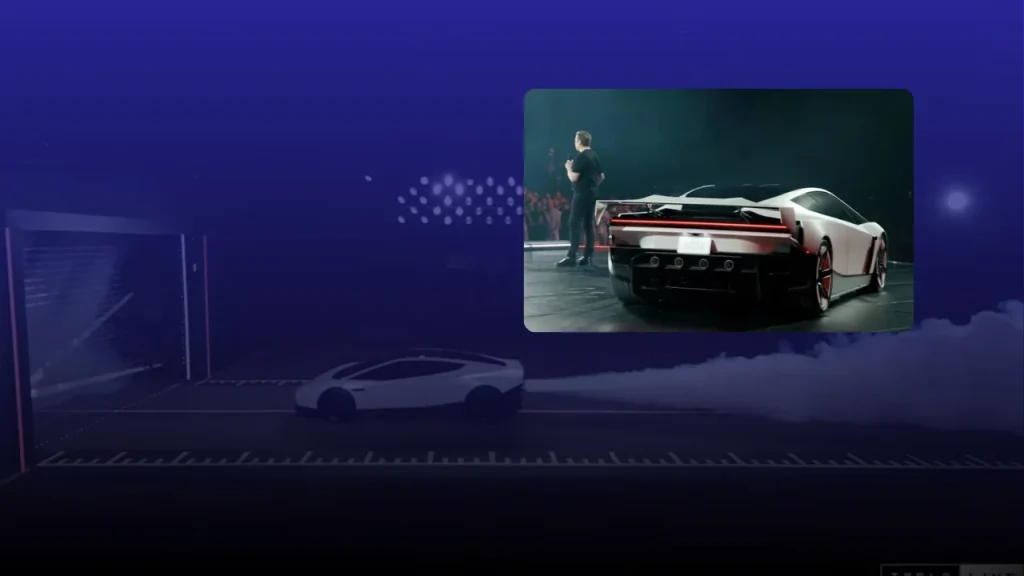
Mirrors and Camera-Based Systems Under FMVSS 111
Concept and prototype cars often show slim camera stalks instead of mirrors. Under FMVSS 111, passenger cars must carry the required mirrors, and a camera-only substitute would need either a change to the federal rule or an NHTSA exemption. Tesla has not published how the final Performance version will handle this in the reporting reviewed, so it is a question worth asking before delivery.
Federal Exemptions Under 49 U.S.C. § 30113 and 49 C.F.R. Part 555
A manufacturer that cannot meet a particular standard can apply to NHTSA for a temporary exemption under 49 U.S.C. § 30113 and 49 C.F.R. Part 555. These are limited. The statute caps them at 2,500 vehicles in any 12-month period, they last for a limited term, and the applicant has to meet specific criteria. The public record reviewed does not show that Tesla has sought one for any Roadster configuration.
EPA Requirements for a Battery-Electric Vehicle
A battery-electric car has no tailpipe, but it is not outside federal environmental rules. The Clean Air Act (42 U.S.C. § 7522) prohibits selling new vehicles that lack the required EPA certification, and EPA’s fuel economy labeling rules in 40 C.F.R. Part 600 apply to electric vehicles too. Electric propulsion is not an exemption from vehicle-safety rules or federal certification.
Federal Recall and Defect Obligations After Delivery
Once vehicles are on the road, 49 U.S.C. §§ 30118–30120 require manufacturers to notify owners and NHTSA of safety defects and noncompliance and to remedy them, and 49 C.F.R. Part 573 sets the reporting rules. A buyer’s rights after delivery are tied to the vehicle’s VIN, which follows the standards in 49 C.F.R. Part 565.
Does the Roadster Performance’s Suction System Affect Street Legality?
It could matter for compliance, but its presence does not make the car illegal. There is no general rule that a vehicle with a fan, active aerodynamic parts or an unusual downforce system is barred from public roads. The finished vehicle has to meet the requirements that apply to it. Questions worth asking include:
- Does the final system comply with applicable federal standards?
- Are its components safely installed and adequately protected?
- Do any moving or projecting parts create equipment-compliance issues under state law?
- Can the car operate safely in its road-going modes?
- Do the tires, brakes, steering and other systems meet the standards for the finished car?
Those answers come from Tesla’s compliance documentation, not from public descriptions.
Does Track Capability Prove the Roadster Performance Is Road Legal?
No. Racing at a track demonstrates neither federal certification nor state registration eligibility. Tracks can admit cars that could never be registered for public roads, and the Performance version’s “Road Ready” description should not be confused with the “Race Ready” label on the Thrust model.
Did the FAA Rule on the Tesla Roadster?
Business Insider reported on October 16, 2026, that the Federal Aviation Administration said the Tesla vehicle did not meet its definition of an aircraft. Under 14 C.F.R. § 1.1, an aircraft is a device used or intended to be used for flight. That statement answers the aviation question only. It is not approval to drive any version on public roads, and the Rocket’s flight-style demonstration is not a shortcut for judging Performance.
Tires, Brakes and Performance Hardware on a Street-Legal Tesla Roadster
High-performance hardware is legal on public roads when it meets the standards that apply to it. For the Performance version, the relevant points are:
| Component | Legal position | What has to be true |
| High-performance brakes | Legal | Must meet FMVSS 135 stopping-distance and system requirements. |
| Ultra-high-performance tires | Legal | Must meet FMVSS 109 or 139 and carry the DOT marking and tire identification number required by 49 C.F.R. Part 574. |
| Active aerodynamic parts | Generally legal | The finished car must still meet applicable federal and state equipment rules. |
| Multimode suction system | Depends on final design | Has to fit within the vehicle’s overall compliance documentation. |
| Cold-gas thrusters (Thrust and Rocket) | Not established for public roads | Tesla has not shown that thruster-equipped versions are certified for public-road use, and it says the Rocket is not approved. |
Can the Tesla Roadster Performance Be Registered in California?
California adds its own registration and equipment requirements on top of the federal framework. A California buyer should confirm that the delivered vehicle:
- Qualifies for title and registration under California law, which requires registration for vehicles driven on public roads (Vehicle Code § 4000).
- Carries the federal certification documentation.
- Meets California’s equipment requirements. Vehicle Code § 24002 lets officers cite vehicles that are unsafe or lack required equipment.
- Has complete title, registration and ownership paperwork.
- Satisfies California’s financial-responsibility rules (Vehicle Code § 16056), which as of this writing require minimum liability limits of $30,000 per person, $60,000 per accident and $15,000 for property damage.
California exempts fully electric vehicles from its Smog Check program, but that does not establish that the car meets every other requirement. California also has a registration route for specially constructed vehicles built for private use, but a factory-built Tesla should not be assumed to belong in that category just because it uses unusual technology.
Can the Tesla Roadster Performance Be Registered in Texas?
Texas eliminated its statewide safety inspection for ordinary noncommercial vehicles on January 1, 2025, under House Bill 3297. Qualifying gasoline vehicles in designated counties still need emissions testing, which a battery-electric car would not ordinarily face. Other Texas requirements still apply: equipment rules in Transportation Code Chapter 547 and financial responsibility under Transportation Code § 601.051, which as of this writing requires minimum liability limits of $30,000 per person, $60,000 per accident and $25,000 for property damage.
Dropping the inspection requirement does not approve a vehicle whose compliance has not been established. California and Texas show the same principle: state rules vary, but neither state’s inspection program decides whether Tesla met the federal standards.
Can the Tesla Roadster Performance Be Registered in All 50 States?
It is too early to guarantee that. The problem is not that states ban electric sports cars. It is that the final production vehicle and its documentation do not yet exist. A compliant factory-built Roadster may qualify for ordinary registration in many or all states, but nothing today justifies promising universal eligibility.
| Requirement | What the buyer should verify |
| Federal compliance | The finished vehicle meets the standards applicable to it or qualifies for a valid exception. |
| Title and ownership | The state accepts the VIN, manufacturer documents and ownership records. |
| Registration and insurance | The vehicle can be registered and the owner meets the state’s financial-responsibility rules. |
| Inspection and equipment | All applicable safety, emissions, equipment and inspection requirements are met. |
An emissions exemption is not a general exemption from vehicle-safety rules. For a state-by-state inspection comparison, see our 50-state Tesla Roadster legality guide and the EPA’s directory of state inspection programs.
Does State Dealer Law Affect Where Tesla Can Sell the Roadster?
Some states restrict how manufacturers sell directly to consumers, and those dealer-franchise laws can affect where and how a buyer takes delivery. The rules differ by state and change, so check your state’s current law and Tesla’s delivery terms for your location.
Will Insurance Companies Cover the Tesla Roadster Performance?
That depends on the actual vehicle, its configuration and the insurer’s underwriting. Do not assume an insurer will treat it like an ordinary electric sedan because Tesla calls it road-ready. Before delivery, give the insurer the exact model, configuration and VIN when available, and ask about:
- Required liability coverage: what your state requires.
- Collision and comprehensive coverage: whether the insurer will cover the car’s agreed or appraised value.
- Performance equipment: whether factory-installed aerodynamic and suction hardware is covered.
- Track use: road policies often restrict or exclude track events.
- Modifications: whether later changes need disclosure or an endorsement.
- Configuration mismatches: what happens if the delivered car differs from what the insurer agreed to cover.
Insurance can satisfy financial-responsibility rules, but buying a policy does not make a noncompliant vehicle legal.
Can You Drive the Tesla Roadster Performance at Its Advertised Top Speed on Public Roads?
No. A claimed top speed is not permission to drive that fast. Performance figures from the unveiling are manufacturer claims or targets for a vehicle still in development. If the Roadster does become street legal, its driver is bound by speed limits and reckless-driving laws like any other driver. For example:
- California: Vehicle Code § 22348(b) prohibits driving over 100 miles per hour, § 23103 covers reckless driving and § 23109 covers speed contests and exhibitions of speed.
- Texas: Transportation Code § 545.351 requires a reasonable and prudent speed, § 545.401 covers reckless driving and § 545.420 covers racing on a highway.
Track entry rules are separate from public-highway law, and a track accepting a car says nothing about its road legality.
What Tesla’s Roadster Reservation Agreement Means for Buyers
Road legality is only one risk of reserving a car that is still under development. Tesla’s U.S. Roadster Reservation Agreement is dated October 15, 2026, and contains several important terms.
- The reservation payment is not the purchase price. Reports put the Performance reservation at $50,000. Tesla’s agreement says the price is finalized later through configuration and purchase.
- A reservation is not a completed order. It secures approximate priority for configuration and ordering. Tesla expects to invite reservation holders to configure the car and sign further agreements before delivery.
- Delivery is not guaranteed. The agreement states the Roadster remains under development and that Tesla cannot guarantee when, or whether, it will be delivered.
- Cancellation and refund. A reservation can be cancelled through the Tesla account before the holder completes configuration after being invited, with a refund subject to the agreement’s terms.
- No escrow or interest. Tesla says it does not hold the reservation payment in a separate escrow or trust account and does not pay interest on it.
Read the full agreement, and any later order agreement, since the terms at each stage may differ. Consumer-protection law may also apply to how reservations and deposits are marketed and handled, including Section 5 of the Federal Trade Commission Act (15 U.S.C. § 45) on unfair or deceptive practices and your state’s consumer-protection statute. Once a car is delivered, warranty rights can arise under the federal Magnuson-Moss Warranty Act (15 U.S.C. § 2301 et seq.) and state lemon laws, such as California’s Song-Beverly Consumer Warranty Act (Civil Code § 1790 et seq.) and Texas’s lemon law (Occupations Code Chapter 2301, Subchapter M).
Do not pay a reservation fee on the assumption that the Performance version’s intended road use guarantees a final configuration, a delivery date or legal eligibility in your state.
What to Ask Tesla Before Taking Delivery of a Roadster Performance
Vehicle and certification
- Is this exact Performance configuration intended for public-road use?
- Does the final vehicle carry the federal certification label?
- Are there restrictions on any mode or factory-installed system that affect public-road use?
- Has Tesla finalized the production specification for my order?
- Will the final VIN and manufacturer documentation be available before delivery?
- How does the final car meet the FMVSS 111 mirror requirement?
Registration and insurance
- Will my state motor-vehicle agency accept this vehicle for title and registration?
- Does my state require a safety inspection, emissions test or other verification?
- Has my insurer confirmed coverage for this configuration and its intended use?
- Have I reviewed the final price, delivery terms, cancellation rights and refund conditions?
If Tesla cannot give a clear answer about the final vehicle’s legal status, get written clarification before completing a purchase.
What Happens If You Drive a Roadster That Is Not Street Legal?
There is no single penalty for every noncompliant vehicle in every state. Possible consequences include:
- Registration denial: a state may refuse to register a vehicle that does not meet its title or registration requirements.
- Equipment violations: driving with prohibited or noncompliant equipment can lead to enforcement under state law, such as California Vehicle Code § 24002.
- Insurance disputes: a claim may be contested if the car differs from the configuration disclosed to the insurer or the policy excludes the use.
- Federal compliance problems: manufacturing, selling or importing a noncompliant new vehicle raises separate federal issues, including civil penalties under 49 U.S.C. § 30165. Do not confuse those with an ordinary registration or equipment violation.
- Track and private-property restrictions: venues set their own safety and access rules.
A license plate or an insurance policy does not override a restriction on the actual vehicle configuration. Not every registration problem is a federal crime, and the outcome depends on the specific law and facts.
Key Dates in the Tesla Roadster Performance Street-Legality Question
| Date | Development |
| November 2017 | Tesla first showed a second-generation Roadster concept. |
| October 15, 2026 | Tesla unveiled the redesigned Roadster in Performance, Thrust and Rocket configurations and issued its U.S. Roadster Reservation Agreement. |
| October 16, 2026 | Reports of the FAA statement and Tesla’s Rocket road-use disclaimer; research date for this article. Final production certification for Performance is not established. |
| 2028 | Reported production target; Tesla says delivery timing is not guaranteed. |
Frequently Asked Questions About the Tesla Roadster Performance Being Street Legal
Is the Tesla Roadster Performance Street Legal Right Now?
Its status is not yet conclusively established for a final production vehicle. Tesla calls it “Road Ready,” but that phrase alone does not prove a delivered vehicle has completed the federal compliance steps or can be registered in a given state.
Does Tesla Guarantee the Roadster Performance Will Be Street Legal?
The public information reviewed does not support describing street legality as an unconditional guarantee for every future production vehicle. Verify the final configuration and documentation before completing a purchase.
Is the Tesla Roadster Performance Different From the Rocket Version?
Yes. Performance is described as road-ready, while Tesla’s Rocket listing says the full-flight-system version is not approved for public-road use. One version’s status should not be applied to the other.
Is the Tesla Roadster Performance Different From the Thrust Version?
Yes. Thrust adds rear-mounted cold-gas thrusters and is described as Race Ready, so it needs its own assessment.
Can the Tesla Roadster Performance Be Registered in California?
It may qualify if the final vehicle meets federal requirements and California’s title, registration and equipment rules. California’s Smog Check exemption for electric vehicles is not a blanket exemption from other vehicle laws.
Can the Tesla Roadster Performance Be Registered in Texas?
That depends on the final vehicle and Texas requirements. Ending the statewide safety inspection on January 1, 2025, does not itself approve a vehicle whose compliance has not been established.
Will Every State Have the Same Rules for the Tesla Roadster Performance?
No. Federal rules govern new-vehicle safety compliance, while states set registration, insurance, equipment and inspection rules, and some requirements vary by locality.
Does a Federal Certification Label Prove the Roadster Is Legal Everywhere?
It is strong evidence that the manufacturer certified compliance with the applicable FMVSS. It does not resolve every state registration, insurance, equipment or operating question.
Does an Electric Roadster Need an Emissions Test?
Generally no tailpipe test applies, and some states expressly exempt electric vehicles. That does not establish overall street legality, and safety inspection requirements can still apply.
Does the Roadster’s Suction System Make It Illegal?
Not automatically. What matters is whether the final vehicle’s design, equipment and operation meet the applicable requirements.
Does the Roadster Need Side-View Mirrors?
FMVSS 111 requires mirrors on passenger cars. A camera-only replacement would need a rule change or exemption, and Tesla has not published how the Performance version will address it.
Can I Drive the Roadster Performance on Public Roads if My Insurer Covers It?
Insurance is only one part of lawful operation. A policy does not establish federal compliance, state registration eligibility or permission to use a restricted configuration on public roads.
When Will the Tesla Roadster Performance Enter Production?
Tesla has indicated a 2028 target, but its reservation agreement says delivery timing is not guaranteed.
Is the $50,000 Reservation the Final Price of the Roadster Performance?
No. Reports identify $50,000 as the Performance reservation amount, and Tesla’s agreement says the final price is confirmed later through configuration and purchase.
Can I Cancel a Tesla Roadster Reservation?
The current agreement lets you cancel through your Tesla account before you complete configuration after being invited, with the refund subject to its terms. Read the agreement in effect for your reservation before relying on that right.
Conclusion: Is the Tesla Roadster Performance Street Legal?
As of October 16, 2026, the most defensible answer is not yet conclusively confirmed for a final production vehicle. Tesla describes the Performance version as “Road Ready,” which points to road use, but the final specification, federal compliance documentation and each state’s registration eligibility still have to be established.
Do not confuse Performance with the Rocket version, which Tesla’s listing says is not approved for public-road use, or with the Thrust version, which needs its own assessment. Confirm the exact configuration, review Tesla’s final documents, check the federal certification label, ask your state agency about registration and arrange insurance before you rely on the car being legal. Tesla’s 2028 target is a planning reference, not a guarantee of delivery or of universal street legality.
For the wider legal picture across all three versions, see Is the Tesla Roadster Street Legal? Federal Rules and Laws in All 50 States (2026).
Official Sources for the Tesla Roadster Performance Street-Legality Article
- Tesla: Roadster product page and U.S. Roadster Reservation Agreement (October 15, 2026).
- U.S. Code: 49 U.S.C. §§ 30112, 30113, 30115, 30118–30120 and 30165; 42 U.S.C. § 7522; 15 U.S.C. §§ 45 and 2301.
- Code of Federal Regulations: 49 C.F.R. Parts 555, 565, 567, 571, 573 and 574; 40 C.F.R. Part 600; 14 C.F.R. § 1.1.
- NHTSA: Importation and Certification FAQs and vehicle certification guidance.
- EPA: State and local vehicle emissions inspection program directory.
- California: Vehicle Code §§ 4000, 16056, 22348, 23103, 23109 and 24002; Bureau of Automotive Repair Smog Check guidance; Civil Code § 1790 et seq.
- Texas: Transportation Code Chapter 547 and §§ 545.351, 545.401, 545.420 and 601.051; House Bill 3297; Occupations Code Chapter 2301.
- The Verge, TechCrunch, Reuters and Business Insider: reporting on the October 15–16, 2026, unveiling, the 2028 target, the FAA statement, Tesla’s Rocket disclaimer and the reservation terms.
- AllAboutLawyer.com: Is the Tesla Roadster Street Legal? Federal Rules and Laws in All 50 States (2026).
This article is for general information only and is not legal advice. AllAboutLawyer.com is a legal information website, not a law firm. Final compliance and registration decisions depend on the vehicle’s actual specifications, its documentation and the laws in force when it is delivered and driven.
Researched and written by Israr Ahmad, legal content researcher and founder of AllAboutLawyer.com. All facts verified against Tesla’s Roadster page and reservation agreement, the U.S. Code and Code of Federal Regulations, NHTSA and EPA guidance, California and Texas vehicle statutes, and The Verge, TechCrunch, Reuters and Business Insider reporting, as of October 16, 2026. Last Updated: October 16, 2026.
About the Author
Israr Ahmad is a legal content researcher with 4+ years of experience covering class action settlements and consumer rights cases. He has researched and published coverage of 2,500+ settlements using verified court records, settlement administrator filings, and government sources. Learn more about Israr.