
Is the Tesla Roadster Street Legal? Federal Rules and Laws in All 50 States (2026)
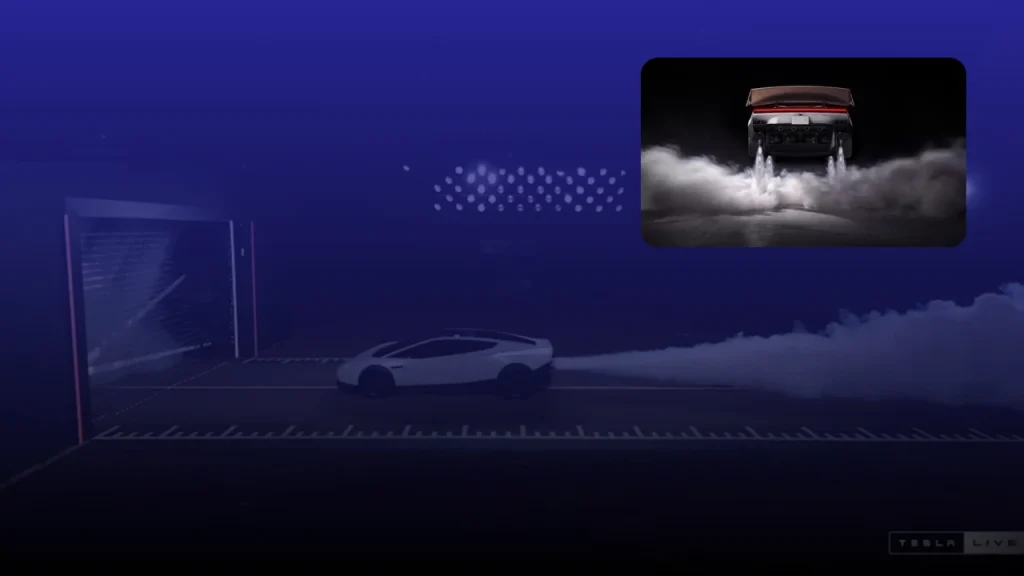
Tesla unveiled its redesigned Roadster on October 15, 2026. The demonstration included a version built with SpaceX-developed thruster technology, and Reuters reported a planned production start in 2028. Reporting published October 16 also separated Tesla’s road-ready Performance model from the Rocket configuration, which Tesla’s reservation listing says is not approved for public-road use.
So is the Tesla Roadster street legal? It depends on which Roadster you mean. The original 2008–2012 Roadster was a road car and can be driven when properly titled and registered. The redesigned Roadster is a different story: the Performance version is intended for road use, the Thrust version’s status is unresolved, and the Rocket version is expressly excluded from public roads.
The key distinction is between a car that is intended for road use and a production car that has actually met every requirement for lawful road use.
Quick Facts: Is the Tesla Roadster Street Legal?
| Question | Answer |
| Is the original (2008–2012) Tesla Roadster street legal? | Yes. It was built as a road car, but each vehicle must still be properly titled, registered, insured and operated lawfully. |
| Is the redesigned Tesla Roadster street legal? | Not yet established. Final production certification and state registration eligibility have not been confirmed in the reporting reviewed. |
| Is the Performance version intended for road use? | Yes. Tesla describes it as road-ready, but that description is not proof of completed federal certification. |
| Is the Thrust version street legal? | Uncertain. It adds rear-mounted cold-gas thrusters, and its final public-road status has not been established. |
| Is the Rocket version street legal? | No, as currently described. Tesla’s reservation listing says it is not approved for public-road use. |
| When will the redesigned Roadster be available? | Tesla has indicated production is expected to begin in 2028. Reuters reported no final price at the reveal. |
| Can all 50 states register it? | A compliant production version may qualify in every state, but each state applies its own title, registration, insurance, equipment and inspection rules. |
| Can state registration cure a noncompliant vehicle? | No. A plate or title does not establish federal compliance or override restrictions on a configuration. |
What Tesla Announced About the 2026 Roadster’s Performance, Thrust and Rocket Versions
At its October 15, 2026, event, Tesla showed a redesigned Roadster using SpaceX-related technology and presented three configurations.
- Performance: Tesla describes this as the road-ready version. Reports at the reveal cited an acceleration target of under one second from 0 to 60 mph and a top speed above 230 mph in one of the highest-performance configurations. These are manufacturer-reported targets, not legal permission to reach those speeds on public roads.
- Thrust: This version adds rear-mounted cold-gas thrusters and has been described in launch coverage as “race ready.” Some coverage describes it as intended for road use, while other reporting stresses the uncertainty around thruster-equipped versions.
- Rocket: Tesla’s reservation listing describes an invite-only, single-seat configuration with a full flight system and states that it is not approved for public-road use.
Tesla first showed a second-generation Roadster concept in November 2017. The October 2026 unveiling is a redesign, and a 2028 production target is a target, not a delivery guarantee. Tesla’s reservation terms also say the Roadster remains under development and that delivery timing is not guaranteed.
Did the FAA Say the Tesla Roadster Is an Aircraft?
Business Insider reported on October 16, 2026, that the Federal Aviation Administration said the vehicle did not meet its definition of an aircraft. Under 14 C.F.R. § 1.1, an aircraft is a device used or intended to be used for flight in the air.
That statement answers only the aviation question. It does not mean the vehicle can lawfully be driven on a highway. A car must still satisfy the federal vehicle-safety rules and state road-use requirements that apply to it.
The Four Legal Requirements for Driving a New Tesla Roadster on Public Roads
Four separate requirements operate together:
- Federal vehicle safety compliance. The manufacturer must certify that the vehicle complies with the applicable Federal Motor Vehicle Safety Standards (FMVSS).
- Title and registration. The state must be able to title and register the specific vehicle. A prototype or a vehicle sold for closed-course use may not qualify for ordinary passenger-car registration.
- Required road equipment and inspections. The car must meet rules for brakes, tires, lighting, mirrors or other required visibility equipment, seat belts and any state or local inspection program.
- Lawful operation. The owner needs a valid license, insurance or financial responsibility, and must follow traffic laws. A registered vehicle is not exempt from speed limits or reckless-driving laws.
Passing a state inspection does not prove federal compliance, and a federal certification label does not replace state registration.
Federal Laws That Decide Whether the Tesla Roadster Can Be Driven on Public Roads
No single federal document gives blanket permission to drive a vehicle on every U.S. road. Federal law governs manufacturing, safety standards, certification and importation. States govern licensing, registration, insurance and most operating rules.
49 U.S.C. § 30112: The Ban on Selling Noncompliant New Vehicles
Under 49 U.S.C. § 30112, and subject to statutory exceptions, a person may not manufacture for sale, sell, offer for sale, introduce into interstate commerce or import a new motor vehicle that does not comply with applicable federal motor vehicle safety standards. This matters because the redesigned Roadster is a newly developed production vehicle, not an existing registered car with different styling.
49 U.S.C. § 30115 and 49 C.F.R. Part 567: Certification Labels
Section 30115 requires the manufacturer or distributor to certify that the vehicle complies with the applicable standards. 49 C.F.R. Part 567 sets the requirements for the permanent certification label. A factory-built passenger car generally carries a label identifying the manufacturer and date of manufacture and stating that the vehicle conforms to the applicable FMVSS.
NHTSA does not ordinarily issue advance approval for each new passenger-car model. Manufacturers certify, and NHTSA enforces. A prototype shown at a private event does not prove that any customer-delivery version has completed certification.
Federal Motor Vehicle Safety Standards (FMVSS) the Roadster Must Meet
The standards that apply depend on the vehicle’s class, design and manufacture date. Subjects that typically matter for a two-seat electric sports car include:
- FMVSS 108 (lighting): headlamps, taillamps, turn signals and reflectors.
- FMVSS 111 (rear visibility): mirrors and other required visibility equipment. A camera-only system in place of mirrors would need to fit within the federal rules or receive an exemption.
- FMVSS 135 (brakes), FMVSS 126 (electronic stability control) and FMVSS 138 (tire pressure monitoring).
- FMVSS 208 (occupant crash protection), FMVSS 214 (side impact) and FMVSS 216 (roof crush resistance).
- FMVSS 305 (electric-powered vehicles): electrolyte spillage and electrical shock protection, which applies to battery-electric cars.
- 49 C.F.R. Part 581 (bumper standard): applies to passenger cars.
An electric sports car is not exempt from these rules because it has no gasoline engine. The question for the Roadster is whether the finished production vehicle meets them, not how impressive its acceleration is.
Federal Exemptions Under 49 U.S.C. § 30113 and 49 C.F.R. Part 555
A manufacturer that cannot meet a particular standard can ask NHTSA for a temporary exemption under 49 U.S.C. § 30113 and 49 C.F.R. Part 555. These exemptions are limited. By statute they cover no more than 2,500 vehicles in any 12-month period, they run for a limited term, and the applicant must meet specific criteria such as showing an overall safety level equivalent to the standard or a substantial economic hardship. They are not routine for consumer cars, and no public information reviewed shows that Tesla has sought one for any Roadster configuration.
A separate provision, 49 U.S.C. § 30114, allows limited exemptions for vehicles imported or used for show or display. Those carry their own conditions and are not general permission to drive a nonconforming vehicle.
Importing and Titling a Vehicle Without Federal Certification
NHTSA’s importation guidance explains that a vehicle under 25 years old that was not originally manufactured and certified to meet federal standards generally cannot be permanently imported unless it qualifies under the applicable federal process (see 49 U.S.C. § 30141 and 49 C.F.R. § 591.5). A license plate or state title is not proof that a vehicle meets those separate federal requirements.
Penalties for Violating the Federal Motor Vehicle Safety Act
Under 49 U.S.C. § 30165, NHTSA can seek civil penalties for violations of the safety act, including selling a vehicle that does not comply with applicable standards. Defects and noncompliance are also addressed through the recall provisions of 49 U.S.C. §§ 30118–30120. Penalty amounts are adjusted periodically, so check the current figure at NHTSA before relying on any number.
Does the Tesla Roadster’s Thruster Technology Make It Illegal?
No federal rule says “thrusters are illegal.” The issue is whether the completed vehicle meets the standards that apply to it and whether the added hardware creates compliance problems that a conventional electric car would not have.
Performance Version: Intended for Ordinary Road Use
If Tesla delivers a properly certified Performance vehicle that qualifies for registration, its electric drivetrain and extreme speed would not by themselves make it illegal. High-performance cars can be street legal. The finished car still needs the certification label and must meet state registration and equipment rules.
Thrust Version: Why the Cold-Gas Thrusters Raise Questions
The Thrust version’s cold-gas thrusters are additional hardware designed to boost acceleration. Whether that hardware, and the vehicle’s resulting safety characteristics, can be certified and registered for public roads has not been established. Until Tesla publishes the finished configuration and its compliance documentation, no one can responsibly promise that the Thrust version will be street legal in every state.
Rocket Version: Tesla Says It Is Not Approved for Public Roads
That is a materially different position from a car awaiting routine registration. Adding plates, buying insurance or applying for a special title does not make the Rocket configuration eligible for public-road use. Private tracks are not a blanket exemption either, since venue rules and other safety laws still apply.
What State Laws Apply to a Tesla Roadster?
Even if Tesla produces a federally compliant Roadster, the owner must comply with the laws of the state where it is registered and driven. Common requirements include:
- Title and registration: proof of ownership, application documents, fees and plates.
- Insurance or financial responsibility: most states require liability coverage, though the rules and alternatives differ. For example, California’s minimum liability requirement is in Vehicle Code § 16056, and Texas’s is in Transportation Code § 601.051.
- Vehicle equipment: lights, mirrors, tires, windshield, wipers and brakes. Texas’s equipment rules are in Transportation Code Chapter 547.
- Inspections: some states require periodic safety inspections (for example, New York under Vehicle and Traffic Law § 301), while others focus on emissions testing in designated counties, and many have no routine program for private passenger cars.
- Traffic laws: speed limits and reckless-driving statutes apply to every car, however fast it is.
Tesla Roadster Laws in All 50 States: Safety Inspections and Emissions Rules
Important limitation: As of October 16, 2026, Tesla has not provided enough confirmed production information to give a definitive yes-or-no street-legal answer for the redesigned Roadster in every state. The table below describes each state’s general inspection framework. It does not claim any state has approved the new car, and it is a screening guide, not a full reproduction of every statute or county rule.
A fully electric car has no gasoline tailpipe to test, so it generally avoids tailpipe emissions testing. That does not exempt it from title, registration, equipment or safety-inspection rules. The EPA keeps a directory of state and local inspection programs.
| State | Safety-inspection consideration | Emissions and other considerations |
| Alabama | No general periodic passenger-car safety inspection. | No general statewide emissions testing. |
| Alaska | No general periodic passenger-car safety inspection. | No general statewide emissions testing. |
| Arizona | No general periodic passenger-car safety inspection. | Emissions testing in designated Phoenix and Tucson areas; no tailpipe test for a battery-electric car. |
| Arkansas | No general periodic passenger-car safety inspection. | No general statewide emissions testing. |
| California | No periodic safety inspection for ordinary private cars. | Electric vehicles are exempt from Smog Check, but registration and equipment rules still apply. |
| Colorado | No general periodic passenger-car safety inspection. | Emissions testing in designated Denver and North Front Range areas; all-electric cars have no tailpipe test. |
| Connecticut | No annual safety-inspection program like those in some states. | Emissions-testing program for covered vehicles; confirm how it treats a new electric model. |
| Delaware | Inspection applies at registration and under the state’s schedule. | Electric propulsion does not remove applicable safety-inspection requirements. |
| Florida | No general periodic passenger-car safety inspection. | No general statewide emissions testing. |
| Georgia | No general periodic passenger-car safety inspection. | Emissions testing for qualifying gasoline vehicles in metro Atlanta counties. |
| Hawaii | Annual safety inspection generally applies. | Confirm the process with the Hawaii DMV; electric power does not remove it. |
| Idaho | No general periodic passenger-car safety inspection. | Former Ada and Canyon county emissions programs have ended. |
| Illinois | No general periodic passenger-car safety inspection. | Emissions testing in designated metro areas; no tailpipe test for an electric car. |
| Indiana | No general periodic passenger-car safety inspection. | Emissions testing in Lake and Porter counties. |
| Iowa | No general periodic passenger-car safety inspection. | No general statewide emissions testing. |
| Kansas | No general periodic passenger-car safety inspection. | No general statewide emissions testing. |
| Kentucky | No general periodic passenger-car safety inspection; VIN checks may apply in some title cases. | No general statewide emissions testing. |
| Louisiana | 2026 Act 701 changes the inspection-sticker rules. Many provisions are scheduled to take effect January 1, 2027, so check the rules in force at delivery. | Implementation in areas tied to federal emissions-inspection requirements depends on EPA approval. |
| Maine | Annual safety inspection generally applies. | Confirm the inspection class and any environmental requirements. |
| Maryland | Safety inspection generally applies when covered used vehicles are titled or transferred. | Vehicle Emissions Inspection Program in designated areas. |
| Massachusetts | Annual inspection generally applies. | Combined safety and emissions inspection; the emissions part differs by propulsion type. |
| Michigan | No general periodic passenger-car safety inspection. | No general statewide emissions testing. |
| Minnesota | No general periodic passenger-car safety inspection. | No general statewide emissions testing. |
| Mississippi | No general periodic passenger-car safety inspection. | No general statewide emissions testing. |
| Missouri | Depends on vehicle age, mileage and exemptions; confirm whether the Roadster falls in a covered category. | Emissions testing in the St. Louis area. |
| Montana | No general periodic passenger-car safety inspection. | No general statewide emissions testing. |
| Nebraska | No general periodic passenger-car safety inspection. | No general statewide emissions testing; title and VIN verification may apply in some cases. |
| Nevada | No general periodic passenger-car safety inspection. | Emissions testing in Clark and Washoe counties. |
| New Hampshire | The inspection program has been affected by 2026 legislation and court proceedings; confirm the operative rule with the DMV. | Remaining emissions or special inspection duties depend on the current rule. |
| New Jersey | No recurring safety inspection like annual-inspection states. | Periodic emissions inspection for covered vehicles; verify the rule for an all-electric car. |
| New Mexico | No general periodic passenger-car safety inspection. | Emissions testing in Bernalillo County. |
| New York | Annual safety inspection applies, including to electric vehicles. | Electric vehicles skip the conventional exhaust-emissions portion only. |
| North Carolina | Annual safety inspection generally applies. | Emissions testing in designated counties; confirm exemptions for the vehicle. |
| North Dakota | No general periodic passenger-car safety inspection. | No general statewide emissions testing. |
| Ohio | No general periodic passenger-car safety inspection. | E-Check emissions program in designated counties. |
| Oklahoma | No general periodic passenger-car safety inspection. | No general statewide emissions testing. |
| Oregon | No general periodic passenger-car safety inspection. | Emissions testing in the Portland and Medford areas. |
| Pennsylvania | Annual safety inspection generally applies. | Emissions testing in designated counties. |
| Rhode Island | Periodic inspection applies; verify the current interval. | The program also covers emissions for covered vehicles. |
| South Carolina | No general periodic passenger-car safety inspection. | No general statewide emissions testing. |
| South Dakota | No general periodic passenger-car safety inspection. | No general statewide emissions testing. |
| Tennessee | No general periodic passenger-car safety inspection. | Former county emissions programs ended in 2022. |
| Texas | Ordinary noncommercial passenger-vehicle safety inspection ended January 1, 2025. | Emissions testing continues in designated counties for qualifying gasoline vehicles; Bexar County is scheduled to join November 1, 2026. |
| Utah | No general periodic passenger-car safety inspection. | Emissions testing in designated counties. |
| Vermont | Annual safety inspection generally applies. | Verify any added components for the model year. |
| Virginia | Annual safety inspection generally applies. | Emissions testing in designated Northern Virginia localities; exclusively electric vehicles are exempt. |
| Washington | No general periodic passenger-car safety inspection. | Statewide emissions program ended in 2020. |
| West Virginia | Periodic safety inspection applies; confirm the current interval under the revised rules. | Check current inspection and registration instructions. |
| Wisconsin | No general periodic passenger-car safety inspection. | Emissions testing in designated counties. |
| Wyoming | No general periodic passenger-car safety inspection. | No general statewide emissions testing. |
Louisiana’s 2026 legislation and Texas’s 2025 inspection change show why these rules should be checked again close to delivery. Production is targeted for 2028, and state programs can change before then.
Can the Tesla Roadster Be Registered in California?
California requires an otherwise eligible vehicle to be titled and registered, with fees and financial responsibility satisfied. Its Smog Check program exempts fully electric vehicles, but that exemption does not make a nonconforming vehicle street legal.
For the Roadster, a buyer should confirm:
- Whether Tesla supplies the federal certification label and VIN documentation for the exact configuration.
- Whether that vehicle can receive a California title and registration.
- Whether installed thruster or flight-related equipment affects the road-use approval.
- Whether any recall or added equipment requirement applies.
- Whether the insurer will cover the exact configuration.
California also has a registration process for specially constructed vehicles, meaning vehicles built for private use that were not made by a licensed manufacturer. A factory-built Roadster is not automatically a specially constructed vehicle just because its technology is unusual.
Can the Tesla Roadster Be Registered in Texas?
Texas requires valid title and registration for road use, subject to exceptions and temporary permits. House Bill 3297 eliminated the ordinary noncommercial safety inspection on January 1, 2025, but that does not remove ownership-document, registration, insurance or equipment requirements. Texas still requires emissions inspections for qualifying gasoline vehicles in designated counties, so a battery-electric Roadster would not ordinarily face that test.
Texas Transportation Code Chapter 731 covers assembled vehicles, and the Texas DMV says some vehicles, including certain track-only or off-highway designs, cannot be titled as assembled vehicles. A production Roadster would not normally use that process.
The Roadster was demonstrated in Texas, but where a demonstration happened says nothing about whether a production car can be registered there.
Can You Register the Tesla Roadster Rocket in Another State or as a Kit Car?
There is no verified general procedure that guarantees this. Some states have title procedures for assembled, reconstructed, kit or specially constructed vehicles, and those can involve inspections, receipts and VIN assignment. They are not blanket exemptions from federal motor-vehicle law.
Registering a new, nonconforming vehicle as a kit car, custom car or collector car does not automatically make it legal for ordinary road use. Federal show-or-display and import exemptions have their own conditions, too. Until Tesla provides a compliant public-road configuration and documentation, treat the Rocket version as unavailable for normal public-road driving.
Can Removing the Thrusters Make the Rocket Roadster Street Legal?
Possibly only if the resulting vehicle is legally eligible, and removing hardware does not automatically convert a nonconforming vehicle into a road-legal one. Changes can affect certification, structural integrity, safety systems and the accuracy of the vehicle’s documentation. Anyone considering that route should get written guidance from Tesla, a qualified vehicle-compliance professional and the state motor-vehicle agency first.
Are the Tesla Roadster’s Top Speed and Acceleration Legal on U.S. Roads?
Performance targets do not override speed limits. Reported figures such as 0 to 60 mph in under one second and a top speed above 230 mph are manufacturer claims, not permission to reach those speeds on a public road. Excessive speed, street racing and stunts can lead to citations, criminal charges and civil liability. The legal question is not how fast the car can go, but whether the specific vehicle and its equipment are lawful for public roads and whether the driver is operating it lawfully.
What Happens If You Drive a Non-Street-Legal Tesla Roadster?
The consequences depend on the vehicle’s status, the law involved and the facts:
- Registration refusal: a state can decline to register a vehicle that does not qualify.
- Equipment violations: noncompliant equipment can lead to enforcement under state law.
- Insurance problems: an insurer may dispute coverage if the policy does not cover the vehicle or its use.
- Federal compliance issues: a noncompliant or improperly imported vehicle raises federal questions separate from state registration, including civil penalties under 49 U.S.C. § 30165.
- Track restrictions: a car not approved for public roads is still subject to venue rules and other safety laws.
Not every irregularity is a federal crime, and the outcome depends on the specific rule and facts.
What About the Original 2008–2012 Tesla Roadster?
The first-generation Roadster is an existing production car, and its status is separate from the 2026 redesign. An original Roadster can be driven on public roads when the individual car is properly titled and registered, insured, and compliant with the state where it is driven. Buyers should still check the VIN, title history, open recalls, condition and any state inspection requirement. That the original was sold as a road car says nothing about the new Rocket configuration.
What to Check Before Paying a Tesla Roadster Reservation Deposit
- Which version are you reserving? Confirm whether it is Performance, Thrust or Rocket and what hardware it includes.
- Is that exact version intended and certified for public roads? Get written confirmation rather than relying on a marketing label.
- Will it carry the federal certification label? Ask for the production-vehicle documentation.
- Can it be titled and registered in your state? Ask your state DMV.
- Will your insurer cover it? Get confirmation for the exact configuration.
- What happens if the final version is not road eligible? Read the reservation agreement’s cancellation, refund and change-of-specification terms.
A reservation deposit does not prove road legality. Tesla’s own terms say the vehicle is under development and delivery is not guaranteed.
Is Road Legality the Same as Vehicle Safety?
No. A car can meet registration requirements and still raise separate product-liability or defect questions. Federal certification, state registration and product-liability law address different issues. For related background on how safety claims and legal authorization to drive differ, see our article Tesla Class Action Alleges Model S Door Handles Trap Occupants During Emergencies. That case concerns alleged defects, not the Roadster’s registration status.
Key Dates in the Tesla Roadster Street-Legality Question
| Date | Development |
| November 2017 | Tesla first unveiled the second-generation Roadster concept. |
| October 15, 2026 | Tesla unveiled the redesigned Roadster with flight-related demonstrations and Performance, Thrust and Rocket configurations. |
| October 16, 2026 | Reports of the FAA statement and Tesla’s Rocket road-use disclaimer; this article’s research date. Final certification details for each configuration are not established. |
| November 1, 2026 | Texas’s Bexar County emissions program is scheduled to begin. |
| January 1, 2027 | Many Louisiana Act 701 inspection-sticker changes are scheduled to take effect. |
| 2028 | Reported production target; not a confirmed delivery date. |
Frequently Asked Questions About Tesla Roadster Street Legality
Is the Tesla Roadster Street Legal in the United States?
The original Roadster was designed for public roads and can be driven if properly titled, registered and operated lawfully. The redesigned Roadster depends on the version and its final production compliance. Tesla says the Rocket version is not approved for public-road use.
Is the Tesla Roadster Performance Version Street Legal?
Tesla describes it as road-ready, but buyers should confirm the final vehicle’s federal certification and state registration eligibility before assuming it can be driven on public roads in every state.
Is the Tesla Roadster Thrust Version Street Legal?
Its status is unresolved. The added cold-gas thrusters raise questions that cannot be answered from advertised performance alone. Get written confirmation from Tesla for the exact configuration.
Is the Tesla Roadster Rocket Version Street Legal?
Not as currently described. Tesla’s reservation listing says it is not approved for public-road use, and ordinary title and registration paperwork should not be assumed to overcome that.
Will the Tesla Roadster Be Street Legal When Production Begins in 2028?
A road-going version may qualify if Tesla completes the applicable compliance requirements and the car meets state registration, equipment and inspection rules. The 2028 target does not guarantee a delivery date or legal status for every version.
Does the Tesla Roadster Need Side-View Mirrors to Be Street Legal?
FMVSS 111 sets federal rear-visibility requirements. Whether a camera-based system could replace physical mirrors on the Roadster depends on how the final vehicle meets, or is exempted from, that standard. Tesla has not published that detail in the reporting reviewed.
Can the Tesla Roadster Be Registered in California?
A qualifying production vehicle may be eligible if it meets federal requirements and California’s title, registration and equipment rules. The Smog Check exemption for electric vehicles does not establish overall road legality.
Can the Tesla Roadster Be Registered in Texas?
A qualifying production version may be eligible under Texas registration law. The former safety inspection ended January 1, 2025, and the gasoline emissions test would not ordinarily apply to a battery-electric car, but federal certification and other requirements still matter.
Do Electric Cars Have to Pass Emissions Tests?
Generally no tailpipe test applies, and California expressly exempts electric vehicles from Smog Check. That does not exempt an electric car from safety inspections, title rules or equipment laws.
Is the Tesla Roadster Legally an Aircraft?
Business Insider reported that the FAA said the vehicle did not meet its definition of an aircraft. That does not decide whether the car is legal on public roads.
Can a State License Plate Make the Rocket Roadster Street Legal?
No. A plate does not establish federal compliance or override restrictions on a vehicle’s configuration.
Does a Tesla Roadster Reservation Guarantee a Street-Legal Car?
No. Tesla’s terms say the Roadster is under development and delivery timing is not guaranteed.
Official Sources for the Tesla Roadster Street-Legality Article
- Tesla: Roadster product page and reservation agreement.
- U.S. Code: 49 U.S.C. §§ 30112, 30113, 30114, 30115, 30118–30120, 30141 and 30165.
- Code of Federal Regulations: 49 C.F.R. Part 567 (certification), Part 555 (temporary exemptions), Part 581 (bumper standard), § 591.5 (importation) and 14 C.F.R. § 1.1 (aircraft definition).
- NHTSA: Importation and Certification FAQs and FMVSS overview.
- EPA: State and local vehicle emissions inspection program directory.
- California: Bureau of Automotive Repair Smog Check guidance and DMV specially constructed vehicle registration.
- Texas: TxDMV registration and assembled-vehicle guidance; Department of Public Safety emissions inspection criteria; House Bill 3297.
- New York, North Carolina and Virginia DMVs: inspection and emissions program pages.
- Louisiana Legislature: Act 701 of 2026.
- Reuters and Business Insider: reporting on the October 15–16, 2026, unveiling, the 2028 target, the FAA statement and Tesla’s Rocket disclaimer.
This article is for general information only and is not legal advice. AllAboutLawyer.com is a legal information website, not a law firm.
Researched and written by Israr Ahmad, legal content researcher and founder of AllAboutLawyer.com. All facts verified against Tesla’s Roadster page and reservation terms, the U.S. Code and Code of Federal Regulations, NHTSA and EPA guidance, state motor-vehicle agency pages, and Reuters and Business Insider reporting, as of October 16, 2026. Last Updated: October 16, 2026.
About the Author
Israr Ahmad is a legal content researcher with 4+ years of experience covering class action settlements and consumer rights cases. He has researched and published coverage of 2,500+ settlements using verified court records, settlement administrator filings, and government sources. Learn more about Israr.