
Volvo Class Action Lawsuit, Owners Say Infotainment Defects Persist Despite Repeated Repairs
Volvo Car USA is facing another proposed class action over its infotainment software. Four consumers say the Android Automotive system in their vehicles freezes, crashes and goes unresponsive. When that happens, the rearview camera, navigation, audio and climate controls can go with it. They also say dealership repairs, software updates and replacement parts never fixed the problem.
The case is Alopogianis, et al. v. Volvo Car USA LLC, No. 1:26-cv-13953, filed October 26, 2026, in the U.S. District Court for the District of New Jersey. Everything below is an allegation. Volvo has not been found liable, no class has been certified, and no settlement or claim form exists.
Short answer for Volvo owners: nothing needs to be filed to “join” this case today. Check your VIN for open recalls, get the free recall repair done, and keep every service record. Those steps protect you whether or not the lawsuit goes anywhere.
Volvo Infotainment Class Action: Quick Facts
| Detail | Information |
| Case name | Alopogianis, et al. v. Volvo Car USA LLC |
| Case number | 1:26-cv-13953 |
| Filed | October 26, 2026 |
| Court | U.S. District Court, District of New Jersey |
| Defendant | Volvo Car USA LLC |
| Named plaintiffs | John Alopogianis, Jeffery Kaiser, Megan Kaiser and Kelly Tierney |
| Plaintiffs’ attorney | Sergei Lemberg, Lemberg Law LLC |
| Alleged defect | Unstable Android Automotive OS (AAOS) infotainment system |
| Reported vehicles | 11 model lines, model years 2021 to 2025 |
| Relief sought | Damages, restitution, owner notification, permanent repair |
| Jurisdiction listed on docket | 28 U.S.C. § 1332 |
| Jury trial | Demanded |
| Class certified? | No |
| Settlement or claim form? | None verified |
The federal docket shows the complaint and jury demand were filed on October 26 and that a summons was issued the same day.
What Is Volvo Accused Of?
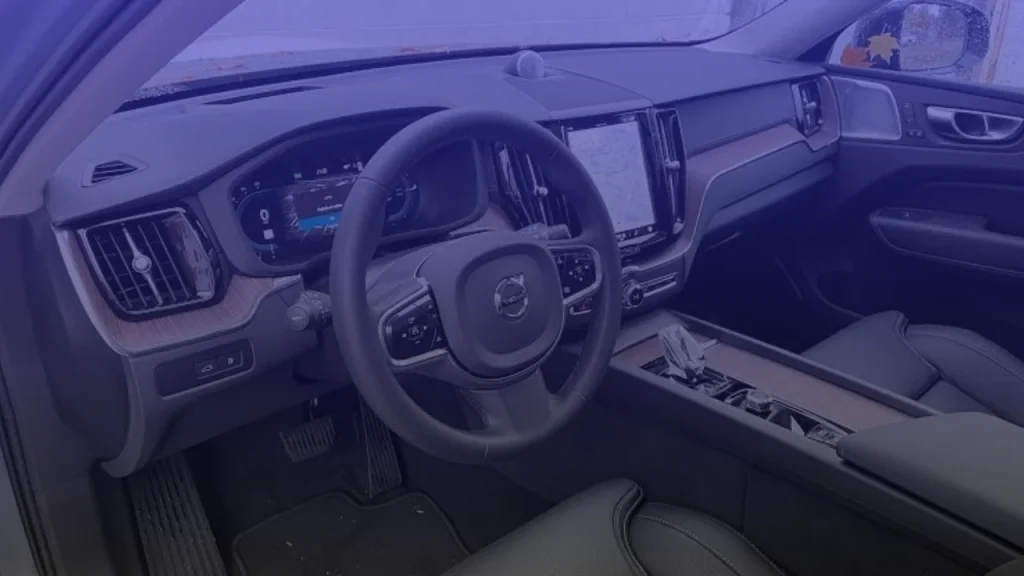
The plaintiffs say Volvo sold vehicles with an unstable version of Android Automotive OS, the Google-built-in system that runs the central screen. They allege the software can freeze, turn black or stop responding without warning.
The screen is not just for music. In these vehicles it can also control:
- Rearview camera display
- Navigation and maps
- Radio, audio and Bluetooth phone connections
- Climate and defrost controls
- Certain driver alerts and audible warnings
- Vehicle settings and some driver-assistance information
The plaintiffs argue that when the screen fails, several functions can fail at once. A driver backing up may not get a camera image. A driver in cold or humid weather may not be able to clear a fogged windshield. Owners have also described “Camera Temporarily Unavailable” messages, dropped Bluetooth connections, and the need for hard resets.
The complaint reportedly alleges that Volvo knew about the software problems before selling the vehicles, did not disclose the risk, and never provided a lasting fix. Volvo has not been found to have done any of this.
Which Volvo Models Are Named?
Reporting on the new complaint lists 11 model lines. The year ranges below match earlier Volvo infotainment litigation coverage. Exact model-year eligibility depends on the class definition in the filed complaint.
| Model | Reported model years |
| XC40 | 2021 to 2025 |
| C40 | 2022 to 2025 |
| XC60 | 2022 to 2025 |
| XC90 | 2022 to 2025 |
| S60 | 2022 to 2025 |
| S90 | 2022 to 2025 |
| V60 | 2022 to 2025 |
| V90 | 2022 to 2025 |
| EX30 | 2025 |
| EX40 | 2025 |
| EX90 | 2025 |
Being on this list does not prove your specific vehicle has the defect. It also does not make you a class member. A class is only defined by a court, and it can end up narrower than the headlines.
Why Do Owners Say Repairs Did Not Work?
The plaintiffs say they took their vehicles to Volvo dealers repeatedly. Fixes reportedly included software updates and hardware replacements. The problems allegedly came back.
Their theory is that the fault sits in the underlying software, not in one bad screen. If so, swapping a part or pushing one update may not stop the same symptoms from returning. Whether that is true is exactly what the court will have to sort out with evidence.
How the Lawsuit Connects to Volvo’s 413,151-Vehicle Recall
The case follows two federal safety recalls over rearview camera software.
- Recall 25V282 (May 2025): Volvo reported a software problem that could stop the rearview camera image from showing when the car is shifted into reverse. It covered 413,151 vehicles. Volvo’s first remedy was a software update.
- Investigation: Volvo says it later received more camera complaints, including from cars that had already received the update. It opened a technical investigation on July 7, 2025, and the investigation concluded on December 19, 2025.
- Recall 25V908 (December 23, 2025): Volvo filed a second recall, manufacturer number R10333. It replaced the first one. Vehicles already repaired under 25V282 needed the new remedy too.
Owner letters for the second recall were reported to begin mailing February 24, 2026, with updates rolling out by model year during March 2026. The remedy is delivered over the air or at an authorized Volvo retailer, free of charge.
Related article: Caprice Williams Charged With Murder of 10-Year-Old Malayshia Alford, What Happened in Philadelphia and What Pennsylvania Law Says
What Recall 25V908 Covers
NHTSA’s filing lists these groups:
- 2021 to 2025 XC40
- 2022 V90
- 2022 to 2024 C40 BEV
- 2022 to 2025 S90
- 2022 to 2025 V90 Cross Country
- 2022 to 2025 XC60
- 2023 to 2025 S60
- 2023 to 2025 V60 and V60 Cross Country
- 2023 to 2025 XC90
- 2025 EC40
- 2025 EX40
Two cautions. First, the recall is about one defect: the camera image may not display in reverse. It does not admit that every infotainment problem in the lawsuit exists. Second, the 413,151-vehicle recall population is not the same thing as the proposed class in Alopogianis. A recall is a regulatory safety campaign. A class action is a private civil case about money and remedies.
What the Lawsuit Asks For
According to reporting on the complaint, the plaintiffs want:
- Money damages
- Restitution for affected buyers and lessees
- An order requiring Volvo to notify owners of the alleged defect
- An order requiring a permanent repair
- Any other relief the law allows
The core argument is economic. They say they paid for vehicles marketed as safe and reliable and would have paid less, or not bought them at all, had they known. No per-owner payment amount exists. None can be estimated until there is a ruling or a settlement.
Which Laws May Apply?
The docket labels the case as a contract dispute under diversity jurisdiction. The full complaint was not available in the public sources used for this article, so we cannot confirm which counts are actually pleaded. The frameworks below are the ones that typically appear in vehicle-defect class actions like this one, and the ones courts are likely to analyze.
Federal Court Jurisdiction: 28 U.S.C. § 1332
Section 1332(a) covers ordinary diversity cases. Class actions are commonly filed under § 1332(d), the Class Action Fairness Act (CAFA). CAFA generally requires a proposed class of at least 100 members, more than $5 million in total controversy, and at least minimal diversity between any class member and any defendant. Earlier Volvo infotainment complaints filed elsewhere cited CAFA. Jurisdiction decides which court hears the case. It does not decide whether Volvo is liable.
Federal Rule of Civil Procedure 23
A class action only proceeds as a class if the judge certifies it. The plaintiffs must show numerosity, common questions, typical claims and adequate representation under Rule 23(a). For money damages they must also satisfy Rule 23(b)(3): common issues must predominate and a class action must be the superior way to resolve the dispute. Vehicle cases often fight over predominance, because different owners had different symptoms, repair histories and state laws.
Express Warranty (UCC § 2-313)
An express warranty is a specific promise by the seller or manufacturer. New Jersey’s version is N.J.S.A. 12A:2-313. Volvo’s written new-vehicle warranty promises repair of covered defects during the warranty period. A claim usually depends on the warranty wording, whether the defect is covered, and whether the manufacturer had a fair chance to fix it. Repeated visits do not automatically prove breach.
Implied Warranty of Merchantability (UCC § 2-314)
Under N.J.S.A. 12A:2-314, goods must be fit for their ordinary purpose. The plaintiffs will argue that a car whose central screen can disable the camera and defroster is not. Volvo can be expected to argue that vehicles still drive safely, that the problems are intermittent, and that some states require a direct contractual relationship (privity) with the seller. Privity rules differ by state.
Magnuson-Moss Warranty Act (15 U.S.C. §§ 2301 to 2312)
This federal law regulates written warranties on consumer products. Section 2310(d) lets consumers sue for breach of written or implied warranties, and courts may award attorney fees to a prevailing consumer. Section 2310(e) generally requires the warrantor to get a reasonable chance to cure first. Federal-court access for class claims under the Act has its own thresholds, which is why many plaintiffs rely on CAFA instead.
New Jersey Consumer Fraud Act (N.J.S.A. 56:8-1 et seq.)
The New Jersey Consumer Fraud Act is the state’s main consumer protection statute. It prohibits deception and the knowing concealment or omission of material facts in connection with the sale of merchandise. A plaintiff generally must show unlawful conduct, an ascertainable loss, and a causal link between the two. A successful plaintiff can recover treble damages and attorney fees under N.J.S.A. 56:8-19. The statute does not automatically reach out-of-state buyers, which matters a great deal here (see the Thomson ruling below).
Other State Consumer Protection Laws
Because owners live in many states, claims can invoke other state statutes. Pennsylvania’s Unfair Trade Practices and Consumer Protection Law (73 P.S. § 201-1 et seq.), for example, was the basis of the earlier Leonberg case, which proposes a Pennsylvania class. The state where a vehicle was bought or leased often controls which statute applies.
State Lemon Laws
Lemon laws are separate from class actions and can be used by one owner alone. They have strict time and mileage windows. New Jersey’s Lemon Law (N.J.S.A. 56:12-29 et seq.) generally covers the first 24 months or 18,000 miles of a new vehicle, whichever comes first, and requires repeated unsuccessful repair attempts or extended time out of service. Pennsylvania’s Automobile Lemon Law (73 P.S. § 1951 et seq.) generally has a shorter window. Confirm your state’s rules; the deadlines are strict and many owners miss them.
The Federal Safety Act and FMVSS 111
Recalls arise under the National Traffic and Motor Vehicle Safety Act, 49 U.S.C. §§ 30118 to 30120. When a manufacturer determines a safety defect exists, it must notify owners and provide a remedy at no charge. Federal Motor Vehicle Safety Standard 111 (49 C.F.R. § 571.111) sets rear visibility requirements, including that the rearview image appear within a short time after the vehicle is shifted into reverse. A recall does not itself create a private right to sue under the Safety Act, and a recall is not a finding that every other alleged problem is a defect. Plaintiffs typically use recall facts as evidence of knowledge and seriousness, then sue under state law.
Deadlines (Statutes of Limitation)
Claims expire. Breach-of-warranty claims under UCC § 2-725 (N.J.S.A. 12A:2-725) generally must be brought within four years of delivery. New Jersey Consumer Fraud Act claims generally carry a six-year period. Other states differ. Pending class actions can pause the clock for putative class members under the American Pipe tolling doctrine, but that tolling is not unlimited and ends in some situations, such as when class certification is denied.
Arbitration and Notice Requirements
Some purchase and lease contracts contain arbitration clauses or class waivers. Several states also require pre-suit written notice to the manufacturer for warranty claims. Courts have thrown out warranty claims for missing notice. If you are thinking about an individual claim, read your paperwork carefully.
How This Case Differs From Other Volvo Software Lawsuits
These are separate cases. They have different plaintiffs, courts and procedural histories, and they are not consolidated.
Leonberg v. Volvo Cars of North America (D.N.J.)
Lydia Leonberg, a Pennsylvania buyer of a 2023 XC60, sued over infotainment failures she says continued despite many dealership visits. The proposed class is limited to Pennsylvania purchasers and lessees. She is represented by Lemberg Law, the same firm as the Alopogianis plaintiffs. Case number 1:25-cv-18948. Volvo moved to dismiss the amended complaint in April 2026, and the case was later transferred to the Camden division.
Read our earlier coverage: Volvo’s Infotainment System Is Being Sued Over Safety Defects: 11 Models Affected.
Weinbach v. Volvo Car USA (W.D.N.Y.)
David Weinbach sued on January 22, 2026, about one month after Volvo announced the second camera recall. He alleges the recall remedy and Volvo’s handling of it were inadequate. Case number 6:26-cv-06088. He is represented by Sultzer & Lipari, PLLC. Volvo moved to dismiss the amended complaint in May 2026, and no later ruling was confirmed in the sources reviewed.
Read our earlier coverage: Volvo Class Action: Drivers Allege Google Infotainment System Failures Pose Severe Safety Risks.
The 413,151-Vehicle Camera Recall
The recall is an administrative safety campaign, not a lawsuit or a settlement.
Read our earlier coverage: Volvo Backup Camera Recall and Lawsuit 2026: Are You Affected?.
Older Volvo cases also targeted in-car technology. A Sensus-era class action was litigated in New Jersey around 2018 and cited CAFA jurisdiction. That is background only. It is a different system, a different complaint and a different time period.
A Recent Dismissal Shows What Volvo May Argue: Thomson v. Volvo
On September 10, 2026, a New Jersey federal judge dismissed a different Volvo class action, Thomson v. Volvo Car North America LLC, No. 2:25-cv-17193, without prejudice. The plaintiffs were Kansas residents who leased two 2024 C40 Recharge vehicles. They complained about automatic rear braking and dashboard displays.
As reported, the judge found they had not shown enough of a connection to New Jersey to sue under the New Jersey Consumer Fraud Act. The opinion also criticized the way the complaint lumped allegations together across several Volvo corporate defendants. The court allowed an amended complaint within 30 days.
This ruling does not decide Alopogianis. But it shows a point owners should understand: filing in New Jersey does not mean New Jersey law protects buyers across the country. Where each plaintiff lives, where they bought or leased, and which claims are pleaded all matter.
Who Could Be in the Proposed Class?
The proposed class is described broadly as purchasers and lessees of the affected Volvo models. The filed complaint controls the real definition, and a judge can narrow it. Questions that usually matter:
- What model and model year is the vehicle?
- Does it use the Android Automotive infotainment system?
- Did the screen freeze, go black or become unresponsive?
- Did the rearview camera or other functions fail?
- Were dealer repairs attempted, and did they fail?
- Did you pay out of pocket for repairs?
- In which state was the vehicle bought or leased?
What Should Volvo Owners Do Now?
- Check your VIN for open recalls. Use NHTSA’s recall lookup and Volvo’s official recall page. Look for 25V908 or R10333.
- Get the free recall repair. Do not assume an earlier update under 25V282 counts. Confirm with an authorized Volvo retailer. Volvo customer service has been listed at 1-800-458-1552.
- Keep every repair order. Save dates, mileage, reported symptoms and what the dealer did.
- Log recurring failures. Write down freezes, camera dropouts and navigation failures when it is safe to do so. Never film or handle your phone while driving.
- Save all communications. Keep recall letters, warranty booklets, emails and customer-service case numbers.
- Report safety problems to NHTSA. File at nhtsa.gov/report-a-safety-problem. Complaints help investigators spot patterns.
- Mind your deadlines. Lemon-law and warranty clocks keep running even while a class action is pending. Do not rely on a lawsuit you have not joined.
- Consider talking to a licensed attorney. If repairs keep failing, a lawyer in your state can explain warranty, lemon-law and individual claims.
A recall repair and a lawsuit are separate. Do not delay a safety recall waiting on litigation.
Is There a Volvo Infotainment Settlement or Claim Form?
No. As of November 6, 2026, there is no verified settlement, class certification order, claims administrator or public claim form in Alopogianis. The complaint is days old, and the docket shows only the filing and a summons.
If a settlement is ever reached, it needs court approval. A court-approved notice would then explain who qualifies, what they get and how to file. Be wary of any site or message that asks for personal information to “claim” money in this case today.
What Happens Next?
Typical early steps in a federal class action include service of the complaint, Volvo’s response, usually a motion to dismiss, possible consolidation or transfer, discovery, and eventually a motion for class certification. That process often takes years. Volvo’s response here is not yet known. Given how the other Volvo cases are progressing, motions to dismiss based on choice of law, standing and pleading detail are plausible. That is analysis, not a prediction.
Frequently Asked Questions
Why is Volvo being sued over its infotainment system?
The lawsuit alleges Volvo sold vehicles with Android Automotive software that can freeze, crash or become unresponsive, disabling the rearview camera and other functions, and that repeated dealership repairs have not produced a lasting fix.
Who filed the new Volvo class action?
Four consumers: John Alopogianis, Jeffery Kaiser, Megan Kaiser and Kelly Tierney.
What is the case number and court?
Alopogianis, et al. v. Volvo Car USA LLC, No. 1:26-cv-13953, in the U.S. District Court for the District of New Jersey.
Who represents the plaintiffs?
Sergei Lemberg of Lemberg Law LLC.
Which Volvo models are involved?
Reporting lists the XC40, C40, XC60, XC90, S60, S90, V60, V90, EX30, EX40 and EX90, generally model years 2021 to 2025. Exact eligibility depends on the complaint and the vehicle.
Is this the same as the Volvo backup camera recall?
They overlap but are different. Recall 25V908 targets one defect, the camera image failing to display in reverse. The lawsuit alleges a wider set of infotainment failures.
How many vehicles are covered by the recall?
413,151 potentially affected vehicles. That is the recall population, not the lawsuit’s class.
Does the free recall repair fix screen freezes?
The R10333 remedy addresses the rearview-camera software problem. Do not assume it resolves every infotainment issue described in the lawsuit.
Can I join the lawsuit?
There is nothing to join yet. No class has been certified. If one is later certified, eligible owners are usually included automatically unless they opt out, and a court-approved notice explains the process.
Has Volvo agreed to pay anyone?
No settlement or admission of liability has been verified.
Is there a claim form?
No public claim form or administrator has been identified.
Can I sue Volvo on my own?
Possibly. Depending on your state, warranty, repair history and losses, you may have individual warranty, consumer-protection or lemon-law options. Deadlines are strict, so speak with a licensed attorney in your state.
Does a recall mean my car is a lemon?
No. A recall means a safety remedy is available. Lemon-law status depends on state rules, repair attempts, time out of service and mileage.
What should I do if my screen freezes while driving?
Only handle the screen when it is safe. If the camera fails while reversing, rely on mirrors and a direct look behind you. Then document the event and report it to a dealer and to NHTSA.
Bottom Line
The October 26, 2026 Alopogianis lawsuit adds four named consumers to the growing legal pressure on Volvo over its Android Automotive infotainment system. They allege freezes and crashes disrupt safety-related functions, including the rearview camera, despite repeated repairs.
The case sits beside NHTSA recall 25V908, which covers 413,151 vehicles for a specific camera defect, but it challenges more than the recall fixes. It is early. Volvo has not been found liable, no class exists and no settlement or claim form has been announced.
Owners with recurring problems should check for open recalls, get the free repair done, keep records and watch their own legal deadlines.
Researched and written by Israr Ahmad for AllAboutLawyer.com, based on the October 26, 2026 federal docket entry, reporting on the Alopogianis complaint, NHTSA recall 25V908, Volvo’s recall information and related court filings. Updated November 6, 2026.
AllAboutLawyer.com is a consumer legal information publisher, not a law firm. This article is general information, not legal advice. Laws and deadlines vary by state and change over time. For advice about your situation, consult a licensed attorney.
Primary Sources
- Federal docket, D.N.J. 1:26-cv-13953 (Justia)
- NHTSA recall 25V908 report
- Volvo recall lookup
- Leonberg v. Volvo complaint
- Weinbach v. Volvo complaint
About the Author
Israr Ahmad is a legal content researcher with 4+ years of experience covering class action settlements and consumer rights cases. He has researched and published coverage of 2,500+ settlements using verified court records, settlement administrator filings, and government sources. Learn more about Israr.