
Piracy Off the Coast of Somalia, Somali Pirates Are Back, What Happened to the Honour 25 Crew, Why Five Died and What the Law Says
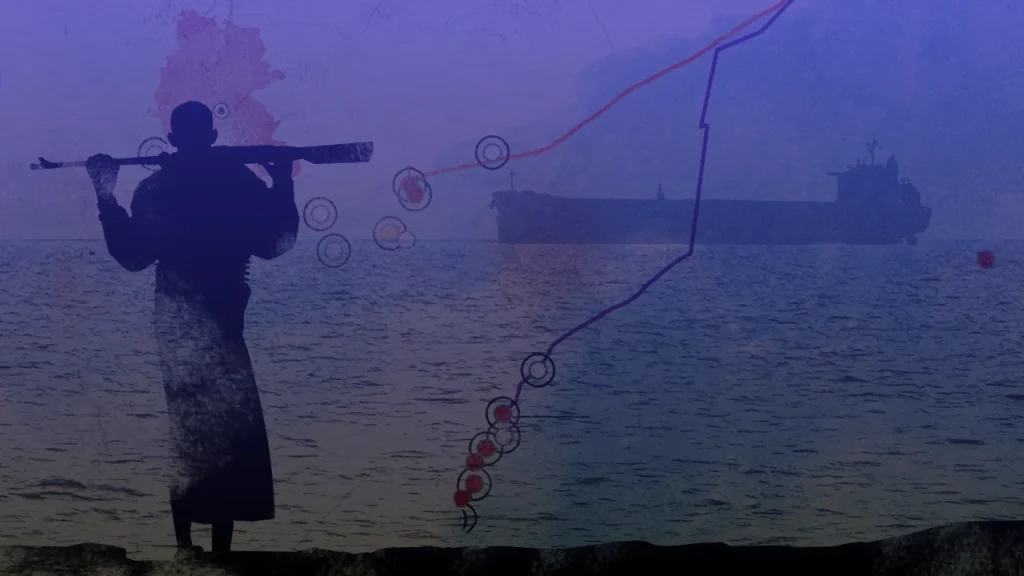
Somali piracy has returned in 2026 after more than a decade of relative calm. Merchant ships have been hijacked, crews have been held for months, and the tanker Honour 25 produced what appear to be the first crew deaths at the hands of Somali pirates in over ten years.
The Honour 25, a Palau-flagged tanker carrying 17 crew and about 18,500 barrels of oil, was hijacked on April 21, 2026. Puntland’s Maritime Police Force retook it on September 29. Five crew members were killed: three from Pakistan, one from India and one from Myanmar. Four others were injured.
Who is responsible for those deaths, and what can the families do? Accounts differ on exactly how the five died, and the law offers several routes (criminal prosecution, shipowner liability, employment benefits) that run through different countries. This article explains what is confirmed, what is disputed and what the law says.
Somali Piracy in 2026: Quick Facts
| Detail | What the record shows |
| Main case | Hijacking of the tanker Honour 25 (Palau flag) |
| Hijacked | April 21, 2026 |
| Recovered by Puntland Maritime Police Force | September 29, 2026 |
| Crew aboard | 17 |
| Crew killed | 5 (3 Pakistani, 1 Indian, 1 Myanmar) |
| Crew injured | 4 per Puntland’s Information Ministry (3 Pakistani, 1 Indian) |
| Vessels freed or closed by EU naval mission | Honour 25, Sward, Eureka, Sibu 1 |
| Vessel still held (as of October 16 update) | MT Asana, hijacked July 17, 2026 |
| Seafarers aboard Asana | 22, per IMO’s October 2 update |
| Global piracy incidents, January–September 2026 | 51, per the International Maritime Bureau (IMB) |
| Somali hijackings in that period | 8 vessels, per IMB |
| Main legal framework | UN Convention on the Law of the Sea (UNCLOS) |
| Official updates | EUNAVFOR Operation Atalanta |
What Happened to the Honour 25 Crew?
The Honour 25 was carrying about 2,700 tonnes of diesel from Oman to Mogadishu when it was seized. Puntland police say six armed men boarded it. Crew accounts reported by other outlets describe the group growing to about 30 as more boats arrived, with the ship taken to anchor near the Somali coast.
The crew spent more than five months in captivity. Families of the Pakistani crew held protests in Karachi in May calling on the government to act.
How did the five crew members die?
Two official versions exist, and both should be reported:
- Puntland’s Information Ministry said “before the operation began, the pirates on board the ship killed five of the crew.” Reuters and Al Jazeera carried that statement.
- The International Maritime Organization (IMO) and the EU naval mission describe the five as dying during the operation to free the ship.
These accounts may describe the same events, but they frame responsibility differently, and no court or independent investigation has yet reported findings. Suspects were captured in the recovery: Puntland’s Information Ministry said 16, while other reports put the number at 21. Arrest is not conviction. Al Jazeera also reported that 28 of 41 pirates arrested in an earlier Puntland operation escaped while being transferred to jail, and that officials accused local police of complicity.
The injured crew landed at Bander Beyla on September 30, and the rest were taken ashore at Bosaso on October 4.
Are Somali Pirates Really Back, or Is the Threat Overstated?
Both statements are true depending on the scale. The IMB reported 51 incidents worldwide in the first nine months of 2026, down from 116 in the same period of 2025, which it described as the lowest nine-month total since 1992. At the same time, it reported that Somali pirates carried out eight hijackings in those nine months. Global numbers can fall while one region gets sharply worse.
Al Jazeera, citing officials, reported at least 15 attacks off Somalia since April.
Why is Somali piracy increasing?
Reuters reported that experts attribute the resurgence in part to effects of the Iran war, including elevated oil prices that make tankers more attractive targets. Analysts also point to naval forces being drawn toward other regional threats such as Houthi attacks on shipping, reduced security aboard some vessels, and economic pressure in coastal areas, including anger over illegal fishing by foreign fleets. These are contributing factors identified by analysts, not proven single causes, and they do not mean coastal communities as a whole are involved in piracy.
Related article: MT Asana Hijacking, What We Know About the 22 Crew Held by Somali Pirates
Which Ships Were Hijacked in 2026?
According to the EU naval mission’s October 16 update and other reporting:
| Vessel | Status |
| Honour 25 | Hijacked April 21; recovered September 29; five crew killed |
| Sward | Hijacked April 26; abandoned by pirates September 11; crew safe; reached Mombasa |
| Eureka | Hijacked May 2 at Qana Port, Yemen; abandoned and grounded by pirates September 29; crew safe |
| Sibu 1 (also Seamull) | Hijacked in August; freed September 25; reported by Reuters as a US-sanctioned tanker |
| Asana | Hijacked July 17, about 65 nautical miles southwest of Mukalla, Yemen; Tanzanian-flagged; still under pirate control as of October 16 |
The IMO said on October 2 that 44 seafarers had been freed from the Honour 25, Sibu 1 and Eureka, and that 22 remained aboard the Asana. One report put 11 of the Asana crew as Indian nationals. I found no confirmed release of the Asana crew as of October 29.
What Does International Law Say About Piracy?
The core rules are in the United Nations Convention on the Law of the Sea (UNCLOS):
- Article 101 defines piracy as illegal violence, detention or depredation for private ends on the high seas against another ship or people or property outside any state’s jurisdiction.
- Article 100 requires states to cooperate in suppressing piracy.
- Article 105 lets states seize pirate ships on the high seas and lets the seizing state’s courts decide penalties.
Location matters. Attacks inside a country’s territorial waters, such as ships anchored near the Somali coast, are generally classed by the IMO as armed robbery against ships rather than high-seas piracy, and they fall under that coastal state’s law.
Other laws that may apply include:
- The 1988 SUA Convention (Convention for the Suppression of Unlawful Acts against the Safety of Maritime Navigation), which targets seizing control of a ship by force.
- The 1979 International Convention against the Taking of Hostages, relevant where crew are held to compel a ransom.
- U.S. law, 18 U.S.C. § 1651, which makes piracy “as defined by the law of nations” a federal crime when committed on the high seas, punishable by life imprisonment, for offenders brought to or found in the United States.
- Somali and Puntland criminal law, under which most recent suspects have been detained.
Can pirates be prosecuted outside Somalia?
Yes, in some circumstances. Examples include India, which took 35 Somali pirates captured from the hijacked bulk carrier Ruen to Mumbai for trial in March 2024. Which country can prosecute depends on where the attack happened, who seized the suspects, the flag and crew nationalities, and the prosecuting state’s laws. There is no single global piracy court.
Can Shipowners Be Held Liable When Crew Are Killed?
Not automatically. Liability depends on the flag state’s law (Palau for the Honour 25), the crew’s contracts, safety and security obligations, and evidence of what the owner or operator knew and did. The Maritime Labour Convention, 2006, sets standards on seafarers’ wages, repatriation and welfare, and how it applies to hostage situations depends on the flag state and contract.
Crew accounts reported by the media raised concerns about the Honour 25‘s condition and security measures. Those accounts have not been tested by a court or a formal investigation.
What can families of killed seafarers do?
Depending on the facts and the law that applies, families can:
- Ask their government’s consular officials for help confirming the circumstances of death and recovering records and personal effects. Pakistan’s Foreign Ministry expressed sadness at the deaths of its nationals.
- Ask the employer or shipowner about wages, death benefits, insurance and repatriation costs.
- Consult a maritime lawyer about a possible civil claim, which is separate from any criminal case against the pirates.
For general background, see What Is a Wrongful Death Lawsuit? Everything Families Need to Know. When the death occurs abroad, jurisdiction and choice of law get harder; Fox News Sued Over Sasha Kuvshynova’s Death in Ukraine, What the New York Court Decided shows how a cross-border death can raise separate legal questions. Those cases are unrelated to the Honour 25.
No single international fund pays every family affected by piracy.
Is It Legal for Shipowners to Pay Pirate Ransoms?
It depends. Payment is not automatically legal or illegal everywhere. Sanctions and anti-money-laundering rules, insurance terms and the identity of the recipient all matter. In the United States, for example, payments to persons whose property is blocked under sanctions programs, including Executive Order 13536 on Somalia, can create legal exposure. Reports of a “deal” announced by pirates are not proof that money was paid. Reporting on the Honour 25 says pirates told the crew an agreement had been reached before the recovery operation, but the sources I reviewed do not confirm a payment.
The Sibu 1 is reported to be a US-sanctioned tanker, which shows how sanctions can complicate who is dealing with a vessel.
Will Somali Piracy Raise Shipping Costs and Prices?
It can raise security, insurance and routing costs for ships operating near the Horn of Africa. How much of that reaches consumers is uncertain and depends on routes, cargo and fuel prices. The clearest documented impact so far is on the seafarers and vessels directly affected.
How Are Ships Protecting Themselves?
The IMO and industry guidance recommend that ships transiting high-risk waters follow the current Best Management Practices for Maritime Security, register their transit and report suspicious approaches to the UK Maritime Trade Operations (UKMTO) and the Maritime Security Centre – Indian Ocean (MSCIO). The U.S. Maritime Administration has issued advisories warning of piracy and kidnapping-for-ransom risk in the Gulf of Aden, Arabian Sea and Indian Ocean.
What Happens Next?
- The Asana crew are the most urgent open case. Atalanta says the vessel remains under pirate control in Somali territorial waters.
- Prosecutions of the suspects held after the recoveries will depend on charges, evidence and where cases are tried.
- Investigations into the Honour 25 deaths may clarify the conflicting accounts.
- Regional security efforts continue through Operation Atalanta, the Puntland Maritime Police Force and other navies.
Frequently Asked Questions
What happened to the Honour 25?
Pirates hijacked the tanker on April 21, 2026. Puntland forces retook it on September 29. Five crew members died, according to Puntland, the IMO and EUNAVFOR.
Who killed the five Honour 25 crew members?
Puntland’s Information Ministry says the pirates killed them before the operation began. The IMO and the EU naval mission describe the deaths as occurring during the recovery operation. No court has ruled.
Which nationalities were the dead crew members?
Three Pakistani, one Indian and one Myanmar national.
Is the Asana crew still held?
As of the EU naval mission’s October 16 update, the Asana remained under pirate control, with 22 crew reported by the IMO on October 2. I found no confirmed release as of October 29.
Was a ransom paid for the Honour 25?
The sources I reviewed do not confirm that a ransom was paid.
Is piracy increasing worldwide?
No, not overall. The IMB counted 51 incidents in the first nine months of 2026 against 116 a year earlier. Somali piracy, however, has risen sharply.
Can pirates be prosecuted in the United States?
18 U.S.C. § 1651 makes high-seas piracy a federal crime for offenders brought to or found in the U.S. Jurisdiction depends on the facts.
Can a shipowner be sued after a crew member is killed in a hijacking?
Possibly, if the evidence supports a claim under the applicable law. A hijacking alone does not establish liability.
Sources
- EUNAVFOR Operation Atalanta: Update on the piracy incidents off the northern coast of Somalia, October 16, 2026
- Al Jazeera: Somali pirates killed five crew members on hijacked tanker, officials say
- Seatrade Maritime: Pirates kill five Honour 25 crew before rescue by Puntland forces
- South China Morning Post (Reuters/AFP): Somali pirates kill 5 crew on hijacked tanker before rescue by security forces
- Eastleigh Voice: UK maritime security agency warns of possible piracy in Gulf of Aden (IMO and IMB figures)
- UN: Legal framework for the repression of piracy under UNCLOS
- IMO: Piracy and armed robbery against ships
Disclaimer: This article is general information, not legal advice. AllAboutLawyer.com is not a law firm. Reported accounts have not been tested in court, and the situation may change.
Researched and written by Israr Ahmad, legal content researcher and founder of AllAboutLawyer.com. All facts verified against the EUNAVFOR Operation Atalanta update, IMO and IMB figures as reported, Reuters, Al Jazeera and Seatrade Maritime reporting, and the UNCLOS framework, as of October 29, 2026. Last Updated: October 29, 2026.
About the Author
Israr Ahmad is a legal content researcher with 4+ years of experience covering class action settlements and consumer rights cases. He has researched and published coverage of 2,500+ settlements using verified court records, settlement administrator filings, and government sources. Learn more about Israr.