
MT Asana Hijacking, What We Know About the 22 Crew Held by Somali Pirates
The MT Asana, a Tanzania-flagged tanker carrying oil products, was hijacked by suspected Somali pirates on July 17, 2026, in the Gulf of Aden near Yemen. As of October 29, 2026, the vessel is still reported under pirate control, and 22 seafarers are still listed as held captive.
The tanker was seized about 65 nautical miles southwest of Mukalla, Yemen, and was then taken toward Somalia. EU NAVFOR Operation Atalanta confirmed in its October 16 update that the ship remained under the control of a pirate action group inside Somali territorial waters. Maritime-security monitoring reviewed on October 29 still lists the case as unresolved.
There is no publicly confirmed release date, no announced rescue operation for the Asana, and no verified ransom payment in the sources reviewed for this article. Authorities have also not published a detailed, current assessment of the crew’s health or welfare.
Quick Answer
- Is the Asana still held? Yes, according to the latest public reporting reviewed as of October 29, 2026.
- How many crew? 22 seafarers, per the IMO and EU NAVFOR.
- Any confirmed deaths aboard? None reported in the sources reviewed.
- Ransom paid? No verified public confirmation.
- Rescue under way? None publicly announced.
MT Asana Hijacking: Quick Facts
| Detail | What Is Known |
| Vessel | MT Asana |
| Vessel type | Product/chemical tanker carrying oil products |
| Flag | Tanzania |
| Hijacking date | July 17, 2026 |
| Initial reported location | About 65 nautical miles southwest of Mukalla, Yemen |
| Intended destination | Bosaso, Somalia |
| Crew reported held | 22, according to the IMO and EU NAVFOR |
| Current reported location | Inside Somali territorial waters (exact position not published) |
| Most recent case-specific official update located | October 16, 2026, EU NAVFOR Operation Atalanta |
| Status as of October 29 | Still reported held; no confirmed release located |
| Ransom | No verified payment publicly confirmed |
| Confirmed crew deaths aboard Asana | None reported in the sources reviewed |
| Main legal framework | United Nations Convention on the Law of the Sea (UNCLOS) |
| Separate regional warning | October 28, 2026: suspected pirate action group in the Gulf of Aden; no attack confirmed |
What Happened to the MT Asana?
The Asana was heading toward Bosaso, a port in Somalia, when armed men reportedly boarded it on July 17. Early maritime-security reporting placed the attack in the Gulf of Aden, about 65 nautical miles southwest of Mukalla, north of the Internationally Recommended Transit Corridor used by commercial ships.
The United Kingdom Maritime Trade Operations (UKMTO) classified the incident as a hijacking after unauthorized people boarded the vessel and it was steered toward Somali waters. Initial assessments indicated the incident was consistent with Somali piracy rather than an attack by Yemen’s Houthi movement.
That distinction matters. The Gulf of Aden faces several maritime threats, including piracy and attacks linked to regional armed conflict. An incident in the same area does not automatically involve the same perpetrators, motive or legal classification.
Where was the tanker taken?
In July, the Associated Press and Reuters reported that the vessel was moved toward waters off Caluula in Puntland’s Bari region, in northeastern Somalia. EU NAVFOR later confirmed that the Asana remained inside Somali territorial waters under the control of a pirate action group.
No reliable, current position has been published. The reported holding area should not be treated as a live vessel-tracking location.
How Many Crew Members Are Being Held?
The IMO stated on October 2 that 22 seafarers remained in captivity aboard the Asana. EU NAVFOR also referred to a crew of up to 22.
Early reporting varied. A Reuters report from July 23, based on a crew manifest the agency had seen, described 19 crew members: 11 Indians, five Syrians, two Yemenis and one Egyptian. Because the later official figure is 22, that early list should not be treated as a complete accounting. EU NAVFOR said roughly half the crew were Indian nationals. No single official update reviewed gives a full, reconciled nationality breakdown.
Families should not assume a person is aboard, or has been freed, based only on an unverified list circulating online.
Have any crew members died or been injured?
No deaths or injuries aboard the Asana have been confirmed in the sources reviewed as of October 29. However, no comprehensive medical assessment has been released, and the absence of reported casualties is not proof that every crew member is safe, healthy or receiving adequate food and care.
The Asana should not be confused with the Honour 25, a separate vessel. Five seafarers died during Puntland’s September 29 operation to recover the Honour 25. Those deaths are unrelated to the Asana crew.
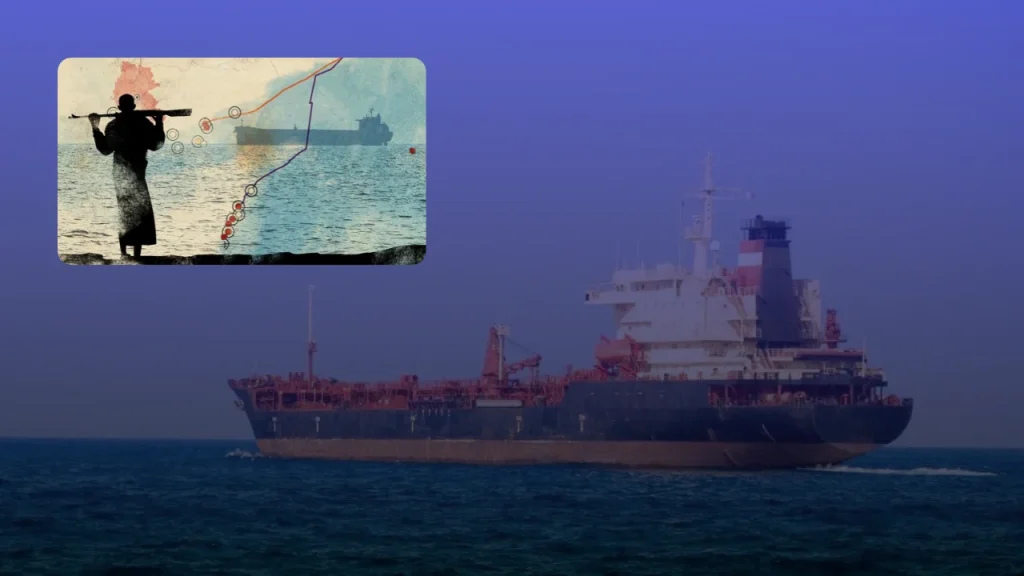
MT Asana Hijacking Timeline: July to October 2026
| Date | Development |
| July 17, 2026 | Armed assailants reportedly boarded and seized the Asana about 65 nautical miles southwest of Mukalla, Yemen. |
| July 19, 2026 | The Associated Press reported the tanker had been moved toward waters off Puntland, northeastern Somalia. |
| July 23, 2026 | Reuters reported the tanker was held by suspected Somali pirates and published a manifest-based crew count of 19. |
| August 24, 2026 | The IMO warned of a resurgence in Gulf of Aden piracy and called for the release of seafarers held on hijacked ships. |
| September 25, 2026 | Puntland forces recovered the separate tanker Sibu 1/Seamull; its crew was reported safe. |
| September 29, 2026 | Puntland forces recovered the Honour 25; five crew members died during the operation. Pirates also abandoned the separate tanker Eureka. |
| October 2, 2026 | The IMO said 44 seafarers had been freed from the Honour 25, Sibu 1/Seamull and Eureka, while 22 remained captive aboard the Asana. |
| October 16, 2026 | EU NAVFOR Operation Atalanta said four piracy cases (Honour 25, Eureka, Sibu 1/Seamull and Sward) were closed and the Asana case remained open. |
| October 25, 2026 | The latest Joint Maritime Information Center regional assessment reviewed reported no change to its Somali coast and basin threat rating; monitoring continued to list the Asana as held. |
| October 28, 2026 | A separate suspected pirate action group was reported in the Gulf of Aden. No new hijacking was confirmed and no link to the Asana was made. |
| October 29, 2026 | No public confirmation of the Asana‘s release was found. |
Several long-running hijackings ended in September and early October, but the Asana remains the unresolved merchant-vessel case in the latest monitoring reviewed.
Why Has the Asana Crew Not Been Released?
Authorities have not publicly explained every operational decision. No verified public account establishes that a particular ransom demand, failed negotiation or rescue plan is responsible for the continued captivity. Several practical and legal factors can shape the response to a hijacking:
Crew safety. An armed recovery risks harming hostages held near armed captors. The Honour 25 deaths show such operations can end tragically, although that case does not predict what would happen with the Asana.
The ship’s location. The vessel was seized off Yemen but later moved into Somali waters. Acting inside another state’s territorial sea raises different legal questions from acting on the high seas, and coordination with the coastal authorities (here, Puntland forces) is important.
Negotiations and information. A negotiated release or rescue depends on reliable information about the vessel, captors and crew. Governments, shipowners and negotiators may hold information that is not public.
Limits of public reporting. The lack of a public rescue announcement does not prove that no diplomacy or negotiation is under way. Equally, monitoring does not mean a rescue has been scheduled.
It would be speculation to say the crew will be freed by a particular date or that efforts have been abandoned. No release timeline has been announced.
Is the Asana Linked to the October 28 Piracy Warning?
Not on the publicly available evidence. On October 28, the Maritime Security Centre Indian Ocean (MSCIO) issued Alert 156/26 about a suspected pirate action group in the Gulf of Aden: a small craft with nine people aboard, reportedly carrying two ladders and a hook. A navigational warning, NAVAREA IX 416/26, advised mariners to keep clear, use extreme caution and report incidents.
EU NAVFOR was investigating. The warnings did not confirm that any merchant vessel had been attacked, boarded or hijacked, and did not identify the Asana or tie the craft to the group holding it. The alert shows that authorities are still watching for pirate activity; it is not evidence that the Asana has moved or that another crew has been taken.
What Does International Law Say About the Asana Hijacking?
The central framework is the United Nations Convention on the Law of the Sea (UNCLOS).
- Article 101 defines piracy as certain illegal acts of violence, detention or depredation committed for private ends by the crew or passengers of one private ship against another ship, or against people or property, on the high seas or in a place outside any state’s jurisdiction. The definition has specific conditions; not every attack at sea qualifies.
- Article 100 requires states to cooperate to the fullest possible extent in repressing piracy.
- Article 105 allows states to seize pirate ships on the high seas and lets the seizing state’s courts decide penalties, subject to applicable law.
Location matters. The reported seizure, about 65 nautical miles off Mukalla, was outside Yemen’s 12-nautical-mile territorial sea, although the area may fall within Yemen’s exclusive economic zone. The tanker was later reported inside Somali territorial waters. A coastal state has sovereignty over its territorial sea, so foreign navies do not automatically have unrestricted authority to use force there just because a vessel is suspected of being held by pirates. Authority for a recovery operation may depend on the coastal state’s consent or cooperation, relevant international arrangements and other legal grounds.
The IMO distinguishes piracy on the high seas from armed robbery against ships within a state’s internal waters, archipelagic waters or territorial sea, so the facts and location of each act can affect the legal analysis.
Holding crew members against their will may also engage hostage-taking laws, including the International Convention against the Taking of Hostages, as well as national criminal law. Which rules apply to the Asana depends on the facts and on who has jurisdiction. For a broader look at how legal systems differ across countries, see What Is the Difference Between Civil Law and Common Law? Legal Systems Explained.
Can the people holding the Asana crew be prosecuted?
Potentially, if authorities identify suspects, establish a lawful basis to prosecute and gather enough evidence. Depending on the facts and national law, conduct tied to a hijacking can lead to charges involving piracy, unlawful detention, hostage-taking, robbery, firearms or violence. The sources reviewed identify no charged defendants or completed prosecution in this case. Cooperation could involve Somalia, the flag state (Tanzania), the countries of the crew and other states with a lawful basis to investigate. An arrest is not a conviction.
Seafarers’ Rights While Held Captive
Seafarers held by pirates are not simply forgotten under the law. Under the Maritime Labour Convention (MLC, 2006), as amended, seafarers held captive as a result of piracy or armed robbery are generally meant to keep receiving wages and other entitlements, and to be repatriated, subject to how each flag state applies the rules and the terms of the individual employment agreement. Whether and how this applies to the Asana crew depends on their contracts, the shipowner’s insurance and the flag state’s implementation, none of which has been publicly detailed.
Is a Ransom Being Demanded for the Asana?
No verified public ransom demand or payment amount was identified as of October 29. Reports about ransom talks in other Somali hijackings cannot be applied automatically to the Asana, and a demand reported by an intermediary is not proof that anything was paid.
Ransom decisions can involve shipowners, insurers, specialist negotiators, national authorities and legal limits such as sanctions and criminal laws. Nothing confirms that a payment would guarantee release.
What Can the Crew’s Families Do?
Families who believe a loved one is aboard need reliable information rather than social-media claims.
- Contact the shipowner or manager and the crewing agency. They are usually the first source of confirmed information about a specific seafarer.
- Contact the relevant consulate or foreign ministry. The crew reportedly includes several nationalities, so more than one diplomatic office may be involved.
- Keep records. Save all communications, plus the seafarer’s contract, identity documents and wage records.
- Ask which official channel will provide updates, and do not assume a person has been released, hurt or killed unless a reliable authority confirms it.
- Beware of scams. Be cautious of unsolicited messages asking for money in exchange for information or a promised release. Verify through the employer, crewing agency, consulate or official authorities before sharing money or sensitive information.
No publicly confirmed, universal compensation fund exists for families of people held in Somali hijackings. Separate questions may arise about wages, benefits, insurance, repatriation costs or civil claims. If a crew member were to die and evidence supported a claim against another party, surviving relatives might need to evaluate their rights under the applicable law, though a claim against a shipowner would not automatically succeed. See What Is a Wrongful Death Lawsuit? Everything Families Need to Know. Any civil claim would be separate from a criminal investigation of the hijackers.
Could the Hijacking Affect Shipping and Fuel Prices?
The Asana carried oil products, but there is not enough evidence to attribute a specific rise in fuel prices to this single hijacking. Piracy can raise costs through security measures, insurance, delays and rerouting, and those costs may be passed on to cargo owners and sometimes consumers, depending on the route, cargo, contract terms and wider market conditions. The case does show that the risk off Somalia has not disappeared.
What Happens Next in the MT Asana Case?
Three developments would materially change the story:
- A confirmed release or rescue. Authorities, the shipowner or a reliable maritime-security body would need to confirm that control of the ship changed and the crew was freed. An unverified report that pirates abandoned the ship would not alone prove the crew is safe.
- A substantive update on crew welfare. Confirmation about food, water, medical care and contact with family would fill the biggest gap in public information.
- A legal or operational development. A confirmed negotiation outcome, official operation, arrest, charge or court proceeding would clarify the response.
As of October 29, 2026, no release announcement, confirmed ransom payment or rescue date has been identified. Future updates should rest on official statements or independently corroborated reporting, not predicted deadlines.
Frequently Asked Questions
Is the MT Asana still held by Somali pirates?
Yes. As of October 29, 2026, the latest public monitoring reviewed lists the vessel as held. EU NAVFOR’s October 16 update said it remained under a pirate action group’s control inside Somali territorial waters.
When was the MT Asana hijacked?
July 17, 2026, about 65 nautical miles southwest of Mukalla, Yemen, in the Gulf of Aden.
How many people are being held aboard the Asana?
The IMO reported on October 2 that 22 seafarers remained captive. Early media reports gave different counts, so the official figure should be distinguished from earlier reporting.
What nationalities are the crew?
EU NAVFOR said about half were Indian. An early Reuters manifest listed people from India, Syria, Yemen and Egypt. A complete, reconciled list has not been located.
Has a ransom been paid?
No verified public payment was identified as of October 29. A reported demand would not prove that money was paid or that the crew would be freed.
Are the crew members alive?
No deaths aboard the Asana have been confirmed in the sources reviewed, but no detailed, current medical report has been published, so it would be inaccurate to assume everyone is well.
Is a rescue operation under way?
None has been publicly confirmed. Operation Atalanta reports monitoring the case, but the lack of an announcement does not prove that no private negotiation or diplomacy is taking place.
Did the October 28 piracy warning involve the Asana?
No link has been established. MSCIO reported a suspected pirate action group, but no attack or hijacking was confirmed.
Can another country prosecute the suspected pirates?
Potentially, depending on where the alleged piracy occurred, how suspects are lawfully seized or held, national law and the basis for jurisdiction. UNCLOS provides a cooperation framework, but it does not let every country prosecute every suspect in every circumstance.
How can families get reliable information?
Contact the ship’s owner or manager, the crew’s employer or crewing agency, and the relevant consular service, and be wary of anyone asking for money in exchange for news.
Sources
- EU NAVFOR Operation Atalanta: Update on the Piracy Incidents Off the Northern Coast of Somalia, October 16, 2026 (https://eunavfor.eu/news/update-piracy-incidents-northern-coast-somalia)
- International Maritime Organization: Secretary-General Mourns Seafarers Killed During Rescue of Hijacked Ship, October 2, 2026 (https://www.imo.org/en/mediacentre/pressbriefings/pages/imo-secretary-general-mourns-seafarers-killed-during-rescue-of-hijacked-ship-.aspx)
- International Maritime Organization: Calls for Urgent Release of 44 Seafarers Held by Pirates, July 6, 2026 (https://www.imo.org/en/mediacentre/pressbriefings/pages/imo-secretary-general-calls-for-urgent-release-of-44-seafarers-held-by-pirates.aspx)
- Associated Press: Tanzanian-Flagged Tanker MT Asana Hijacked Off Yemen, July 2026 (https://apnews.com/article/827efb5b74d4aad62b4ff063420327e3)
- Reuters: Merchant Ship Hijacked Off Yemen, Now Held by Somali Pirates (https://www.marketscreener.com/news/merchant-ship-hijacked-off-yemen-now-held-by-somali-pirates-residents-say-ce7f51dede8ef120)
- Maritime Security Centre Indian Ocean: Alert 156/26, October 28, 2026 (https://mscio.eu/alerts/192)
- United Nations: Legal Framework for the Repression of Piracy Under UNCLOS (https://www.un.org/depts/los/piracy/piracy_legal_framework.htm)
- International Maritime Organization: Piracy and Armed Robbery Against Ships (https://www.imo.org/en/ourwork/security/pages/piracyarmedrobberydefault.aspx)
This article is for informational purposes only. AllAboutLawyer.com is a consumer legal information website, not a law firm, and does not provide legal advice. Crew numbers, vessel status and reported events may change as authorities release new information. Official maritime-security updates and applicable legal rules control over unverified reporting.
About the Author
Israr Ahmad is a legal content researcher with 4+ years of experience covering class action settlements and consumer rights cases. He has researched and published coverage of 2,500+ settlements using verified court records, settlement administrator filings, and government sources. Learn more about Israr.