
Shawn Oliver Massachusetts, GOP Lieutenant Governor Candidate Suspends Campaign After OUI Arrest and Five-Car Crash in New Bedford
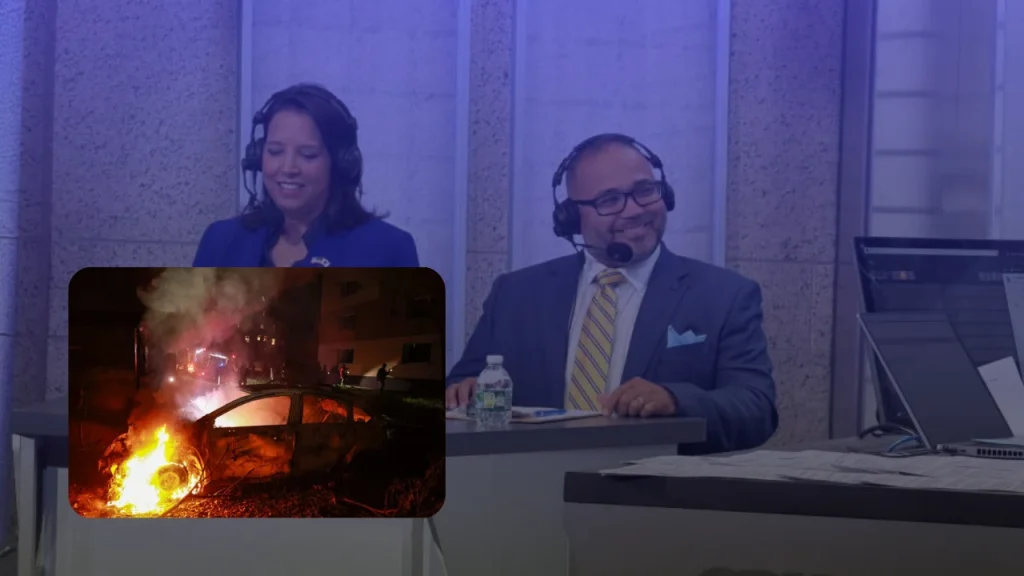
Shawn Oliver, the Republican nominee for lieutenant governor of Massachusetts and a Ward 3 New Bedford city councilor, suspended his campaign on October 18, 2026, one day after being arrested following a late-night crash on Dartmouth Street. Police say Oliver’s vehicle struck five parked cars and overturned at about 11:40 p.m. on Saturday, October 17. Two of the parked vehicles sustained extensive damage.
Oliver, 42, was taken to St. Luke’s Hospital for treatment and was then arrested and charged with operating under the influence of liquor (OUI), negligent operation of a motor vehicle, a marked-lanes violation and speeding. His running mate, Republican gubernatorial nominee Mike Minogue, called for him to step aside and said he would formally ask Oliver to resign if their ticket is elected.
The arrest raises three separate legal tracks: the criminal case and Registry of Motor Vehicles (RMV) action, Oliver’s job as a state corrections officer, and his place on the November 3 ballot. An arrest is not a conviction. The charges are allegations, and the reports reviewed do not establish Oliver’s blood-alcohol concentration, whether he took or refused a chemical test, or the outcome of his arraignment.
Shawn Oliver Arrest: Quick Facts
| Detail | Latest reported information |
| Name | Shawn Oliver |
| Age | 42 |
| Hometown | New Bedford, Massachusetts |
| Political position | Ward 3 New Bedford city councilor (elected 2023) |
| Statewide candidacy | Republican nominee for lieutenant governor |
| Running mate | Mike Minogue, Republican nominee for governor |
| Incident date and time | Saturday, October 17, 2026, about 11:40 p.m. |
| Location | 448 Dartmouth Street, New Bedford, Massachusetts |
| Vehicles involved | Oliver’s vehicle (overturned) and five parked vehicles |
| Property damage | Two parked vehicles reportedly sustained extensive damage |
| Hospital | St. Luke’s Hospital (treated for injuries) |
| Charges | OUI liquor, negligent operation, marked-lanes violation, speeding |
| Campaign status | Suspended October 18, 2026 |
| Ballot status | Name expected to remain on the ballot |
| Corrections employment | Placed on restricted duty while the matter is reviewed |
| Election date | November 3, 2026 (early voting underway) |
| Court status | Arraignment expected Monday, October 19; no later disposition verified |
| Chemical test result | Not reported |
Reflects official statements and reliable reporting available on October 19, 2026. Any later court, RMV or employer action takes precedence over this article.
1. What Happened in the Shawn Oliver Car Crash?
According to the New Bedford Police Department’s account, officers responded at about 11:40 p.m. on October 17 to a crash at 448 Dartmouth Street. They found a vehicle overturned after striking multiple parked vehicles. Five parked vehicles were involved. Investigators identified Oliver as the driver. After the scene and hospital investigation, police arrested him and charged him with four motor-vehicle offenses. Reports say he was booked and released on personal recognizance early Sunday.
Was anyone else injured?
The reports reviewed confirm injuries to Oliver but do not establish that anyone else was hurt. Police reporting focused on the overturned vehicle and damage to parked cars. A more complete official account would be needed before concluding no one else was harmed.
Was Oliver driving drunk?
Police charged him with OUI. That is an allegation, not a finding of intoxication or guilt. No blood-alcohol reading, breath-test result or field sobriety detail has been published in the reports reviewed.
Did Oliver comment on the crash?
On October 18 he announced he was suspending his campaign, saying the election was too important to be overshadowed by personal matters, and asked that his family’s privacy be respected. The statement did not describe the crash, a test result or a legal defense.
2. What Criminal Charges Does Shawn Oliver Face?
| Charge | Massachusetts law | What prosecutors generally must establish |
| Operating under the influence of liquor | M.G.L. c. 90, § 24 | That he operated a motor vehicle on a public way or place with public access while under the influence of alcohol, or with a blood-alcohol concentration of 0.08% or higher |
| Negligent operation | M.G.L. c. 90, § 24(2)(a) | That he operated negligently so that the lives or safety of the public might be endangered |
| Marked-lanes violation | M.G.L. c. 89, § 4A | That he failed to drive within a single lane or left the lane without first making sure it was safe |
| Speeding | M.G.L. c. 90, § 17 | That he drove faster than was reasonable and proper under the circumstances, or above a posted limit |
Each charge has its own elements, and prosecutors must prove each one. Damage to parked cars is evidence, but it does not by itself prove impairment, speed or lane position.
OUI versus negligent operation
OUI focuses on whether the driver was impaired or over the legal limit. Negligent operation focuses on how the vehicle was driven. The same crash can support both charges.
Charges that have not been reported
No report reviewed says Oliver is charged with leaving the scene, OUI causing serious bodily injury (M.G.L. c. 90, § 24L), or any felony. Those offenses would require different facts, such as injury to another person, and should not be assumed.
Are these criminal offenses?
OUI and negligent operation are criminal offenses under Chapter 90. Speeding and marked-lanes violations are generally treated as civil motor vehicle infractions, with fines and effects on the driving record and insurance rather than jail.
3. What Penalties Could Oliver Face Under Massachusetts Law?
These are statutory possibilities, not a prediction. The actual outcome depends on the evidence, any qualifying prior history (none was reported), and how the case is resolved.
- First-offense OUI (M.G.L. c. 90, § 24): a fine of $500 to $5,000, imprisonment of up to 2½ years in a house of correction, or both, plus a one-year loss of license on conviction, along with assessments and fees.
- Negligent operation (c. 90, § 24(2)(a)): punishable by a fine and/or imprisonment under the statute. Confirm the current maximums against the statute before relying on a figure.
- Speeding and marked lanes: civil fines and surcharges, plus possible insurance consequences.
Could a first-time OUI receive a different disposition?
M.G.L. c. 90, § 24D allows eligible first offenders a treatment and probation option. A qualifying disposition generally includes probation, a driver-alcohol education program, and a license loss of 45 to 90 days, subject to the statute’s requirements. It is not automatic, and the court must find eligibility. Such a disposition typically follows a plea or admission to sufficient facts rather than a dismissal.
Could Oliver go to jail?
The statute authorizes imprisonment, but an arrest does not mean jail will be imposed. The case could be dismissed, resolved by plea or disposition, or go to trial.
Restitution to the owners of the parked vehicles
A Massachusetts court can order restitution for victims’ property losses as part of a sentence or as a condition of probation. Victims also have rights under the Massachusetts Victim Bill of Rights (M.G.L. c. 258B), including notification and the opportunity to be heard.
4. Could Oliver Lose His Driver’s License?
Possibly. In Massachusetts, RMV license action is separate from the criminal case.
- Chemical test refusal: a driver 21 or older who refuses a breath test after an OUI arrest faces an administrative suspension of 180 days for a first refusal. This is separate from any criminal sentence, and a refusal cannot be used as an element of the criminal OUI trial in the same way a test result can.
- Failed breath test (0.08% or higher): a driver 21 or older with no qualifying priors generally faces a 30-day administrative suspension.
- Conviction: a first OUI conviction carries a one-year loss of license, while a qualifying 24D disposition carries the shorter 45 to 90 day period.
- Repeat offenses: longer suspensions and ignition-interlock requirements can apply.
The reports do not say whether Oliver took or refused a test, so it would be wrong to claim any specific suspension has occurred. Oliver’s actual license status requires RMV and court records. Drivers may be able to challenge administrative suspensions through the RMV process.
5. What Happens at the Arraignment and After?
Oliver was expected to be arraigned on Monday, October 19, 2026, in the district court with jurisdiction over New Bedford. I could not verify a published result. An arraignment is an early stage: the court identifies the charges, records a plea (typically not guilty at this stage) and addresses release conditions. It does not decide guilt.
Later stages may include:
- Discovery and exchange of police reports, test results and video
- Pretrial motions, including motions to suppress evidence
- Plea negotiations or a possible 24D disposition
- Trial
- Sentencing if there is a conviction or qualifying disposition
What evidence matters in an OUI case?
Officer observations, body-camera footage, witness statements, field sobriety tests, breath or blood results and the crash scene. A defense lawyer may examine whether police followed required procedures, whether tests were reliable and administered properly, and whether statements can lawfully be used. No specific defense can be assessed without the case file.
Constitutional rights
- Presumption of innocence: the prosecution must prove each charge beyond a reasonable doubt.
- Right to remain silent: protected by the Fifth Amendment and Article 12 of the Massachusetts Declaration of Rights. Miranda warnings are required for custodial interrogation, not at every police encounter.
- Right to counsel: guaranteed by the Sixth Amendment and Article 12.
- Right to an independent test: Massachusetts law allows an arrested OUI suspect to request an independent medical examination at their own expense, and police must not obstruct that request.
6. Can the Owners of the Parked Cars Sue or Claim Insurance?
Yes. A person whose vehicle is damaged by another driver’s negligence can pursue a property-damage claim through insurance or, if necessary, a civil lawsuit. In Massachusetts, a standard auto policy includes compulsory coverage for damage to someone else’s property, so owners often begin with the driver’s insurer, or their own collision coverage, and then pursue recovery.
Recoverable losses can include repair costs or a vehicle’s value if it is a total loss, towing and storage, and certain other supported losses. Insurers investigate liability and policy terms before paying, and an arrest is not a civil judgment. If damages exceed coverage, personal financial exposure may arise. In Massachusetts, tort claims are generally subject to a three-year limitation period (M.G.L. c. 260, § 2A), though shorter notice requirements can apply in some situations.
No report reviewed shows that any owner has filed suit against Oliver.
7. What Does the Arrest Mean for Oliver’s Job as a Corrections Officer?
The Associated Press reported that Oliver works as a corrections officer at the Massachusetts Treatment Center. A Department of Correction spokesperson said he was placed on restricted work duty while the facts and circumstances are reviewed. Restricted duty is an employment measure, not a conviction or a disciplinary finding.
Can the Department of Correction fire him?
The arrest can prompt an employment review, but no termination has been reported. Any action would depend on Department of Correction policies, the collective bargaining agreement (M.G.L. c. 150E governs public-sector bargaining), civil service protections where they apply (M.G.L. c. 31, including its just-cause and hearing procedures for covered employees), and the outcome of the criminal case. A pending charge is different from a conviction, but off-duty misconduct can still be reviewed under conduct rules for public-safety employees.
Could a conviction affect his career?
Potentially. A conviction could affect assignments, discipline or continued employment depending on applicable policies. Those consequences remain unsettled.
8. Why Did Oliver Suspend His Campaign?
He suspended on October 18, saying the election was too important to be overshadowed by personal matters. Minogue said there was no excuse for driving under the influence and that, if elected, he would ask Oliver to resign. The Massachusetts Republican Party supported the suspension, and New Bedford Mayor Jon Mitchell, a Democrat, said the public deserved an explanation. These are political statements, not judicial findings.
Has Oliver formally withdrawn?
The accurate description is that he suspended his campaign. A suspension means he stopped campaigning; it does not necessarily remove his name from the ballot. WHDH reported that the withdrawal deadline passed after the September primary, ballots were printed, and early voting was underway.
Could Oliver still be elected?
His name remains on the ballot beside Minogue’s, and votes for the ticket are not invalidated because a candidate stops campaigning. In Massachusetts the governor and lieutenant governor are elected as a ticket. If the ticket wins and Oliver does not take or hold the office, vacancy and succession would be governed by the Massachusetts Constitution and statutes, and Minogue’s statement that he would ask Oliver to resign is a stated intention, not a legal order.
Does an arrest disqualify him?
The materials reviewed identify no automatic rule that a pending OUI arrest disqualifies a candidate from the lieutenant governorship. Any eventual consequence would depend on qualification rules, election procedures and the outcome of the criminal case.
Early voting and the ballot
Massachusetts allows early voting (M.G.L. c. 54, § 25B), and voting began October 17. Some voters had already cast ballots when the suspension was announced. Withdrawal and ballot-replacement deadlines for state offices are set by Massachusetts election law (M.G.L. c. 53), and the reports say those deadlines have passed.
9. Does the Arrest Affect His New Bedford City Council Seat?
Oliver was elected to the New Bedford City Council in 2023 and represents Ward 3. His campaign statement addressed the lieutenant governor race and did not announce a resignation from the council. An arrest does not automatically vacate a municipal office. Whether a councilor could be censured, suspended or removed depends on the city charter, state law and council rules, and no formal proceeding had been reported.
10. What Happens to the Republican Ticket?
- Oliver could remain on the ballot through Election Day without campaigning.
- The ticket could still receive votes despite the suspension.
- If the ticket wins, questions about Oliver’s willingness to serve could arise.
- Oliver could separately resign from the candidacy or another role, subject to applicable procedures.
- Any vacancy would be handled under the Massachusetts Constitution and statutes.
The campaign suspension does not dismiss the criminal charges, and the arrest does not automatically cancel the candidacy.
11. Possible Legal Issues in the Case
- OUI proof: the prosecution needs evidence of impairment or a qualifying blood-alcohol level. The absence of a published result does not mean no test occurred.
- Negligent operation: crash scene, damage, witnesses, video and reconstruction evidence may establish how the vehicle was operated.
- Speeding and marked lanes: each must be proven separately. An overturned vehicle does not automatically prove the exact speed or lane violation.
- Testing and statements: a lawyer may review whether procedures complied with law and whether evidence is reliable.
- Separate counts: dismissal of one charge does not automatically dismiss the others.
No outcome can be predicted from news reports alone.
12. What Happens Next?
Watch for the arraignment outcome and release conditions, the status of the charges, RMV action on his license, any change to his Department of Correction duties, any change in his council status, and the November 3 results. Until those are documented, the confirmed facts are that Oliver was arrested and charged after a crash involving five parked vehicles, suspended his campaign, and was placed on restricted duty. The charges remain allegations unless resolved through the legal process.
Frequently Asked Questions About Shawn Oliver’s Arrest
Why was Shawn Oliver arrested?
New Bedford police said he was arrested after a late-night crash on October 17, 2026, involving five parked vehicles. He was charged with OUI liquor, negligent operation, a marked-lanes violation and speeding.
Did Shawn Oliver fail a breathalyzer test?
No breath-test result or blood-alcohol concentration has been reported, and the reports do not say whether he took or refused a test.
What is the maximum penalty for a first OUI in Massachusetts?
Under M.G.L. c. 90, § 24, a first offense carries up to 2½ years in a house of correction and a fine of $500 to $5,000, or both. Eligible first offenders may receive a § 24D disposition instead.
Will Shawn Oliver lose his driver’s license?
Not confirmed. RMV action depends on the test result or refusal and the court outcome. A refusal carries a 180-day suspension for drivers 21 and over, and a first OUI conviction carries a one-year loss of license, with a shorter period under § 24D.
Has Oliver been convicted?
No. An arrest and charge are not a finding of guilt.
Did Shawn Oliver drop out of the race?
He suspended his campaign. Reports say his name will remain on the ballot because the withdrawal deadline passed and early voting is underway.
Could Oliver still become lieutenant governor?
His name is expected to remain on the ballot with Mike Minogue. Whether the ticket wins and whether Oliver serves are separate questions.
Is he still a New Bedford city councilor?
Reports identify him as the Ward 3 councilor and do not report a resignation.
Was he fired from his corrections job?
No firing was reported. He was placed on restricted duty while the matter is reviewed.
Can the owners of the five damaged cars sue?
They may pursue claims through insurance or civil court. No lawsuit has been reported.
Is OUI a felony in Massachusetts?
A first-offense OUI is a misdemeanor. Different provisions, such as OUI causing serious bodily injury, are more serious but are not alleged in the reports reviewed.
Editorial Note and Disclaimer
This article is general legal and political information, not legal advice. The charges are allegations, not findings of guilt. Statutory provisions are summarised in plain language, may be amended, and penalties and procedures depend on the facts of a case. Court, RMV, employment and election outcomes may change as more official information is released. Anyone facing OUI charges or affected by a crash should consult a Massachusetts attorney. Corrections are welcome and will be applied promptly.
Sources
- Associated Press, Massachusetts GOP lieutenant governor candidate suspends campaign after arrest in car crash, October 18, 2026: https://apnews.com/article/oliver-crash-alcohol-arrest-minogue-f470b43e825dce1cb1ab73b65f8f8102
- ABC News, Massachusetts Republican Shawn Oliver suspends campaign after arrest, October 18, 2026: https://abcnews.com/US/massachusetts-republican-shawn-oliver-suspends-campaign-after-arrest/story?id=137364299
- WHDH, Despite suspension of campaign, Oliver’s name will appear on election ballot, October 18, 2026: https://whdh.com/news/despite-suspension-of-campaign-olivers-name-will-appear-on-election-ballot/
- Boston 25 News, Republican Party response following the OUI crash: https://www.boston25news.com/news/local/republican-candidate-mass-lieutenant-governor-suspends-campaign-following-oui-crash/52WPR4K32NAYPNW4B74MLZMIPQ/
- Massachusetts General Laws, Chapter 90, Section 24 (OUI and negligent operation): https://malegislature.gov/Laws/GeneralLaws/PartI/TitleXIV/Chapter90/Section24
- Massachusetts General Laws, Chapter 90, Section 24D (first-offender disposition): https://malegislature.gov/Laws/GeneralLaws/PartI/TitleXIV/Chapter90/Section24D
- Massachusetts General Laws, Chapter 90, Section 17 (speeding): https://malegislature.gov/Laws/GeneralLaws/PartI/TitleXIV/Chapter90/Section17
- Massachusetts General Laws, Chapter 89, Section 4A (marked lanes): https://malegislature.gov/Laws/GeneralLaws/PartI/TitleXIV/Chapter89/Section4a
- Massachusetts RMV, Alcohol and drug suspensions for drivers over 21: https://www.mass.gov/info-details/alcohol-and-drug-suspensions-for-over-21-years-of-age
- Massachusetts Court System, New Bedford District Court: https://www.mass.gov/locations/new-bedford-district-court
- Massachusetts General Laws: Chapter 258B (Victim Bill of Rights), Chapter 260 § 2A (tort limitation), Chapter 150E (public-sector bargaining), Chapter 31 (civil service), Chapter 54 § 25B (early voting), Chapter 53 (nominations and ballots), malegislature.gov.
- Massachusetts Constitution and Declaration of Rights (Article 12), malegislature.gov.
About the Author
Israr Ahmad is a legal content researcher with 4+ years of experience covering class action settlements and consumer rights cases. He has researched and published coverage of 2,500+ settlements using verified court records, settlement administrator filings, and government sources. Learn more about Israr.