
Ilhan Omar Citizenship Investigation Update, Obama Condemns Probe as Lawyers Accuse DOJ of Ignoring Judge’s Safeguards in Home Search
The federal investigation into Rep. Ilhan Omar (D-Minn.) has escalated from a question about her citizenship into a dispute over how the Justice Department (DOJ) searched her Washington, D.C., home on October 12, 2026. On October 16, her attorneys, Amy Jeffress and Joshua Matz, sent prosecutors a letter demanding the return of seized property and the preservation of recordings made during the search. They allege agents disregarded safeguards a magistrate judge imposed to protect her constitutional interests as a member of Congress. On October 18, former President Barack Obama publicly condemned the investigation.
The DOJ disputes the allegations. A department spokesperson said its attorneys and law-enforcement partners complied with all court orders and legal obligations and called the lawyers’ letter inaccurate.
What has not changed: Omar remains a U.S. citizen and a sitting member of Congress. No criminal charge and no court order revoking her citizenship were identified in the sources reviewed through October 19, 2026. An investigation is not a charge, a charge is not a conviction, and a search warrant is not proof of a crime. Omar denies wrongdoing.
Ilhan Omar Investigation: Quick Facts
| Detail | Latest reported information |
| Subject | Rep. Ilhan Omar (D-Minn.) |
| Reported focus of inquiry | Her U.S. citizenship status and related immigration and naturalization records; the full evidence has not been publicly disclosed |
| Search date | October 12, 2026 |
| Location | Omar’s residence in Washington, D.C. |
| Reported court safeguards | A magistrate judge imposed protections for a sitting member of Congress; the full warrant and order have not been made public |
| Lawyers’ letter | October 16, 2026, from Amy Jeffress and Joshua Matz to DOJ prosecutors |
| What the lawyers demand | Return of seized property (including her personal cellphone) and preservation of search audio and video recordings |
| DOJ position | Says it complied with all court orders and legal obligations; calls the letter inaccurate |
| Obama statement | October 18, 2026; called the investigation an abuse of federal power and compared it to false claims about his own citizenship |
| Court ruling so far | None identified ordering return of property or finding a violation |
| Citizenship status | Not revoked; no denaturalization case reported |
| Charges | None reported |
| Next general election | November 3, 2026 |
Reflects reporting available on October 19, 2026. Any later court filing or ruling takes precedence over this article.
What Happened During the October 12 Search?
Federal agents executed a search warrant at Omar’s Washington home on October 12. According to her attorneys’ allegations, which the DOJ disputes:
- Investigators were required to notify Omar and the House of Representatives Office of General Counsel when executing the warrant, and that did not happen.
- Omar and her counsel were supposed to receive a copy of the warrant at the outset, and her attorneys say this was not followed.
- Agents allegedly prevented Omar from contacting her lawyer for more than an hour after the search began.
- Documents and other items were seized, including her personal cellphone, and her lawyers say the dispute includes protecting materials tied to her legislative work from improper executive-branch review.
The attorneys’ letter is not a judicial finding that agents violated any order. A court would have to decide that. Because the warrant and the judge’s order have not been released in full, readers cannot compare either side’s account against the documents.
Unverified claims circulating online
Some commentary has claimed that agents reviewed constituent communications without a court-approved filter team, that digital imaging exceeded time limits set by the magistrate, or that a motion for a Special Master has already been filed and an expedited hearing set. The sources reviewed do not confirm these specifics, so this article does not report them as fact. The confirmed development is the October 16 demand letter, not a ruling.
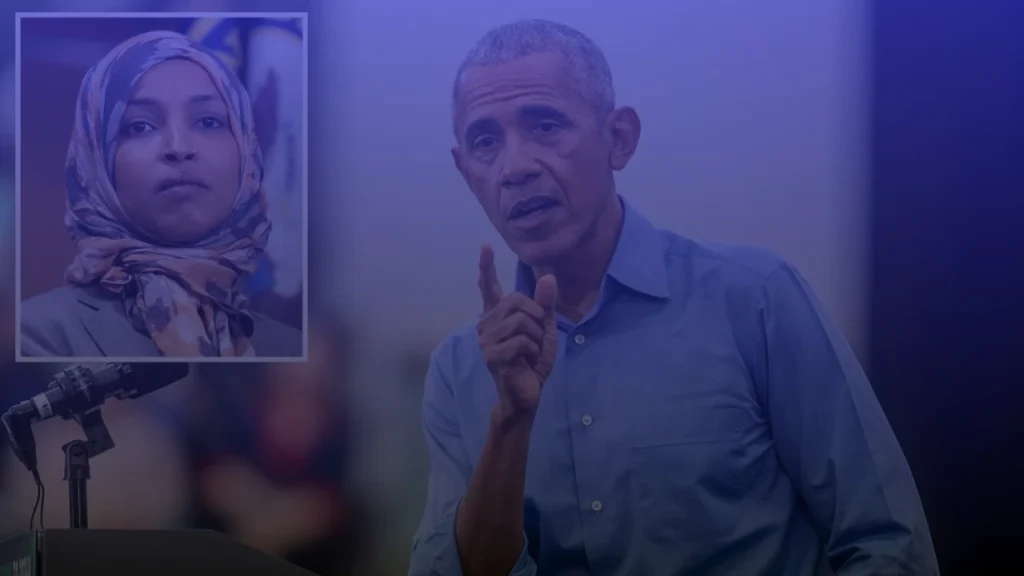
Obama Condemns the Investigation
On Sunday, October 18, former President Barack Obama criticized the investigation, arguing that federal law enforcement should not be used to intimidate an elected official over her political views. He compared it to the false claims about his own citizenship promoted by Donald Trump before and during his presidency, and said it should outrage Americans.
Obama also asserted that Omar became a U.S. citizen at age 17 when her father was naturalized. That is a legal claim about derivative citizenship, discussed below. His remarks are political criticism, not a court finding about Omar’s immigration records, and they do not decide the factual questions investigators are examining.
Omar has consistently denied wrongdoing, and her legal team says there is no legitimate basis to suggest she violated citizenship law.
The Law: How Citizenship Can Be Acquired Through a Parent
8 U.S.C. § 1431 (Child Citizenship Act of 2000). A child born outside the United States automatically becomes a citizen when the statutory conditions are met. They include being under 18, having at least one parent who is a U.S. citizen (by birth or naturalization), being a lawful permanent resident, and residing in the United States in the legal and physical custody of the citizen parent.
Being under 18 is not enough. Every condition must be met. An allegation or investigation does not establish that any condition was missed. The government would have to prove that in court.
The Law: Can Citizenship Be Revoked?
Revoking a naturalized citizen’s citizenship (denaturalization) is difficult and requires a court. There is no administrative shortcut for a sitting member of Congress or anyone else.
- Civil denaturalization, 8 U.S.C. § 1451(a): The government must file a case in federal district court, supported by an affidavit showing good cause. It must prove that citizenship was obtained illegally or by concealment of a material fact or willful misrepresentation. Courts require clear, unequivocal and convincing evidence, a high standard.
- Criminal denaturalization, 8 U.S.C. § 1451(e): Following a conviction for unlawfully procuring naturalization (8 U.S.C. § 1425), the court revokes citizenship as part of the judgment.
- Unlawful procurement and false statements: 8 U.S.C. § 1425 criminalizes procuring naturalization contrary to law. 18 U.S.C. § 1015 criminalizes false statements in naturalization proceedings, and 18 U.S.C. § 1001 criminalizes false statements to federal authorities generally. Federal law generally sets a ten-year limitation period for naturalization offenses (18 U.S.C. § 3291), which becomes important for older conduct.
- Supreme Court limits: Afroyim v. Rusk (1967) bars involuntary loss of citizenship absent a qualifying legal basis. In Maslenjak v. United States (2017), the Court held that the government must show a false statement actually influenced the naturalization decision (a causal link), not merely that a false statement was made. Schneiderman v. United States (1943) and Fedorenko v. United States (1981) established the demanding evidentiary standard and strict construction against the government.
Would a citizenship dispute affect her seat in Congress?
Article I, Section 2, Clause 2 requires a House member to have been a citizen for at least seven years. Article I, Section 5, Clause 1 makes each chamber the judge of its members’ qualifications, and Article I, Section 5, Clause 2 allows expulsion by a two-thirds vote. An investigation alone changes none of this. Omar’s eligibility has not been altered by the investigation. Only a final court judgment of revocation, or a House action under its own constitutional powers, could change her status.
Why the Speech or Debate Clause Matters
Article I, Section 6, Clause 1 protects members of Congress from being questioned in any other place about legislative acts. The Supreme Court has addressed its reach in cases including Johnson (1966), Brewster (1972), Gravel v. United States (1972), Eastland v. U.S. Servicemen’s Fund (1975) and United States v. Helstoski (1979).
The most relevant precedent is United States v. Rayburn House Office Building, Room 2113, 497 F.3d 654 (D.C. Cir. 2007). The D.C. Circuit held that the clause includes a nondisclosure privilege, so executive agents cannot review legislative materials during a search of a lawmaker’s office without giving the member a chance to assert the privilege. That ruling is why courts and the DOJ use safeguards such as notice to the member and House counsel and screening of legislative materials.
The clause is not blanket immunity. It does not protect members from criminal investigation of personal, non-legislative conduct, and it does not make a lawmaker’s home categorically immune from a lawful search. The disputed question is whether this search, and the handling of seized material, respected the protections that apply to legislative activity. The DOJ says it did, and Omar’s attorneys say it did not.
Fourth Amendment and Search Rules
- Fourth Amendment: Searches require a warrant based on probable cause, particularly describing the place and items to be seized. A search that exceeds the warrant’s scope can be challenged.
- Fed. R. Crim. P. 41: Governs warrants. Rule 41(f) covers execution, inventory and return, and requires that a copy of the warrant and a receipt be given to the person searched or left at the premises.
- Fed. R. Crim. P. 41(g): A person aggrieved by an unlawful search or by the deprivation of property may ask the court to return it. The court may impose reasonable conditions to protect access to the property and its use in later proceedings.
- Fed. R. Crim. P. 41(h): A motion to suppress evidence is made under Rule 12 of the same rules.
- Franks v. Delaware (1978): A defendant can challenge a warrant by showing that the affidavit contained deliberately or recklessly false statements material to probable cause.
- Exclusionary rule: Mapp v. Ohio (1961) generally bars unlawfully obtained evidence at trial, but United States v. Leon (1984) and later cases recognize a good-faith exception, and courts weigh whether suppression is an appropriate remedy for a particular violation.
Could Omar get her phone and other property back?
Her attorneys demanded return of the property and preservation of recordings. The reports reviewed through October 19 do not show that a judge has ordered return or ruled the seizure unlawful. A Rule 41(g) request does not automatically require investigators to surrender evidence they may lawfully keep. The outcome can depend on the warrant, the type of item, the status of the investigation and any privileges. A court could instead order a copy returned, restrict review of certain files, or require screening by a filter or taint team, or in some cases a neutral special master.
Would a procedural violation end the investigation?
No automatic dismissal follows. A court would identify the specific violation and choose a remedy, which might be return of property, limits on review of privileged material, or in some cases suppression of evidence at trial. A procedural dispute over the search does not by itself prove that Omar’s citizenship was lawfully or unlawfully obtained, and an immigration inquiry does not prove agents followed every search requirement.
Does the Pre-Election Timing Violate DOJ Policy?
Omar’s attorneys argue that taking investigative steps weeks before the November 3 election raises serious concerns about political interference. Obama made a similar criticism.
The Justice Manual, Section 9-85.500, states that federal prosecutors and agents may not select the timing of an investigative step, charge or public statement for the purpose of affecting an election or giving an advantage or disadvantage to a candidate or party. It is an internal policy, not a statute, and it does not forbid every investigative step near an election. The question would be whether officials chose the timing for an improper electoral purpose. No court has found that. A violation of internal policy also does not by itself create a constitutional violation or require dismissal.
The Hatch Act, 5 U.S.C. §§ 7321 to 7326, limits certain political activity by federal employees, but no report reviewed alleges a Hatch Act violation here.
What Are the Possible Outcomes?
| Possible development | What it would mean |
| Court filing seeking relief | Her lawyers could ask a judge for return of property, a ruling on the safeguards, or a screening process |
| Ruling on the search | A judge could find compliance, find a violation and order a remedy, or request more information |
| Investigation closed or continues | No charge is required to follow any filing |
| Criminal charges | Would require a grand jury indictment or information; none reported |
| Civil denaturalization case | Would require a filing in federal district court with a high burden of proof; none reported |
| House action | Ethics or other proceedings under the House’s own rules; none reported |
None of these has occurred according to the sources reviewed.
What Happens Next?
As of October 19, the publicly reported developments are the October 12 search, the October 16 demand letter, the DOJ’s denial, and Obama’s October 18 criticism. Watch for a court filing seeking judicial relief, a ruling on the search or the seized materials, confirmation of the scope of the investigation, and any announcement of criminal or denaturalization proceedings.
The controlling point is unchanged: Ilhan Omar’s citizenship has not been publicly revoked by a court, and her eligibility to serve in Congress has not been altered by the investigation alone.
Frequently Asked Questions About the Ilhan Omar Investigation
What is the latest update in the Ilhan Omar investigation?
Her lawyers sent DOJ prosecutors a letter on October 16 demanding return of seized property and preservation of search recordings, alleging agents ignored a magistrate judge’s safeguards. The DOJ disputes this. Obama condemned the investigation on October 18.
Has Ilhan Omar been charged with a crime?
No charge has been reported.
Has Ilhan Omar’s citizenship been revoked?
No. Revocation requires a federal court process, and none has been reported.
Can Ilhan Omar still serve in Congress?
Yes. The investigation alone does not change her eligibility or her status as a sitting member.
What did Obama say?
He criticized the investigation as an abuse of government power against a political critic and compared it to false claims about his own citizenship. He also said Omar became a citizen at 17 through her father’s naturalization.
What does the Speech or Debate Clause protect?
It protects members of Congress from executive and judicial interference with legitimate legislative acts, including a privilege against review of legislative materials. It does not give blanket immunity from investigation of personal conduct.
What law governs the return of seized property?
Federal Rule of Criminal Procedure 41(g) allows a person to ask a court to return property seized in an unlawful search or otherwise wrongly held.
Did the DOJ violate a court order?
That is alleged by Omar’s lawyers and denied by the DOJ. No court has found a violation.
Could evidence from the search be thrown out?
Possibly, but only if a court finds a violation and decides suppression is the right remedy. Courts consider good-faith exceptions and the nature of the violation.
Is the timing before the election a violation of DOJ policy?
The Justice Manual bars choosing the timing of investigative steps to affect an election. No court or official finding has said that happened here.
What is derivative citizenship under 8 U.S.C. § 1431?
It is the automatic acquisition of U.S. citizenship by a child under 18 who meets all statutory conditions, including a citizen parent, lawful permanent residence and residence in the parent’s legal and physical custody.
What would have to happen for Omar to be denaturalized?
The government would have to file a civil case or obtain a criminal conviction, and prove illegal procurement or concealment or misrepresentation of a material fact to a high evidentiary standard.
Editorial Note and Disclaimer
This article is general news and legal information, not legal advice. The allegations described are claims by the parties and have not been resolved by a court. Omar is presumed to have acted lawfully absent a final judgment, and she denies wrongdoing. Statutory and case-law summaries are in plain language and may change. Facts may change as the court record develops. Corrections are welcome and will be applied promptly.
Sources
- The Washington Post, Obama says Trump officials’ pursuit of Rep. Omar should outrage all Americans, October 18, 2026: https://www.washingtonpost.com/politics/2026/10/18/obama-says-trump-officials-pursuit-rep-omar-should-outrage-all-americans/
- CBS News, Attorneys for Rep. Ilhan Omar accuse DOJ of violating judge’s orders, October 17, 2026: https://www.cbsnews.com/news/attorneys-ilhan-omar-doj-violating-judge-orders/
- Associated Press, Rep. Ilhan Omar’s attorneys demand return of property seized in federal search of her home, October 17 to 18, 2026: https://apnews.com/article/ilhan-omar-justice-department-investigation-search-42c86bdbd54679e974e32ac4a924b402
- 8 U.S.C. § 1431, Children born outside the United States and residing in the United States: https://uscode.house.gov/view.xhtml?req=granuleid:USC-prelim-title8-section1431
- 8 U.S.C. §§ 1425 and 1451, naturalization offenses and revocation of naturalization, U.S. Code, uscode.house.gov.
- U.S. Constitution, Article I, Sections 2, 5 and 6; Fourth Amendment.
- Federal Rules of Criminal Procedure, Rule 41: https://www.uscourts.gov/file/7832/download
- Justice Manual, Section 9-85.500, Actions That May Have an Impact on an Election: https://www.justice.gov/jm/jm-9-85000-protection-government-integrity
- United States v. Rayburn House Office Building, Room 2113, 497 F.3d 654 (D.C. Cir. 2007).
- Gravel v. United States, 408 U.S. 606 (1972); United States v. Brewster, 408 U.S. 501 (1972); United States v. Helstoski, 442 U.S. 477 (1979).
- Maslenjak v. United States, 582 U.S. 335 (2017); Afroyim v. Rusk, 387 U.S. 253 (1967); Schneiderman v. United States, 320 U.S. 118 (1943); Fedorenko v. United States, 449 U.S. 490 (1981).
- Franks v. Delaware, 438 U.S. 154 (1978); Mapp v. Ohio, 367 U.S. 643 (1961); United States v. Leon, 468 U.S. 897 (1984).
- 18 U.S.C. §§ 1001, 1015 and 3291; 5 U.S.C. §§ 7321 to 7326.
About the Author
Israr Ahmad is a legal content researcher with 4+ years of experience covering class action settlements and consumer rights cases. He has researched and published coverage of 2,500+ settlements using verified court records, settlement administrator filings, and government sources. Learn more about Israr.