
Reese’s Pumpkin Lawsuit, Florida Case Dismissed, Hershey Changes Packaging, New York Class Action Continues
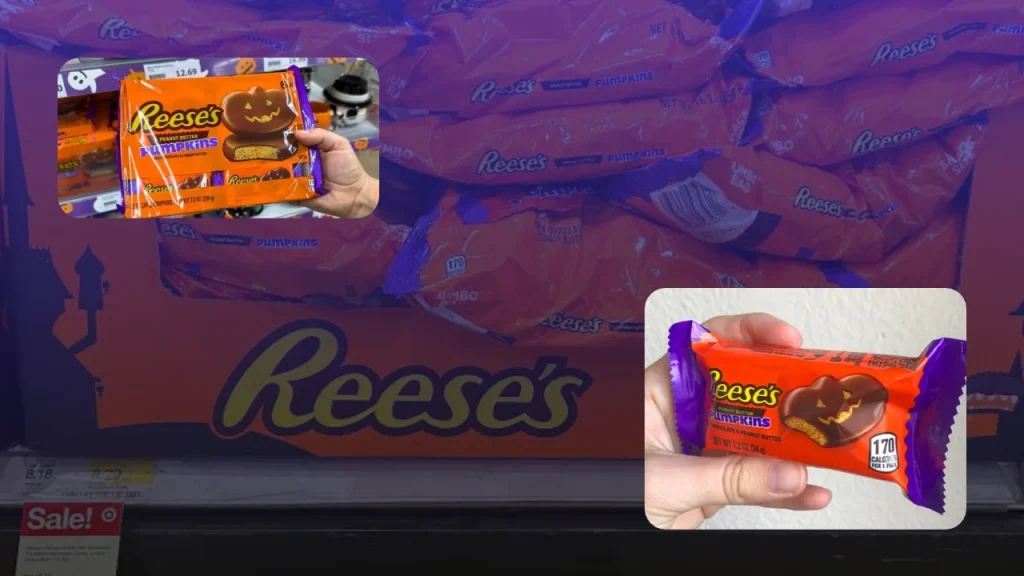
Shoppers sued The Hershey Company because the Reese’s Peanut Butter Pumpkins wrapper showed a jack-o’-lantern with carved eyes and a grin, while the candy inside was smooth. On September 16, 2026, a federal judge in Florida dismissed that case for the second time, ruling that the plaintiffs had not shown a concrete financial injury. Within weeks, Hershey changed the wrapper to read “CARVING NOT ON ACTUAL PRODUCT.”
The story is not over. A separate proposed class action, Lane v. The Hershey Company, is still active in federal court in New York. No settlement, class certification or claim form exists for any of these cases.
Reese’s Pumpkin Lawsuit: Key Facts
| Detail | What the record shows |
| Company | The Hershey Company |
| Products | Reese’s Peanut Butter Pumpkins and other seasonal Reese’s shapes |
| Allegation | Packaging showed carved designs that the candy does not have |
| First case | Kelly v. The Hershey Company, No. 8:23-cv-02977 (M.D. Fla.), filed December 28, 2023; voluntarily dismissed May 17, 2024 |
| Main Florida case | Vidal et al. v. The Hershey Company, No. 0:24-cv-60831 (S.D. Fla.), filed May 17, 2024 |
| Judge | U.S. District Judge Melissa Damian |
| First dismissal | September 19, 2025, for lack of Article III standing, with leave to amend |
| Second dismissal | September 16, 2026, without prejudice; case closed |
| Remaining Florida plaintiffs | Nathan Vidal and Eduardo Granados |
| New York case | Lane et al. v. The Hershey Company, No. 2:26-cv-00824 (E.D.N.Y.), filed February 12, 2026 |
| New York plaintiffs | Jaimie Lane, Dennis Gatto Jr., Paige Johns, Jennifer Cole |
| New packaging | “CARVING NOT ON ACTUAL PRODUCT” (USA TODAY, October 6, 2026) |
| Old packaging | “DECORATING SUGGESTION” |
| Class certified | No |
| Settlement or claim form | None |
| Recall | None; this is not a food-safety case |
What Did the Reese’s Packaging Show, and What Did Shoppers Say Was Missing?
Older Reese’s Peanut Butter Pumpkins packaging pictured a pumpkin-shaped candy with triangular eyes and a smiling carved mouth. The actual candy was a smooth pumpkin shape. The complaints also challenged other seasonal products, including Reese’s White Pumpkins, Reese’s Pieces Pumpkins, Peanut Butter and White Ghosts, Peanut Butter Bats, Peanut Butter Footballs (pictured with carved stitching), Reese’s Medals, and seasonal snowmen, stockings and bells.
The plaintiffs argued they were not just buying chocolate and peanut butter. They said the detailed carvings gave the candy novelty and display value for parties and holiday use, and that they paid more or would not have bought it had they known the candy was blank.
How Did the Reese’s Pumpkin Lawsuits Start?
December 28, 2023: Kelly v. The Hershey Company. Cynthia Kelly filed the first proposed class action in the Middle District of Florida under the Florida Deceptive and Unfair Trade Practices Act (FDUTPA). On May 17, 2024, she voluntarily dismissed it under Federal Rule of Civil Procedure 41(a)(1)(A)(i), without prejudice. No admission, payment or finding followed.
May 17, 2024: Vidal v. The Hershey Company. The same day, four consumers (Nathan Vidal, Debra Hennick, Abdjul Martin and Eduardo Granados) filed a separate proposed class action in the Southern District of Florida seeking at least $5 million and other relief. It is a different case with a different number, not a continuation of Kelly.
According to the September 2025 ruling, Vidal bought three bags of Reese’s Peanut Butter Pumpkins and one bag of Reese’s White Pumpkins at Publix on October 29, 2023, at about $8 per bag, and Granados bought one bag of Peanut Butter Pumpkins at Publix on November 2, 2023 for $2.65. Both said they relied on the pictured carvings.
Why Did the Judge Dismiss the Reese’s Pumpkin Lawsuit in September 2025?
On September 19, 2025, Judge Damian dismissed the original Vidal complaint for lack of Article III standing. A federal plaintiff must show an injury that is concrete and particular, traceable to the defendant, and fixable by the court. Hershey argued that buyers got what they paid for, edible Reese’s candy in a pumpkin shape, and that disappointment over a missing design is not economic harm. The court agreed that the complaint did not plead a concrete economic injury. It also noted the “DECORATING SUGGESTION” disclaimer on the wrapper, which Hershey said told reasonable shoppers that the picture was a suggestion. The plaintiffs said the wording was too small. The judge allowed an amended complaint.
What Did the Amended Reese’s Complaint Argue in 2026?
The plaintiffs filed an amended complaint on December 4, 2025. Hennick and Martin had voluntarily dismissed their claims, leaving Vidal and Granados. The amended complaint focused on Peanut Butter Pumpkins and added a price-premium theory: that the pumpkins cost about 20.4% to 25% more per ounce than regular Reese’s Peanut Butter Cups at certain major retailers and on Hershey’s website. Hershey moved to dismiss on January 8, 2026.
Why Did Hershey Win the September 16, 2026 Dismissal?
Judge Damian again found no concrete economic injury, rejecting both of the plaintiffs’ theories.
The benefit-of-the-bargain theory failed. The plaintiffs got pumpkin-shaped Reese’s candy, which was edible and safe. They did not allege it was defective or had lost all value without the carvings.
The price-premium theory failed. Vidal and Granados bought at Publix, but the complaint’s price comparisons came from Target, Walmart and Hershey’s website. The comparison also set pumpkins against regular peanut butter cups, a different product, and so did not show what extra, if anything, a buyer pays for carvings on the same pumpkin candy. The court said plaintiffs had to tie the alleged premium to the disputed feature. As an illustration of what such evidence might look like, it pointed to a competitor’s candy that does have real carved details, Ghirardelli’s Milk Chocolate Jack O’ Lanterns.
What the judge did not decide. The ruling did not decide whether the packaging was deceptive under FDUTPA. Because standing was missing, the court did not reach Hershey’s other arguments about whether the complaint stated a claim or whether the class allegations were adequate.
The Publix refund argument was left open. Hershey argued the plaintiffs could have had a full refund under Publix’s policy, which would undercut any injury. The court did not rule on it, so no one can say refund policies defeat every similar claim.
Related article: Nerds Candy Arsenic Lawsuit, Ferrara Class Actions, Florida Testing and the Dweebs Ruling
Was the Florida Reese’s Lawsuit Dismissed With or Without Prejudice?
Without prejudice, with the clerk directed to close the case. A standing dismissal is not a decision that the packaging was lawful, and it does not stop a plaintiff from refiling, though any new case would have to meet standing rules and filing deadlines. Standing under Article III is a federal requirement, so a plaintiff might be able to pursue a similar claim in a state court that applies its own standing rules, although no such case has been reported.
Reuters reported on September 17, 2026 that plaintiffs’ counsel was disappointed and planned to appeal. A notice of appeal generally must be filed within 30 days of the order (Fed. R. App. P. 4(a)(1)(A)), which for a September 16 order would run to about October 16, 2026, absent an extension. No notice of appeal or appellate case number has been verified.
Why Did Hershey Change the Reese’s Pumpkin Packaging to “Carving Not on Actual Product”?
USA TODAY reported on October 6, 2026, and News 12 followed on October 8, that the Peanut Butter Pumpkins wrapper now carries the statement “CARVING NOT ON ACTUAL PRODUCT” under the illustration, replacing the smaller “DECORATING SUGGESTION.” The change came even though Hershey won the Florida dismissal.
Hershey has not said the lawsuits caused the change. It is not a court order, a settlement term or an admission that the old packaging was misleading. Reports specifically confirm the new wording on the Peanut Butter Pumpkins. They do not establish that ghosts, bats, footballs or other seasonal shapes now carry the same words, so check each package.
What Is the Lane v. Hershey Reese’s Class Action in New York?
On February 12, 2026, four consumers filed Lane et al. v. The Hershey Company, No. 2:26-cv-00824, in the Eastern District of New York. It challenges the same issue across pumpkins, ghosts, bats, footballs, medals and other seasonal shapes.
The complaint alleges that:
- Hershey changed its packaging around 2021 to show more detailed designs, increasing novelty appeal.
- Shoppers posted online videos showing disappointment when the candy lacked the pictured details.
- Some seasonal candies sold at similar prices to regular Reese’s products despite containing less candy by weight.
The plaintiffs invoke consumer-protection laws in New York, Pennsylvania, Massachusetts, Rhode Island, Oregon and the District of Columbia. That is wider than the Florida case, which was limited to Florida purchasers. These are allegations. No class has been certified.
Hershey sought leave to file a motion to dismiss and asked to move the case to the Middle District of Pennsylvania. On May 26, 2026, the magistrate judge denied Hershey’s request to pause discovery. On June 22, the court set a phased schedule:
| Event | Date |
| Initial disclosures | July 23, 2026 |
| E-discovery protocol | July 31, 2026 |
| Phase 1 fact discovery ends | November 30, 2026 |
| Parties meet and confer on settlement | December 11, 2026 |
| Deadline to seek amendment or add parties | December 30, 2026 |
| Phase 2 fact discovery ends | May 28, 2027 |
The docket also shows activity on October 23 and 26, 2026, but the indexed entries do not show a dismissal or settlement.
Does the Florida Ruling End the New York Reese’s Case?
No. Different plaintiffs, different state laws and a different federal circuit are involved. A district court’s ruling in Florida is not binding in New York, where the judge applies Supreme Court and Second Circuit standing law. The Florida reasoning, especially on price premiums, may be cited as persuasive, but the New York plaintiffs will still have to prove their own injury and damages.
What Laws Apply to the Reese’s Pumpkin Packaging Lawsuits?
Florida Deceptive and Unfair Trade Practices Act, Fla. Stat. §§ 501.204, 501.211 and 501.2105. Bars unfair or deceptive acts in trade. Remedies include actual damages, declaratory and injunctive relief, and attorney fees to the prevailing party. The limitation period is generally four years (Fla. Stat. § 95.11).
New York General Business Law §§ 349 and 350. Section 349 bars deceptive acts, and § 350 bars false advertising. The conduct must be materially misleading to a reasonable consumer (Fink v. Time Warner Cable, 2d Cir. 2013). Section 349(h) allows actual damages or $50, with up to treble damages capped at $1,000 for willful violations. Section 350-e provides actual damages or $500, with trebling up to $10,000. The limit is three years (N.Y. C.P.L.R. 214(2)).
Other state laws pleaded in Lane. Pennsylvania’s Unfair Trade Practices and Consumer Protection Law (73 P.S. § 201-1 et seq.; private action under § 201-9.2); Massachusetts General Laws chapter 93A (a 30-day demand letter generally precedes a consumer suit under § 9); Rhode Island’s Deceptive Trade Practices Act (R.I. Gen. Laws § 6-13.1-1 et seq.); Oregon’s Unlawful Trade Practices Act (ORS 646.605 et seq.); and the District of Columbia Consumer Protection Procedures Act (D.C. Code § 28-3901 et seq.).
Article III standing. The Supreme Court requires an injury in fact that is concrete, particularized and traceable (Lujan v. Defenders of Wildlife, 1992; Spokeo, Inc. v. Robins, 2016). In TransUnion LLC v. Ramirez (2021), the Court held that every class member must have standing to recover damages. Federal Rule of Civil Procedure 12(b)(1) is how defendants like Hershey raise it.
Class action rules. Federal Rule of Civil Procedure 23(a) requires numerosity, commonality, typicality and adequacy, and Rule 23(b)(3) adds predominance and superiority for damages classes. Federal courts can hear multistate consumer class actions of this size under the Class Action Fairness Act, 28 U.S.C. § 1332(d). A request to move a case to another district, like Hershey’s request to move to Pennsylvania, is decided under 28 U.S.C. § 1404(a).
Federal food labeling and slack-fill. Under 21 U.S.C. § 343(a)(1), food labeling that is false or misleading is misbranded, and FDA’s slack-fill rule, 21 C.F.R. § 100.100, treats nonfunctional empty space in packaging as misleading. The Lane allegation that some seasonal candies contain less candy by weight overlaps with this concept. Private citizens cannot enforce the FDCA directly (21 U.S.C. § 337(a)), and states generally cannot impose labeling requirements that differ from federal ones (21 U.S.C. § 343-1(a)), so these cases are built on state consumer laws.
Reasonable-consumer standard and disclaimers. Most consumer-protection claims turn on whether a reasonable consumer would be misled. Companies argue that serving-suggestion or decorating-suggestion language prevents that. Whether a disclaimer is prominent enough is usually a fact question, which is why the wording change on the wrapper is notable.
Voluntary dismissal, Fed. R. Civ. P. 41(a). A plaintiff can dismiss once without a court order before the defendant answers or moves for summary judgment. A second voluntary dismissal of the same claim operates as a decision on the merits (Rule 41(a)(1)(B)).
For related consumer-marketing cases, see McDonald’s McRib Lawsuit, Judge Denies Motion To Dismiss and Idahoan Butter & Herb Class Action Lawsuit On False-Advertising, What Consumers Need to Know.
Can You Get Money From the Reese’s Pumpkin Lawsuit?
Not now. The Florida case ended without a settlement. The New York case has no approved settlement, claims administrator, payment amount or claim deadline. A real class settlement would need court approval and an official notice before anyone could file a claim. Be wary of sites promising a Reese’s pumpkin payout.
If you bought the candy, keep the wrapper, photos, receipt, product variety and lot number. Those records help only if a real claims process opens. For a disappointing purchase today, ask the retailer about its regular return or refund policy, which is separate from any lawsuit.
Is There a Reese’s Pumpkin Recall?
No. These cases are about how the packaging looks compared with the candy, not about contamination or safety, and no court has ordered a recall. For real recall information, use the FDA’s Recalls, Market Withdrawals and Safety Alerts page.
What Does the Reese’s Pumpkin Case Mean for Food Packaging Lawsuits?
The Florida ruling shows how a plaintiff in federal court has to do more than say the product disappointed them. Courts want an actual financial loss, tied to the specific representation, with a price comparison at the store where the buyer actually shopped and between like products. Packaging cases that survive generally allege a defect, a measurable price gap or real underfilling, not only a lost expectation.
For food companies, the packaging change shows the cheap fix: clearer words near the picture. For consumers, the takeaway is that a picture on a wrapper is not always a promise, but a company that wins on standing has not been cleared on the merits.
Frequently Asked Questions About the Reese’s Pumpkin Lawsuit
Is the Reese’s pumpkin lawsuit real?
Yes. There are documented federal lawsuits against Hershey in Florida and New York over seasonal Reese’s packaging.
Did Hershey lose the Reese’s pumpkin lawsuit?
No. The Florida case was dismissed on September 16, 2026, for lack of standing. That is not a ruling that the packaging was lawful.
Why did Reese’s change the pumpkin packaging?
The wrapper now says “CARVING NOT ON ACTUAL PRODUCT.” Hershey has not said why. The change was reported in October 2026.
Can I join the Reese’s pumpkin lawsuit?
The New York case is a proposed class action, but no class has been certified and there is nothing to join or claim yet.
Is there a Reese’s pumpkin settlement?
No settlement, fund or claim form has been verified as of November 1, 2026.
Who are the plaintiffs in the Florida Reese’s pumpkin lawsuit?
Nathan Vidal and Eduardo Granados were the remaining plaintiffs when the case was dismissed in September 2026.
Why was the Florida Reese’s lawsuit dismissed?
The judge found the plaintiffs had not shown a concrete economic injury under either a benefit-of-the-bargain or a price-premium theory.
Can the Florida Reese’s plaintiffs appeal?
Their lawyer said they planned to. A notice of appeal is generally due within 30 days of the order, and none has been verified.
Is the New York Reese’s lawsuit still active?
Yes. Lane v. The Hershey Company is in discovery, with Phase 1 fact discovery set to end November 30, 2026.
Does the Florida ruling decide the New York case?
No. The cases involve different plaintiffs, courts and state laws.
Is Reese’s candy safe to eat?
Nothing in these cases suggests it is unsafe. The claims concern appearance and packaging.
What to Watch Next in the Reese’s Pumpkin Litigation
The key event is Lane v. The Hershey Company. Watch for the November 30 end of Phase 1 discovery, the December 11 settlement conference, the December 30 deadline to amend or add parties, and any motion to dismiss or class certification filing. In Florida, watch for any notice of appeal or a refiled state-court case. On the shelf, watch whether the new wording spreads to other seasonal Reese’s shapes.
Sources and Court Records
- Vidal et al. v. The Hershey Company, No. 0:24-cv-60831 (S.D. Fla.), Order Granting Motion to Dismiss First Amended Class Action Complaint, September 16, 2026, Doc. 75
- Vidal et al. v. The Hershey Company, Order Granting Motion to Dismiss, September 19, 2025, Doc. 47
- Kelly v. The Hershey Company, No. 8:23-cv-02977 (M.D. Fla.), filed December 28, 2023; voluntary dismissal May 17, 2024
- Lane et al. v. The Hershey Company, No. 2:26-cv-00824 (E.D.N.Y.), filed February 12, 2026, and scheduling orders
- Reuters, September 17, 2026
- USA TODAY, October 6, 2026
- News 12, October 8, 2026
- Fla. Stat. §§ 95.11, 501.204, 501.211 and 501.2105; N.Y. Gen. Bus. Law §§ 349 and 350; N.Y. C.P.L.R. 214(2); 73 P.S. § 201-1 et seq.; Mass. Gen. Laws ch. 93A; R.I. Gen. Laws § 6-13.1-1 et seq.; ORS 646.605 et seq.; D.C. Code § 28-3901 et seq.
- U.S. Const. art. III; Fed. R. Civ. P. 12(b)(1), 23 and 41; Fed. R. App. P. 4(a)(1)(A); 28 U.S.C. §§ 1332(d) and 1404(a); 21 U.S.C. §§ 337, 343 and 343-1; 21 C.F.R. § 100.100
- Lujan v. Defenders of Wildlife, 504 U.S. 555 (1992); Spokeo, Inc. v. Robins, 578 U.S. 330 (2016); TransUnion LLC v. Ramirez, 594 U.S. 413 (2021); Fink v. Time Warner Cable, 714 F.3d 739 (2d Cir. 2013)
This article is for informational purposes only and does not constitute legal advice. Laws vary by state and individual circumstances differ. For advice about your specific situation, consult a qualified attorney. Allegations in a lawsuit are not established facts.
Researched and written by Israr Ahmad, legal content researcher and founder of AllAboutLawyer.com. All facts verified against the September 16, 2026 and September 19, 2025 orders in Vidal v. The Hershey Company, the Kelly and Lane dockets, Reuters, USA TODAY and News 12 reporting, and the cited statutes and rules, as of November 1, 2026. Last Updated: November 1, 2026.
About the Author
Israr Ahmad is a legal content researcher with 4+ years of experience covering class action settlements and consumer rights cases. He has researched and published coverage of 2,500+ settlements using verified court records, settlement administrator filings, and government sources. Learn more about Israr.