
Nerds Candy Arsenic Lawsuit, Ferrara Class Actions, Florida Testing and the Dweebs Ruling
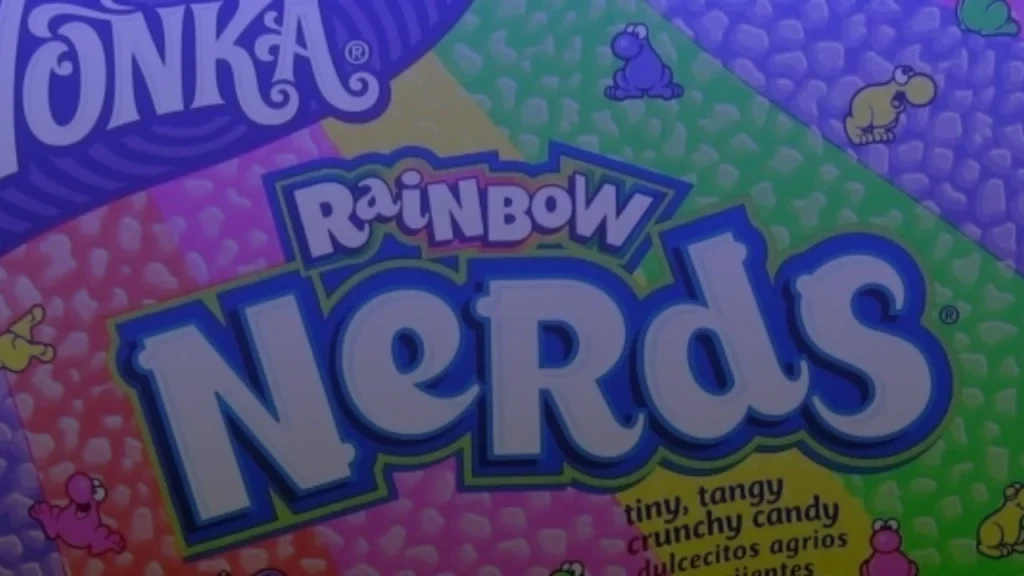
Ferrara Candy Company, the maker of Nerds, Laffy Taffy, SweeTarts and Trolli, was hit with two proposed class actions in February 2026 claiming it sold candy with arsenic and did not tell buyers. The Illinois case, Anstett v. Ferrara Candy Company, was voluntarily dismissed on March 10, 2026, about five weeks after it was filed. A second case in California, Chhin v. Ferrara Candy Company, was filed two days later, and its current status could not be confirmed.
No court has found that Nerds contain unsafe levels of arsenic. No recall has been issued. No settlement or claim form exists for the arsenic allegations. A separate Ferrara lawsuit over a look-alike candy called Dweebs is a trademark case and has nothing to do with arsenic.
Nerds Arsenic Lawsuit: Key Facts
| Detail | What the record shows |
| Company | Ferrara Candy Company |
| Trigger | Florida Department of Health candy testing report, January 26, 2026 |
| Florida sample size | 46 candy samples from 10 companies; arsenic detected in 28 |
| First lawsuit | Anstett v. Ferrara Candy Company, No. 1:26-cv-01304, N.D. Illinois |
| Filed | February 4, 2026, by Christina Anstett |
| Outcome | Voluntarily dismissed without prejudice, March 10, 2026 |
| Second lawsuit | Chhin v. Ferrara Candy Company, No. 4:26-cv-01186-KAW, N.D. California |
| Filed | February 6, 2026, by Phanny Chhin |
| Chhin status | Not confirmed; no certification, ruling or settlement verified |
| Class certified | No |
| Recall | None identified |
| Arsenic settlement or claim form | None |
| Separate trademark case | Ferrara Candy Company v. American Continental Ltd. et al., No. 2:25-cv-08249, C.D. California; permanent injunction July 16, 2026 |
What Did the Florida Department of Health Find in Nerds and Other Candy?
On January 26, 2026, the Florida Department of Health published results from candy bought at retail stores. Arsenic was detected in 28 of 46 samples from 10 companies. Reports on the findings listed several Ferrara products among them, with figures including roughly 500 parts per billion (ppb) for Nerds Gummy Clusters, about 450 ppb for Nerds Strawberry, about 380 ppb for Nerds Grape and about 480 ppb for banana Laffy Taffy. Trolli Sour Brite Crawlers and SweeTarts were also reported as elevated. The state said lead, cadmium and mercury were not elevated in the tested samples. These figures are as reported and have not been independently confirmed.
Florida’s analysis also estimated that eating a relatively small number of some pieces, about 96 of certain Nerds varieties under its assumed piece weight, could exceed a child’s estimated annual arsenic intake limit. Critics say that estimate treated each Nerds piece as roughly half a gram, far heavier than an actual piece, which inflates the “pieces per year” calculation.
A lab detecting a chemical in selected samples does not show that every product, flavor or batch carries the same amount, or that anyone was hurt.
What Do the Nerds Arsenic Lawsuits Against Ferrara Allege?
Both complaints rely on the Florida results and make a disclosure claim: Ferrara allegedly sold candy that contained arsenic without warning buyers, so consumers paid for products without material information. The Illinois complaint named Nerds (including Gummy Clusters), Laffy Taffy, SweeTarts, SweeTarts Ropes, Trolli gummies and Black Forest gummy bears. It sought to represent a nationwide class and, according to reporting on the filing, invoked Florida’s consumer-protection law.
This is a consumer-deception theory, not a personal-injury claim. A buyer can argue she would have chosen differently, or paid less, had the information been disclosed, without claiming she got sick. A claim for physical harm needs proof of exposure and medical causation.
Why Was the Anstett v. Ferrara Candy Nerds Lawsuit Dismissed?
On March 10, 2026, the plaintiff voluntarily dismissed Anstett without prejudice. Under Federal Rule of Civil Procedure 41(a)(1)(A)(i), a plaintiff can do that without a court order if the defendant has not yet answered or moved for summary judgment, and the dismissal is without prejudice unless the notice says otherwise. The public record gives no reason for the withdrawal.
That means:
- No judge decided whether the allegations were true.
- Ferrara was not found liable, and it did not prove the candy safe.
- No class was certified and no settlement was paid.
- The plaintiff could, in theory, refile. Rule 41(a)(1)(B) makes a second voluntary dismissal of the same claim operate as a decision on the merits, so a plaintiff gets one clean exit.
What Is the California Chhin v. Ferrara Candy Nerds Lawsuit?
Two days after Anstett, Phanny Chhin filed a separate proposed class action in the Northern District of California, again alleging Ferrara failed to disclose arsenic. The complaint relies on California’s Consumers Legal Remedies Act, False Advertising Law and Unfair Competition Law. Dismissal of the Illinois case did not end it.
As of November 1, 2026, no class certification, dismissal, ruling or settlement in Chhin could be verified from the court information reviewed. Do not treat it as settled, and do not trust any website that says a claim form is open.
Why Does the National Confectioners Association Dispute the Florida Arsenic Testing?
On February 20, 2026, the National Confectioners Association argued that Florida used the wrong method. It said the state relied on EPA Method 6010D, designed for environmental samples, and that this approach can overstate arsenic in food. It pointed to food-specific FDA testing that it said shows much lower levels in candy.
This is an industry position, not a court finding. The questions that matter scientifically are:
- Was the method validated for candy?
- Was total arsenic or inorganic arsenic measured? Inorganic arsenic is the form regulators treat as more toxic, and organic forms generally are not.
- What concentration was found, and in which sample?
- How much candy does a person realistically eat, and how often?
- How does that exposure compare with toxicology benchmarks?
Related article: Joyce Beatty Kennedy Center Lawsuit, Trump Name Ruling, Closure Fight and What Happens Next
Does the FDA Have an Arsenic Limit for Candy?
No candy-specific FDA arsenic limit exists. That does not make any amount lawful.
The FDA has set action levels for specific foods: 100 ppb inorganic arsenic in infant rice cereal (2020 final guidance) and 10 ppb inorganic arsenic in apple juice (2023 final guidance). Those numbers are not legal limits for candy and should not be applied to Nerds. The agency’s “Closer to Zero” program also works to reduce arsenic, lead, cadmium and mercury in foods for babies and young children over time.
When no action level exists, the FDA looks at the substance, its toxicity, the concentration, how much people eat and who is exposed. A candy with no set limit can still be adulterated under federal law if it contains a poisonous or deleterious substance that may render it injurious to health.
What Federal Laws Apply to Arsenic in Candy?
Adulteration, 21 U.S.C. § 342(a)(1). Food is adulterated if it contains a poisonous or deleterious substance that may make it injurious to health. This is the core federal food-safety provision behind heavy-metal claims.
Prohibited acts, 21 U.S.C. § 331(a). Introducing adulterated or misbranded food into interstate commerce is prohibited. The government can seek injunctions (§ 332), seizures (§ 334) and criminal penalties (§ 333).
Misbranding, 21 U.S.C. § 343(a)(1). Food labeling that is false or misleading in any particular is misbranded. A silent label raises a harder question than a false one, because an omission generally has to be material and misleading in context.
Preventive controls, 21 U.S.C. § 350g and 21 C.F.R. Part 117. Under the Food Safety Modernization Act, covered facilities must run a hazard analysis and put preventive controls in place for hazards that are known or reasonably foreseeable, including chemical hazards.
Private enforcement bar, 21 U.S.C. § 337(a). Only the federal government can enforce the Act directly. Consumers cannot sue simply for an FDCA violation, so class actions are built on state law.
Preemption, 21 U.S.C. § 343-1(a). States cannot impose food-labeling requirements that differ from federal ones. Defendants often raise this against labeling-based claims, and plaintiffs respond that they seek to enforce state duties that mirror federal law.
What State Consumer and Product Laws Could Apply to the Nerds Arsenic Claims?
Florida Deceptive and Unfair Trade Practices Act, Fla. Stat. §§ 501.204 and 501.211. Bars unfair or deceptive acts in trade and allows actual damages and injunctive or declaratory relief. The limitation period is generally four years (Fla. Stat. § 95.11).
Illinois Consumer Fraud and Deceptive Business Practices Act, 815 ILCS 505/2 and 505/10a. The natural statute for an Illinois-based buyer, with a three-year limitation period (815 ILCS 505/10a(e)).
California Consumers Legal Remedies Act, Cal. Civ. Code §§ 1770, 1780 and 1782. Allows actual damages, injunctions and restitution. It generally requires pre-suit notice for damages claims (§ 1782) and has a three-year limit (§ 1783).
California False Advertising Law, Bus. & Prof. Code § 17500, and Unfair Competition Law, §§ 17200, 17203 and 17204. The UCL requires lost money or property to sue and mainly offers restitution and injunctions, not damages. The UCL limit is four years (§ 17208).
California Proposition 65, Health & Safety Code § 25249.6. Arsenic and inorganic arsenic compounds are on the Prop 65 list. A business with 10 or more employees must give a clear and reasonable warning before knowingly exposing Californians to a listed chemical above the safe-harbor level. Private enforcers must send a 60-day notice first. This is an additional route in California that doesn’t depend on deception, and it is not part of the filed complaints as far as the record shows.
Sherman Food, Drug, and Cosmetic Law, Cal. Health & Safety Code § 109875 et seq. California’s state version of the federal adulteration and misbranding rules.
Warranty and unjust enrichment. Class actions over food routinely add breach of implied warranty of merchantability (UCC § 2-314, 810 ILCS 5/2-314), express warranty (UCC § 2-313) and unjust enrichment. Warranty claims generally carry a four-year period under UCC § 2-725.
What Does a Plaintiff Have to Prove to Get a Nerds Arsenic Class Action Certified?
A proposed class action is only a request. Under Federal Rule of Civil Procedure 23(a), the plaintiff must show numerosity, commonality, typicality and adequacy of representation. For damages, Rule 23(b)(3) also requires that common questions predominate and that a class action is the superior way to proceed.
Food cases often stumble on three points:
- Standing. Under TransUnion LLC v. Ramirez (2021), every class member must have a concrete injury. A buyer who ate the candy without harm needs a recognized economic theory, such as paying a premium for a product that wasn’t what was promised.
- Variation between products. Florida tested specific samples. A class that spans many brands, flavors and batches has to show the problem is common to all of them.
- Materiality and reliance. The plaintiff must connect the omitted information to buying decisions, and defendants point to the lack of a candy standard and to the testing-method dispute.
No court has reached any of these questions in the Nerds cases.
Can Someone Sue Ferrara for Getting Sick From Nerds?
Potentially, but not on a purchase receipt and a lab report from someone else’s product. Strict product liability (Restatement (Second) of Torts § 402A, adopted in Illinois and California), negligence and breach of warranty are the usual theories, and a plaintiff would need evidence of:
- the specific product, lot number and date
- the arsenic content of that product, and its form
- how much was eaten, how often and over what period
- a medically recognized injury
- expert testimony tying the exposure to the injury, which is hard when food, water and air all contain background arsenic
Personal-injury claims generally must be filed within two years in both Illinois (735 ILCS 5/13-202) and California (Code Civ. Proc. § 335.1). For children, the clock is generally tolled until age 18 (735 ILCS 5/13-211; Code Civ. Proc. § 352), though a parent’s own claim for medical costs can run on a different schedule. Anyone with health concerns should talk to a physician, not rely on a lawsuit.
Is There a Nerds Arsenic Recall or Settlement Claim Form?
No. No FDA recall or Ferrara recall tied to the Florida results has been identified, and the products remain on shelves. The dismissed Illinois case produced no settlement. The California case has no approved settlement that could be verified.
Be careful with sites that promise a Nerds arsenic payout. A real class settlement comes with a court-approved notice and an official administrator. Check current recalls on the FDA Recalls, Market Withdrawals and Safety Alerts page.
What Is the Ferrara Dweebs Lawsuit, and Is It Related to the Arsenic Claims?
It is not related. In Ferrara Candy Company v. American Continental Ltd. et al., No. 2:25-cv-08249 (C.D. Cal.), Ferrara sued the companies behind the revived Dweebs candy, including American Continental Limited, LD Distribution Services LLC and American Fizz UK Limited, claiming the product’s shapes, colors, cloud imagery and packaging imitated Nerds. On July 16, 2026, the court entered a permanent injunction barring LD Distribution Services from selling Dweebs in the United States. Bloomberg Law reported it on July 21, 2026. The order covers the named distributor, not every Dweebs product or defendant.
The claims arise under the Lanham Act: 15 U.S.C. § 1114 (registered trademark infringement), § 1125(a) (false designation of origin and trade-dress confusion) and § 1125(c) (dilution of famous marks).
What Were the Older Nerds and Ferrara Lawsuits?
Artificial-flavor labeling case (2019). Gruber v. Ferrara Candy Company, No. 1:19-cv-04700 (N.D. Ill.), challenged “no artificial flavors” claims on Nerds, Runts and Everlasting Gobstoppers because the candy contains DL-malic acid. It ended with settlement-related filings and a dismissal, without a trial finding.
Underfilled candy box settlement (2021). Consumers claimed oversized boxes of products including Rainbow Nerds, SweeTarts, Spree, Gobstoppers, Sno-Caps and Runts contained too little candy. The claim deadline was December 27, 2021, and has passed. This was a slack-fill case, not an arsenic case.
What Should Parents Do About Nerds and Arsenic Right Now?
- Keep the package, lot number and best-by date if you have concerns.
- Talk to your child’s pediatrician about any real health worry. Heavy metals appear in many foods at low levels, and a single candy is rarely the main source of exposure.
- Check the FDA and your state health department for updated testing and guidance.
- Don’t pay for or submit personal information to a “settlement registration” site unless it links to a court-approved notice.
For other food-contamination cases we’ve covered, see Driscoll’s Strawberries PFAS Lawsuit and Kerrygold Butter Lawsuit, “Pure Irish Butter” Allegedly Contains Toxic Forever Chemicals—Case Dismissed But Raises Food Safety Questions.
Frequently Asked Questions About the Nerds Candy Lawsuit
Is there a Nerds candy lawsuit in 2026?
Yes. Two proposed class actions were filed against Ferrara in February 2026, one in Illinois and one in California, over alleged undisclosed arsenic.
Was the Nerds arsenic lawsuit dismissed?
The Illinois case, Anstett v. Ferrara Candy Company, was voluntarily dismissed without prejudice on March 10, 2026. The California case, Chhin v. Ferrara Candy Company, has no verified outcome.
Does the dismissal mean Nerds are safe?
No. The dismissal was not a ruling on safety. The court never reached the merits.
Does every Nerds product contain arsenic?
No such finding exists. Florida tested selected samples, and the results can’t be applied to every flavor or batch.
How much arsenic did Florida find in Nerds?
Reports put the figures at roughly 380 to 500 ppb for the Nerds products tested. Those are as reported by Florida and are disputed by the candy industry’s testing-method argument.
Is there an FDA limit for arsenic in candy?
No candy-specific limit. The FDA’s action levels cover infant rice cereal (100 ppb inorganic arsenic) and apple juice (10 ppb inorganic arsenic).
Can I get money from a Nerds arsenic settlement?
No settlement or claim form exists. Filing a class action does not give anyone a right to payment.
Can I sue Ferrara if my child ate Nerds?
Possibly, if you can show exposure, a recognized injury and causation. Time limits are generally two years, with extra time for minors.
Is the Dweebs lawsuit about arsenic?
No. It is a trademark case over packaging, and the July 2026 injunction applies to a named distributor.
Can I still claim money from the old Nerds box settlement?
No. The deadline was December 27, 2021.
What to Watch Next in the Ferrara Nerds Litigation
The main open item is the status of Chhin v. Ferrara Candy Company in California. Watch for a dismissal, a motion to dismiss ruling, a class certification motion or a settlement filing. A new refiled suit, a state enforcement action, an FDA statement on arsenic in candy or independent retesting could also change the picture.
Until then, the difference between an allegation, a court ruling, a recall and an approved settlement is the whole story. None of the last three has happened on the arsenic claims.
Sources and References
- Florida Department of Health, candy testing report, January 26, 2026
- Anstett v. Ferrara Candy Company, No. 1:26-cv-01304 (N.D. Ill.), complaint and notice of voluntary dismissal
- Chhin v. Ferrara Candy Company, No. 4:26-cv-01186-KAW (N.D. Cal.), complaint
- National Confectioners Association statement on Florida testing, February 20, 2026
- FDA guidance on inorganic arsenic in infant rice cereal and apple juice; FDA Closer to Zero program
- Bloomberg Law, July 21, 2026, reporting on Ferrara Candy Company v. American Continental Ltd., No. 2:25-cv-08249 (C.D. Cal.)
- Gruber v. Ferrara Candy Company, No. 1:19-cv-04700 (N.D. Ill.)
- 21 U.S.C. §§ 331, 332, 333, 334, 337, 342, 343, 343-1 and 350g; 21 C.F.R. Part 117; 15 U.S.C. §§ 1114 and 1125; Fed. R. Civ. P. 23 and 41
- Fla. Stat. §§ 95.11, 501.204 and 501.211; 815 ILCS 505/2 and 505/10a; 735 ILCS 5/13-202 and 13-211; Cal. Civ. Code §§ 1770, 1780, 1782 and 1783; Cal. Bus. & Prof. Code §§ 17200, 17203, 17204, 17208 and 17500; Cal. Health & Safety Code §§ 25249.6 and 109875 et seq.; Cal. Code Civ. Proc. §§ 335.1 and 352; UCC §§ 2-313, 2-314 and 2-725
- TransUnion LLC v. Ramirez, 594 U.S. 413 (2021)
This article is for informational purposes only and does not constitute legal advice or medical advice. Laws vary by state and individual circumstances differ. For advice about your specific situation, consult a qualified attorney or healthcare provider. Allegations in a complaint are not proven facts.
Researched and written by Israr Ahmad, legal content researcher and founder of AllAboutLawyer.com. All facts verified against the Florida Department of Health candy testing report, the Anstett and Chhin federal court filings, the National Confectioners Association’s February 2026 statement, FDA guidance, Bloomberg Law reporting on the Dweebs ruling, and the cited statutes, as of November 1, 2026. Last Updated: November 1, 2026.
About the Author
Israr Ahmad is a legal content researcher with 4+ years of experience covering class action settlements and consumer rights cases. He has researched and published coverage of 2,500+ settlements using verified court records, settlement administrator filings, and government sources. Learn more about Israr.