
Purdue Pharma Sentenced to $5.544 Billion in Criminal Penalties, What Opioid Victims Should Know
A federal judge sentenced Purdue Pharma L.P., the maker of OxyContin, on April 28, 2026, ordering a $3.544 billion criminal fine and a $2 billion criminal forfeiture, for a total of $5.544 billion. The Justice Department will credit up to $1.775 billion against the forfeiture. Three days later, on May 1, 2026, Purdue’s bankruptcy plan took effect, the company dissolved, and its manufacturing operations moved to a new company, Knoa Pharma LLC.
The sentence itself does not pay victims. The fine and forfeiture are penalties owed to the government. Money for individuals comes from a separate fund, the Purdue Personal Injury Trust. Its claim deadline passed on July 28, 2025, and as of its September 30, 2026 update the Trust says it is already paying Qualified and Allowed claimants on a rolling basis, with most expected to receive some portion of their award by the end of 2026.
Quick Facts: United States v. Purdue Pharma L.P.
| Detail | What the primary sources say |
| Criminal case | United States v. Purdue Pharma L.P., U.S. District Court for the District of New Jersey (Newark), Judge Madeline Cox Arleo |
| Guilty plea | November 24, 2020: three felony counts (one count of conspiracy to defraud the United States and violate the Food, Drug, and Cosmetic Act; two counts of conspiracy to violate the federal Anti-Kickback Statute) |
| Sentencing date | April 28, 2026. The court accepted the plea agreement at a hearing where 36 victims spoke |
| Criminal fine | $3.544 billion, assessed in connection with the bankruptcy proceedings |
| Criminal forfeiture | $2 billion. DOJ will credit up to $1.775 billion if Purdue stops operating in its current form and emerges as a public benefit company |
| Total ordered | $5.544 billion before the credit (fine plus forfeiture) |
| Other sentence term | Purdue must host a public repository of documents relating to the criminal charges |
| Bankruptcy case | In re Purdue Pharma L.P., No. 19-23649, U.S. Bankruptcy Court, Southern District of New York |
| Plan | Eighteenth Amended Joint Chapter 11 Plan of Reorganization of Purdue Pharma L.P. and Its Affiliated Debtors |
| Plan confirmed | November 18, 2025 |
| Plan effective date | May 1, 2026 |
| Successor company | Knoa Pharma LLC, run by a board with no connection to Purdue and barred from marketing opioids |
| Purdue payment at effective date | Approximately $900 million |
| Sackler family payments | More than $1.5 billion on May 1, 2026, then approximately $500 million (May 2027), $500 million (May 2028) and $400 million (May 2029) |
| Personal Injury Trust awards (initial distribution) | $16,294 (Non-NAS Tier 1), $8,147 (Non-NAS Tier 2), $25,653 (NAS), each before the claimant’s attorneys’ fees, costs and medical liens |
| Personal Injury Trust claim deadline | July 28, 2025, 11:59 p.m. ET (passed). A 15-day grace period ended August 12, 2025 |
| New claim form from the criminal sentence | None |
Three points trip people up. The sentence and the victim fund are different things. The 5.544billioniswhatthecourtordered,notwhatPurduewillhandoverincash.Andthe”225 million” figure that appears in some coverage belongs to the Sackler family’s separate civil settlement, not to the criminal fine (explained below).
What Happened to Purdue Pharma L.P. in Federal Court on April 28, 2026?
Judge Arleo accepted Purdue’s 2020 plea agreement at a sentencing hearing in Newark where 36 victims spoke. She then imposed the penalties agreed to in that plea: the $3.544 billion criminal fine and the $2 billion criminal forfeiture. Under the plea agreement, the Justice Department had deferred the judge’s acceptance until the sentencing date, as federal Rule 11(c)(3)(A) allows.
The sentence also requires Purdue to host a public repository of documents relating to the criminal charges. Only the company was charged. The Justice Department’s case page lists the charges against Purdue Pharma L.P. alone, and no Sackler family member faces criminal charges in this case.
What Did Purdue Pharma Admit in Its 2020 Guilty Plea?
On November 24, 2020, Purdue pleaded guilty to an information charging three felonies. In the plea, Purdue admitted that from May 2007 through at least March 2017 it:
- Deceived the Drug Enforcement Administration (DEA). It told the DEA it ran an effective anti-diversion program while continuing to market its opioids to more than 100 health care providers it had good reason to believe were diverting them.
- Reported misleading data to boost its manufacturing quotas. The prescription data it gave the DEA included prescriptions from doctors Purdue had good reason to believe were engaged in diversion.
- Aided violations of the Food, Drug, and Cosmetic Act. The conspiracy involved facilitating the dispensing of its opioids, including OxyContin, without a legitimate medical purpose.
- Paid kickbacks. Between June 2009 and March 2017 Purdue paid two doctors through its speaker program to induce more opioid prescriptions. From April 2016 through December 2016 it paid the electronic health records company Practice Fusion Inc. to refer and recommend its extended-release opioids: OxyContin, Butrans and Hysingla.
The sentence was delayed for years while Purdue’s Chapter 11 case worked its way through the courts, including the U.S. Supreme Court’s June 2024 decision in Harrington v. Purdue Pharma L.P., which invalidated an earlier plan’s release of the Sackler family. Negotiators returned to the table, and the revised plan was confirmed on November 18, 2025.
Related article: Ford Recalls 41,748 Expedition and Super Duty Vehicles Over Contaminated LED Headlight Chip
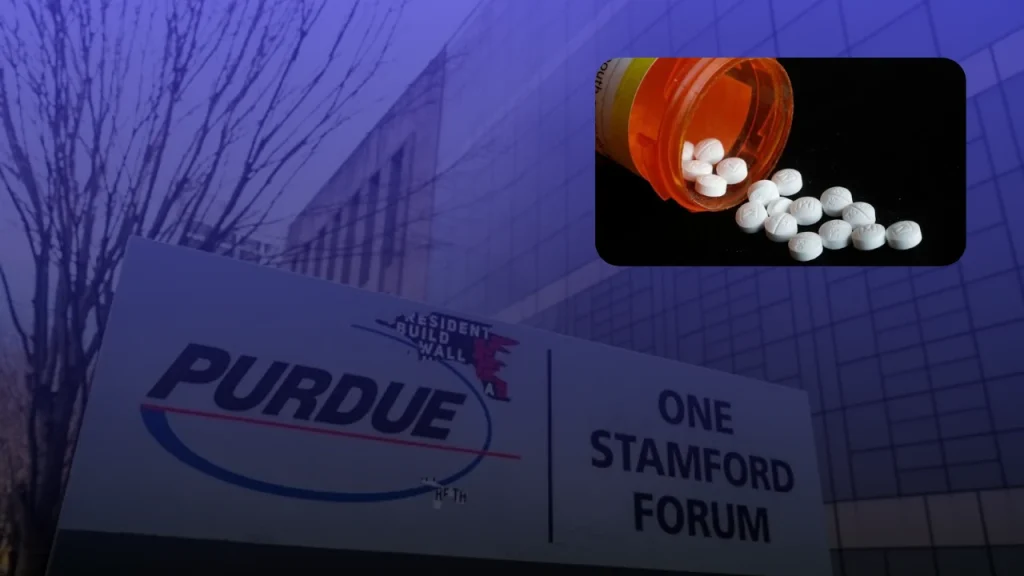
How Is the $5.544 Billion Purdue Pharma Sentence Calculated?
| Piece | Amount | What it is |
| Criminal fine | $3.544 billion | Penalty to the government, assessed in connection with the bankruptcy proceedings |
| Criminal forfeiture | $2 billion | Penalty to the government |
| Total ordered | $5.544 billion | Fine plus forfeiture (our arithmetic from the two figures above) |
| DOJ credit | Up to $1.775 billion | Credited against the forfeiture for value delivered to state, local and tribal governments through the bankruptcy, if Purdue ceases operating in its current form and emerges as a public benefit company |
| Civil False Claims Act claim | $2.8 billion | Separate allowed, unsubordinated, general unsecured bankruptcy claim the United States received under the 2020 plea agreement to resolve civil liability |
| Sackler civil settlement | $225 million | Separate payment by the Sackler family to resolve its own civil False Claims Act liability |
The proceeds of the public benefit company are to be directed toward state and local opioid abatement programs. That is how the credit works: the government gives up most of the forfeiture because the value is going to the same governments through the bankruptcy plan.
Did Purdue Pharma Dissolve on May 1, 2026?
Yes, its plan took effect and its operations transferred on May 1, 2026. The Purdue Personal Injury Trust confirms the plan became effective that day and that the Trust was funded the same day. State attorneys general, including Connecticut’s William Tong and New York’s Letitia James, announced the dissolution and the start of the new structure.
The settlement is the $7.4 billion Purdue-Sackler opioid settlement. Purdue paid approximately $900 million at the effective date, and the Sackler family paid more than $1.5 billion that day, with approximately $500 million due in May 2027, $500 million in May 2028 and $400 million in May 2029. The settlement also requires Purdue and the Sacklers to make more than 30 million documents about their opioid business public.
One limit worth stating: the sources describe the plan taking effect and Purdue’s operations transferring to Knoa Pharma. They do not list the formal wind-up of every Purdue legal entity. To check the status of a specific entity, use the bankruptcy docket or ask a lawyer. For more on the transition, see our detailed explainer, Purdue Pharma Is Gone, How the OxyContin Maker Dissolved and Replaced by Knoa Pharma Who Runs Its Successor.
What Is Knoa Pharma LLC, and How Is It Different From Purdue Pharma L.P.?
Knoa Pharma LLC took over Purdue’s manufacturing operations on May 1, 2026. According to the state attorney general announcements:
- It is run by a board with no connection to Purdue, and no Sackler family member is involved.
- It is owned by the Knoa Foundation, a newly established nonprofit, so there are no private shareholders taking profits.
- It is barred from marketing opioids, and the settlement provides for an independent monitor to check compliance. The monitor is former Montana Attorney General and Governor Steve Bullock.
- It is meant to sell overdose-reversal and addiction-treatment medicine at or below cost.
Knoa can still make opioid medications for legitimate public health needs, but it cannot promote them. Purdue’s decades of aggressive marketing is the conduct the injunction is built to prevent.
Does the $5.544 Billion Purdue Pharma Sentence Pay Opioid Victims?
No. The criminal case is the government against the company, and the fine and forfeiture are owed to the government. The Justice Department’s case page lists a fine, a forfeiture and a document repository as the sentence. It does not describe a restitution order.
What Is the Crime Victims’ Rights Act Petition in the Third Circuit?
The DOJ case page (last updated June 24, 2026) reports that one individual has petitioned the U.S. Court of Appeals for the Third Circuit for a writ of mandamus under the Crime Victims’ Rights Act, 18 U.S.C. § 3771(d)(3), claiming a right to restitution. It is docketed as No. 26-2159. The Justice Department also gave notice that other potential victims may join under Third Circuit Local Appellate Rule 21.1(b).
We could not confirm the current status of that petition. Check the Third Circuit docket before relying on it, and talk to a lawyer if you think the Crime Victims’ Rights Act applies to you.
How Does the Purdue Personal Injury Trust Pay Individual Victims?
Individual injury payments come from the Purdue Personal Injury Trust, which the plan set up and which was funded on May 1, 2026. Its September 30, 2026 update says:
- Awards have been computed. Qualified and Allowed claimants receive an initial distribution of $16,294 (Non-NAS Tier 1), $8,147 (Non-NAS Tier 2) or $25,653 (NAS). These amounts already reflect deductions for the Trust’s operating expenses (including claims and lien resolution), certain professional fees under the plan, and other plan assessments.
- Your own costs come out next. The figures are stated before the claimant’s attorneys’ fees, costs and medical liens.
- A second payment is possible. The Trustee will decide whether to make one once all contingencies are resolved, based on the number of Qualified and Allowed claims and the assets left.
- Payments are rolling. The Trust says it has begun paying Qualified and Allowed claimants and anticipates most will receive some portion of their award by the end of 2026.
- Liens can delay part of an award. Claimants who have not cleared lien resolution can have part of their award held back as a “lien holdback,” and receive the rest once the Lien Administrator finishes the review.
- Represented claimants are paid through their lawyers. Pro se claimants get an email from the Trust confirming their mailing address.
Older reporting on the 2021 plan that the Supreme Court later blocked cited a range of $3,500 to $48,000. Those figures do not describe the current Trust.
What Do Claim Status Letters and Appeals Look Like at the Purdue Personal Injury Trust?
The Trust has been sending claim status letters on a rolling basis. Each letter says whether the claim is Qualified and Allowed (entitled to payment) or Deficient, and lists any appeal rights.
- Appeal window. Issuing a status letter starts a 20-day appeal period.
- Who decides. Appeals go to the Appeals Special Master, Ken Simon. His decisions are final and binding, with no further appeal rights under the Trust’s distribution procedures.
- Fee. Our earlier review of the Trust’s Non-NAS claims page found a mandatory $500 appeal fee. Confirm the amount in your own letter.
- Where letters go. If you have an attorney, letters go to your attorney. If you do not, they go to you.
- Moved? If you are unrepresented, email [email protected] with the injured party’s name and your new address.
The Trust says the largest groups of Deficient claims include claimants whose objections were withdrawn or reinstated, claimants who gave Kroll some evidence with the original proof of claim but never filed a claim form with the Trust, and claimants whose evidence did not meet the requirements.
Who Could Claim From the Purdue Personal Injury Trust?
To qualify for a Non-NAS award, a claimant had to:
- Hold an opioid-related personal injury claim against a Purdue debtor that arose before the September 15, 2019 petition date.
- Provide proof of use of a Purdue-prescribed “Qualifying Opioid” before the petition date.
- Have timely filed an individual personal injury proof of claim in the bankruptcy. A proof of claim filed before September 21, 2021 is treated as timely unless the court disallowed it.
Claimants also had to submit the Non-NAS claim form, the HIPAA consent form and, for a deceased person’s claim, an Heirship Declaration or valid estate documents, all received by the July 28, 2025 deadline.
For a Neonatal Abstinence Syndrome (NAS) claim, the claimant also needed proof of a diagnosis of a condition resulting from intrauterine exposure to opioids, and a Proxy Form for minors. Documentation already provided in the Mallinckrodt or Endo bankruptcies, or with the Purdue proof of claim, did not have to be resubmitted.
The window has closed. Any claim form received more than 15 days after the deadline (after August 12, 2025) cannot be a Qualified Claim. Insurers and health plans had a separate Third-Party Payor Trust, whose claim form deadline was September 30, 2025 after an extension. It posted initial determinations on June 22, 2026. Individuals with personal injury claims are not third-party payors.
What If You Did Not Grant the Third-Party Release? (Objection and Opt-Out Guidance)
The plan was confirmed on November 18, 2025, so the voting and objection stages are over. The Trust’s September 30, 2026 update draws one distinction that matters: claims that are Qualified and Non-Participating, meaning claimants who did not grant the Third-Party Release, are not currently eligible for payment. Under the plan they are not potentially eligible until eighteen months after the effective date, which by our count is November 1, 2027.
We did not review the release language in the confirmed plan itself. If you are deciding whether you have any claim left against a Sackler family member, that is a question for a licensed attorney reading the plan.
How Is the $7.4 Billion Purdue Settlement Reaching States and Counties?
Most of the $7.4 billion is community abatement money, not personal compensation. Funds go to state and local governments for addiction treatment, prevention and recovery, over about 15 years. State-by-state coverage on this site:
- $7.4B Purdue Pharma Opioid Settlement, How Pennsylvania’s $205 Million Will Reach Your County. Pennsylvania expects more than $205 million over 15 years, split 70% to counties, 15% to litigating subdivisions and 15% to the Commonwealth.
- Missouri Receives $91M and Illinois $148.8M Purdue Pharma Opioid Settlement Share of the $7.4 Billion Judgment. Missouri expects $91,333,005.76 over 15 years, and Illinois $148.8 million.
There is no claim form for residents of these states to receive those government funds.
What Should You Do Now If You Filed a Purdue Personal Injury Claim?
- Watch for your claim status letter. The 20-day appeal clock starts when it is issued, so open it promptly. If you have an attorney, the letter goes to them, so stay in touch.
- Keep your address current. If you are unrepresented, send updates to [email protected].
- Plan for deductions. Expect your attorneys’ fees, costs and medical liens to come out of the award figure. Ask the Trust’s lien resolution process how a lien holdback applies to you.
- Use only the official site. The Trust’s website is purduepitrust.com. Never pay a fee to receive a Purdue award.
- Beware of scam messages. Purdue is not a class action, but the red flags are the same. See How to Spot Fake Class Action Settlement Notices? Complete Consumer Guide.
Purdue Pharma Timeline: Key Dates
| Date | Event |
| September 15, 2019 | Purdue files for Chapter 11 bankruptcy (petition date) |
| October 2020 | Justice Department announces global resolution of the criminal and civil investigations |
| November 24, 2020 | Purdue pleads guilty to three felony counts |
| June 2024 | U.S. Supreme Court decides Harrington v. Purdue Pharma L.P. and invalidates the earlier plan’s release terms |
| April 15, 2025 | Bankruptcy court appoints the personal injury claims administrator and sets claims deadlines |
| July 28, 2025 | Personal Injury Trust claim deadline (grace period to August 12, 2025) |
| September 30, 2025 | Third-Party Payor Trust claim form deadline, as extended |
| November 18, 2025 | Bankruptcy plan confirmed |
| April 28, 2026 | Criminal sentence imposed in the District of New Jersey |
| May 1, 2026 | Plan effective; Purdue dissolves; operations transfer to Knoa Pharma LLC; Personal Injury Trust funded |
| June 22, 2026 | Third-Party Payor Trust posts initial determinations |
| September 30, 2026 | Personal Injury Trust update: awards computed, payments rolling |
| End of 2026 | Trust expects most Qualified and Allowed claimants to receive some portion of their award |
| May 2027, May 2028, May 2029 | Scheduled Sackler installments of approximately $500M, $500M and $400M |
| November 1, 2027 | Earliest date Qualified and Non-Participating claims could be payable (our arithmetic: 18 months after May 1, 2026) |
For earlier background, see our coverage in Oxycodone Lawsuit, $7.4 Billion Settlement Approved—Purdue Pharma Who Make OxyContin & Sacklers Ordered to Pay After Supreme Court Rejection and OxyContin Lawsuit, $7.4 Billion Settlement Approved – Latest 2025 Update. For the general process, see How To Claim A Lawsuit Settlement? Guide To Getting Paid. Related coverage is in our Medical and Personal Injury sections.
When Should You Talk to a Lawyer About Your Purdue Pharma Claim?
Consider a licensed attorney if:
- You get a denial or Deficient letter and need to decide whether to appeal within the 20-day window.
- You received an award figure and want to understand how attorneys’ fees, costs and medical liens will reduce it.
- You missed the July 28, 2025 deadline and want to know whether any route exists. The Trust says late claims are not qualified, so this needs individual advice.
- You did not grant the Third-Party Release and want to understand what “Qualified and Non-Participating” means for your claim.
- You lost a family member and are unsure who has authority to act for the estate.
- You want to know whether the Crime Victims’ Rights Act petition in the Third Circuit affects you.
- Anyone offers to “speed up” or “guarantee” a Purdue payment for a fee.
Frequently Asked Questions About the Purdue Pharma Sentence and Dissolution
How much was Purdue Pharma ordered to pay in its April 28, 2026 federal sentence?
A $3.544 billion criminal fine and a $2 billion criminal forfeiture, totaling $5.544 billion before a credit of up to $1.775 billion against the forfeiture. The Justice Department’s own release describes penalties of over $5 billion.
Was Purdue Pharma L.P. dissolved after the sentence?
Yes. The plan took effect on May 1, 2026, and Purdue’s operations transferred to Knoa Pharma LLC that day. State attorneys general announced the dissolution.
Do OxyContin victims receive money from Purdue’s $5.544 billion criminal sentence?
No. The fine and forfeiture are criminal penalties owed to the government. Individual awards come from the Purdue Personal Injury Trust.
Can I still file a claim with the Purdue Personal Injury Trust?
No. The deadline was July 28, 2025, with a grace period through August 12, 2025. Later claims cannot be Qualified Claims.
How much will Purdue Personal Injury Trust payments be?
The initial distribution amounts are $16,294 for Non-NAS Tier 1, $8,147 for Non-NAS Tier 2 and $25,653 for NAS claims, before attorneys’ fees, costs and medical liens. A second payment may follow.
When will Purdue Personal Injury Trust payments arrive?
The Trust says it has begun paying on a rolling basis and expects most Qualified and Allowed claimants to receive some portion of their award by the end of 2026. Timing depends on your claim status and lien resolution. Check purduepitrust.com for the latest update.
What happens if I disagree with my Purdue Personal Injury Trust determination?
You have a 20-day appeal period from the status letter. Appeals go to Appeals Special Master Ken Simon, and his decision is final and binding.
Were the Sackler family members criminally charged in the Purdue Pharma case?
No. The Justice Department’s case page lists charges against Purdue Pharma L.P. only. The Sackler family agreed separately to pay $225 million to resolve its civil False Claims Act liability.
Will anyone go to prison over the Purdue Pharma case?
The criminal case was against the company, and no individual faces charges in it.
What is Knoa Pharma LLC?
The successor company that took over Purdue’s manufacturing operations on May 1, 2026. It is run by a board with no connection to Purdue, is barred from marketing opioids and has an independent monitor.
Is a Purdue Pharma settlement payment taxable?
Payments for personal physical injury are generally not taxable under federal law, but payments for lost wages or other economic damages may be. Ask a tax professional about your payment.
Is a message about a Purdue Pharma payout legitimate?
Only if it points to the Trust’s official site (purduepitrust.com) or the claims agent for your category. Never pay a fee to receive a Purdue award.
Bottom Line on the Purdue Pharma Sentence and Dissolution
Purdue Pharma L.P. was sentenced on April 28, 2026 to $5.544 billion in criminal penalties, with up to $1.775 billion creditable against the forfeiture, and dissolved on May 1, 2026, when its $7.4 billion settlement took effect and Knoa Pharma LLC took over its operations. The criminal penalties are separate from victim compensation. The Personal Injury Trust’s claim deadline passed on July 28, 2025, awards have been computed at $16,294, $8,147 and $25,653 before fees and liens, and payments are rolling out through the end of 2026.
Sources
- U.S. Department of Justice, Criminal Division, United States v. Purdue Pharma L.P. case page (updated June 24, 2026): https://www.justice.gov/criminal/criminal-vns/case/united-states-v-purdue-pharma-lp
- U.S. Department of Justice, Office of Public Affairs, “Opioid Manufacturer Purdue Pharma Sentenced for Fraud and Kickback Conspiracies,” April 28, 2026: https://www.justice.gov/opa/pr/opioid-manufacturer-purdue-pharma-sentenced-fraud-and-kickback-conspiracies
- Purdue Personal Injury Trust, “Claims Processing Update as of September 30, 2026”: https://purduepitrust.com/
- Purdue Personal Injury Trust, Non-NAS PI Claims page: https://purduepitrust.com/?page_id=45
- Purdue Personal Injury Trust, NAS PI Claims page: https://purduepitrust.com/?page_id=50
- State attorney general announcements, May 1, 2026 (settlement effective; Knoa Pharma LLC; Sackler payment schedule; 30 million documents): Colorado, https://coag.gov/press-releases/purdue-sackler-7-4b-nationwide-opioid-settlement-goes-into-effect/; New Jersey, https://www.njoag.gov/purdue-sackler-7-4-billion-opioid-settlement-goes-into-effect/; Maryland, https://oag.maryland.gov/News/pages/Attorney-General-Brown-Announces-Purdue-Sackler-$7.4-Billion-Opioid-Settlement-To-Go-Into-Effect-.aspx
- New York Attorney General, “Attorney General James Announces Shutdown of Opioid Manufacturer Purdue Pharma”: https://ag.ny.gov/press-release/2026/attorney-general-james-announces-shutdown-opioid-manufacturer-purdue-pharma
- Connecticut Attorney General, “Attorney General Tong Announces Purdue Pharma to Dissolve Today”: https://portal.ct.gov/ag/press-releases/2026-press-releases/attorney-general-tong-announces-purdue-pharma-to-dissolve-today
- Pennsylvania Attorney General, Purdue-Sackler $7.4 billion settlement goes into effect: https://www.attorneygeneral.gov/taking-action/attorney-general-sunday-purdue-sackler-7-4-billion-national-opioid-settlement-goes-into-effect/
- Missouri Attorney General, $7.4 billion Purdue Pharma opioid settlement goes into effect: https://ago.mo.gov/7-4-billion-purdue-pharma-opioid-settlement-goes-into-effect/
- Kroll Restructuring Administration, In re Purdue Pharma L.P., No. 19-23649 (Bankr. S.D.N.Y.): https://restructuring.ra.kroll.com/purduepharma/EPOC-Index
- Purdue Third-Party Payor Trust (Kroll): https://restructuring.ra.kroll.com/purduetpptrust/
- Crime Victims’ Rights Act, 18 U.S.C. § 3771, as summarized on the DOJ case page (source 1).
Editorial note: This article reports information from official court, Department of Justice, claims-trust and state attorney general sources. It is updated as those sources change.
Disclaimer: AllAboutLawyer.com provides general legal information, not legal advice, and is not a law firm. Claim rules, deadlines and appeal rights depend on your individual circumstances. Consult a licensed attorney about your situation.
Researched and written by Israr Ahmad, legal content researcher and founder of AllAboutLawyer.com. All facts verified against the U.S. Department of Justice case page and press release, the Purdue Personal Injury Trust’s September 30, 2026 claims update, and the state attorney general announcements listed above, as of October 5, 2026. Last Updated: October 5, 2026.
About the Author
Israr Ahmad is a legal content researcher with 4+ years of experience covering class action settlements and consumer rights cases. He has researched and published coverage of 2,500+ settlements using verified court records, settlement administrator filings, and government sources. Learn more about Israr.