
Purdue Pharma Is Gone, How the OxyContin Maker Dissolved and Replaced by Knoa Pharma Who Runs Its Successor
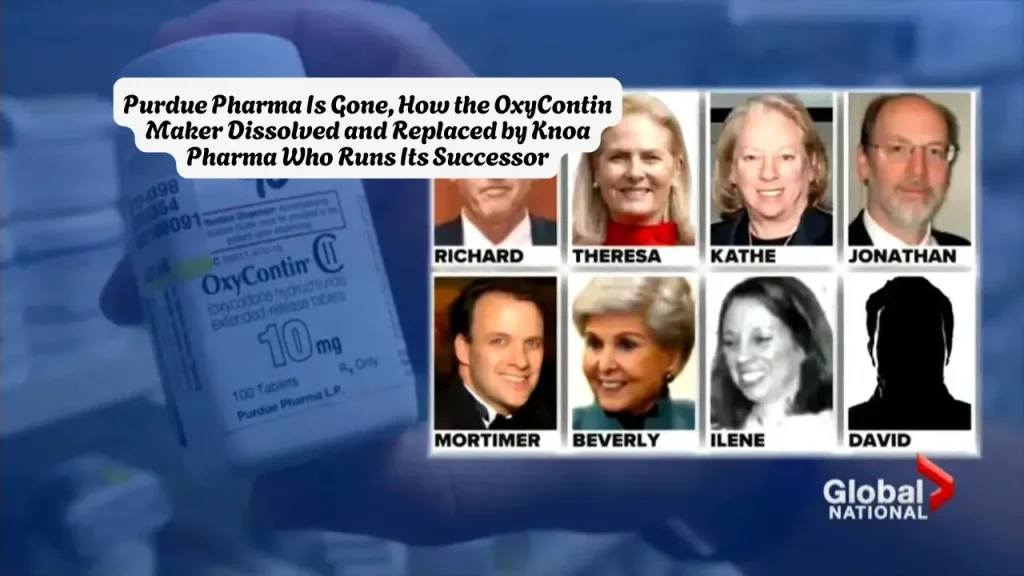
Purdue Pharma has officially ceased operations and concluded its multi-year bankruptcy proceedings, re-emerging as a nonprofit organization called Knoa Pharma — a new entity dedicated to treating opioid addiction and overseen by a board with government and health industry experience. Purdue, which filed for Chapter 11 in 2019, had long planned the transition to Knoa Pharma as part of a $7.4 billion bankruptcy settlement meant to devote all of the company’s remaining resources to addressing the harms of the opioid crisis. No member of the Sackler family has any involvement in the new company.
Quick Facts: Purdue Pharma Dissolution and Knoa Pharma
| Field | Detail |
| Purdue Pharma Dissolved | May 1, 2026 |
| Successor Entity | Knoa Pharma LLC |
| Knoa’s Owner | Knoa Foundation (newly established nonprofit) |
| Total Settlement Value | $7,400,000,000 ($7.4 billion) |
| Criminal Sentence | $5.5 billion (DOJ collecting $225 million; remainder credited through bankruptcy) |
| Individual Victim Fund | $865,000,000 |
| Sackler Family Banned | Permanently barred from selling opioids in the U.S. |
| Independent Monitor | Former Montana AG and Governor Steve Bullock |
| Knoa’s Mission | Sell overdose reversal and addiction treatment medicine at or below cost |
| Last Updated | May 2, 2026 |
Current Status
- The recent completion of Purdue’s criminal sentencing removed the final legal obstacle, allowing the bankruptcy plan to come into full effect on May 1, 2026.
- Knoa Pharma LLC has begun operating in Purdue’s place, overseen by independent directors and trustees who have no association with Purdue. Knoa Pharma is entirely owned by the Knoa Foundation, a newly established nonprofit.
- All members of the Sackler family are permanently barred from selling opioids in the United States and will not have any involvement in the new company.
What Is the Purdue Pharma Bankruptcy About? In re Purdue Pharma L.P., No. 19-23649 (Bankr. S.D.N.Y.)
Purdue previously pleaded guilty to misbranding and fraud charges related to its marketing of OxyContin in 2007, admitting it falsely marketed OxyContin as less addictive, less subject to abuse, and less likely to cause withdrawal symptoms than rival pain medications. The company kept pushing high-dose prescriptions anyway. State attorneys general and the Department of Justice gathered evidence over years showing Purdue treated addiction as someone else’s problem — even as hundreds of thousands of Americans died.
Purdue pleaded guilty in 2020 on charges of deceiving federal regulators and paying doctors to boost opioid sales. According to court documents, Purdue illegally marketed its opioid products, defrauded the DEA by misrepresenting the effectiveness of its programs, and paid kickbacks to doctors through its speaker program. The criminal sentencing was then delayed for years by legal battles over the bankruptcy structure — including a pivotal June 2024 Supreme Court ruling that struck down a prior settlement’s broad immunity for the Sackler family.
Before accepting the plea deal, U.S. District Judge Madeline Cox Arleo in Newark heard nearly seven hours of testimony from people who wanted to speak about the company’s role in fueling the opioid epidemic. Arleo directed Purdue Chairman Steve Miller to apologize directly to victims in the courthouse, which he did, saying the company deeply regrets and accepts responsibility for past misconduct. That moment — a corporation’s chairman apologizing to a courtroom full of victims — marked the end of more than two decades of denial.
Related article: PFAS Found in Village of Maine Private Wells Here Are Your Rights as a Well Owner
Are You Part of the Purdue Pharma Bankruptcy Settlement?
Most Americans will benefit from this settlement indirectly — through opioid treatment programs their state, county, or city now funds. But some individuals may have direct financial claims. Here is how to understand where you fall.
You may have a direct claim if:
- You filed a personal injury claim in Purdue’s bankruptcy proceedings as someone directly harmed by OxyContin or another Purdue opioid product
- Your city or county was a litigating party in the opioid litigation and is entitled to a direct distribution from the settlement trust
- You are a healthcare provider or program receiving opioid abatement funds through your state’s distribution structure
You are NOT a direct cash recipient if:
- You did not file a personal injury claim in the bankruptcy before that window closed
- You are looking for a new online claim form — the bankruptcy claims process is now closed
- You are seeking to sue Purdue or the Sacklers independently — the settlement and dissolution make new individual litigation against Purdue effectively impossible
The current $7.4 billion plan includes approximately $865 million specifically earmarked for individual victims — the largest direct compensation pool for people harmed by the opioid crisis. That fund is being administered through the bankruptcy trust, not a public claim portal.
What Is Knoa Pharma and Who Runs It?
Knoa Pharma is the single most consequential structural outcome of the entire Purdue litigation — and it is unlike anything that has come out of a corporate bankruptcy before.
Knoa Pharma will manufacture medications, including opioid products, safely and responsibly to address public health needs. Knoa Pharma will be barred from marketing its opioid products, lobbying, and using opioid sales metrics for compensation by a court-ordered injunction. The company that spent decades aggressively marketing painkillers to maximize revenue is now legally prohibited from marketing anything.
Knoa will sell medicine for overdose reversal and addiction treatment at or below its cost of production. That means drugs like naloxone — which reverses opioid overdoses — and medications for opioid use disorder will be distributed at cost, not for profit.
The people running Knoa have no ties to Purdue. Knoa Pharma’s trustees include Rahul Gupta, who led the White House Office of National Drug Control Policy under President Joe Biden; Paul Rothman, former CEO of Johns Hopkins University School of Medicine; and David Saltzman, co-founder of the Atria Health and Research Institute.
Former Montana Attorney General and Governor Steve Bullock will serve as an independent monitor of the company, ensuring it complies with the court’s injunction. Bullock’s role exists specifically to make sure Knoa never drifts back toward the aggressive sales culture that defined Purdue.
What Did the Criminal Sentencing Actually Mean?
A federal judge in Newark delivered a historic sentence against Purdue Pharma, ordering the OxyContin manufacturer to pay $5.5 billion in criminal fines and penalties for its role in fueling the opioid epidemic. But the headline number requires context — most of it will never be collected in cash.
The sentence includes a criminal fine of $3.544 billion — to be assessed through bankruptcy proceedings — and an additional $2 billion in criminal forfeiture. The Department of Justice will credit up to $1.775 billion against the forfeiture amount based on the value provided to governments through Purdue’s bankruptcy, if the company ceases to operate in its current form and emerges as a public benefit company.
In practice: under the terms of the 2020 agreement with federal prosecutors, most of the $5.5 billion in fines will go unpaid. The Justice Department collected just $225 million, as long as Purdue directs its remaining assets toward repaying creditors — a structure designed to maximize funds flowing to victims rather than the government.
No Sackler family members face criminal charges. No one is going to prison. That reality drew sharp criticism from victim advocates and opioid survivors — but the judge acknowledged she was limited by what the government and company had already agreed to in 2020.
Purdue Pharma Complete Timeline
| Milestone | Date |
| OxyContin First Approved by FDA | 1995 |
| Purdue First Pleaded Guilty to Misbranding | 2007 |
| Multistate Attorney General Investigation Launched | 2016 |
| Purdue Filed Chapter 11 Bankruptcy | September 2019 |
| Purdue Criminal Guilty Plea to DOJ | 2020 |
| Prior Bankruptcy Settlement Struck Down by Supreme Court | June 2024 |
| Revised Bankruptcy Plan Approved | November 2025 |
| New $7.4B Settlement Announced | January 2025 |
| All 55 Attorneys General Sign On | June 2025 |
| Criminal Sentencing — $5.5B Ordered | April 29, 2026 |
| Purdue Pharma Dissolves | May 1, 2026 |
| Knoa Pharma Begins Operations | May 1, 2026 |
Frequently Asked Questions
Is there still a class action lawsuit against Purdue Pharma I can join?
No. Purdue has ceased operations and concluded its multi-year bankruptcy proceedings. The litigation is resolved. Claims filed in the bankruptcy are being processed through the settlement trust. New suits against Purdue as a company are not viable. If you believe you have an individual claim that was not captured, speak with a consumer rights lawyer about your options.
Do I need to do anything right now if I was harmed by OxyContin?
If you filed a personal injury claim in the bankruptcy, your payment will be distributed through the trust — no additional action is needed. If you never filed and believe you qualify, consult an attorney immediately. The claims window has closed, but legal counsel can advise on any remaining options.
Will anyone from Purdue or the Sackler family go to prison?
No. Purdue Pharma admitted to misleading the public about the safety of OxyContin and to paying doctors through a kickback scheme to over-prescribe highly addictive opioid medications — but the criminal resolution applies to the company, not to individuals. No members of the Sackler family face criminal charges.
What is Knoa Pharma — and is it trustworthy?
Knoa Pharma is a new public benefit corporation entirely owned by the Knoa Foundation, a newly established nonprofit. It is overseen by independent directors and trustees who have no association with Purdue. A court-ordered injunction bars it from marketing opioids, lobbying, or using sales metrics to determine compensation — the exact practices that defined Purdue’s misconduct.
When will individual opioid victims receive their payments?
The $7.4 billion settlement, which includes an $865 million fund for individuals affected by the crisis, had been hailed by Purdue and plaintiffs’ lawyers as a victory for victims. Payment timing through the trust depends on claims processing — monitor the official bankruptcy docket at PACER for updates on distribution schedules.
Will my opioid victim settlement payment affect my taxes?
Payments compensating for personal physical injury are generally not taxable under federal law, but payments for lost wages or other economic damages may be. Speak with a tax professional about how any payment you receive should be treated on your return.
Can Knoa Pharma ever sell OxyContin again?
Knoa Pharma will be barred from marketing its opioid products, lobbying, and using opioid sales metrics for compensation by a court-ordered injunction. It can manufacture opioid medications to address public health needs — but it cannot promote them, and an independent monitor is in place to enforce those limits permanently.
Sources & References
- New York Attorney General — Shutdown of Purdue Pharma Announced
- Washington Times — DOJ Criminal Penalties Order
- Connecticut Attorney General — Purdue Dissolution Announcement
Prepared by the AllAboutLawyer.com Editorial Team and reviewed for factual accuracy against official state attorney general announcements, DOJ records, and court filings on May 2, 2026. Last Updated: May 2, 2026
Disclaimer: This article is for informational purposes only and does not constitute legal advice. Legal claims and outcomes depend on specific facts and applicable law. For advice regarding a particular situation, consult a qualified attorney.
About the Author
Israr Ahmad is a legal content researcher with 4+ years of experience covering class action settlements and consumer rights cases. He has researched and published coverage of 2,500+ settlements using verified court records, settlement administrator filings, and government sources. Learn more about Israr.