
Pitt Professors Join NIH Putative Class Action Alleging Scientific Research Censorship
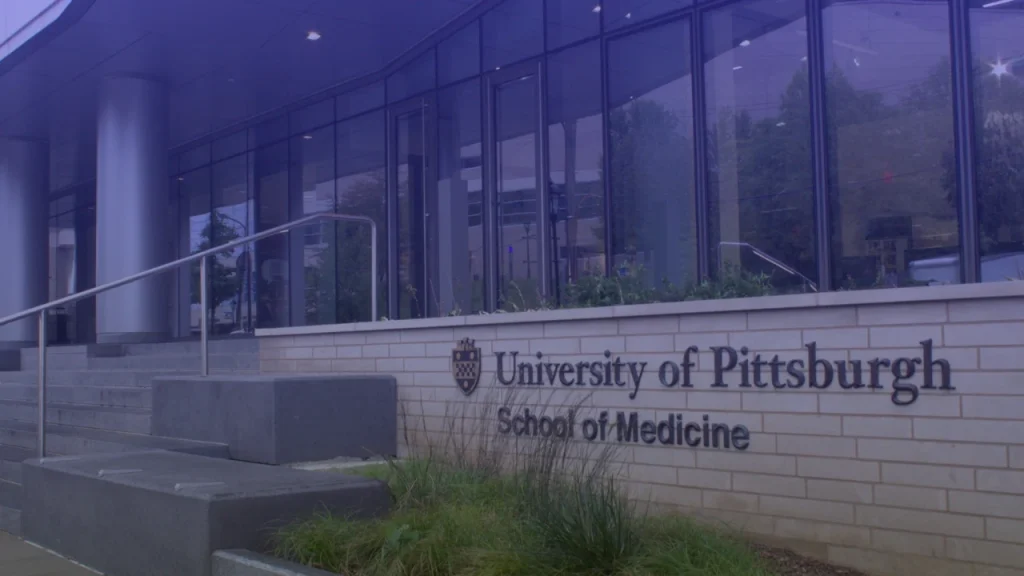
Two University of Pittsburgh researchers, Andrea Rosso and Ann D. Cohen, are among 17 plaintiffs challenging National Institutes of Health (NIH) grant-screening and funding practices in federal court. They allege NIH used viewpoint-based criteria to block, terminate, or force changes to federally funded research.
Short answer for researchers: this is active litigation. There is no settlement, no claim form, no payment, and no claims deadline. No class has been certified, and the court has not ruled that NIH violated any law. The allegations are unproven.
Quick Facts: Salles et al. v. National Institutes of Health et al.
| Detail | Information |
| Case | Salles et al. v. National Institutes of Health et al. |
| Case number | 3:26-cv-10510 |
| Court | U.S. District Court, Northern District of California (San Francisco Division) |
| Filed | September 16, 2026 |
| Judicial officer | Magistrate Judge Sallie Kim |
| Plaintiffs | 17 researchers, including Andrea Rosso and Ann D. Cohen (University of Pittsburgh); four proceed under pseudonyms (Jordan Doe 1 to 4) |
| Defendants | NIH; NIH Director Jay Bhattacharya; U.S. Department of Health and Human Services (HHS); HHS Secretary Robert F. Kennedy Jr.; U.S. DOGE Service |
| Main claims | First Amendment (viewpoint discrimination, compelled speech, retaliation); Administrative Procedure Act (APA) |
| Relief sought | Declaratory and injunctive relief, vacatur of challenged policies, re-review and restoration of affected grants and grant language |
| Class status | Putative class action; no class certified |
| Preliminary injunction | Motion filed September 24, 2026; not granted as of this update |
| Next scheduled event | Case-management statement due December 14, 2026; initial case-management conference December 21, 2026, 1:30 p.m. PT (videoconference) |
| Official settlement website | None. No settlement exists |
| Claim form | None |
| Where to track the case | Federal docket (PACER, CourtListener RECAP, Justia, Civil Rights Litigation Clearinghouse; see Sources) |
What Does the Lawsuit Allege?
The plaintiffs allege NIH added an ideological screening layer on top of normal scientific peer review. According to the lawsuit, NIH uses a list of 235 keywords and phrases to flag grants and applications. Reportedly flagged terms include words such as “equity,” “gender,” “racist,” “Latinx,” “climate change,” and “pregnant individual,” which plaintiffs say serve as proxies for disfavored viewpoints on topics such as diversity, gender identity, racial disparities, and climate change.
Plaintiffs claim flagged projects have been terminated, denied, delayed, or pushed into “renegotiation” requiring researchers to remove or reword the flagged language. They argue the government may set funding priorities but may not use funding to punish or compel particular viewpoints in private scientific speech.
These are the plaintiffs’ allegations. The government has not been found liable, and defendants will respond in court.
Why Are the Pitt Researchers Involved?
Andrea Rosso is a University of Pittsburgh epidemiology researcher. Pitt’s eBrain program identifies her as a principal investigator on a longitudinal study of neighborhood disadvantage, cognitive aging, and Alzheimer’s disease risk in disinvested African American neighborhoods. The program says the study’s NIH grant was canceled in August 2026, involving roughly 600 older adults in two Pittsburgh neighborhoods, before the team could finish the final stage of evaluating participants’ cognitive results.
Ann D. Cohen, PhD (listed on the docket as Ann D. Cohen-Wilson) is an associate professor of psychiatry at Pitt whose research includes Alzheimer’s disease and neuroimaging. Plaintiffs allege her NIH-funded work was also terminated in 2026.
Their cancellations are part of the broader dispute, but the court has not decided that NIH canceled any grant unlawfully. The case is not against the University of Pittsburgh, and it is not limited to Pitt research. Plaintiffs include researchers from other institutions, such as Stanford and the University of Pennsylvania.
Related article: Driscoll’s Berry Pesticide Residue Lawsuit in Quebec, Gauthier v. Driscoll’s Canada Operations Inc., No. 500-06-000075-263
Who Are the Defendants and Who Represents the Plaintiffs?
Defendants are NIH, Director Jay Bhattacharya, HHS, Secretary Robert F. Kennedy Jr. (both officials sued in their official capacities), and the U.S. DOGE Service. Summonses have been issued. Counsel for plaintiffs include the ACLU, ACLU of Northern California, Protect Democracy, the Center for Science in the Public Interest, and Jacobson Lawyers Group.
Legal Claims
- First Amendment: Plaintiffs argue the government cannot condition or withdraw research funding based on the viewpoint expressed in scientific work, or compel researchers to adopt preferred phrasing.
- Administrative Procedure Act: Plaintiffs argue the challenged actions are arbitrary and capricious, an abuse of discretion, or contrary to law or governing statutes and regulations (5 U.S.C. § 706).
Has a Class Been Certified?
No. The case was filed as a putative class action. Plaintiffs have reportedly also filed a motion for class certification (around September 25, 2026), but the court has not granted it. The proposed class would cover researchers whose NIH-funded work was terminated under the challenged policies and has not been reinstated, as well as researchers whose existing or prospective grants face termination, denial, forced rewording, or renegotiation under them. Exact class definitions are in the complaint and the certification motion.
Researchers should not assume they are already members of a certified class.
More related article: Netflix Class Action Lawsuit, Ohio Parents Say Netflix Tracks Kids’ Viewing Data
What Relief Are Plaintiffs Seeking?
The case primarily seeks court orders, not a cash settlement. Plaintiffs ask the court to:
- declare the challenged policies unlawful;
- stop NIH from enforcing them;
- vacate the challenged agency actions;
- require re-review of affected grant decisions;
- restore grant language researchers say they were pressured to change;
- restore terminated funding where appropriate; and
- award attorneys’ fees and costs where legally available.
What Happens Next?
The plaintiffs filed preliminary-injunction materials on September 24, 2026. A request for an injunction is not a court order. The docket does not show it has been granted. The court’s scheduling order requires a case-management statement by December 14, 2026, with an initial case-management conference on December 21, 2026, at 1:30 p.m. Pacific Time. Dates can change, so check the docket. Expect briefing on preliminary relief and class certification, responses from the government, and possibly motions challenging the claims. Outcomes could include denial of relief, injunctions, class certification (or denial), settlement, or appeals.
Can Researchers Join or Get Money?
- No claim form or settlement fund exists. Do not submit claims based on this case.
- If a class is later certified, the court would order notice explaining who is included and any rights such as opting out. Until then, there is no process for researchers to “join.”
- Individual claims may still be possible depending on the grant and agency action, subject to deadlines and exhaustion requirements. Talk to counsel experienced in federal grant and constitutional litigation, and to your institution’s sponsored-programs office.
What Should Affected Researchers Do Now?
Preserve records:
- Original grant applications and award notices
- Peer-review materials and scores
- NIH correspondence, including requests to revise or remove terminology
- Termination or non-renewal notices
- Records of funding received or withheld
- Research schedules, participant records, and staff impacts from the funding decision
- Any appeal or reconsideration requests
Also distinguish between a grant ended for ordinary administrative or scientific reasons and one allegedly ended because of viewpoint. The lawsuit concerns the second.
How Is This Different From Earlier Grant Litigation?
It is part of a broader wave of litigation over federal research funding. Earlier challenges produced mixed results, and Salles alleges that screening practices continued or were reformulated. Do not assume any earlier ruling controls this case. AllAboutLawyer previously covered a related but separate case: Trump Administration Research Grants Lawsuit, Were You Affected? (Thakur v. Trump, No. 3:25-cv-04737-RFL).
Key Dates
| Date | Event |
| August 2026 | Pitt’s eBrain program says Rosso’s NIH grant was canceled |
| September 16, 2026 | Complaint filed; case opened; summonses issued; motion to proceed pseudonymously filed |
| September 24, 2026 | Preliminary-injunction materials filed |
| About September 25, 2026 | Class-certification motion reportedly filed |
| December 14, 2026 | Case-management statement due |
| December 21, 2026, 1:30 p.m. PT | Initial case-management conference |
| None | Settlement, claim deadline |
Frequently Asked Questions
What is the NIH research censorship lawsuit? Salles et al. v. National Institutes of Health et al., No. 3:26-cv-10510, filed in the Northern District of California. Researchers allege NIH uses viewpoint-based screening in funding decisions in violation of the First Amendment and the APA.
Are Andrea Rosso and Ann Cohen plaintiffs? Yes. Both Pitt researchers are listed among the 17 plaintiffs.
How many researchers filed the lawsuit? Seventeen, including four proceeding under pseudonyms.
Has the class been certified? No. It is a putative class action.
What is the 235-keyword list? Plaintiffs allege NIH screens grants for 235 terms tied to subjects like diversity, gender identity, racial disparities, and climate change.
Is there a settlement or claim form? No.
Can researchers get money? No payment has been established. The case mainly seeks declaratory and injunctive relief.
Did a judge already rule that NIH censored research? No. The allegations have not been decided.
When is the next court date? The initial case-management conference is scheduled for December 21, 2026, at 1:30 p.m. PT.
What should affected researchers do? Preserve records, consult counsel and your university’s sponsored-programs office, and monitor the docket.
Bottom Line
Pitt researchers Andrea Rosso and Ann D. Cohen are among 17 plaintiffs in Salles v. NIH, which alleges NIH’s grant screening, including a disputed 235-keyword list, amounts to viewpoint discrimination. The claims are unproven, no class is certified, and the plaintiffs seek court orders rather than payments. There is no settlement, claim form, or deadline. The next scheduled event is the December 21, 2026 case-management conference.
Sources
- U.S. District Court, N.D. Cal., docket and complaint, Salles et al. v. National Institutes of Health et al., No. 3:26-cv-10510 (filed Sept. 16, 2026): https://dockets.justia.com/docket/california/candce/3%3A2026cv10510/479059
- Civil Rights Litigation Clearinghouse, case summary and filings: https://clearinghouse.net/case/48478/
- ACLU press release, “Researchers Challenge NIH Screening of Grants for Disfavored Viewpoints” (Sept. 16, 2026): https://www.aclu.org/press-releases/researchers-challenge-nih-screening-of-grants-for-disfavored-viewpoints
- Reuters, “Scientists challenge US NIH grant screening as unconstitutional”: https://www.investing.com/news/economy-news/scientists-challenge-us-nih-grant-screening-as-unconstitutional-4904669
- University of Pittsburgh eBrain program, “When Research Funding Disappears, So Does the Promise Made to Participants”: https://www.ebrain.pitt.edu/when-research-funding-disappears-so-does-the-promise-made-to-participants/
- University of Pittsburgh faculty pages for Ann Cohen, PhD (Dementia Epidemiology Program; Department of Psychiatry): https://dementia-epidemiology.pitt.edu/people/ann-cohen-phd
Disclaimer: This article provides general legal information and is not legal advice. The allegations against NIH, HHS, and the other defendants have not been proven in court. AllAboutLawyer.com is not a law firm and does not represent any party in this case.
Researched and written by the AllAboutLawyer.com editorial team. Last reviewed October 5, 2026.
About the Author
Israr Ahmad is a legal content researcher with 4+ years of experience covering class action settlements and consumer rights cases. He has researched and published coverage of 2,500+ settlements using verified court records, settlement administrator filings, and government sources. Learn more about Israr.