
Par Health Recall 2026, Injectable Drug Recall, All 46 Lot Numbers, Six Affected Drugs and Health Risks
Par Health has voluntarily recalled 46 lots of six injectable medications distributed nationwide to hospitals and pharmaceutical wholesalers because of foreign particles: cellulose, polystyrene, vial stopper material and aluminum. The company announced the recall on November 23, 2026, and the U.S. Food and Drug Administration (FDA) published the notice on November 24, 2026.
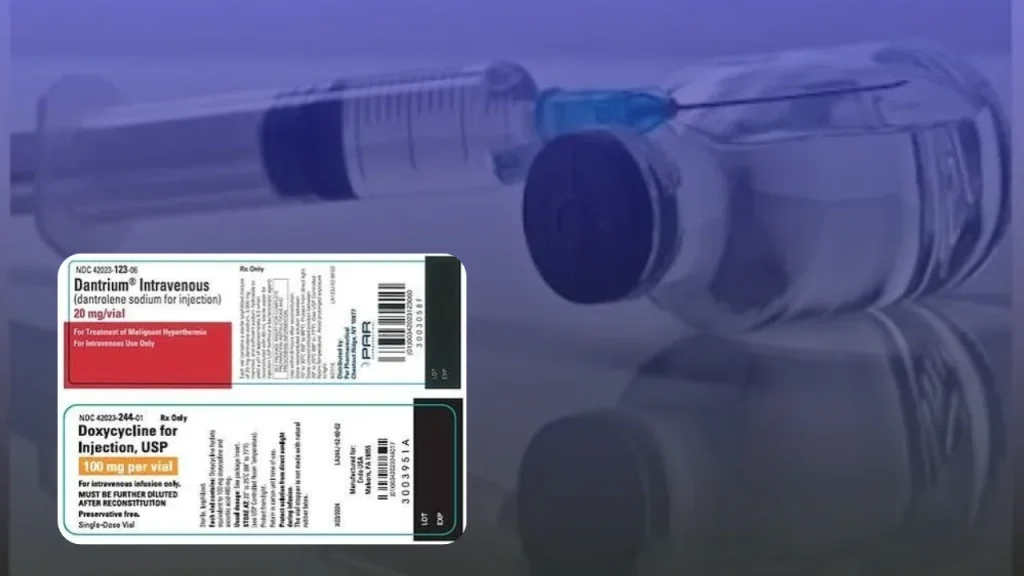
The affected drugs are Brevital Sodium, Coly-Mycin M, Dantrium Intravenous, Doxycycline for Injection, Ethacrynate Sodium and Micafungin.
Injecting medication that contains foreign particles could cause serious, potentially life-threatening complications, including blood vessel blockage, tissue damage and vein inflammation. Par Health reported no adverse events when it announced the recall.
Hospitals and wholesalers should stop using and distributing the affected lots immediately. Patients worried about past treatment should ask their healthcare provider or hospital pharmacy whether they received medication from a recalled lot. Only the 46 listed lots are recalled.
Par Health Recall 2026: Quick Facts
| Recall Detail | Official Information |
| Official notice | FDA recall announcement dated November 24, 2026 (link in Sources below) |
| Recalling company | Par Health (current distributor: Par Health USA, LLC) |
| Older label names | Par Pharmaceutical and Endo USA (predecessor companies) |
| Announcement location | Rochester, Michigan |
| Company announcement | November 23, 2026 |
| FDA publication | November 24, 2026 |
| Drugs affected | 6 (7 product configurations; Micafungin in two strengths) |
| Total recalled lots | 46 |
| Distribution | Nationwide, to hospitals and wholesalers |
| Distribution period | July 2, 2024 to September 17, 2026 |
| Recall level | Hospital/user level |
| Reason | Foreign particulate matter |
| Materials identified | Cellulose, polystyrene, stopper material, aluminum |
| Potential complications | Blood vessel blockage, tissue and organ damage, vein inflammation, blood clots |
| Reported adverse events | None at announcement |
| FDA hazard classification | Not independently verified as of November 25, 2026 |
| Recall administrator | Inmar, Inc. |
| Recall phone | 844-940-1986 (Mon to Fri, 9 a.m. to 5 p.m. ET) |
| Recall email | [email protected] |
| Medical and product complaints | 800-828-9393 |
| FDA MedWatch | 800-332-1088 |
| Lawsuit or settlement | None identified for this recall |
Which Six Injectable Drugs Did Par Health Recall?
| Medication | Strength | Medical Use | Recalled Lots |
| Brevital Sodium | 500 mg/vial | Anesthesia and short procedural sedation | 20 |
| Coly-Mycin M Parenteral | 150 mg/vial | Serious Gram-negative bacterial infections | 1 |
| Dantrium Intravenous | 20 mg/vial | Malignant hyperthermia emergencies | 15 |
| Doxycycline for Injection | 100 mg/vial | Bacterial infections | 4 |
| Ethacrynate Sodium | 50 mg/vial | Fluid retention (edema) | 1 |
| Micafungin for Injection | 50 mg/vial | Serious fungal infections | 1 |
| Micafungin for Injection | 100 mg/vial | Serious fungal infections | 4 |
| Total | 46 |
Brevital and Dantrium account for 35 of the 46 lots. The recall does not cover every strength, formulation or manufacturer of these drugs.
Complete Par Health Recall Lot Numbers and Expiration Dates
Compare the drug name, strength, National Drug Code (NDC) and lot number against these listings.
1. Brevital Sodium Recall: All 20 Lots
Methohexital Sodium for Injection, USP (Schedule IV controlled substance). 500 mg/vial, 50 mL multidose vial. NDC 42023-105-01.
| Lot | Expiration | Lot | Expiration |
| 74327 | 11/2026 | 84239 | 11/2027 |
| 76610 | 01/2027 | 84666 | 11/2027 |
| 76407 | 01/2027 | 84641 | 11/2027 |
| 76619 | 01/2027 | 84992 | 11/2027 |
| 77304 | 02/2027 | 86174 | 01/2028 |
| 81324 | 07/2027 | 86805 | 01/2028 |
| 82439 | 09/2027 | 87083 | 02/2028 |
| 82811 | 09/2027 | 88406 | 03/2028 |
| 83192 | 09/2027 | 92786 | 08/2028 |
| 81738 | 10/2027 | 93510 | 09/2028 |
Brevital is a short-acting anesthetic used in certain procedures in adults and children. Patients who had anesthesia or procedural sedation can ask their provider whether methohexital was used.
Two other Brevital lots, 86930 and 88623, were recalled separately in October 2026. They are not in this 20-lot list, so facilities should check both lists.
2. Coly-Mycin M Parenteral Recall: 1 Lot
Colistimethate for Injection, USP. 150 mg/vial, 10 mL single-dose vial. NDC 42023-107-01.
| Lot | Expiration |
| 79575 | 05/2027 |
Coly-Mycin M is an antibiotic for certain serious infections caused by susceptible Gram-negative bacteria. The treating team should decide on alternatives.
3. Dantrium Intravenous Recall: All 15 Lots
Dantrolene Sodium for Injection. 20 mg/vial, 75 mL single-dose vial. NDC 42023-123-06.
| Lot | Expiration |
| 78902 | 04/2027 |
| 79404 | 05/2027 |
| 79825 | 05/2027 |
| 81317 | 07/2027 |
| 81093 | 07/2027 |
| 82437 | 09/2027 |
| 82781 | 09/2027 |
| 83750 | 10/2027 |
| 84128 | 10/2027 |
| 88122 | 03/2028 |
| 89046 | 04/2028 |
| 89519 | 05/2028 |
| 89653 | 06/2028 |
| 92325 | 08/2028 |
| 93504 | 09/2028 |
Dantrium is used to prevent and treat malignant hyperthermia, a rare and potentially fatal reaction to certain anesthetics. Hospitals and surgical centers should check emergency stock and malignant hyperthermia carts, and arrange unaffected replacement stock so emergency treatment stays available.
4. Doxycycline for Injection Recall: 4 Lots
Doxycycline for Injection, USP. 100 mg/vial, 20 mL single-dose vial. NDC 42023-244-10.
| Lot | Expiration |
| 83920 | 11/2026 |
| 85001 | 12/2026 |
| 86446 | 01/2027 |
| 84236 | 04/2027 |
This is the injectable form only. Oral doxycycline tablets and capsules are not part of this recall.
5. Ethacrynate Sodium Recall: 1 Lot
Ethacrynate Sodium for Injection, USP. 50 mg/vial, 20 mL single-dose vial. NDC 42023-157-01.
| Lot | Expiration |
| 87689 | 03/2027 |
Ethacrynate sodium is a loop diuretic used when fluid must be removed quickly. Patients receiving it often have heart, kidney or liver conditions that need medical supervision.
Related article: SHEIN $100 Million FTC Settlement 2026, Who Qualifies for Refunds and How to Claim?
6. Micafungin Recall: 5 Lots in Two Strengths
Micafungin is an antifungal used for serious Candida infections and to prevent infection in certain stem cell transplant patients. The two strengths have different NDCs and lots; check each separately.
Micafungin 50 mg/vial (10 mL single-dose vial, NDC 42023-229-10)
| Lot | Expiration |
| 84241 | 11/2026 |
Micafungin 100 mg/vial (10 mL single-dose vial, NDC 42023-230-10)
| Lot | Expiration |
| 86168 | 01/2027 |
| 88403 | 03/2027 |
| 89209 | 04/2027 |
| 90885 | 06/2027 |
Are Par Pharmaceutical and Endo USA Products Included?
Yes. Par Pharmaceutical, Inc. and Endo USA, Inc. are predecessor companies to Par Health USA, LLC. An affected vial may carry either older name, so don’t search inventory by “Par Health” alone. The drug name, strength, NDC and lot number are the reliable identifiers.
The corporate relationship does not by itself decide which company is legally responsible for a defect or injury.
Why Were the Par Health Injectable Drugs Recalled?
Par Health found foreign particles in certain lots:
| Material | What It Is |
| Cellulose | Plant-based fiber material |
| Polystyrene | Synthetic plastic |
| Stopper material | Material from vial closures |
| Aluminum | Metal |
The announcement does not say where each particle came from, which equipment was involved, which contaminant appeared in each lot, how concentrated the particles were, or how many vials are affected. The presence of stopper material does not prove contamination happened during hospital preparation. Only a full investigation can show where the particles entered the products.
Why Particles in Injectable Drugs Are More Dangerous Than in Tablets
Injectables go straight into the bloodstream or tissue, bypassing the digestive system’s natural barriers. Par Health identified these potential complications:
| Complication | Explanation |
| Pulmonary emboli | Blocked blood vessels in the lungs |
| Vascular occlusion | Blocked blood flow elsewhere in the body |
| Tissue damage | Injury from poor blood supply |
| Organ damage | Injury from disrupted circulation |
| Phlebitis | Inflamed veins |
| Thrombosis | Blood clot formation |
Not every vial in a recalled lot necessarily contains particles, and not every patient given one of these drugs received a recalled lot. A risk statement does not mean every recipient was harmed.
Bacterial Contamination vs. Particulate Contamination
This announcement reports foreign particles. It does not report confirmed bacterial or fungal contamination or a sterility-test failure. Those are different quality problems, though each can be serious in an injectable.
Par Health’s Earlier 2026 Injectable Recalls
The November recall follows three earlier Par Health announcements involving foreign particles.
| Announcement | Product | Lots |
| September 18, 2026 | Dexmedetomidine HCl in Sodium Chloride Injection | 2 |
| October 8, 2026 | Brevital Sodium 500 mg/vial | 2 |
| October 13, 2026 | Argatroban Injection 250 mg/2.5 mL | 22 |
| November 23, 2026 | Six injectable drugs (this recall) | 46 |
| Total across four announcements | 72 |
The earlier Brevital lots are 86930 (exp. 02/2028) and 88623 (exp. 04/2028). Together, the October and November notices cover 22 Brevital lots under NDC 42023-105-01.
The repeated announcements raise fair questions about quality controls, but no verified finding shows that all four recalls share one root cause.
How Patients Can Find Out If They Received a Recalled Injection
The lots were distributed between July 2, 2024 and September 17, 2026. Many of these drugs are given during surgery, hospital stays or emergencies, so patients often never see the vial. A hospital visit during that period does not mean you were exposed.
- Identify the hospital or facility where you were treated.
- Contact your physician or the hospital pharmacy.
- Ask whether any of the six recalled drugs were given.
- Ask for the manufacturer, strength, NDC and lot number, if traceable.
- Ask whether the facility received any affected lots.
- Ask for clinical guidance if exposure is confirmed or suspected.
Hospitals may need pharmacy inventory, supplier invoices, anesthesia records and medication administration records to answer. In some cases the exact lot given to one patient cannot be reconstructed.
Can You Request Your Hospital Records?
Generally yes. The HIPAA Privacy Rule (45 CFR § 164.524) gives patients a right to access their own health records from covered providers, which can include medication administration records, anesthesia reports, discharge summaries and lab results. Providers generally must respond within 30 days, with a limited extension allowed.
That right does not automatically cover internal hospital purchasing, quality-control or incident-investigation files. If your record lacks a lot number, ask the pharmacy or patient safety department whether the product can be traced. Don’t wait for a records request before seeking medical care.
Symptoms to Watch For After a Possibly Contaminated Injection
No related adverse events had been reported at announcement. Seek emergency care for:
- Sudden trouble breathing
- Unexplained chest pain
- Fainting or severe dizziness
- Sudden weakness or trouble speaking
- Severe unexplained limb pain or swelling
These symptoms have many causes and don’t prove exposure to recalled medication. For milder concerns, such as persistent redness, tenderness or swelling at an injection site, call your healthcare provider. If you received an affected drug and feel well, ask your clinician whether any follow-up makes sense. No universal screening program has been announced for past recipients.
What Hospitals and Pharmacies Should Do
Par Health instructs wholesalers and hospital pharmacies to stop using and distributing affected products immediately. Recommended steps:
- Identify inventory matching the seven product configurations and 46 lots.
- Quarantine recalled stock to prevent accidental dispensing.
- Check operating rooms, emergency departments, ICUs, infusion centers, anesthesia carts, malignant hyperthermia carts and automated dispensing cabinets.
- Notify downstream facilities that received affected products.
- Arrange returns through Inmar, Inc.
- Keep records of quantities received, administered, quarantined and returned.
- Coordinate replacement supply with clinical and pharmacy teams.
- Assess potential patient exposure and decide on notification and follow-up.
- Report suspected adverse events and quality problems.
Brevital is a Schedule IV controlled substance, so its return and disposal must also follow controlled-substance recordkeeping rules. Don’t try to filter particles out or improvise preparation.
Could the Recall Cause Drug Shortages?
Possibly, depending on replacement supply and how much inventory is affected. Dantrium is especially sensitive because dantrolene must be on hand for malignant hyperthermia emergencies. The announcement does not establish an existing nationwide shortage. Hospitals should check with suppliers, clinical pharmacy teams and the FDA Drug Shortages Database. Patients should not cancel necessary treatment without medical advice.
Is the Par Health Recall FDA Class I, II or III?
The company describes potentially life-threatening consequences, which is consistent with the seriousness of Class I recalls, but that is not a formal FDA classification. Under 21 CFR § 7.3:
| Class | General Meaning |
| Class I | Reasonable probability of serious adverse health consequences or death |
| Class II | Temporary or reversible harm, or remote probability of serious harm |
| Class III | Adverse health consequences unlikely |
As of November 25, 2026, no classification for this recall was verified. The “hospital/user level” describes how far down the supply chain the recall reaches, not how hazardous FDA considers it. Check the FDA Enforcement Reports for updates.
Federal Laws Governing the Par Health Recall
Federal Food, Drug, and Cosmetic Act
- 21 U.S.C. § 351: a drug is adulterated if it fails statutory purity, quality or manufacturing requirements, including CGMP under § 351(a)(2)(B).
- 21 U.S.C. § 331: prohibits certain acts involving adulterated drugs, including introducing them into interstate commerce.
- 21 U.S.C. §§ 332 and 334: authorize injunction and seizure where voluntary action is not enough.
A voluntary recall is not a finding that Par Health or anyone else violated these provisions.
Current Good Manufacturing Practice Regulations
| Regulation | Relevance |
| 21 CFR § 211.22 | Quality control unit responsibilities |
| 21 CFR § 211.67 | Equipment cleaning and maintenance |
| 21 CFR § 211.94 | Drug product containers and closures |
| 21 CFR § 211.110 | In-process controls |
| 21 CFR § 211.113 | Control of microbiological contamination |
| 21 CFR § 211.150 | Distribution procedures and lot traceability |
| 21 CFR § 211.165 | Testing and release for distribution |
| 21 CFR § 211.167 | Special testing requirements |
| 21 CFR § 211.192 | Investigation of unexplained discrepancies and failures |
| 21 CFR § 211.198 | Complaint handling |
| 21 CFR § 7.49 | Recall communications |
| 21 CFR § 7.53 | Recall status reports |
Section 211.192 is especially relevant to repeated particulate recalls because it requires investigating quality failures and extending the investigation to other batches that may be affected. FDA has also issued draft guidance on inspecting injectable products for visible particulates. Draft guidance is not a binding regulation and is not a finding of a violation.
Could Hospitals Be Liable for Giving Recalled Medication?
Possibly, depending on the facts. A hospital is not automatically negligent because it gave a drug later recalled. Relevant questions include:
- Did the facility know, or should it have known, the lot was affected?
- Was the drug given before or after recall notice?
- Were required preparation and visual-inspection procedures followed?
- Did the facility keep using known recalled stock?
- Did the patient suffer an injury caused by the drug?
Medical negligence requires a duty, a breach, causation and a compensable injury. No verified finding shows that any hospital acted negligently in connection with this recall.
Can You Sue Par Health Over Contaminated Injectables?
A patient injured by a defective injectable may have remedies under state law, depending on the facts.
| Possible Claim | General Basis |
| Manufacturing defect | Product departed from its intended specifications |
| Negligence | Lack of reasonable care in making, testing or distributing |
| Breach of warranty | Product failed quality obligations |
| Medical malpractice | A provider’s negligent treatment |
| Consumer protection | Unfair or deceptive conduct |
| Wrongful death | Conduct that caused a death |
A claimant generally must show exposure to the product and a legally sufficient link between that exposure and the injury. A recall alone does not mean every recipient has a viable case. Federal preemption may limit some prescription-drug claims, especially those based on labeling or design rather than a manufacturing defect.
Under 21 U.S.C. § 337(a), private individuals generally cannot sue just to enforce the FDCA, though independent state-law claims may still be available. Filing deadlines (statutes of limitation) vary by state, so injured patients should talk to a licensed attorney promptly.
Is There a Par Health Recall Class Action Settlement?
As of November 25, 2026, no class action, court-approved settlement, compensation fund or official claim form for this recall was identified. Beware of websites or ads promising “recall payouts.”
Keep these processes separate:
- Returning recalled product
- Getting medical care
- Reporting an adverse event to FDA
- Seeking insurance reimbursement
- Pursuing an individual civil claim
- Joining a court-approved class settlement
There is no “objector” status or opt-out process in an FDA recall. Hospitals and wholesalers receive replacement or credit through Inmar’s reverse-distribution process, and the recalling firm generally bears recall costs under 21 CFR Part 7. Any future compensation for a physical injury could have tax consequences (see 26 U.S.C. § 104(a)(2)), so consult a tax professional.
Evidence to Keep If You Believe You Were Injured
After getting medical care, consider keeping:
- Hospital and pharmacy records
- Medication administration and anesthesia records
- Drug names, NDCs and lot numbers, if available
- Medical bills and insurance statements
- Lab and diagnostic results
- Hospital communications about the recall
- Records of lost income or added expenses
Don’t take vials or other clinical materials from a hospital without authorization. An attorney can advise on evidence preservation and deadlines. No compensation amount can responsibly be estimated without reviewing an individual case.
Par Health Recall Contact Information
| Contact | Details |
| Recall administrator | Inmar, Inc. |
| Recall phone | 844-940-1986 |
| Recall email | [email protected] |
| Recall hours | Mon to Fri, 9 a.m. to 5 p.m. ET |
| Medical and technical inquiries | 800-828-9393 |
| Medical inquiry hours | Mon to Thu, 9 a.m. to 8 p.m. ET; Fri, 9 a.m. to 6 p.m. ET |
| FDA MedWatch phone | 800-332-1088 |
| FDA MedWatch fax | 800-332-0178 |
| Returns | Through Inmar, Inc. |
Providers and patients can report adverse reactions or quality problems to FDA MedWatch. A report supports federal safety monitoring but is not a compensation claim.
Par Health Injectable Recall Timeline
| Date | Development |
| July 2, 2024 | Distribution of the 46 recalled lots begins |
| September 17, 2026 | Distribution period ends |
| September 18, 2026 | Separate Dexmedetomidine recall announced |
| October 8, 2026 | Two more Brevital lots recalled |
| October 13, 2026 | Separate 22-lot Argatroban recall announced |
| November 23, 2026 | Par Health announces the 46-lot recall |
| November 24, 2026 | FDA publishes the announcement |
| September 2028 | Latest expiration among the 46 lots |
A future expiration date does not override a recall.
Frequently Asked Questions
How many drugs did Par Health recall?
46 lots of six injectable drugs. Micafungin is included in two strengths.
Which drugs are affected?
Brevital Sodium, Coly-Mycin M Parenteral, Dantrium Intravenous, Doxycycline for Injection, Ethacrynate Sodium for Injection and Micafungin for Injection.
Why were they recalled?
Foreign particles (cellulose, polystyrene, stopper material, aluminum) were found in certain lots.
Is oral doxycycline recalled?
No. Only four lots of the 100 mg injectable are listed.
How many Brevital lots are recalled?
20 lots in the November notice, plus two different lots (86930 and 88623) recalled in October.
Can contaminated injections cause pulmonary embolism?
Particles in the bloodstream can potentially block lung vessels. Par Health lists this among the possible serious complications.
Has anyone died because of the recall?
No related adverse events were reported at announcement, and no related death was identified in the sources reviewed.
How can I tell if a hospital gave me a recalled drug?
Ask the hospital pharmacy or treating provider what was given, including manufacturer and lot number if traceable.
Does the recall cover every Par or Endo drug?
No. It is limited to the listed products and lots.
Is there a lawsuit or claim form?
No verified compensation program or claim form for this recall was identified.
Bottom Line
Par Health’s November 2026 recall covers 46 lots of six injectable drugs shipped to U.S. hospitals and wholesalers between July 2024 and September 2026. Facilities should identify, quarantine and return affected stock right away and secure replacements, especially for Dantrium and Brevital. Patients concerned about past injections should ask their provider or hospital pharmacy whether exposure can be established.
The contaminants could cause serious complications, but no associated adverse events had been reported at announcement, and no settlement or general compensation program has been announced. We will update this article when FDA assigns a classification or more details are released.
Related Recall Coverage
- Baxter Sodium Chloride Injection Recall, Fiberglass Contamination in IV Saline
- Greenwich Rx and Clove Rx Recall 2026, Lot Numbers, Medications and What to Do
- Apothecary Pharma GLP-1 Injection Recall, All 22 Tirzepatide Lots and the NAD+ Vial
Sources
- FDA: Par Health Issues Voluntary Nationwide Recall of Certain Lots of Six Injectable Drug Products, November 24, 2026
- FDA: Par Health Argatroban Injection Recall, October 2026
- FDA: Par Health Brevital Sodium Recall, October 2026
- FDA: Par Health Dexmedetomidine Injection Recall, September 2026
- FDA: Inspection of Injectable Products for Visible Particulates, Draft Guidance
- FDA: Enforcement Reports
- FDA: MedWatch, Report a Problem
- FDA: Drug Shortages Database
- eCFR: 21 CFR Part 211, Current Good Manufacturing Practice for Finished Pharmaceuticals
- eCFR: 21 CFR Part 7, Enforcement Policy (Recalls)
- U.S. Code: 21 U.S.C. § 351, Adulterated Drugs and Devices
- U.S. Code: 21 U.S.C. § 337, Proceedings in Name of United States
- HHS: HIPAA Right of Access, 45 CFR § 164.524
- Par Health: Regulatory News and Recall Announcements
Legal and Medical Disclaimer: AllAboutLawyer.com is an independent legal information website, not a law firm or healthcare provider. This article is for general information and is not medical or legal advice. Recall information may change. Consult a qualified healthcare professional about possible medication exposure and a licensed attorney about individual legal rights.
About the Author
Israr Ahmad is a legal content researcher with 4+ years of experience covering class action settlements and consumer rights cases. He has researched and published coverage of 2,500+ settlements using verified court records, settlement administrator filings, and government sources. Learn more about Israr.