
ICE Detainee Habeas Corpus Petitions, 97,000+ Challenges, DOJ Response and How Immigrants Can Seek Release
More than 97,000 immigration detainees have filed habeas corpus petitions since January 2025, including about 10,000 since October 2026. On November 24, 2026, Attorney General Todd Blanche directed attorneys from non-immigration Justice Department divisions to help defend these cases. A habeas petition can challenge whether ICE has legal authority to hold someone, but it does not automatically stop deportation, free the person, or grant immigration status.
ICE Habeas Corpus Petitions: Key Facts at a Glance
| Information | Current details |
| Petitions filed since January 2025 | More than 97,000 (per DOJ memo as reported by news outlets) |
| Petitions filed since October 2026 | Approximately 10,000 |
| DOJ directive date | November 24, 2026 |
| Issued by | Attorney General Todd Blanche |
| Civil litigators potentially available | Roughly 2,000 across DOJ components |
| Number of attorneys actually reassigned | Not specified in the memo |
| Legal basis for most petitions | 28 U.S.C. § 2241 |
| Main legal dispute | Mandatory detention without bond hearings |
| Pending Supreme Court case | Rhoney v. Barbosa da Cunha, No. 26-104 |
| Government’s merits brief due | November 30, 2026 |
| Respondent’s merits brief due | January 13, 2027 |
| Federal habeas filing fee | $5 (waiver may be requested) |
| Is habeas corpus suspended? | No |
What the DOJ Did on November 24, 2026
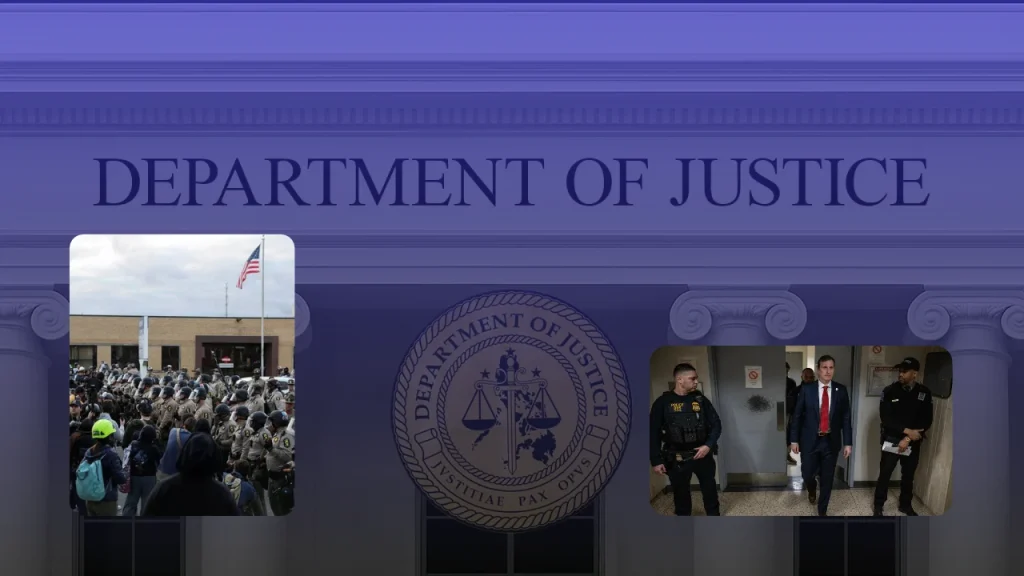
In a three-page memorandum, Attorney General Todd Blanche directed civil attorneys from several non-immigration components to help U.S. Attorneys’ Offices respond to ICE detention habeas petitions. Reported components include the Antitrust Division, Civil Division, Civil Rights Division, Environment and Natural Resources Division and the U.S. Trustee Program, along with lawyers from senior leadership offices.
The memo states that many U.S. Attorneys’ Offices have been overwhelmed by the volume of petitions and by court-imposed procedures. It describes many petitions as “frivolous.” It also directs senior offices to develop recommendations for an aggressive appellate strategy, with proposals due within 30 days.
The memo does not say how many attorneys will be reassigned or how many cases each will handle.
Before 2025, federal immigration-detention habeas filings were reported at a few hundred per year. The current volume is a dramatic shift.
Two perspectives: The government says the volume burdens its offices and that many petitions lack merit. Immigration attorneys, detainees and many federal judges say court review is necessary when people are held without lawful authority or without a meaningful chance to contest detention. Whether any individual petition has merit is decided by the court that hears it.
What the directive does not do: It changes how the DOJ staffs its defense. It does not change the habeas statute, suspend habeas corpus, or remove any detainee’s existing legal remedies.
Why Are So Many ICE Detainees Filing Habeas Corpus Petitions?
The surge follows a change in how the administration reads federal detention law.
- Traditional approach: People arrested inside the U.S. after entering without inspection were commonly treated as detained under INA § 236(a) (8 U.S.C. § 1226(a)), which generally allows consideration for release on bond.
- New approach: On July 8, 2025, ICE issued guidance treating many of these individuals as “applicants for admission” subject to mandatory detention under INA § 235(b)(2)(A) (8 U.S.C. § 1225(b)(2)(A)), even after years of living in the U.S.
- BIA ruling: On September 5, 2025, the Board of Immigration Appeals adopted that reading in Matter of Yajure Hurtado, 29 I&N Dec. 216, limiting immigration judges’ power to grant bond hearings to affected people.
With bond hearings unavailable in immigration court, attorneys turned to federal district courts. Other petitions raise prolonged detention, re-arrest after prior release (including at routine ICE check-ins), and due process claims.
What Is a Habeas Corpus Petition for an ICE Detainee?
A writ of habeas corpus lets a person in custody ask a court to decide whether the detention is lawful. It is protected by the Suspension Clause (Article I, Section 9, Clause 2 of the U.S. Constitution).
Immigration detainees typically file under 28 U.S.C. § 2241, which lets federal courts review custody that allegedly violates federal law or the Constitution. The petition asks a federal judge to decide whether the government has legal authority to hold the person. Depending on the case, a court may order release, order a legally adequate bond hearing, or grant other relief.
Who Can File a Habeas Corpus Petition Against ICE?
Eligibility depends on the person’s custody status, the statute ICE relies on, and the law in the federal circuit where the person is held.
| Detention circumstances | Potential basis for habeas review |
| Denied a bond hearing that the law may allow | Challenge to detention authority |
| Arrested at a routine ICE check-in after prior release | Statutory or due process challenge |
| Held a long time without adequate review | Prolonged detention challenge |
| Held after a final removal order when removal is not reasonably foreseeable | Post-removal-order detention challenge |
| U.S. citizen mistakenly held | Unlawful detention challenge |
| Asylum applicant detained during pending proceedings | Depends on detention category and applicable law |
| Lawful permanent resident detained by ICE | Depends on the grounds for detention |
| Held under mandatory criminal-related provisions | Separate statutory and constitutional rules apply |
Having no criminal record, a work permit or U.S. citizen children does not guarantee release. These facts may still matter to bond eligibility or constitutional claims.
Which Immigration Detention Laws Are Being Challenged?
| Federal law | General purpose | Bond availability |
| 8 U.S.C. § 1225(b) | Detention of certain applicants for admission | Generally mandatory, subject to exceptions |
| 8 U.S.C. § 1226(a) | Discretionary detention pending removal proceedings | Bond or conditional release may be available |
| 8 U.S.C. § 1226(c) | Mandatory detention of specified noncitizens, including certain criminal-related categories | Generally no ordinary bond hearing |
| 8 U.S.C. § 1231 | Detention after a removal order | Separate custody and release rules |
The core dispute is whether people arrested inside the U.S. after entering without inspection must be held under § 1225 or may seek release under § 1226(a). That answer can decide whether an immigration judge may consider release at all.
Where bond is authorized under § 1226(a), the statutory minimum is generally $1,500, and the actual amount can be much higher. Bond is separate from the $5 federal habeas filing fee.
ICE Detention Without Bond in 2026: Where Courts Stand by Circuit
Federal appeals courts are split. Based on appellate rulings tracked as of November 25, 2026, nine circuits have rejected the government’s broad mandatory-detention reading in the category of cases at issue, and two have upheld it.
| Federal circuit | States and territories | Position |
| First | MA, ME, NH, RI, Puerto Rico | Rejected |
| Second | NY, CT, VT | Rejected |
| Third | PA, NJ, DE, U.S. Virgin Islands | Rejected |
| Fourth | MD, VA, WV, NC, SC | Rejected |
| Fifth | TX, LA, MS | Upheld |
| Sixth | OH, MI, KY, TN | Rejected |
| Seventh | IL, IN, WI | Rejected |
| Eighth | AR, IA, MN, MO, NE, ND, SD | Upheld |
| Ninth | CA, AZ, NV, WA, OR, AK, HI, ID, MT, Guam, Northern Mariana Islands | Rejected |
| Tenth | CO, KS, OK, NM, UT, WY | Rejected |
| Eleventh | FL, GA, AL | Rejected |
This table covers one specific statutory dispute: people arrested inside the U.S. after entering without admission. It does not mean everyone detained in those circuits is entitled to release.
On October 23, 2026, the Fifth Circuit also held in Sosnava Rodriguez v. Vergara that the detainees at issue were not constitutionally entitled to individualized bond hearings under the challenged framework. That makes challenges especially difficult in Texas, Louisiana and Mississippi.
The detention facility’s location can control which court hears the petition and which precedent applies. ICE transfers between states can complicate this.
Supreme Court Immigration Detention Case: Rhoney v. Barbosa da Cunha
The Supreme Court has agreed to review the mandatory-detention question. On October 1, 2026, it granted review in Rhoney v. Barbosa da Cunha, No. 26-104. The case comes from New York and asks whether federal law requires mandatory detention of people present in the U.S. who were never formally admitted.
| Date | Development |
| April 28, 2026 | Second Circuit rules against the government’s interpretation |
| July 23, 2026 | Government petitions for Supreme Court review |
| October 1, 2026 | Supreme Court grants review |
| October 28, 2026 | Extended briefing schedule approved |
| November 30, 2026 | Government’s merits brief due |
| January 13, 2027 | Respondent’s merits brief due |
| Not yet announced | Oral argument |
| Not yet announced | Decision |
Granting review does not mean the Court has upheld or rejected the policy. The eventual ruling could settle the split among appeals courts and affect bond eligibility nationwide.
Are Federal Judges Ordering ICE to Release Detainees?
Yes, in individual cases. Recent examples reported from federal courts:
| Date | Location | Court action |
| November 3, 2026 | Western Pennsylvania | Immediate release ordered, subject to lawful supervision conditions |
| November 10, 2026 | Middle District of Pennsylvania | Habeas relief granted; release ordered |
| November 19, 2026 | Middle Tennessee | Relief granted to an immigrant arrested at a routine ICE check-in |
| November 20, 2026 | Western Pennsylvania | Immediate release from ICE detention ordered |
In Patel v. Bullock, No. 3:26-cv-01727 (M.D. Tenn.), an Indian national with a pending asylum application was arrested at a supervisory check-in on October 30, 2026. On November 19, the court found that § 1226(a) governed his detention and barred re-detention without bond under the challenged § 1225(b)(2)(A) reading.
These are individual orders, not blanket releases for everyone in ICE custody.
How to File a Habeas Corpus Petition Against ICE (Step by Step)
Detention litigation is complex, especially when deportation is imminent. An attorney experienced in both immigration law and federal court practice can advise on the right approach.
Step 1: Locate the detained person. Use the ICE Online Detainee Locator System with the person’s A-Number and country of birth, or the biographical search. The locator does not cover everyone, and an unsuccessful search does not prove the person is free.
Step 2: Identify the legal basis for detention. Gather documents such as the Notice to Appear (Form I-862), any Notice of Custody Determination (Form I-286), prior bond or release decisions, final removal orders, ICE check-in records and immigration court filings. They help show which detention statute applies.
Step 3: Choose the correct federal court. A challenge to present physical custody is generally filed in the federal district where the person is detained, naming the official with immediate custody. Filing in the wrong court can cause delay or dismissal.
Step 4: Prepare the petition. The federal judiciary provides Form AO 242 (Petition for a Writ of Habeas Corpus Under 28 U.S.C. § 2241). Explain the detention history, the alleged legal violation, prior proceedings and the relief requested. Some courts require local forms, and exhaustion of administrative remedies may be required unless an exception applies.
Step 5: Pay the $5 fee or request a waiver. Those who cannot pay may ask to proceed in forma pauperis. Attorney fees are separate.
Step 6: Seek emergency relief if appropriate. If transfer or deportation is imminent, an attorney can assess a temporary restraining order, stay of removal or similar remedy. Filing the petition does not automatically provide these protections.
Step 7: Await the court’s review. The court may order the government to explain the detention, request more information or hold a hearing. It may grant, deny, or dismiss the petition on procedural or jurisdictional grounds.
ICE Habeas Corpus Petition Cost
The federal filing fee is $5, and a fee waiver can be requested. The real cost is legal representation, which varies widely. Some nonprofits, pro bono programs and volunteer attorney networks assist detained people and their families. Confirm that any provider can handle federal court habeas litigation, not only immigration court cases.
Can Habeas Corpus Stop Deportation?
Not automatically.
| Legal procedure | Primary purpose |
| Habeas corpus petition | Challenge the legality of detention |
| Immigration bond hearing | Seek release while proceedings continue |
| Petition for review | Challenge a qualifying final removal order in a federal court of appeals |
| Stay of removal | Temporarily prevent deportation when granted |
| Asylum application | Seek protection from persecution |
| Motion to reopen | Ask to reconsider completed proceedings |
Judicial review of final removal orders generally belongs in the federal courts of appeals under 8 U.S.C. § 1252, subject to limits and exceptions. A successful habeas case does not normally cancel a removal order. A person released may still have to attend hearings, report to ICE and follow other lawful conditions.
The usual deadline to petition for review of a final removal order is 30 days, but identifying the operative order and deadline can be legally complex. Anyone facing imminent deportation should seek urgent legal help rather than rely on a habeas filing alone.
How Long Can ICE Legally Detain Someone?
No single maximum applies to every detainee. In Zadvydas v. Davis, 533 U.S. 678 (2001), the Supreme Court recognized a presumptively reasonable six-month period for detention after a removal order under the provision at issue. After that, a detainee who shows good reason to believe removal is not reasonably foreseeable may challenge continued detention, and the government may respond with evidence.
This is not an automatic release deadline. Different rules govern pending removal proceedings, mandatory-detention categories, travel-document delays and certain national security cases.
How Long Does an ICE Habeas Petition Take?
Some emergency petitions get attention within days; others take weeks or months. Under 28 U.S.C. § 2243, courts are directed to act promptly, with expedited procedures and response deadlines that can be extended. Actual timing depends on the court, urgency, complexity and the government’s response. The DOJ directive may increase the government’s capacity to defend cases, but it creates no new deadline for decisions.
Has Habeas Corpus Been Suspended for Immigrants?
No. As of November 25, 2026, no general suspension of habeas corpus for immigration detainees has been enacted. The Constitution permits suspension only in cases of rebellion or invasion when public safety requires it. Officials have discussed the idea in the past, but discussion is not suspension, and the DOJ’s attorney reassignment does not suspend habeas or block legally available challenges.
Where Can Families Find Help?
Start by locating the detainee, preserving paperwork and contacting an attorney or qualified legal services organization. Useful official resources (links are listed in the Sources section below) include the ICE Online Detainee Locator, the EOIR Automated Case Information system, the DOJ list of pro bono legal service providers, the federal court locator, Form AO 242 and PACER for federal case records.
Frequently Asked Questions
Can undocumented immigrants file habeas corpus petitions?
Yes. Immigration status alone does not eliminate access to habeas review, although jurisdictional limits and individual facts can affect what relief is available.
Can a family member file habeas corpus for an ICE detainee?
In limited cases, someone may act as a “next friend” for a detainee who cannot file. Courts impose strict requirements, and a family relationship alone does not establish standing. Most families work through an attorney.
Can ICE arrest someone again after habeas release?
Possibly, if ICE has lawful authority and complies with court orders. Some judgments specifically bar re-detention on the legal basis that was challenged.
Does winning a habeas case give someone a green card?
No. Release does not grant permanent residency, citizenship, asylum or work authorization.
Are the 97,000 petitions one class action?
No. The figure refers to many individual habeas petitions. Separate class actions exist, but the DOJ memo does not announce a nationwide settlement or compensation program.
Do I need a lawyer to file habeas against ICE?
Not legally required, but strongly recommended. Jurisdiction, custody statutes, emergency relief and circuit precedent make self-filing risky, especially if removal is near.
Bottom Line
More than 97,000 immigration detention challenges have pushed the Justice Department to expand its litigation resources. Habeas corpus remains a key tool for challenging potentially unlawful ICE detention, especially when bond hearings are denied or detention is prolonged. But results depend on the detention statute, the person’s circumstances and the precedent in the circuit where they are held. The Supreme Court’s review of Rhoney v. Barbosa da Cunha could reshape detention and bond rules nationwide. The next step to watch is the government’s November 30 merits brief.
Sources and Legal References
- CBS News, “Inundated by thousands of ICE detainee lawsuits, DOJ directs non-immigration attorneys to help with caseload,” November 24, 2026: https://www.cbsnews.com/news/ice-detainee-lawsuits-justice-department-non-immigration-attorneys/
- Newsweek, coverage of the November 24, 2026 DOJ memo and appellate strategy directive: https://www.newsweek.com/trumps-doj-attacks-federal-judges-amid-ramped-up-deportation-push-12765819
- Raw Story, coverage of the DOJ memo’s language: https://www.rawstory.com/todd-blanche-doj-2678517705/
- U.S. Supreme Court, Rhoney v. Barbosa da Cunha, No. 26-104 docket: https://www.supremecourt.gov/docket/docketfiles/html/public/26-104.html
- U.S. Court of Appeals for the Fifth Circuit, Sosnava Rodriguez v. Vergara, October 23, 2026: https://law.justia.com/cases/federal/appellate-courts/ca5/26-50183/26-50183-2026-10-23.html
- Patel v. Bullock, No. 3:26-cv-01727 (M.D. Tenn. Nov. 19, 2026): https://cases.justia.com/federal/district-courts/tennessee/tnmdce/3%3A2026cv01727/112650/17/0.pdf
- Loja Loja v. Moshannon Valley ICE Processing Center (W.D. Pa.): https://www.govinfo.gov/app/details/USCOURTS-pawd-3_26-cv-01378/USCOURTS-pawd-3_26-cv-01378-0
- Zadvydas v. Davis, 533 U.S. 678 (2001): https://www.law.cornell.edu/supremecourt/text/99-7791
- 28 U.S.C. § 2241: https://uscode.house.gov/us/usc/t28/s2241/
- 28 U.S.C. § 2243: https://uscode.house.gov/us/usc/t28/s2243/
- 8 U.S.C. § 1225: https://uscode.house.gov/us/usc/t8/s1225/
- 8 U.S.C. § 1226: https://uscode.house.gov/us/usc/t8/s1226/
- 8 U.S.C. § 1252: https://uscode.house.gov/us/usc/t8/s1252/
- DOJ EOIR, Board of Immigration Appeals Precedent Decisions, Volume 29 (Matter of Yajure Hurtado): https://www.justice.gov/eoir/volume-29
- ICE Online Detainee Locator System: https://locator.ice.gov/odls/
- EOIR Automated Case Information: https://acis.eoir.justice.gov/
- DOJ List of Pro Bono Legal Service Providers: https://www.justice.gov/eoir/list-pro-bono-legal-service-providers
- Federal Court Locator: https://www.uscourts.gov/court-locator
- Form AO 242, Petition for a Writ of Habeas Corpus Under 28 U.S.C. § 2241: https://www.uscourts.gov/forms-rules/forms/petition-a-writ-habeas-corpus-under-28-usc-ss-2241
- PACER: https://pacer.uscourts.gov/
Legal disclaimer: AllAboutLawyer.com is an independent legal information website, not a law firm, and does not provide legal advice or create an attorney-client relationship. Immigration laws, agency policies and court rulings change quickly. Anyone facing detention or imminent deportation should consult a qualified immigration and federal litigation attorney promptly.
Published November 25, 2026 | By the All About Lawyer Legal Research Team | Information current as of publication date
This article is general legal information, not legal advice. See the full disclaimer at the end.
About the Author
Israr Ahmad is a legal content researcher with 4+ years of experience covering class action settlements and consumer rights cases. He has researched and published coverage of 2,500+ settlements using verified court records, settlement administrator filings, and government sources. Learn more about Israr.