
Why Is Trump Imposing Tariffs Again? New Section 301 Tariffs on 14 Trading Partners and the Law Behind Them
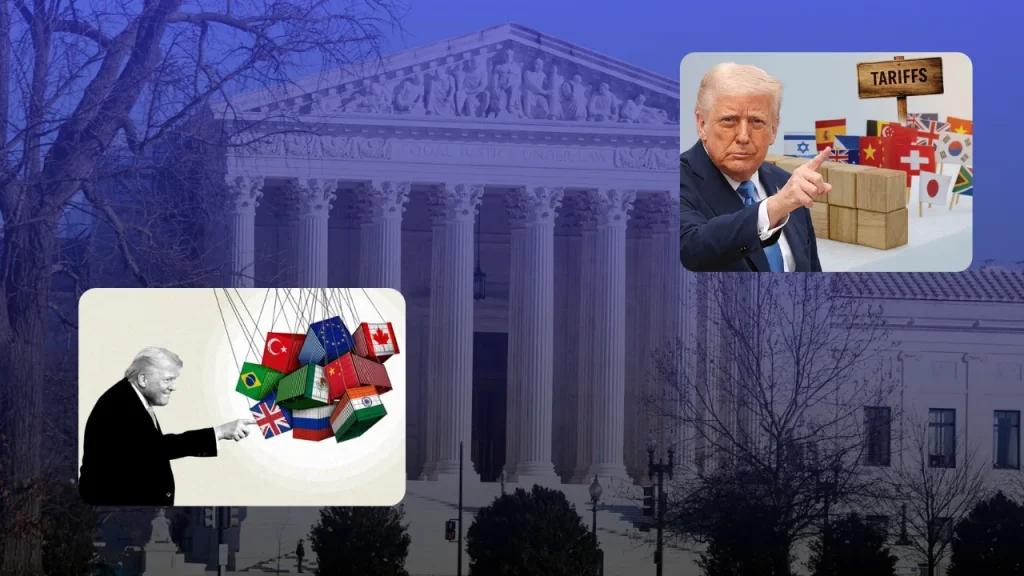
On November 25, 2026, the U.S. Trade Representative (USTR) proposed new tariffs on 14 trading partners after an eight-month Section 301 investigation into “structural excess capacity” in manufacturing. Tariffs are returning because the Supreme Court ruled on February 20, 2026 that the International Emergency Economic Powers Act (IEEPA) does not authorize presidential tariffs. The administration is now using Section 301 of the Trade Act of 1974, which expressly authorizes import duties after an investigation, findings, and public comment. The proposals are not yet in effect. Implementation is expected no earlier than January 2027.
Trump’s New Tariffs at a Glance
| Information | Latest details |
| Announcement date | November 25, 2026 |
| Agency | Office of the U.S. Trade Representative (USTR) |
| Trading partners investigated | 16 |
| Trading partners covered by the proposal | 14 |
| Investigated but not covered | Mexico and Norway |
| Legal authority | Section 301, Trade Act of 1974 (19 U.S.C. § 2411) |
| Investigation launched | March 11, 2026 |
| Stated justification | Government-supported structural excess capacity in manufacturing |
| Current status | Proposed; public comment and hearing required before final action |
| Possible implementation | January 2027 |
| U.S.–China trade truce expires | January 10, 2027 |
Why Is Trump Adding Tariffs Again? The Key Reasons
1. The Supreme Court struck down the earlier emergency tariffs
On February 20, 2026, the Supreme Court ruled in Learning Resources, Inc. v. Trump that IEEPA does not authorize the president to impose tariffs. That removed the legal basis for the sweeping 2025 “reciprocal” tariffs.
The Court did not end all presidential tariff power. Congress has passed other trade laws, including Section 301, Section 232 and Section 122, that expressly allow tariffs when their conditions are met. The administration is now rebuilding its tariff program under those laws. The 2026 investigations were launched specifically to rebuild tariff pressure after the ruling.
2. USTR says foreign governments are fueling overproduction
USTR argues that subsidies, favorable financing, support for state-owned firms and related policies push some economies to produce more than they can consume. It says the resulting surplus floods global markets with goods such as steel, aluminum, electric vehicles, appliances and solar products, hurting U.S. manufacturers. China disputes the claim, calling it a false proposition and objecting to unilateral tariffs.
3. Southeast Asian assembly and transshipment concerns
Reuters reported that the probe is also partly aimed at Chinese-backed manufacturing in Vietnam, Indonesia and Cambodia, which the administration argues can be used to supply the U.S. market while avoiding earlier tariffs on China.
4. Manufacturing goals and negotiating leverage
The administration says tariffs encourage domestic manufacturing and give leverage over foreign subsidy and market-access policies. The timing also overlaps with the January 10, 2027 expiration of the U.S.–China trade truce, and Reuters reported that a higher Chinese rate could apply if the truce lapses. Critics point out that U.S. manufacturers also depend on imported inputs, so tariffs can raise costs for some domestic producers.
Which Countries Are Targeted?
USTR investigated 16 trading partners. The proposal covers 14. The European Union counts as one trading partner even though it has 27 member states, which is why the headline says “14 trading partners” and not “14 countries.”
| Trading partner | Status |
| China | Covered |
| European Union | Covered |
| Japan | Covered |
| South Korea | Covered |
| India | Covered |
| Taiwan | Covered |
| Vietnam | Covered |
| Thailand | Covered |
| Malaysia | Covered |
| Indonesia | Covered |
| Singapore | Covered |
| Switzerland | Covered |
| Bangladesh | Covered |
| Cambodia | Covered |
| Mexico | Investigated, not covered in this proposal |
| Norway | Investigated, not covered in this proposal |
Brazil and Canada were not among the 16 economies in this investigation. No official explanation for the Mexico and Norway exclusions had been independently confirmed at publication. Mexico also trades with the U.S. under the USMCA, and existing duties still apply to both countries.
How High Are the Proposed Tariffs?
Final rates will appear in USTR’s notice and the Federal Register. Reporting so far, and what it means:
- China: Initial reports described a 20% proposed rate for China and Vietnam. However, Reuters reported before the announcement that, under the U.S.–China truce, second-term tariffs on Chinese goods are capped at 20%, on top of roughly 25% in duties from Trump’s first term, and that a 12.5% anti-forced-labor duty already counts toward that cap, leaving only 7.5% of room. If the truce expires, the rate could rise. Importers should confirm the exact additional rate in the final notice.
- Could some Chinese goods face 45%? Possibly. Where a roughly 25% first-term tariff and 20% in second-term duties both apply, the combined rate on certain goods could reach about 45%. That is not a universal rate on all Chinese imports.
- Other partners: Negotiated tariff ceilings from earlier trade deals, such as 15% for the EU, Japan and South Korea, are expected to be respected. A negotiated ceiling is not the same as an additional tariff on every product.
- Stacking: The new duties are generally expected to interact with, not simply add to, existing measures such as Section 232 tariffs on autos, steel and aluminum and the forced-labor tariffs. Do not add up headline percentages. Check the final Harmonized Tariff Schedule provisions and CBP instructions.
What Is Section 301 and Why Can Trump Use It After the Supreme Court Ruling?
Section 301 of the Trade Act of 1974 (19 U.S.C. § 2411) lets the U.S. Trade Representative act against foreign practices that are unjustifiable, unreasonable or discriminatory and burden U.S. commerce. Unlike IEEPA, it expressly authorizes import duties.
It also has procedural guardrails: an investigation, statutory findings, consultation with the trading partners involved, and public comment and hearings before action. Renaming a tariff does not make it lawful. Each measure must meet the requirements of the statute used.
| Legal authority | Purpose | Status |
| IEEPA | National emergencies | Supreme Court: does not authorize tariffs |
| Section 301 | Unfair foreign trade practices | Expressly authorizes qualifying duties |
| Section 232 | Imports threatening national security | Remains available (autos, steel, aluminum) |
| Section 122 | Balance-of-payments problems | Temporary surcharge with statutory limits |
| Section 338 | Discrimination against U.S. commerce | Separate authority with statutory conditions |
For a deeper comparison, read Section 338 vs Section 301 vs Section 232 vs IEEPA, What Each Tariff Law Allows After the 2026 Supreme Court Ruling.
Can Trump Impose Tariffs Without Congress?
Yes, when Congress has already delegated the power by statute and the administration follows that statute. Article I, Section 8 gives Congress authority over duties and foreign commerce, and Congress delegated certain trade powers through the Trade Act of 1974. Congress can amend or limit those powers, and courts can review whether an agency acted within its authority.
Could the New Tariffs Be Challenged in Court?
Yes. Section 301 is on firmer ground than IEEPA because it expressly authorizes tariffs, and it survived court challenges during Trump’s first term. But legal experts have noted that broad uses of Section 301 may still be vulnerable. Possible challenges include:
- Whether the investigated practices meet Section 301’s requirements.
- Whether the findings adequately support the action.
- Whether required procedures were followed.
- Whether the tariffs exceed statutory authority.
Many customs disputes go to the U.S. Court of International Trade. The February IEEPA ruling does not automatically invalidate Section 301 tariffs, so any challenge must address the new measures on their own legal footing. Country-specific duties based on “overcapacity” could also raise World Trade Organization issues and invite retaliation. At publication, no lawsuit against this specific proposal had been independently identified.
Which Products Could Become More Expensive?
USTR’s investigation identified 21 manufacturing sectors. Sectors highlighted in the investigation and related reporting include:
| Sector | Potential impact |
| Steel and aluminum | Construction and manufacturing costs |
| Automobiles and parts | Vehicle and repair costs |
| Electric vehicles and batteries | EV and energy-storage costs |
| Solar products | Solar installation costs |
| Appliances and electronics | Household goods |
| Machinery and chemicals | Business inputs |
| Apparel, footwear and textiles | Clothing prices |
These are sectors under review, not a confirmed product list. Reporting indicates exclusions for energy products, foods not easily grown in the U.S., pharmaceuticals and certain semiconductors. Confirm all exclusions in the final notice.
Who Pays Tariffs and Will Prices Go Up?
Tariffs are collected by U.S. Customs and Border Protection from the importer of record, not paid directly by foreign governments. Importers may absorb the cost, negotiate with suppliers, switch suppliers or raise prices. A 20% additional duty on goods valued at $100 means $20 in duty, but retail prices will not necessarily rise by exactly that amount.
A 2023 U.S. International Trade Commission study of Section 232 and Section 301 tariffs imposed in 2018–2021 found that U.S. importers bore nearly all of the cost. The study also found that those tariffs reduced some imports and raised domestic production in some industries while raising prices. For computer equipment, the Commission estimated earlier Section 301 tariffs cut imports by 5%, raised U.S. prices by 0.8% and raised domestic production by 1.2%. These are historical findings, not forecasts for the November 2026 proposal.
A post-midterm Reuters/Ipsos poll found 62% of respondents supported efforts to repeal the tariffs, which shows how closely affordability is being watched.
Will the New Tariffs Affect Black Friday and Holiday Prices?
Not directly. The measures are proposals, and prospective tariffs do not ordinarily apply to goods already imported. Retailers may adjust prices in anticipation of future costs, but no universal holiday price increase has been established by this announcement. Existing tariffs, including the forced-labor tariffs, are separate.
How the New Tariffs Relate to the July 2026 Forced-Labor Tariffs
USTR’s separate Section 301 forced-labor investigation covered 60 economies and led to tariffs of 10% to 12.5% that took effect in July 2026. The excess-capacity action is a different investigation with a different rationale, and the two are expected to interact, particularly under negotiated caps such as the China cap described above. Check final customs guidance before calculating duties.
Will the New Tariffs Affect Refunds of the Earlier IEEPA Tariffs?
The proposal does not automatically cancel refund rights arising from the Supreme Court’s IEEPA decision. The two sets of tariffs have separate legal foundations. Importers that paid qualifying IEEPA duties may have refund rights under court orders and customs procedures. Ordinary shoppers who paid higher prices generally do not have direct customs refund rights, which is why separate consumer lawsuits have been filed against retailers. See IEEPA Tariff Consumer Class Actions, Were You Overcharged? Litigation Update and Walmart, Puma, Abercrombie & Fitch and Peloton Face Tariff Refund Class Action Lawsuits.
Today’s announcement creates no new consumer compensation fund, settlement or claim form.
What Should Businesses Do Now?
- Identify the country of origin and tariff classification of imported products.
- Review existing Section 301, Section 232 and other duties.
- Preserve entry records, invoices and proof of duty payment.
- Review supplier contracts to see who bears added import costs.
- Watch USTR announcements and the Federal Register for product lists, comment deadlines and hearing dates, and consider submitting comments.
- Consult a licensed customs broker or trade attorney about exemptions and deadlines.
When Will the New Tariffs Take Effect?
| Date | Development |
| February 20, 2026 | Supreme Court rules IEEPA does not authorize tariffs |
| March 11, 2026 | USTR opens excess-capacity investigations into 16 trading partners |
| July 2026 | Separate forced-labor Section 301 tariffs take effect |
| November 25, 2026 | New tariffs proposed on 14 trading partners |
| January 2027 | Possible implementation after comment and hearing |
| January 10, 2027 | U.S.–China trade truce scheduled to expire |
The exact effective date, final product list and complete country schedule remain subject to further announcements.
Frequently Asked Questions
Why is Trump imposing tariffs again after losing at the Supreme Court?
The Court ruled that IEEPA does not authorize tariffs. The administration is now using Section 301, which expressly authorizes duties after an investigation and public process.
Are the new tariffs in effect now?
No. They are proposals that require further proceedings.
Is there a 45% tariff on China?
Some Chinese goods could face a combined rate of about 45% where first-term and second-term tariffs both apply. It is not a blanket rate, and the exact additional rate should be confirmed in the final notice.
Are Canada and Mexico included?
Canada was not part of the investigation. Mexico was investigated but is not covered by this proposal.
Will Americans get tariff refund checks?
No consumer refund program has been created by this proposal. Customs refunds for importers and consumer lawsuits against retailers are separate matters.
Can Congress stop the tariffs?
Congress can amend or limit statutory tariff authority through legislation, subject to the normal legislative process.
Bottom Line
Trump is proposing tariffs again because the administration wants to counter alleged foreign overproduction, promote U.S. manufacturing and rebuild its tariff program after the Supreme Court’s February 2026 ruling. The new measures rest on Section 301, which gives a clearer statutory basis than IEEPA but still requires findings, public comment and compliance with the law. For consumers and businesses, the key items to watch are the final product lists, rates, exemptions and the implementation date.
Sources and Legal References
- USTR, “USTR Initiates Section 301 Investigations Relating to Structural Excess Capacity and Production in Manufacturing Sectors,” March 11, 2026: https://ustr.gov/about/policy-offices/press-office/press-releases/2026/march/ustr-initiates-section-301-investigations-relating-structural-excess-capacity-and-production
- USTR Fact Sheet on the Structural Excess Capacity Investigations: https://ustr.gov/about/policy-offices/press-office/fact-sheets/2026/march/fact-sheet-ustr-initiates-section-301-investigations-structural-excess-capacity-and-production
- Federal Register public inspection notice on structural excess capacity: https://public-inspection.federalregister.gov/2026-05214.pdf
- Learning Resources, Inc. v. Trump (U.S. Supreme Court, February 20, 2026): https://www.law.cornell.edu/supremecourt/text/24-1287
- 19 U.S.C. § 2411: https://uscode.house.gov/us/usc/t19/s2411/
- 19 U.S.C. § 2414: https://uscode.house.gov/us/usc/t19/s2414/
- USTR, July 2026 Section 301 forced-labor tariff action: https://www.ustr.gov/about/policy-offices/press-office/press-releases/2026/july/ustr-takes-action-forced-labor-section-301-investigations
- U.S. International Trade Commission, Economic Effects of Section 232 and Section 301 Tariffs (2023): https://www.usitc.gov/press_room/news_release/2023/er0315_63679.htm
- Reuters, “Trump administration set to unveil new tariffs after probe on excess factory capacity, sources say,” November 2026: https://www.thestandard.com.hk/world/article/349545/Trump-administration-set-to-unveil-new-tariffs-after-probe-on-excess-factory-capacity-sources-say
- Reuters, “US proposes new tariffs on 14 trading partners to fight excess factory capacity,” November 25, 2026: https://www.reuters.com/world/china/us-proposes-new-tariffs-14-trading-partners-fight-excess-factory-capacity-2026-11-25/
- Reuters via Korea Times, “US poised to unveil new tariffs targeting S. Korea, 15 other trading partners,” November 25, 2026: https://www.koreatimes.co.kr/world/20261125/us-poised-to-unveil-new-tariffs-targeting-s-korea-15-other-trading-partners
- Axios, “Trump prepares new round of tariffs on China and other U.S. trading partners,” November 25, 2026: https://www.axios.com/2026/11/25/trump-tariffs-china
- Harmonized Tariff Schedule of the United States: https://hts.usitc.gov/
- Federal Register: https://www.federalregister.gov/
- U.S. Trade Representative: https://ustr.gov/
Legal disclaimer: AllAboutLawyer.com is an independent legal information website, not a law firm, and does not provide legal, tax or financial advice. Proposed tariffs remain subject to change. Importers and businesses should consult official customs guidance and a licensed customs broker or trade attorney before making decisions.
Published November 25, 2026 | By the All About Lawyer Legal Research Team | Information current as of publication date
This article is general legal information, not legal, tax or financial advice. See the full disclaimer at the end.
About the Author
Israr Ahmad is a legal content researcher with 4+ years of experience covering class action settlements and consumer rights cases. He has researched and published coverage of 2,500+ settlements using verified court records, settlement administrator filings, and government sources. Learn more about Israr.