
Can Shipowners Be Sued After a Pirate Attack? Crew Deaths, Insurance and Compensation
When pirates hijack a commercial ship, hold its crew hostage or kill a seafarer, the attackers may face criminal prosecution. Families, however, usually ask a different question: can the shipowner also be held responsible, and who pays when a crew member is killed, injured or held captive?
The answer depends on the facts. A shipowner is not automatically liable just because pirates attacked a vessel. But the owner, employer, ship manager or another responsible company can face a civil claim if its own negligence, an unseaworthy vessel, a failure to meet a safety obligation or another legally actionable act contributed to the harm.
Even when negligence cannot be proven, separate benefits may still be available: contractual death or disability payments, wages during captivity, repatriation, insurance cover and financial security required by maritime labour law. These can arise from the seafarer’s employment agreement, a collective agreement, the law of the flag state, international maritime standards or the seafarer’s home-country law.
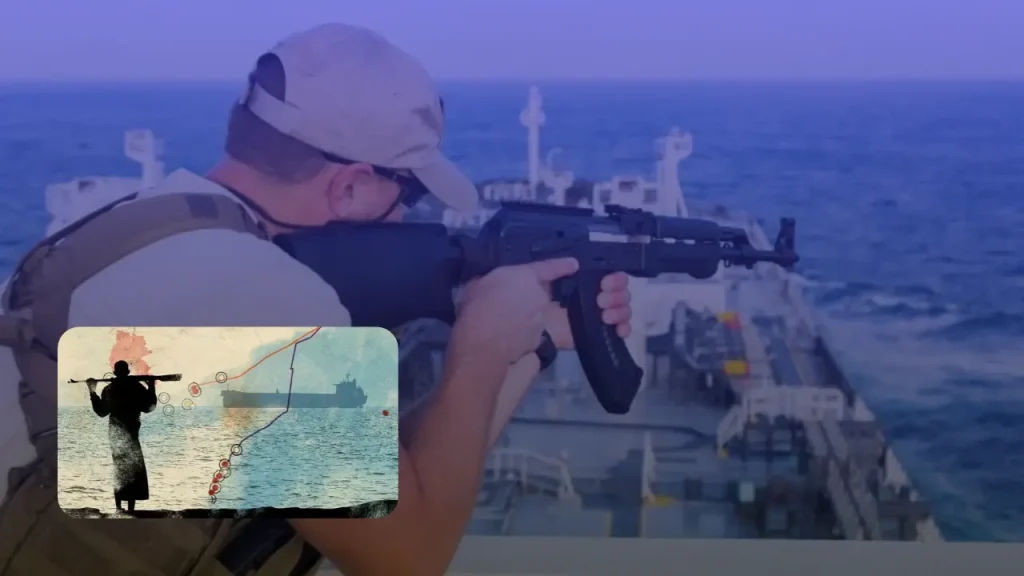
The renewed Somali piracy incidents of 2026 make these questions urgent. The deaths of five seafarers during the September 29 recovery of the tanker Honour 25, and the continuing captivity of 22 crew aboard the MT Asana, show why it matters to separate three things: liability for the hijacking itself, responsibility for decisions made before the attack, and responsibility for deaths during a rescue.
The central issue is not simply whether piracy occurred. It is which party owed a legal duty, whether that duty was breached, whether the breach caused the harm, and what remedies the applicable law allows.
Shipowner Liability After Piracy: Quick Facts
| Question | General legal position |
| Can a shipowner be sued after a pirate attack? | Potentially, if a legally actionable breach contributed to the injury or death |
| Does every hijacking prove negligence? | No |
| Can a family receive money without proving negligence? | Possibly, through employment benefits, contractual compensation or insurance |
| Does international maritime law provide death compensation? | The Maritime Labour Convention (MLC) requires financial-security arrangements for qualifying death or long-term disability, subject to its terms and national implementation |
| Are wages payable while a seafarer is held captive? | Generally intended to continue under the MLC as amended, subject to flag-state rules and the contract |
| Can an injured seafarer claim medical costs? | Potentially, under maritime law, the employment terms and insurance |
| Can the employer and owner be different companies? | Yes; the responsible parties must be identified |
| Can the pirates be sued? | Potentially, but jurisdiction, evidence and collecting a judgment are major obstacles |
| Is there a worldwide compensation fund for piracy victims? | No universal fund automatically pays every crew member or family |
| Is there one deadline for all claims? | No; deadlines depend on the governing law, contract and court |
| What should families do first? | Preserve records, put the employer and insurer on written notice, and consult a maritime lawyer |
When Can a Shipowner Be Held Liable for a Pirate Attack?
Start by separating the pirates’ crimes from any wrongdoing by the shipowner or operator. Pirates who use violence, unlawful detention or threats may face criminal responsibility. That does not make the shipowner responsible for the same conduct. A civil claim against the owner needs its own legal basis, such as negligence, unseaworthiness or breach of a contractual or statutory obligation.
1. The shipowner failed to take reasonable security precautions
Shipowners and managers have a basic duty to provide a seaworthy vessel and to take reasonable steps to protect the crew from foreseeable risks. In high-risk areas such as the Gulf of Aden and the waters off Somalia, questions a court may ask include whether the company:
- Carried out a proper risk assessment and voyage plan before entering the area.
- Considered current threat warnings from bodies such as UKMTO, the Maritime Security Centre Indian Ocean (MSCIO) and naval forces.
- Followed Best Management Practices (BMP) and other industry counter-piracy guidance.
- Provided physical protection where appropriate, such as razor wire, water cannons or a citadel (a secure refuge for the crew).
- Considered whether to use privately contracted armed security personnel (PCASP).
- Trained the crew in anti-piracy drills and emergency procedures.
- Maintained working alarms, communications and other safety equipment.
The International Maritime Organization (IMO) publishes guidance for owners, operators, masters and crews. Its Revised Industry Counter Piracy Guidance, MSC.1/Circ.1601/Rev.2, was issued on June 30, 2025.
Guidance is not automatically a legal guarantee or a standalone cause of action. Its weight in litigation depends on whether it applied to the vessel, whether it was followed, the legal standard and the facts of the attack. Courts generally ask what a prudent owner would have done in the same circumstances.
A pirate attack does not prove negligence. Even a well-prepared vessel can be hijacked, and simply operating in a dangerous area is not negligent by itself. A claim becomes stronger only when evidence links a legally actionable failure to the harm. Ignoring clear warnings or industry standards is a different matter.
2. The vessel was unseaworthy
In maritime law, unseaworthiness generally asks whether a vessel, its equipment and its crew were reasonably fit for the intended service under the applicable legal standard. A claim might point to defective security equipment, inoperative alarms, an inadequate safety system or another dangerous condition that contributed to the harm.
Unseaworthiness is not just another word for a successful attack. For example, evidence that an emergency communication system failed may matter if the failure kept a crew member from getting help, but the fact that pirates boarded does not by itself make a ship legally unseaworthy. Under U.S. maritime law, unseaworthiness is a distinct doctrine with its own requirements, separate from a Jones Act negligence claim.
3. The company ignored a known, specific threat
Evidence that a company knew of a particular threat and failed to respond can matter to negligence. If it received a credible warning about a planned route, investigators may ask whether it evaluated the warning, considered alternative routes, followed security procedures or took reasonable precautions.
A general warning that piracy exists in a region is different from a specific warning about a particular vessel or imminent attack. The family would still have to show that the duty existed, that it was breached and that the breach caused the injury or death. Owners often argue that piracy is an unforeseeable “act of force majeure,” but that argument does not automatically defeat a claim where the owner was negligent in preparation or response.
4. The employer failed to provide required support after the attack
A separate question arises when a seafarer survives a hijacking but is injured, falls ill, needs treatment or is abandoned. Depending on the contract and applicable law, the employer or owner may owe medical expenses, wages, accommodation, repatriation, burial costs or compensation for death or long-term disability. Many of these obligations arise from employment agreements or maritime labour rules, not from proving negligence, so families should look into them even when the evidence does not support a lawsuit.
What If a Seafarer Dies During a Rescue Operation?
A crew member may die during the original attack, in captivity, in an exchange of gunfire or during a military or police operation to recover the ship. The analysis depends on what happened and who, if anyone, acted wrongfully.
Death caused by the pirates. A criminal investigation focuses on those who used violence. A separate civil claim could be pursued against another party only if that party’s own legally actionable conduct contributed to the loss.
Death allegedly linked to inadequate vessel security. A family may investigate whether the employer or owner failed to meet an applicable duty before the hijacking. The outcome depends on the evidence and whether the failure legally caused the death.
Death during a government rescue. A death during a rescue does not automatically make the shipowner responsible. A claim may require examining the decisions made, who controlled them and whether any duty was breached. Claims against a foreign government or military raise added issues such as sovereign immunity and jurisdiction.
A rescue meant to save lives can still end in tragedy, and the outcome alone does not establish negligence by the rescuers, the shipowner or anyone else. The Honour 25 deaths should not be treated as proof that any company or government acted unlawfully.
What Does International Maritime Law Require Shipowners to Provide?
A central framework is the Maritime Labour Convention, 2006 (MLC), adopted through the International Labour Organization (ILO). Regulation 4.2 addresses shipowners’ liability for the financial consequences of sickness, injury or death connected with a seafarer’s employment.
Under Standard A4.2.1, countries that implement the provisions must set rules covering matters that include:
- The costs of sickness and injury during the relevant employment period.
- Financial security for compensation if a seafarer dies or suffers long-term disability from an occupational injury, illness or hazard.
- Medical treatment, medicines, accommodation and related expenses in qualifying circumstances.
- Burial expenses when a seafarer dies on board or ashore during the engagement.
The convention also addresses procedures for handling contractual claims for death or long-term disability.
Wages, repatriation and abandonment during captivity
The MLC and its amendments also matter to seafarers who are held hostage. As amended, the convention is generally meant to keep wages and other entitlements flowing while a seafarer is held captive as a result of piracy or armed robbery, and to ensure repatriation afterward. It also requires financial security for seafarers who are abandoned by an owner. How these rules apply to a given crew depends on the flag state’s implementation, the contract and the insurance in place.
Does the MLC guarantee compensation whenever pirates kill a seafarer?
No, and saying so would overstate it. The death and disability provisions apply according to their terms, national implementation, the employment arrangement and the circumstances of the death. Whether a particular piracy-related death qualifies must be examined, not assumed.
The MLC also does not replace every other remedy. A contractual death benefit may be payable without proving negligence, while a negligence or wrongful-death claim has its own legal requirements.
Union and collective agreements
Many seafarers work under collective bargaining agreements negotiated with unions such as the International Transport Workers’ Federation (ITF). Agreements for vessels trading in designated high-risk areas often include extra protections, which can include higher death and disability compensation, additional pay for the risk and a right to refuse to sail into the area. Whether any of this applies depends on the specific agreement and the vessel’s route, so families should ask for the full text.
What if the ship sails under a foreign flag?
The flag state is an important starting point because maritime conventions rely on states to implement obligations for vessels flying their flags. But the flag alone does not answer every question. The seafarer’s nationality, the employer’s location, the employment contract, any collective agreement, where the incident happened and the court hearing the claim may all matter.
Many seafarers come from countries such as the Philippines, India, Indonesia and Pakistan, which have their own statutes protecting seafarers and sometimes allow direct claims against owners or insurers. A seafarer on a foreign-flagged ship should not assume that U.S. law applies just because the owner has some U.S. connection, and working for an international company does not mean any national scheme guarantees a specific amount.
Can U.S. Seafarers Sue Under the Jones Act?
For qualifying U.S. maritime cases, the Jones Act (46 U.S.C. § 30104) lets an injured seaman, or the personal representative of a seaman who dies from an employment-related injury, bring a civil action against the employer. A Jones Act negligence claim may be relevant if the employer’s negligence contributed to the injury or death. A piracy incident alone does not establish negligence.
The claimant must meet the requirements for seaman status and show a sufficient basis for the claim, including causation. Most international piracy cases involve foreign-flagged vessels and foreign crews, so the Jones Act will often not apply.
What about the Death on the High Seas Act?
The Death on the High Seas Act (DOHSA), 46 U.S.C. § 30302, provides a wrongful-death action for a death caused by a wrongful act, neglect or default on the high seas beyond three nautical miles from the U.S. coast. It authorizes the deceased’s personal representative to sue for the benefit of the spouse, parent, child or dependent relative as specified by the statute.
DOHSA does not mean every death in international waters creates a claim against the shipowner. The claimant must identify a responsible party, meet the statute’s conditions and clear any jurisdiction and choice-of-law hurdles.
Can families recover punitive damages for unseaworthiness?
In Dutra Group v. Batterton, the U.S. Supreme Court held that punitive damages are not available on an unseaworthiness claim under general maritime law. Compensatory damages may still be available. This is a U.S. rule and does not necessarily apply elsewhere.
These statutes and cases are U.S. examples, not universal rules for every seafarer killed by pirates. For foreign nationals, foreign-flagged ships and foreign employers, other legal systems may govern.
What Types of Compensation Might Be Available?
| Potential benefit or claim | What it may cover | Is negligence always required? |
| Contractual death benefit | A lump sum under the employment or collective agreement, often tied to rank and service | Not necessarily; depends on the terms and governing law |
| MLC-related financial security | Qualifying death or long-term disability compensation under implementing rules | Not necessarily; depends on the applicable provisions |
| Wages during captivity | Continued pay and entitlements while held by pirates | Not necessarily; depends on the contract and flag-state rules |
| Medical, injury and repatriation benefits | Treatment, medicines, qualifying living expenses and travel home | Not necessarily |
| Life or accident insurance | Benefits under a qualifying policy | Depends on policy terms |
| Employer negligence claim | Losses caused by a legally actionable breach of duty | Generally requires proof of the elements of negligence |
| Wrongful-death claim | Damages for legally authorized survivors, such as lost support and funeral costs | Generally requires an actionable wrongful death and causation |
| Claim against the perpetrators | Civil remedies under applicable law | Depends on the cause of action; collection may be difficult |
The same loss often cannot be recovered twice. Policies, contracts and local law determine how benefits interact and whether an insurer or employer can seek reimbursement from another recovery.
Who actually pays? Understanding maritime insurance
Maritime insurance is not one policy covering every loss. Different policies protect different interests, and insurance is often the practical source of recovery.
- Protection and indemnity (P&I) insurance covers certain liabilities from operating a vessel, which can include crew death, injury and illness. P&I clubs commonly provide the financial security the MLC requires.
- Hull and machinery insurance focuses on physical loss of or damage to the vessel. It does not automatically pay a deceased crew member’s family.
- War-risk and kidnap-and-ransom (K&R) insurance may address piracy, hostage-taking and related costs, subject to wording and exclusions. A policy that pays a ransom or covers the owner’s loss does not necessarily pay a family directly. Ransom payments also raise legal and public-policy issues, including sanctions and criminal-law restrictions.
- Life, accident or employment-related insurance may separately benefit a seafarer or named beneficiaries, including under home-country workers’ compensation or welfare schemes.
In practice, families often negotiate with the owner’s P&I club rather than going to trial, because clubs prefer to resolve claims efficiently when exposure exists. Do not assume the first offer is the maximum, but do not assume a large lawsuit is justified either. Evaluate a claim against the evidence, the governing law and the benefits already available. A vessel being insured does not mean every injury or death is covered or that an insurer must pay a given amount.
Can Shipowners Limit Their Financial Liability?
Some jurisdictions let shipowners ask a court to limit liability for certain claims. In U.S. maritime litigation, the Limitation of Liability Act is one example. It has specific requirements and exceptions and does not automatically cap every owner’s liability after every casualty. An insurance limit is also different from a legal liability limit: a policy may cap what an insurer pays under its contract, while a separate question is what a defendant owes under the law.
The litigation after the Francis Scott Key Bridge collapse illustrates how owners, operators, insurers and other parties can face separate questions about liability, insurance and statutory limits. See Baltimore Key Bridge Update: $350M Insurance Settlement Reached as High-Stakes Trial Looms and Maryland’s $2.25 Billion Key Bridge Settlement With Grace Ocean and Synergy Marine. Those cases concern a different casualty, not piracy; they are useful only to show that insurance payments, liability limits and claims by different parties are separate issues.
What Evidence Should Families Preserve After a Pirate Attack?
Do not wait for a lawsuit to organize what you already have. Records may be held by different companies or governments, and some can become hard to obtain later. Useful items include:
- The employment agreement, amendments and any collective agreement.
- Pay slips, wage records, beneficiary designations and death-benefit documents.
- Vessel name, IMO number, flag, owner, operator and crewing-agency details.
- Security alerts, company voyage instructions and communications about known threats, where lawfully available.
- Incident reports, medical reports and official records about the injury or death.
- Insurance certificates, policy references and written responses from the insurer or owner.
- The death certificate, medical records, repatriation papers and receipts for expenses the family paid.
- Statements from surviving crew and all communications with the employer, owner, consular officials and authorities.
Keep originals safe, preserve dated messages and emails, and log whom you contacted and what they said. Do not try to obtain confidential shipboard records unlawfully or put yourself at risk to investigate. A maritime lawyer can advise how to request records, preserve evidence and identify the right defendants.
What Should Families Do First?
Separate immediate help from long-term legal decisions.
- Verify the situation through official channels. Contact the employer or ship manager and the relevant consular service, and be cautious about anyone demanding money or promising to arrange a release.
- Put the employer, owner and P&I club on written notice of the claim, and keep copies.
- Notify the authorities that can help: the flag-state authority, the seafarer’s home maritime administration and any union.
- If the seafarer is injured or freed, ask about treatment, rehabilitation, wages, accommodation, repatriation and contractual or statutory benefits, and keep records of costs.
- If the seafarer has died, obtain official confirmation and request the employment, insurance and death-benefit information. Ask who is authorized to communicate with the family and how to claim.
- If you suspect known risks were ignored, consult a lawyer experienced in maritime injury and death claims in the relevant jurisdictions.
For a general explanation of the process for survivors, see What Is a Wrongful Death Lawsuit? Everything Families Need to Know. For background on how legal systems differ between countries, which can matter in cross-border claims, see What Is the Difference Between Civil Law and Common Law? Legal Systems Explained.
Are There Deadlines for Maritime Claims?
Yes, but there is no single limitation period for all piracy-related injury and death claims worldwide. The deadline depends on the governing law, the remedy sought, the location of the incident, the seafarer’s employment status, the contract terms and the court. U.S. maritime statutes impose their own limitation periods, and many contracts and collective agreements add notice, grievance or arbitration steps. Other countries differ, and some claims have relatively short windows.
Many employment contracts also contain exclusive-jurisdiction or arbitration clauses that decide where a claim must be brought.
Do not assume that talks with the employer or insurer pause a legal deadline, or that the clock starts only when a body is recovered or a death is formally confirmed. The safest step is prompt advice from a maritime practitioner who can identify the governing law and deadlines. Waiting for an insurer’s formal denial can shrink the time left to act.
Frequently Asked Questions
Can a shipowner be sued if pirates kill a crew member?
Potentially, but the attack alone does not establish liability. A claimant may need to prove that the owner or another defendant breached an applicable duty and that the breach caused the death. Separate contractual or statutory benefits may be available even without proving negligence.
Does a shipowner have to guarantee that pirates cannot board?
No. Safety obligations generally require meeting the applicable legal standard, not guaranteeing that every attack is prevented. Whether the precautions were adequate depends on the governing law and facts.
Are crew paid while held hostage?
Under the MLC as amended, wages and entitlements are generally intended to continue during captivity caused by piracy, subject to flag-state implementation and the contract. Ask the employer in writing and keep the response.
Can families receive death benefits without a wrongful-death lawsuit?
Possibly. An employment contract, collective agreement, maritime labour law or insurance policy may pay benefits without a negligence suit, provided the family meets the eligibility and documentation requirements.
Does the Maritime Labour Convention cover every pirate-related death?
Not automatically. It addresses financial protection for qualifying employment-related injury, illness, death and long-term disability. Coverage depends on its terms, the implementing law, the employment arrangement and the facts.
Does U.S. law apply to a foreign seafarer killed off Somalia?
Not simply because the death occurred at sea or because the owner has some U.S. link. The applicable law may depend on the flag, the employment arrangements, the parties’ connections, jurisdiction and choice-of-law rules.
Can the shipowner’s insurance pay the family directly?
It depends on the policy and the family’s rights under it. P&I, hull, war-risk, K&R and personal policies cover different risks, and a policy that pays the owner’s losses or a ransom does not necessarily provide a direct death benefit to the family.
Can families sue the pirates instead?
Potentially, depending on jurisdiction and facts, but locating defendants, obtaining jurisdiction, proving the claim and collecting a judgment are difficult. Criminal prosecution and civil compensation are separate processes.
What if a crew member dies during a rescue operation?
The circumstances must be investigated. Responsibility may involve the pirates, decisions during the operation, the vessel’s operator or others. A death during a rescue does not automatically make the shipowner or the rescuing authority liable.
What should a family do if the shipowner refuses to pay?
Request the refusal and its reasons in writing, preserve the contract and benefit documents, and consult a maritime lawyer in the relevant jurisdiction. Check whether contractual benefits, financial-security arrangements and insurance claims have separate procedures and deadlines.
Sources
- International Labour Organization: Maritime Labour Convention, Regulation 4.2, Shipowners’ Liability (https://www.ilo.org/dyn/normlex/en/f?p=NORMLEXPUB:91:0::::P91_SECTION:MLCA_AMEND_A4)
- International Labour Organization: Maritime Labour Convention, 2006, Official Text and Guidance (https://www.ilo.org/sites/default/files/wcmsp5/groups/public/%40ed_norm/%40normes/documents/publication/wcms_765083.pdf)
- International Maritime Organization: Piracy Prevention and Counter-Piracy Guidance (https://www.imo.org/en/ourwork/security/pages/piracy-guidance-default.aspx)
- U.S. Code, 46 U.S.C. § 30104, Personal Injury to or Death of Seamen (https://uscode.house.gov/us/usc/119-120/t46/s30104/)
- U.S. Code, 46 U.S.C. § 30302, Death on the High Seas Act (https://www.govinfo.gov/content/pkg/USCODE-2024-title46/html/USCODE-2024-title46-subtitleIII-chap303-sec30302.htm)
- UK Maritime and Coastguard Agency: MGN 480 (M), Amendment 3, Shipowners’ Liabilities and Seafarer Compensation, August 20, 2026 (https://www.gov.uk/government/publications/mgn-480-m-amendment-3-mlc-2006-shipowners-liabilities-including-seafarer-compensation)
- Supreme Court of the United States: Dutra Group v. Batterton (https://www.law.cornell.edu/supremecourt/text/18-266)
This article is for informational purposes only. AllAboutLawyer.com is a consumer legal information website, not a law firm, and does not provide legal advice. Maritime rights, compensation and liability depend on the applicable law, contracts, insurance terms and the facts of the incident. Consult a qualified maritime lawyer in the relevant jurisdiction.
About the Author
Israr Ahmad is a legal content researcher with 4+ years of experience covering class action settlements and consumer rights cases. He has researched and published coverage of 2,500+ settlements using verified court records, settlement administrator filings, and government sources. Learn more about Israr.